 ProMapRanker
Google Map Pack Ranking Factors: What Actually Moves the Needle

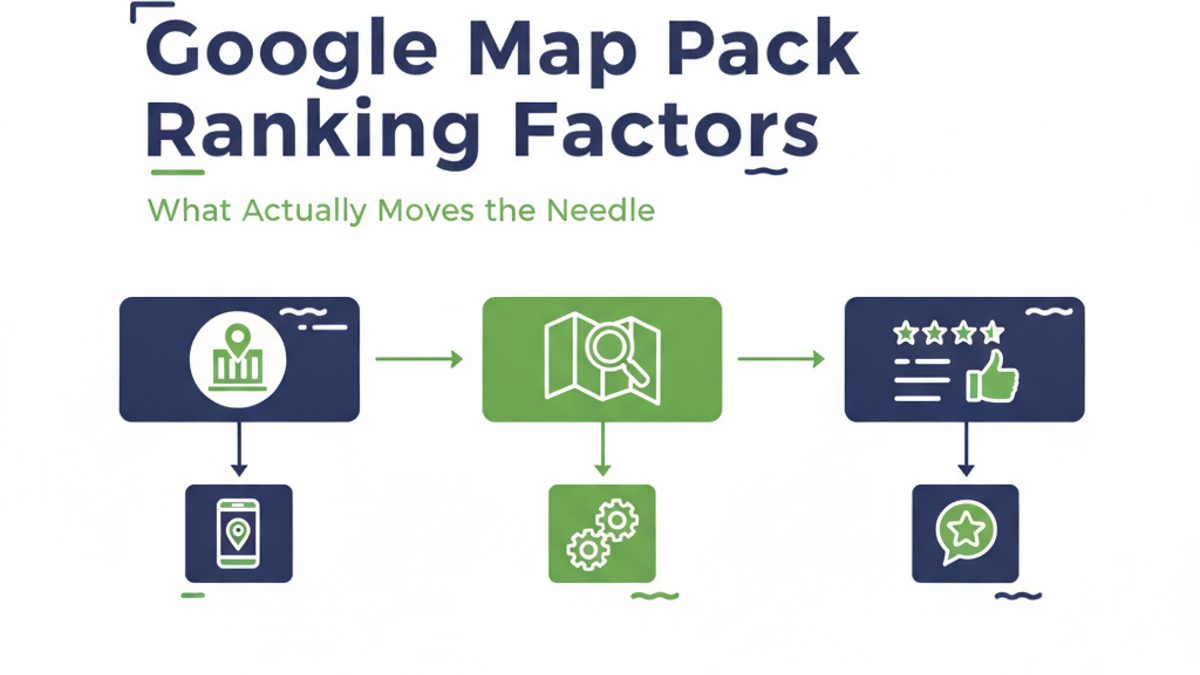
As Md Shihab Mia, founder of ProMapRanker, I've seen firsthand what truly drives local visibility. The Google Map Pack ranking factors boil down to three core pillars: Proximity, Prominence, and Relevance. Google prioritizes businesses that are geographically close to the searcher, possess a strong online reputation and authority, and accurately match the search query's intent. Mastering these signals through meticulous Google Business Profile optimization, robust website SEO, and strategic reputation management is essential for businesses aiming to dominate their local search landscape and appear in the coveted 3-pack.
For any local business, ranking in the Google Map Pack is a game-changer. It's the digital storefront that connects you with customers actively searching for your services nearby. Ignoring these signals means leaving money on the table. Let's break down what actually moves the needle.
What is Google's Local Map Pack, and Why Does it Matter?
The Google Local Map Pack is a prominent block of three business listings, often accompanied by a map, that appears at the top of Google search results for geographically-oriented queries (e.g., "plumber near me" or "coffee shop New York"). It matters because these listings capture significant user attention, drive direct calls, website visits, and directions, and are seen by users as highly credible local recommendations.
Appearing in the Map Pack provides unparalleled visibility for local businesses. It positions your business above organic search results, making it the first point of contact for many potential customers. This prime real estate significantly increases your chances of being chosen over competitors, directly impacting foot traffic and online engagement. Our data at ProMapRanker consistently shows that businesses in the top three Map Pack positions receive a disproportionately higher share of clicks and leads compared to those further down the list or only in organic results.
How Does Proximity Influence Map Pack Rankings?
Proximity is a foundational ranking factor, measuring how close your business's physical address is to the searcher's location or the location specified in their query. Google's algorithm heavily favors businesses that are geographically closest to the user, making it challenging to rank for areas far from your registered business address without a strong overall local SEO presence.
Google uses precise location data to determine a business's proximity. This means that a business located 0.5 miles from a searcher will almost always outrank one that is 5 miles away, assuming other factors are equal. For businesses without a physical storefront, like service-area businesses, the registered address in your Google Business Profile (GBP) is crucial. While you can define a service area, your actual ranking strength often radiates from that central point. Tools like ProMapRanker's geo-grid scans are indispensable here, allowing you to visualize your ranking performance across a specific radius, for instance, a 5x5 grid at 0.5-mile intervals around your target areas. This granular data reveals where you are strong and where you need to improve to capture more local customers.
What Role Does Prominence Play in Local Search?
Prominence refers to how well-known and authoritative a business is, both online and offline, taking into account factors like the quantity and quality of reviews, the strength of its backlink profile, and its overall brand recognition. Businesses with a strong reputation and significant online presence tend to rank higher because Google perceives them as more trustworthy and valuable to users.
Google considers various signals when evaluating prominence. This includes the business's offline reputation, which can be reflected in online mentions and press. More importantly, it looks at the volume and quality of online reviews across platforms, the authority of websites linking to the business, and the business's overall SEO strength. A strong backlink profile, particularly from other local, relevant websites, signals to Google that your business is a trusted entity. Consistent positive sentiment in reviews also boosts prominence. Essentially, the more signals Google finds indicating your business is well-regarded and influential, the higher it will rank. This is where a comprehensive local reputation management strategy becomes critical.
How Does Relevance Connect Your Business to Local Searches?
Relevance is the degree to which your business's services or products align with what a user is searching for, primarily determined by the information provided in your Google Business Profile and on your website. Google aims to show the most useful results, so if your business perfectly matches a search query, it's more likely to appear in the Map Pack.
To maximize relevance, your Google Business Profile must be meticulously completed and optimized. This includes selecting the most accurate primary and secondary business categories, crafting a detailed business description that incorporates relevant keywords, and accurately listing your services or products. For example, a "plumber" needs to clearly list "drain cleaning," "water heater repair," and "leak detection" if those are services offered. The content on your website also plays a significant role; ensuring your service pages are rich with keywords that align with user searches helps Google understand what your business offers. Regularly updating your GBP posts with relevant offers and news further signals your active relevance to Google.
What are the Critical Google Business Profile Optimization Factors?
Optimizing your Google Business Profile (GBP) is arguably the single most impactful action for Map Pack rankings, covering accuracy, completeness, and active engagement. Key factors include selecting precise categories, uploading high-quality photos, maintaining consistent NAP (Name, Address, Phone) information, and regularly utilizing GBP posts and Q&A features to showcase your business.
A fully optimized GBP acts as your business's digital backbone. Here's a breakdown of essential elements:
- Business Categories: Choose the most specific primary category that describes your core service (e.g., "HVAC contractor" rather than just "Contractor"). Add up to nine secondary categories to cover all your offerings. Incorrect categories can severely limit visibility.
- NAP Consistency: Ensure your business Name, Address, and Phone number are identical across your GBP, website, and all online directories. Even slight discrepancies can confuse Google and dilute your authority. Learn more about NAP consistency.
- Service Area: Clearly define your service radius or specific cities if you are a service-area business. This helps Google understand where you operate.
- Business Description: Craft a compelling, keyword-rich description (up to 750 characters) that highlights your unique selling propositions and core services.
- Photos and Videos: Businesses with more photos rank higher. Aim for at least 10-15 high-quality, geo-tagged images of your storefront, team, products, and services. Update these regularly. Google states that businesses with photos receive 42% more requests for directions.
- Business Hours: Keep your hours accurate and up-to-date, especially during holidays.
- Services/Products: Detail all your offerings using specific keywords. This enhances relevance for specific searches.
- GBP Posts: Use posts regularly (weekly is ideal) to share updates, offers, events, and new products. These keep your profile active and provide fresh content signals to Google.
- Q&A: Proactively answer common questions about your business. This allows you to control the narrative and address customer queries before they become reviews.
ProMapRanker offers a comprehensive GBP audit tool that scans your profile for missing information, inconsistencies, and optimization opportunities, providing actionable insights to boost your visibility. Get your free GBP audit today.
Why Do Reviews and Reputation Heavily Impact Your Local Visibility?
Customer reviews are a powerhouse for Map Pack rankings, influencing both prominence and trust through their quantity, quality, recency, and your responsiveness. A high volume of positive reviews signals to Google that your business is reputable and provides excellent service, directly impacting your local search performance.
Google considers reviews from various angles:
- Quantity: A higher number of reviews generally indicates a more established and trusted business. Aim for at least 50-100 reviews in competitive niches to stand out.
- Quality (Star Rating): Businesses with higher average star ratings (ideally 4.5 or above) are favored. Google's algorithm likely uses sentiment analysis to understand the overall tone of reviews.
- Recency: Recent reviews are crucial. An older business with many reviews but none in the last year may not perform as well as a newer business with fewer but fresh reviews. Encourage customers to leave feedback regularly.
- Review Velocity: A consistent stream of new reviews, rather than a sudden influx, is seen as more natural and trustworthy.
- Keyword Mentions: Reviews that naturally include keywords related to your services (e.g., "best plumber for water heaters") can boost relevance for those specific searches.
- Owner Responses: Responding to all reviews-positive and negative-demonstrates engagement and excellent customer service. Aim to respond to 100% of reviews within 24-48 hours. This shows Google you care about your customers.
Actively soliciting reviews and managing your online reputation is not just good for business; it's a critical SEO strategy. ProMapRanker's tools can help you monitor your reviews and competitor performance, ensuring you stay ahead.
How Do On-Page SEO Signals Boost Your Map Pack Performance?
On-page SEO signals, including local keyword optimization, NAP consistency on your website, schema markup, mobile-friendliness, and website speed, provide crucial context to Google about your business's location and services. A well-optimized website reinforces the information in your GBP, creating a cohesive and authoritative online presence that Google rewards.
Your website serves as a detailed extension of your Google Business Profile. Here’s how to optimize it:
- Local Keyword Integration: Naturally incorporate city, neighborhood, and service-specific keywords into your website's page titles, meta descriptions, headings (H1, H2, H3), and body content. Each service page should target specific local keyword variations. For example, instead of just "HVAC Services," use "HVAC Repair in [Your City]" or "Air Conditioning Installation [Your Neighborhood]."
- NAP Consistency: Display your consistent Name, Address, and Phone number prominently on every page of your website, ideally in the footer and on your contact page. This reinforces your location to Google.
- Local Schema Markup: Implement LocalBusiness schema markup on your website. This structured data explicitly tells search engines your business name, address, phone number, hours, reviews, and more, making it easier for Google to understand and display your information accurately. You can find guidelines on Schema.org.
- Mobile-Friendliness: Google operates on a mobile-first indexing principle. Your website must be responsive and provide an excellent user experience on all devices, especially mobile phones.
- Website Speed (Core Web Vitals): Fast-loading websites are crucial for user experience and rankings. Aim for excellent Core Web Vitals scores: Largest Contentful Paint (LCP) under 2.5 seconds, First Input Delay (FID) under 100 milliseconds, and Cumulative Layout Shift (CLS) under 0.1. You can check your site's performance using Google's PageSpeed Insights tool.
- Local Content: Create blog posts or resources relevant to your local community. This could include guides to local events, tips for residents, or news about your involvement in local initiatives.
What is the Impact of Local Citations and Data Aggregators?
Local citations, defined as any online mention of your business's Name, Address, and Phone number (NAP), are critical for validating your business's existence and location to Google. Consistent and accurate citations across numerous reputable directories and data aggregators strengthen your local authority and improve Map Pack rankings.
Citations act as digital breadcrumbs, confirming your business's information to search engines. The more consistent and numerous these breadcrumbs are, the more confident Google becomes in your business's legitimacy and location. Here’s why they matter:
- Verification: Citations help Google verify your business's information, especially your NAP details. Inconsistencies (e.g., "St." vs. "Street") can create confusion and dilute your ranking potential.
- Authority and Trust: Appearing on high-authority directories like Yelp, Yellow Pages, and industry-specific sites builds trust with Google. These are essentially votes of confidence for your business.
- Discovery: While less direct for Map Pack, citations still help users discover your business on other platforms, indirectly driving brand recognition.
- Data Aggregators: Submitting your business information to major local data aggregators (e.g., Factual, Infogroup, Neustar Localeze) is a foundational step. These aggregators distribute your NAP data to hundreds of smaller directories, ensuring broad coverage and consistency.
Aim for a minimum of 20-30 foundational citations, and then build industry-specific and local niche citations. Regularly audit your existing citations for accuracy and update any outdated information. ProMapRanker's tools can help you track your citation profile and identify opportunities for improvement, even by citations by category.
How Do Backlinks and Domain Authority Affect Local Rankings?
Backlinks, especially from relevant and authoritative local websites, significantly boost your website's domain authority, which in turn strengthens your Google Business Profile's prominence. High-quality backlinks signal to Google that your website is a trusted source, indirectly enhancing your Map Pack visibility.
While often considered an organic SEO factor, backlinks have a powerful indirect influence on local rankings:
- Domain Authority: A strong backlink profile from authoritative sites increases your website's overall domain authority. This authority is then partially transferred to your GBP, making it more prominent in local search results.
- Relevance: Backlinks from other local businesses, community organizations, or local news sites are particularly valuable. For example, a link from your local chamber of commerce or a local charity event you sponsored carries significant weight.
- Trust Signals: Google views links from reputable sources as endorsements. The more quality endorsements your website receives, the more trustworthy and authoritative your business appears.
- Referral Traffic: Backlinks also drive referral traffic to your website, increasing user engagement and brand recognition, which are positive signals for Google.
Focus on earning high-quality, relevant backlinks rather than chasing sheer volume. Strategies include local sponsorships, guest blogging on local sites, building relationships with local influencers, and creating valuable content that other local businesses would want to link to.
The Role of User Behavior and Engagement in Local SEO
User behavior, including clicks to call, requests for directions, website visits, and time spent on your GBP, signals to Google how useful and engaging your business is to local searchers. Higher engagement metrics suggest a positive user experience, which can contribute to improved Map Pack rankings.
Google closely monitors how users interact with your Google Business Profile and website. These engagement signals include:
- Click-Through Rate (CTR): The percentage of users who click on your GBP listing when it appears in search results. A higher CTR indicates your listing is compelling and relevant.
- Calls: Direct calls placed from your GBP listing. This is a strong indicator of intent and business value.
- Directions Requests: Users asking for directions to your physical location. This signifies real-world interest and potential foot traffic.
- Website Clicks: Users clicking through to your website from your GBP. This suggests they want more information and are engaging with your brand.
- Photo Views: The number of times users view your GBP photos. High photo engagement suggests an attractive and informative profile.
- Review Views: The number of times users read your reviews.
- Time Spent: While harder to directly measure for GBP, longer engagement with your profile or website suggests users are finding what they need.
To optimize for user engagement, ensure your GBP is visually appealing, provides clear calls to action, and accurately represents your business. Use compelling headlines in your GBP posts and encourage reviews that highlight positive experiences. ProMapRanker helps you track critical GBP engagement metrics, allowing you to see which elements of your profile are driving the most interaction.
Actionable Checklist: Optimizing for Google Map Pack Success
To effectively move the needle in the Google Map Pack, a systematic approach is essential. Use this checklist to guide your local SEO efforts.
| Category | Action Item | Target/Goal |
|---|---|---|
| Google Business Profile (GBP) | Complete all sections of your GBP. | 100% complete profile. |
| Select accurate primary and secondary categories. | 1 primary, 3-9 secondary. | |
| Upload high-quality photos/videos. | 15+ images, including logo, cover, interior, exterior, team. | |
| Write keyword-rich business description and service list. | Utilize 750 characters, detail 100% services. | |
| Publish regular GBP posts. | At least 1-2 posts per week. | |
| Reviews & Reputation | Actively solicit new reviews. | Consistent flow of 5+ new reviews per month. |
| Maintain a high average star rating. | 4.5 stars or higher. | |
| Respond to all reviews (positive & negative). | 100% response rate within 24-48 hours. | |
| Website Optimization | Ensure NAP consistency on website. | Identical NAP on footer, contact page, and GBP. |
| Implement LocalBusiness schema markup. | Validate with Google's Structured Data Testing Tool. | |
| Optimize for mobile-friendliness and speed. | Pass Core Web Vitals (LCP < 2.5s, FID < 100ms, CLS < 0.1). | |
| Create location-specific content. | Dedicated pages for each service area/city. | |
| Citations & Backlinks | Build foundational local citations. | 20-30 high-quality directory listings. |
| Submit to local data aggregators. | Cover Factual, Infogroup, Neustar Localeze. | |
| Acquire relevant local backlinks. | Aim for 2-3 quality links per quarter from local sites. | |
| Tracking & Monitoring | Regularly track Map Pack rankings. | Weekly geo-grid scans across your service area. |
| Monitor competitor performance. | Identify top 3 competitors and track their strategies. |
Implementing this checklist requires consistent effort and precise tracking. ProMapRanker provides the advanced Google Maps rank tracker and GBP audit tools you need to execute these strategies effectively and monitor your progress. Our geo-grid technology allows you to understand your true local visibility, down to specific street corners, which is crucial for making data-driven decisions.
Don't just guess where you stand; know exactly how you're performing across your target areas. Utilize ProMapRanker's geo-grid scanning to get an accurate, real-time picture of your local rankings and identify opportunities to outrank your competitors. Start tracking your local performance with precision. Sign up for ProMapRanker today!
Frequently Asked Questions
What factors influence local pack ranking in Google Maps?
Local Pack ranking in Google Maps is primarily influenced by three core factors: Proximity, Prominence, and Relevance. Proximity considers your business's distance to the searcher, Prominence evaluates your online reputation and authority (e.g., reviews, backlinks), and Relevance assesses how well your business matches the user's search query through your Google Business Profile and website content.
What are the ranking factors for Google Maps?
The key ranking factors for Google Maps include a fully optimized Google Business Profile (accurate categories, photos, services), a strong volume of positive customer reviews with owner responses, consistent NAP (Name, Address, Phone) information across the web, a mobile-friendly and fast-loading website with local keyword optimization and schema markup, and quality backlinks from authoritative local sources.
How to rank higher on Google Map Pack?
To rank higher on the Google Map Pack, focus on thoroughly optimizing your Google Business Profile with precise categories and compelling content, actively encouraging and responding to customer reviews to build prominence, ensuring your website is mobile-friendly, fast, and locally optimized with schema markup, and building a consistent presence across local citations and data aggregators. Consistent monitoring with a geo-grid rank tracker is also crucial for identifying performance gaps.
Why is my
See where you really rank - block by block
ProMapRanker scans Google Maps across a grid of your service area. Simple monthly plans from $19, white-label on every plan.
Start free