 ProMapRanker
Citations By Category: A Complete Guide
As Md Shihab Mia, founder of ProMapRanker, I understand the critical role that local citations play in a robust local SEO strategy. When we talk about citations by category, we are referring to online mentions of your business's Name, Address, and Phone number (NAP) on websites specifically relevant to your industry or niche. These aren't just any listings; they are strategic placements on directories, associations, and portals that Google's algorithm recognizes as authoritative within a particular business sector. For example, a plumber would seek citations on plumbing-specific directories, while a lawyer would target legal directories. This categorical relevance signals to search engines that your business is a legitimate and established entity within its field, significantly boosting your credibility and helping you rank higher in local search results, including the coveted Google Maps Pack. By focusing on category-specific citations, businesses can demonstrate deep relevance to their target audience and Google, leading to better visibility and customer acquisition.
What Exactly Are Citations in Local SEO?
Citations in local SEO are any online mentions of your business's Name, Address, and Phone number (NAP), sometimes including your website. These mentions act as digital breadcrumbs, helping search engines verify your business's existence and legitimacy, which is crucial for local ranking signals.
Think of citations as votes of confidence from various corners of the internet. They can appear on local directories, social media profiles, industry-specific websites, and even blogs or news articles. The more consistent and plentiful these mentions are, especially from authoritative sources, the stronger the signal sent to Google about your business's trustworthiness and relevance in its local area. NAP consistency across all these platforms is paramount; even minor discrepancies can confuse search engines and dilute the positive impact of your citations.
Why Do Citations By Category Matter So Much for Local Businesses?
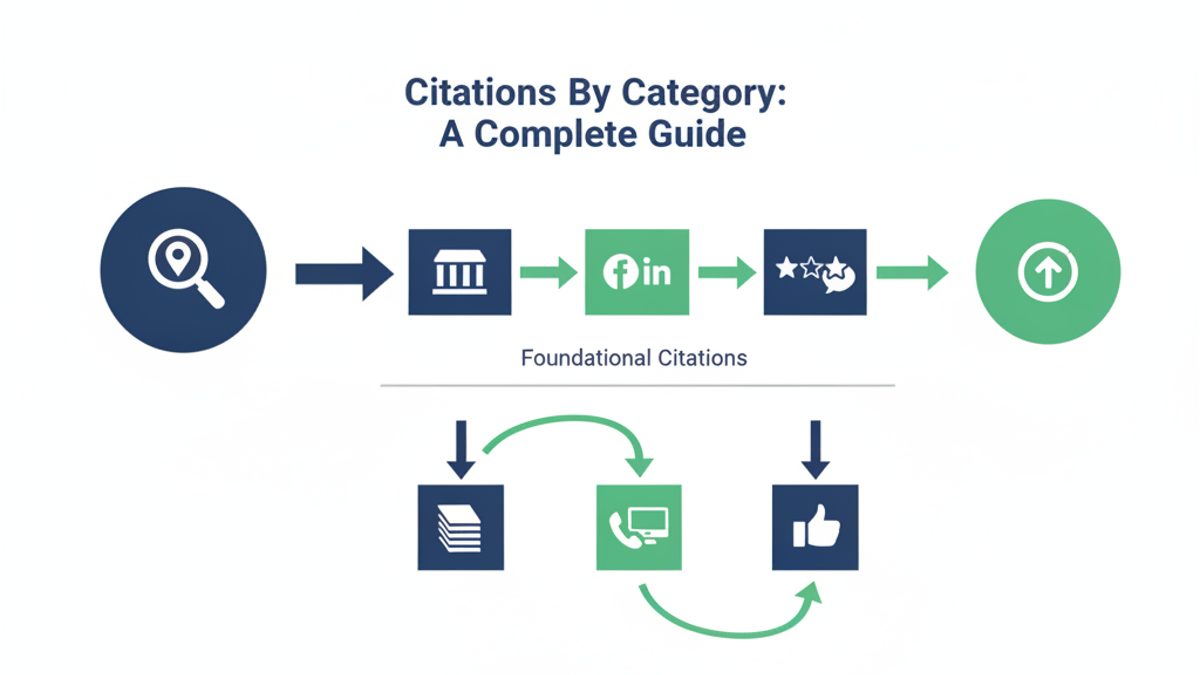
Citations by category are vital because they provide deep relevance signals to search engines, helping them understand exactly what your business does and for whom. These targeted listings enhance your authority within a specific niche, improving your Google Business Profile (GBP) visibility and local search rankings.
While general citations on platforms like Yelp or Yellow Pages are important, category-specific citations take your local SEO strategy to the next level. Imagine a local dental practice listed on a prominent dental association website versus just a general business directory. The former tells Google, "This business is specifically a dentist," reinforcing its categorization and expertise. This targeted approach helps Google confidently match your business with relevant user queries, especially for hyper-local searches, leading to more qualified leads and increased foot traffic. ProMapRanker's geo-grid scans often reveal how businesses with strong, relevant citation profiles perform better in specific service areas.
What Are the Different Types of Citations?
Citations are broadly categorized into structured, unstructured, and niche-specific types, each playing a distinct role in building your local SEO profile. Understanding these distinctions helps in strategically diversifying your citation portfolio for maximum impact.
Let's break down the primary types of citations you'll encounter in local SEO:
- Structured Citations: These are listings on established business directories where your NAP information is presented in a consistent, structured format. Examples include Google Business Profile, Yelp, Facebook, Yellow Pages, and industry-specific directories. They are often the first place search engines look to verify business information. Data aggregators like Infogroup, Neustar Localeze, and Factual (now Foursquare) collect and distribute this data to hundreds of online platforms.
- Unstructured Citations: These are mentions of your business that don't follow a strict format and can appear in various contexts. Examples include mentions in blog posts, online news articles, local event listings, social media posts (e.g., a local influencer mentioning your business), or forum discussions. While less formal, these citations still contribute to your business's online footprint and can signal relevance and authority, especially if they come from high-authority domains.
- Niche or Category-Specific Citations: These are citations on directories or websites that focus exclusively on a particular industry or profession. For instance, Avvo for lawyers, Healthgrades for doctors, or Houzz for home improvement businesses. These are arguably the most powerful types of citations for local SEO because they provide strong relevance signals to Google, affirming your business's specialization.
- Geo-Specific Citations: These citations come from websites that are highly relevant to a particular geographic area, such as a local chamber of commerce website, a city-specific business directory, or a local news portal. They reinforce your business's connection to its physical location, which is critical for local search rankings.
How Do Category-Specific Citations Boost Your Local Search Ranking?
Category-specific citations significantly boost local search rankings by validating your business's expertise and relevance within its industry to search engines. They act as strong trust signals, reinforcing your Google Business Profile categorization and improving your chances of appearing in the local pack for targeted queries.
When Google sees your business listed on multiple reputable directories specific to your industry, it gains confidence in your business's legitimacy and specialization. For instance, if you run an auto repair shop and are listed on directories like AutoMD, RepairPal, and AAA Approved Auto Repair, Google understands you are a verifiable and relevant entity in the automotive repair sector. This deep categorical relevance helps Google disambiguate your business from others with similar names but different services, ensuring you show up for the right searches. This is especially impactful when combined with strong GBP optimization and positive customer reviews, as tracked by tools like ProMapRanker's geo-grid scans which show your actual ranking performance across a localized grid.
A Complete List of Key Citation Categories and Examples
Building a robust citation profile means identifying and leveraging directories most relevant to your specific industry. Below is a comprehensive guide to key citation categories, offering examples of high-authority platforms for various business types. Remember, the goal is quality over quantity, focusing on directories that Google trusts and that are genuinely used by your target audience.
Here's a breakdown by common business categories:
| Business Category | Description & Why it Matters | Key Citation Examples |
|---|---|---|
| Home Services (Plumbing, HVAC, Electrical, Roofing) | These businesses rely heavily on local trust and immediate need. Niche directories help establish credibility and reach customers actively seeking services. | Angi (Angie's List), HomeAdvisor, Houzz, Thumbtack, Yelp, Porch, BuildZoom, specific trade association sites (e.g., PHCC for plumbers). |
| Legal Services (Lawyers, Attorneys) | Authority and specialization are paramount. Legal directories are often consulted by clients seeking specific legal expertise. | Avvo, FindLaw, Justia, Lawyers.com, Nolo, Martindale-Hubbell, State Bar Association directories. |
| Medical & Health (Doctors, Dentists, Clinics, Therapists) | Patient trust and verifiable credentials are crucial. These directories often include patient reviews and doctor profiles. | Healthgrades, Zocdoc, Vitals, WebMD, Doximity, Psychology Today, American Medical Association, local hospital directories. |
| Automotive (Repair Shops, Dealerships) | Customers often research repair shops or dealerships based on specific needs and reputation. | RepairPal, AutoMD, Carfax, Edmunds, Kelley Blue Book, AAA Approved Auto Repair, Yelp. |
| Restaurants & Food Service | Discovery and reviews drive customer decisions. Visibility on food-specific platforms is essential. | Yelp, TripAdvisor, OpenTable, Zomato, Grubhub, DoorDash, Uber Eats, local food blogs. |
| Retail (Boutiques, Specialty Stores) | Local discovery and product-specific searches are key. Online presence helps convert browsers into buyers. | Yelp, Google Shopping, Facebook Marketplace, local chamber of commerce, industry-specific retail associations. |
| Real Estate (Agents, Brokers) | Visibility and agent profiles are critical for client acquisition and trust. | Zillow, Realtor.com, Trulia, Homes.com, LoopNet (commercial), local MLS websites, National Association of Realtors. |
| Financial Services (Accountants, Advisors) | Trust, certifications, and specialization are highly valued. | Investopedia Advisor Directory, NAPFA, AICPA, Wealth Management, local chamber of commerce. |
| Hospitality (Hotels, B&Bs) | Booking platforms and review sites are primary sources of business. | TripAdvisor, Booking.com, Expedia, Hotels.com, Airbnb, local tourism boards. |
| Education & Childcare (Schools, Daycares, Tutors) | Parents heavily research these services based on reputation and specialization. | GreatSchools, Care.com, Niche.com, local school district directories, state licensing boards. |
Beyond these, always consider your local Chamber of Commerce, professional associations, and any hyper-local directories specific to your city or region. A good strategy is to start with the top 10-20 most relevant general and niche directories, ensuring NAP consistency across all of them.
How to Identify the Best Citation Sources for Your Business Category
Identifying the best citation sources involves a blend of competitive analysis, industry research, and leveraging specialized tools. The goal is to find platforms that carry weight with search engines and are genuinely used by your target audience when looking for services like yours.
- Analyze Your Competitors: Start by performing a competitor citation audit. Use tools to see where your top-ranking local competitors (especially those in the Google Map Pack) are listed. Many SEO tools offer this functionality, revealing common and niche directories they leverage. This provides a strong starting point for your own citation building.
- Industry-Specific Research: Brainstorm relevant industry associations, professional organizations, and trade publications. Most of these have member directories or business listings. For example, a restaurant should look for local culinary guides or food blogs. A quick Google search for "[your industry] directories" or "[your city] [your industry] association" can yield valuable results.
- Leverage Existing Lists: Consult established local SEO resources that publish lists of high-authority directories. While these often focus on general directories, they can sometimes include niche options or lead you to more specialized lists.
- Utilize ProMapRanker's GBP Audit: Our Google Business Profile audit tool helps you identify opportunities and ensures your foundational citation (your GBP) is perfectly optimized. While not a citation builder directly, a strong GBP often correlates with a healthy citation profile, and our tool can highlight areas where your online presence might be lacking compared to competitors.
- Check for Local Relevance: Don't forget hyper-local options like your city's Chamber of Commerce, local business improvement districts, or community online portals. These geo-specific citations are invaluable for local ranking signals.
Remember to prioritize directories with high domain authority, those that are actively managed, and those that allow you to include rich information beyond just NAP, such as photos, services, and business descriptions.
The ProMapRanker Approach: Auditing and Building Category Citations
At ProMapRanker, we understand that effective citation building is systematic and data-driven. Our approach integrates robust auditing with strategic implementation, ensuring your citations actively contribute to your local search performance.
Here's a step-by-step guide to how we recommend auditing and building category-specific citations:
-
Initial Citation Audit & Competitor Analysis:
- Begin by compiling a list of your existing citations using a tool or manual search. Note any inconsistencies in NAP data.
- Identify your top 3-5 local competitors using ProMapRanker's local rank tracker and geo-grid scans to see who ranks best for your target keywords.
- Use a citation audit tool (or manual checks) to discover where these high-ranking competitors have their citations. Pay close attention to niche directories they leverage.
-
Prioritize Citation Sources:
- Create a master list combining your existing citations, competitor citations, and new industry-specific directories you've identified.
- Prioritize these sources based on domain authority, relevance to your category, and whether they are actively used by your target audience. Focus on the most impactful 20-30 directories first.
-
Ensure NAP Consistency:
- This is critical. Before building new citations, correct any NAP inconsistencies on your existing listings. Your Name, Address, and Phone number must be identical across your Google Business Profile, website, and all citations. Even minor variations (e.g., "St." vs. "Street") can confuse search engines.
- Use the exact same business name as listed on your GBP.
-
Strategic Citation Building:
- Start submitting your business information to the prioritized list of directories.
- Beyond NAP, fill out every available field: website URL, business hours, services offered, description, categories, photos, and videos. The more complete your profile, the better.
- For niche directories, tailor your business description to highlight your specific expertise within that category.
-
Monitor and Maintain:
- Citations are not a one-time task. Periodically re-audit your citations to ensure NAP consistency remains intact and to identify new opportunities.
- Monitor for duplicate listings and suppress or merge them where possible, as duplicates can harm your SEO.
- Track your local rankings using ProMapRanker's geo-grid scans to see the impact of your efforts. Our heatmap visualizations make it easy to understand performance shifts.
ProMapRanker's tools, particularly our geo-grid rank tracking, provide the data insights needed to understand the real-world impact of your citation strategy. By seeing your Search Visibility (SoLV) and Average Rank Position (ARP) on a detailed local grid, you can directly correlate your citation efforts with improved local search performance.
Beyond Just Listing: Optimizing Your Citations for Maximum Impact
Simply listing your business on various directories is a good start, but true optimization goes further. To maximize the impact of your citations, you need to ensure they are rich, accurate, and aligned with modern SEO best practices.
- Complete & Rich Data: Don't just fill in NAP. Maximize every field available on a directory listing. Include detailed business descriptions, a complete list of services, high-quality photos, videos, operating hours, accepted payment methods, and links to your social media profiles. The more comprehensive and engaging your listing, the better it serves both users and search engines.
- Consistent Categorization: Ensure the business categories you select on directories align with your primary categories on your Google Business Profile. Inconsistencies can confuse Google about your core services.
- Schema Markup Implementation: While not directly part of a citation listing, implementing LocalBusiness schema markup on your website reinforces your NAP and other business details in a machine-readable format. This helps search engines understand your business comprehensively and can enhance how your business appears in search results.
- Review Management Integration: Many citation sites, especially niche directories, allow for customer reviews. Proactively manage these reviews, respond to feedback (both positive and negative), and encourage satisfied customers to leave reviews on these platforms. This not only builds trust with potential customers but also provides fresh, user-generated content that search engines value. Our guide on how to respond to Google reviews offers valuable insights applicable to other platforms too.
- Website Integration: Ensure your website clearly displays your NAP information, ideally in the footer or contact page, and that it matches your citations exactly. Consider embedding a Google Map to further solidify your location.
- Regular Audits: Periodically audit your citations (at least quarterly) to check for data drift, where information might have been altered or new duplicate listings created. Tools like ProMapRanker help you monitor overall local performance, prompting you to check your citation health if rankings drop.
Common Mistakes to Avoid When Building Citations
Even with the best intentions, businesses often make common errors when building citations that can undermine their local SEO efforts. Avoiding these pitfalls is crucial for a clean and effective citation profile.
- NAP Inconsistency: This is the cardinal sin of local SEO. Even slight variations (e.g., "Suite 100" vs. "Ste. 100", "Road" vs. "Rd.") across different listings can dilute trust signals and confuse search engines. Always maintain absolute consistency.
- Ignoring Niche Directories: Many businesses focus only on major aggregators (Yelp, Yellow Pages) and neglect the powerful, category-specific directories. These niche sites offer a far stronger relevance signal to Google.
- Spamming Directories: Submitting your business to hundreds of low-quality, irrelevant directories just for the sake of quantity is detrimental. It can be perceived as spamming and may even lead to penalties or de-indexing from some search engines. Focus on quality and relevance.
- Duplicate Listings: Creating multiple listings for the same business on the same directory, or allowing aggregators to create them, can split your authority and confuse search engines. Always claim and merge or suppress duplicates.
- Outdated Information: Failing to update your citations when your business changes its address, phone number, or even operating hours sends mixed signals. This can also lead to a poor user experience.
- Neglecting Google Business Profile: While not strictly a citation, your GBP is the most critical local listing. Neglecting its optimization, including categories, services, and regular updates, will severely limit the impact of all other citations. ProMapRanker offers a free GBP audit to help you get this foundational element right.
- Ignoring Review Management: Many citation sites are also review platforms. Ignoring customer reviews or failing to respond can damage your reputation and miss opportunities to engage with customers.
The Future of Citations: What’s Next for Local SEO?
The landscape of local SEO is constantly evolving, with artificial intelligence playing an increasingly dominant role. While the fundamental importance of citations remains, their strategic application and the way they are interpreted by search engines are becoming more sophisticated.
Google's AI, particularly algorithms like MUM and BERT, are becoming incredibly adept at understanding natural language and discerning true business relevance. This means generic, low-quality citations will continue to diminish in value, while high-quality, category-specific, and contextually rich citations will become even more impactful. The emphasis will be on E-E-A-T (Experience, Expertise, Authoritativeness, Trustworthiness) signals, where citations from reputable industry sources provide powerful evidence of expertise and authority.
Furthermore, as voice search and AI Overviews become more prevalent, the accuracy and completeness of your business information across all platforms will be paramount. AI systems will synthesize information from various sources to answer user queries, and consistent, robust citations ensure your business is accurately represented. ProMapRanker is already adapting to this future by offering AI rank tracking, allowing businesses to monitor their visibility not just in traditional search results but also within AI-generated summaries and responses. This ensures you're prepared for the next generation of local search, where precise and verified information from category-relevant sources will be key to outranking competitors.
Frequently Asked Questions
What are the 4 types of citations?
The four primary types of citations in local SEO are Structured Citations (on major directories like Yelp), Unstructured Citations (mentions on blogs or news sites), Niche/Category-Specific Citations (on industry-focused platforms like Healthgrades), and Geo-Specific Citations (on local chamber of commerce sites). Each type contributes uniquely to your business's online footprint and local search visibility.
What are examples of citations?
Examples of citations include your business listing on Google Business Profile, a profile on Yelp, a mention in a local news article, your practice listed on a medical directory like Zocdoc, or your restaurant featured on TripAdvisor. Essentially, any online mention of your Name, Address, and Phone number (NAP) constitutes a citation.
What are the three types of citations?
While often broken into four, citations can also be broadly categorized into three types: Structured (formal directory listings), Unstructured (mentions on blogs, news, or social media), and Niche/Geo-Specific (highly relevant listings within a particular industry or local area). This categorization emphasizes the formal, informal, and highly relevant aspects of citation building.
What is the category Normalized citation index?
The Category Normalized Citation Index is an academic metric used primarily in scientific research to compare the citation performance of scholarly articles or journals, normalized by their specific field or category. It is not a direct local SEO ranking factor or a common term used in local business citations, which focus on NAP consistency and relevance for search engine visibility.
See where you really rank - block by block
ProMapRanker scans Google Maps across a grid of your service area. Simple monthly plans from $19, white-label on every plan.
Start free