 ProMapRanker
2017 Local Search Ranking Factors: A Complete Guide

In 2017, local search ranking factors were primarily governed by Google's core algorithm principles of Relevance, Proximity, and Prominence. These three pillars determined how well a local business appeared in the coveted Google Local Pack and Maps results. Specific factors, as highlighted by the 2017 Whitespark Local Search Ranking Factors survey, emphasized Google My Business (now Google Business Profile) signals, link signals, and on-page signals as the most impactful. Understanding these foundational elements is crucial for comprehending the evolution of local SEO and for optimizing local visibility even today.
While the local search landscape has continuously evolved, the year 2017 marked a significant period where many foundational elements solidified their importance. Mobile search was surging, and Google's algorithms were increasingly sophisticated in delivering hyper-local results. For businesses and local SEO professionals, mastering the 2017 ranking factors meant laying a strong groundwork for sustained local visibility. This guide delves into those critical elements, offering a complete historical perspective and actionable insights that remain relevant to understanding local SEO's core.
What Were the Three Core Pillars of Local SEO in 2017?
In 2017, Google's local search algorithm primarily relied on three fundamental pillars: Relevance, Proximity, and Prominence. These interconnected factors determined whether a business listing would appear for a given local search query. Relevance matched the business to the search intent, Proximity measured its distance from the searcher, and Prominence assessed its overall authority and reputation.
These three pillars, often referred to as Google's "core local ranking factors," formed the bedrock of local SEO strategy in 2017 and continue to be central to how local search works. Businesses needed to demonstrate all three to rank competitively in the local pack and Google Maps. Neglecting any one of these areas could significantly hinder a business's local visibility, regardless of how strong it was in the other two.
Relevance: Matching Search Intent
Relevance in 2017 meant how well a local business matched the user's search query. This was primarily communicated to Google through specific fields within a business's Google My Business (GMB) profile, as well as keywords on its website.
- Google My Business Categories: Selecting the most accurate and specific GMB categories was paramount. For example, a "plumber" should list "Plumber" and potentially "Emergency plumber" or "Water heater repair service," but not unrelated categories.
- Keywords in Business Title: While not a best practice for branding, including a relevant keyword in the GMB business title (e.g., "Shihab's Plumbing & Drain Cleaning") was a strong signal in 2017, though Google has since cracked down on keyword stuffing here.
- Website Content: Having service pages and location pages that clearly described offerings and included relevant keywords helped Google understand the business's scope.
Ensuring your business communicated its offerings clearly and accurately to Google was the first step toward achieving relevance. This involved meticulous attention to detail within your Google My Business profile and on your website.
Proximity: Distance to the Searcher
Proximity refers to how close a business's physical location is to the searcher or the location specified in the search query (e.g., "plumber near me," "coffee shop in downtown Austin"). In 2017, proximity was a powerful, often decisive, ranking factor.
- Geo-location: Google used the searcher's device location to determine the "center" of the search. Businesses physically closer to this point generally ranked higher.
- Geographic Service Areas: For service-area businesses without a physical storefront, defining service areas within GMB was crucial, though their proximity calculation was often based on the centroid of their listed service region.
- Geo-grid Visualization: Tools like ProMapRanker, even then, were conceptualizing how a business ranked across a geo-grid of multiple points, illustrating how proximity created distinct ranking patterns. A business might be #1 in its immediate vicinity but drop significantly a few miles away.
The closer your business was to the searcher, the better its chances of ranking. This made physical location a critical strategic asset in local SEO. Understanding your local search heatmap was key to identifying areas where your proximity was an advantage or disadvantage.
Prominence: Reputation and Authority
Prominence in 2017 encompassed how well-known and authoritative a business was, both online and offline. It was an aggregate of various signals that indicated a business's standing and trustworthiness.
- Review Signals: The quantity, quality, and velocity of customer reviews on Google and other platforms were significant indicators of prominence. Businesses with many positive reviews were seen as more prominent.
- Link Signals: The number and quality of inbound links (backlinks) from other reputable websites to a business's website played a major role. These links acted as "votes of confidence."
- Citation Signals: Consistent Name, Address, Phone (NAP) information across numerous online directories (citations) contributed to prominence by validating the business's existence and details.
- Organic Web Ranking: A business's general organic ranking ability (how well its website ranked for non-local keywords) also factored into its local prominence.
Building prominence was a continuous effort involving active reputation management, strategic link building, and consistent online presence. It demonstrated to Google that a business was a reputable and trusted entity within its community.
What Were the Top Specific Local Ranking Factors in 2017?
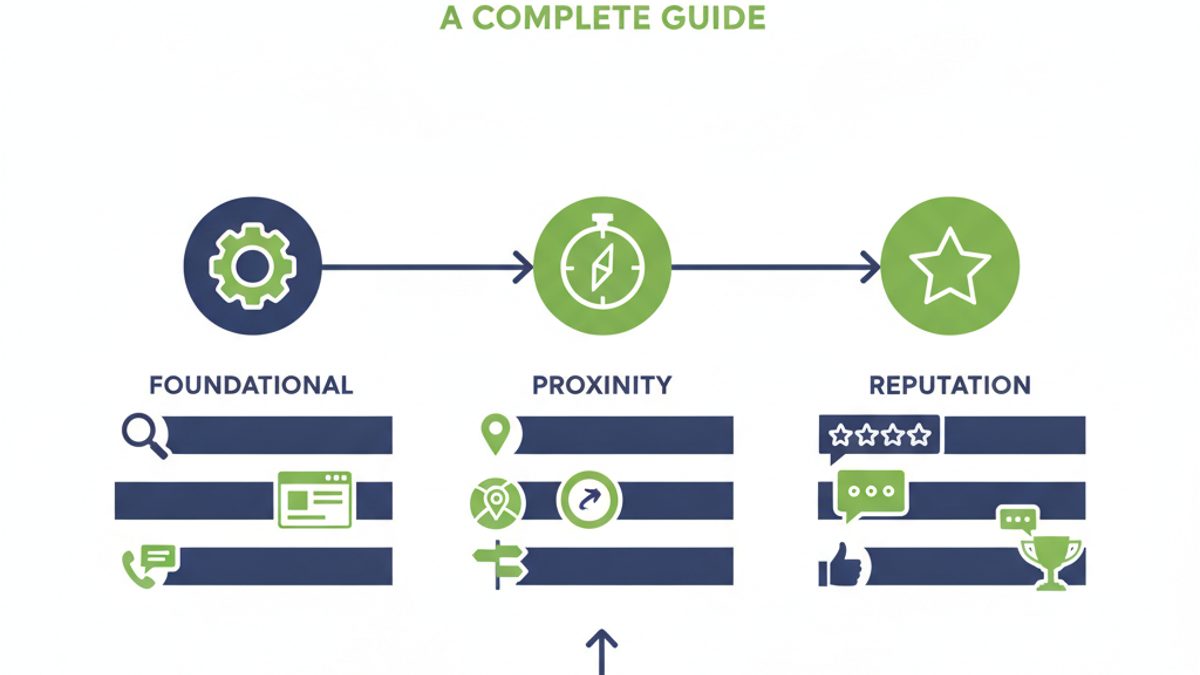
According to the widely respected 2017 Whitespark Local Search Ranking Factors survey, Google My Business (GMB) signals were the most influential factor, accounting for approximately 25% of local pack rankings. This was followed by link signals (17%), on-page signals (14%), review signals (13%), and citation signals (11%). These categories underscored the importance of a comprehensive local SEO strategy.
The Whitespark study, which surveyed dozens of local SEO experts, provided a clear hierarchy of factors. While the percentages were estimates, they guided local SEO professionals on where to focus their efforts for maximum impact. Understanding these specific categories helps us grasp the nuances of local ranking in 2017.
Google My Business (GBP) Signals: The Most Impactful Category
In 2017, optimizing your Google My Business profile was undeniably the single most critical task for local businesses. This category alone held the largest sway over local pack and Maps rankings. The data from Whitespark's 2017 report indicated GMB signals were responsible for roughly 25% of ranking influence. Whitespark 2017 Local Search Ranking Factors Report.
- GMB Category Selection: Choosing the most accurate and specific categories was paramount for relevance. Businesses often selected 2-3 primary categories.
- Keywords in Business Title: While a gray area, including the primary service or location keyword in the business name (e.g., "Joe's Auto Repair & Towing") was highly effective.
- Completeness and Accuracy: Fully completing all GMB profile sections, including business hours, photos, services, and description, was crucial. Incomplete profiles sent negative signals.
- Verification: A verified GMB listing was a non-negotiable prerequisite for appearing in local results.
- Photos and Posts: Uploading high-quality photos and using the GMB Posts feature (relatively new in 2017) helped engage customers and signal activity.
A well-optimized GMB profile provided Google with accurate, comprehensive data about a business, directly feeding into its understanding of Relevance and Prominence. ProMapRanker's Google Business Profile rank tracker helps monitor the impact of these optimizations on your local search visibility.
Link Signals: The Power of External Validation
Link signals, accounting for approximately 17% of local ranking influence in 2017, referred to the quality and quantity of inbound links pointing to a business's website. These links acted as powerful "votes of confidence" from other websites, signaling authority and trustworthiness to Google.
- Linking Domain Authority: Links from high-authority, relevant websites (e.g., local news sites, reputable industry blogs) carried significantly more weight than those from low-quality or spammy sites.
- Quantity of Inbound Links: While quality was paramount, a greater number of unique linking domains generally correlated with higher rankings.
- Anchor Text: The text used in the hyperlink (anchor text) provided context about the linked page. Using relevant keywords in anchor text (e.g., "plumber in Austin") was beneficial.
- Local Links: Links from local businesses, chambers of commerce, and community organizations were particularly valuable for local SEO.
A strategic local link building strategy was essential for accumulating these valuable signals, enhancing a business's overall prominence and organic authority, which in turn boosted its local rankings.
On-Page Signals: Website Optimization
On-page signals, contributing around 14% to local rankings in 2017, related to the content and structure of a business's own website. This ensured the website itself was optimized for both users and search engines.
- NAP Consistency: Having accurate and consistent Name, Address, and Phone number (NAP) details prominently displayed on every page of the website (especially in the footer) was critical. This reinforced the GMB data.
- Keywords in Title Tags: Including relevant keywords and the target location in page title tags (e.g., "<title>Best Plumber in Austin, TX - Joe's Plumbing</title>") was a strong relevance signal.
- Content Relevance: Pages dedicated to specific services or locations, rich with relevant keywords and helpful information, demonstrated expertise and relevance.
- Schema Markup: Implementing local business schema markup (schema.org/LocalBusiness) helped search engines better understand the business's details, services, and location.
- Mobile-Friendliness: With Google's mobile-first indexing well underway, a responsive and fast-loading mobile website was essential for user experience and rankings. Google increasingly prioritized sites that performed well on mobile devices.
Optimizing your website to clearly communicate your services, location, and contact information, alongside technical SEO elements like schema, directly contributed to both relevance and prominence.
Review Signals: The Voice of the Customer
Customer reviews were a powerful force in 2017, accounting for approximately 13% of local ranking factors. They contributed significantly to a business's prominence and trustworthiness. Google explicitly stated that reviews play a role in local rankings, and the quantity, quality, and velocity of reviews were all considered.
- Quantity: Businesses with a higher number of reviews generally outranked competitors with fewer.
- Quality/Sentiment: The average star rating and the sentiment expressed in reviews (e.g., positive vs. negative language) were important.
- Velocity: The rate at which new reviews were acquired signaled an active and current business. A steady stream of recent reviews was beneficial.
- Diversity: Reviews across multiple platforms (Google, Yelp, Facebook, industry-specific sites) added to a business's overall online reputation.
- Review Responses: Actively responding to reviews, both positive and negative, showed engagement and customer service, which Google valued.
Encouraging satisfied customers to leave reviews and actively managing your online reputation was a key local SEO tactic. Learn more about how to leverage reviews in our article on how Google reviews impact SEO.
Citation Signals: Consistency is Key
Citation signals, representing about 11% of local ranking factors in 2017, revolved around the consistency and accuracy of a business's Name, Address, and Phone number (NAP) across various online directories and platforms. These citations validated a business's existence and details for Google.
- NAP Consistency: Exact match NAP details across major data aggregators (e.g., Factual, Infogroup, Acxiom, Localeze) and local directories (Yelp, Yellow Pages, industry-specific sites) were crucial. Any discrepancies could confuse Google and dilute trust.
- Quantity of Citations: A higher number of quality citations generally boosted prominence. Aiming for 20+ relevant directories was a common strategy.
- Structured Citations: Listings on well-known, authoritative directories (e.g., Yelp, Facebook, industry-specific sites) carried more weight.
Auditing and cleaning up existing citations, then building new ones on relevant platforms, was a fundamental step in local citation building. This process ensured Google had consistent data points to confirm a business's identity and location, directly impacting its prominence. More on this in our guide to NAP consistency.
Behavioral Signals: User Engagement
Behavioral signals, while harder to directly influence, were still considered impactful in 2017, contributing approximately 10% to local rankings. These signals reflected how users interacted with a business's listing and website.
- Click-Through Rate (CTR): A higher CTR from local search results to a GMB listing or website indicated relevance and appeal.
- Mobile Clicks to Call/Directions: Users interacting with the "Call" or "Directions" buttons on a GMB listing signaled strong user intent and engagement.
- Dwell Time/Bounce Rate: Users spending more time on a business's website and not immediately bouncing back to search results indicated valuable content and a good user experience.
Improving the quality of your GMB profile (with compelling photos, accurate descriptions) and website user experience could indirectly improve these behavioral signals. A fast, mobile-friendly website was key to reducing bounce rates.
Personalization: The Individual Search Experience
While not a factor businesses could directly optimize for, personalization was a significant element of local search in 2017. It accounted for approximately 7% of ranking influence and meant that search results varied based on individual user factors.
- User Location: As discussed with Proximity, the searcher's physical location heavily influenced the results.
- Search History: A user's past search queries and clicked results could subtly influence future local rankings, favoring businesses they had previously engaged with.
- Device Type: Search results could vary slightly between desktop and mobile, with mobile often prioritizing immediate proximity and mobile-friendly websites.
Understanding personalization meant acknowledging that not every user saw the same search results, even for identical queries. This highlighted the importance of a holistic strategy that aimed to rank well across a diverse set of user contexts, which is precisely what geo-grid local rank tracking helps to visualize.
Table: 2017 Local Ranking Factors at a Glance
This table summarizes the key local search ranking factors and their estimated influence in 2017, based on expert consensus from the Whitespark study:
| Ranking Factor Category | Estimated Influence (2017) | Key Components | ProMapRanker Relevance |
|---|---|---|---|
| Google My Business Signals | ~25% | Categories, keywords in title, completeness, photos, verification | GBP Audit, GBP Rank Tracker |
| Link Signals | ~17% | Domain authority, quantity of links, anchor text, local links | Organic visibility correlation, competitive analysis |
| On-Page Signals | ~14% | NAP, title tags, content, schema, mobile-friendliness | Website health, Keyword Tracking |
| Review Signals | ~13% | Quantity, velocity, sentiment, diversity, responses | Reputation management insights, Review Impact Tracking |
| Citation Signals | ~11% | NAP consistency, quantity, quality of directories | NAP Consistency Checks, Citation Audits |
| Behavioral Signals | ~10% | CTR, mobile actions, dwell time, bounce rate | Indirect via ranking visibility, UX insights |
| Personalization | ~7% | User location, search history, device type | Geo-Grid Tracking (visualizes location impact) |
2017 Local SEO Action Plan: A Checklist
To effectively rank in local search in 2017, a comprehensive strategy touching all major ranking factors was required. Here's a practical checklist based on the insights from that era:
- Optimize Your Google My Business Profile:
- Claim and verify your listing.
- Select accurate primary and secondary categories (e.g., "Plumber," "Emergency plumber").
- Ensure Name, Address, Phone (NAP) are exactly consistent with your website and other online listings.
- Write a compelling business description with keywords.
- Add high-quality photos (interior, exterior, team, products/services).
- Maintain accurate business hours, including holidays.
- Use GMB Posts regularly for announcements, offers, or events.
- Enhance Your Website for Local Search:
- Ensure NAP is visible and consistent across all website pages, ideally in the footer.
- Create dedicated service pages and location-specific landing pages for each area you serve.
- Include target keywords in your page titles and meta descriptions (e.g., "Plumber in Dallas, TX").
- Integrate local business schema markup (`schema.org/LocalBusiness`) to your site.
- Ensure your website is mobile-friendly and loads quickly (Core Web Vitals were emerging concepts, but page speed was always important).
- Build Local Citations:
- Audit existing citations for NAP consistency across major aggregators and local directories.
- Correct any inconsistencies or outdated information.
- Build new citations on relevant industry-specific directories and local listing sites (aim for 20+ quality listings).
- Cultivate Customer Reviews:
- Actively encourage satisfied customers to leave reviews on your Google My Business profile.
- Respond to all reviews, positive and negative, professionally and promptly.
- Monitor review velocity and average star ratings.
- Strengthen Your Backlink Profile:
- Seek out quality backlinks from local businesses, chambers of commerce, industry associations, and local news sites.
- Focus on earning links through valuable content, sponsorships, or community involvement.
- Ensure anchor text is natural and relevant.
- Monitor and Adapt:
- Track your local rankings across a geo-grid to understand your proximity-based performance. ProMapRanker provides detailed geo-grid scans to visualize your exact position across a target area.
- Regularly check your Google My Business Insights for performance metrics.
- Stay informed about algorithm updates and adjust your strategy accordingly.
Implementing this checklist would have provided a robust local SEO foundation in 2017, and many of these principles remain vital today. Tools like ProMapRanker help you execute and measure these strategies effectively, offering geo-grid scans that reveal your exact local footprint and Google Business Profile audits to ensure optimal setup.
Frequently asked questions
How important was Google My Business in 2017?
Google My Business (GMB), now Google Business Profile (GBP), was the single most important local ranking factor in 2017. It accounted for approximately 25% of local pack ranking influence, according to Whitespark's 2017 study. A complete, accurate, and verified GMB profile with relevant categories and keywords was absolutely essential for local visibility.
Did reviews affect local rankings in 2017?
Yes, customer reviews significantly impacted local rankings in 2017, contributing about 13% to ranking factors. Google considered the quantity, quality (star rating), and velocity (how recent and frequent) of reviews. Businesses with more positive reviews generally enjoyed higher prominence and better local search performance.
What role did proximity play in 2017 local search?
Proximity was one of Google's three core local ranking pillars in 2017, alongside Relevance and Prominence. It referred to the physical distance between the searcher's location (or queried location) and the business's address. Businesses physically closer to the searcher's location almost always ranked higher, making location a critical factor.
Were backlinks still important for local SEO in 2017?
Absolutely. Backlinks, or link signals, were the second most influential local ranking factor in 2017, contributing around 17% of ranking influence. High-quality, relevant inbound links from authoritative websites signaled prominence and trust to Google, directly boosting both a website's organic SEO and its local search performance.
What is NAP consistency and why was it crucial in 2017?
NAP consistency refers to having your business's Name, Address, and Phone number exactly consistent across all online platforms, including your website, Google My Business,
See where you really rank - block by block
ProMapRanker scans Google Maps across a grid of your service area. Simple monthly plans from $19, white-label on every plan.
Start freeKeep reading
 check business listings consistency
How to Check Business Listings Consistency Across the Web
Learn how to check your business listings consistency across directories and what to do about errors.
Read → local pack ranking factors
Local Pack Ranking Factors: What Drives the Top Three Spots
The local pack ranking factors that determine which three businesses Google features and why.
Read → how to respond to google reviews
How to Respond to Google Reviews (Good and Bad) Like a Pro
Templates and tactics for responding to positive and negative Google reviews to protect your reputation.
Read →