 ProMapRanker
Local Reputation Management: A Complete Guide

Local reputation management is the strategic process of monitoring, influencing, and enhancing how a local business is perceived online across various platforms, including review sites, social media, and local directories. It directly impacts customer trust, purchasing decisions, and a business's visibility in local search results and the Google Map Pack. Effective local reputation management involves actively soliciting positive reviews, promptly responding to all feedback, ensuring consistent business information (NAP - Name, Address, Phone), and maintaining a positive online presence to attract and retain local customers.
What is Local Reputation Management and Why Does it Matter for Local Businesses?
Local reputation management is the comprehensive effort to shape and maintain a positive public image for a business operating within a specific geographic area. It's crucial because a strong local reputation directly translates into increased customer trust, higher conversion rates, and improved local search engine rankings, ultimately driving more foot traffic and sales.
For any local business, whether a neighborhood cafe, a plumber, or a dental clinic, your online reputation is often the first impression a potential customer gets. Studies consistently show that consumers rely heavily on online reviews and local search results to make purchasing decisions. For example, a business with a 4.5-star rating and hundreds of recent reviews will almost always outperform a competitor with a 3-star rating and sparse feedback, even if their services are comparable.
A positive local reputation also significantly influences your Google Business Profile (GBP) optimization and overall local SEO. Google and other search engines factor in review quantity, quality, recency, and response rates when determining local search rankings. A well-managed reputation signals to search engines that your business is trustworthy, active, and customer-focused, leading to better visibility in the coveted Map Pack and local organic results. Ignoring your online reputation, conversely, can lead to negative reviews dominating search results, deterring potential customers and damaging your brand's credibility.
What Are the Key Pillars of Effective Local Reputation Management?
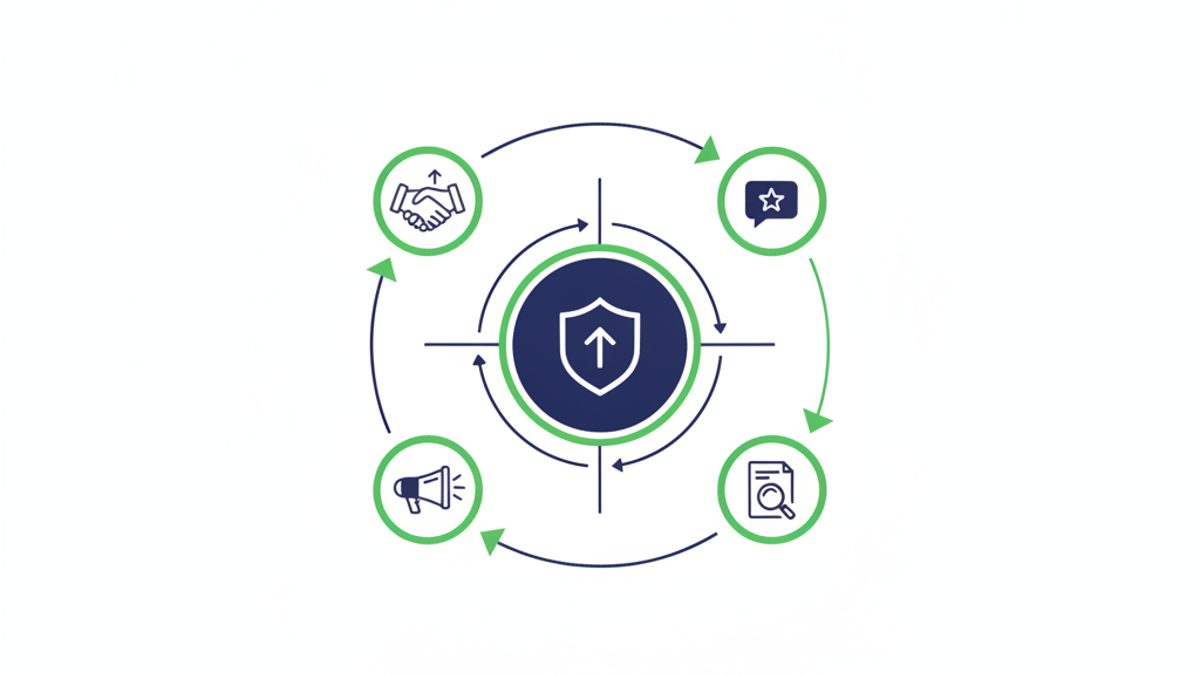
Effective local reputation management rests on several interconnected strategies, primarily focusing on managing online reviews, ensuring consistent local listings, engaging on social media, and monitoring broader online mentions. These pillars work in concert to build and maintain a strong, positive online presence that attracts and retains local customers.
- Online Reviews: This is arguably the most critical component. It involves actively soliciting feedback from satisfied customers, monitoring reviews across platforms like Google, Yelp, Facebook, and industry-specific sites, and responding promptly and professionally to all feedback, both positive and negative.
- Local Listings and Citations: Maintaining accurate and consistent Name, Address, and Phone (NAP) information across all online directories and business listings (e.g., Google Business Profile, Apple Maps, Yellow Pages, industry-specific sites) is fundamental. Inconsistencies can confuse customers and harm your local search rankings.
- Social Media Engagement: Actively participating in local conversations on platforms like Facebook, Instagram, and Nextdoor, responding to comments and messages, and addressing any public feedback or complaints. Social media is a direct channel for community interaction and reputation building.
- Local PR and Media Mentions: Monitoring local news sites, blogs, and forums for mentions of your business. Positive mentions can be amplified, while negative ones can be addressed proactively.
- Website and Content: Ensuring your own website reflects a positive image, featuring testimonials, case studies, and clear contact information. Your website should be a hub that reinforces your strong reputation.
How Do Online Reviews Impact Local Search Rankings and Customer Decisions?
Online reviews are a critical ranking factor for local SEO and profoundly influence customer decisions, acting as social proof that validates a business's credibility and service quality. Google's local search algorithm heavily weighs the quantity, quality, recency, and sentiment of reviews when determining Map Pack and local organic rankings, directly impacting your visibility.
From a customer's perspective, reviews are often the deciding factor. According to a 2023 BrightLocal study, 79% of consumers say they trust online reviews as much as personal recommendations. They look for businesses with a high average star rating (ideally 4.0 stars or higher), a significant number of reviews (e.g., 50+ reviews for a small business, 200+ for a larger one), and recent feedback (within the last 3-6 months). The content of reviews also matters; positive sentiment, specific details about customer experiences, and mentions of key services or products can sway a potential customer. Conversely, a pattern of negative reviews, especially those highlighting poor customer service or product defects, can quickly deter new business.
Google explicitly states that reviews are a key factor in how highly a local business ranks. Factors like keyword mentions in reviews, review velocity (how often new reviews are generated), and the business's responsiveness to reviews all contribute to a positive signal for search engines. ProMapRanker's geo-grid tracking can show you how your Google reviews help SEO by correlating review growth with improvements in your local rankings across a specific service area.
Developing a Proactive Local Review Generation Strategy
A proactive local review generation strategy systematically encourages satisfied customers to share their positive experiences, ensuring a steady stream of fresh, authentic feedback. This approach helps maintain a strong average star rating, improves local search visibility, and provides valuable social proof for potential new customers.
Here's a step-by-step checklist to implement an effective review generation strategy:
- Identify the Right Moment: Ask for a review when the customer is happiest, typically immediately after a successful service completion, a positive interaction, or a great purchase. For a plumber, this might be after a successful repair; for a restaurant, after a delicious meal.
- Make it Easy and Direct: Provide a direct link to your Google Business Profile review page. Avoid making customers search for it. You can create a short, memorable URL or use a QR code. Other important review sites include Yelp, Facebook, and industry-specific platforms relevant to your niche.
- Train Your Staff: Empower your front-line employees to politely ask for reviews. Script a simple, natural way for them to make the request, ensuring they understand the importance of reviews for the business.
- Utilize Digital Channels:
- Email: Send a follow-up email after a transaction or service, thanking the customer and including a direct review link.
- SMS: For businesses with customer phone numbers, a quick SMS with a review link can be highly effective due to high open rates.
- Website: Feature a "Review Us" section on your website, linking directly to your preferred review platforms.
- In-app prompts: If you have a mobile app, incorporate review request prompts at key satisfaction points.
- Physical Reminders: Use subtle in-store signage, table tents, or business cards with QR codes linking to your review pages. Ensure these are tastefully designed and not overly pushy.
- Automate the Process (Responsibly): Integrate review requests into your CRM or point-of-sale system to automate email or SMS outreach after a transaction. Tools like ProMapRanker can help monitor and track review growth, allowing you to see the impact of your efforts on local rankings.
- Never Incentivize or Filter: Google's policies strictly prohibit offering incentives (discounts, freebies) for reviews. Also, do not filter out negative reviews or only ask happy customers. The goal is authentic feedback from all customers.
The Art of Responding to Local Business Reviews (Good and Bad)
Responding to reviews, whether positive or negative, is a critical component of local reputation management that demonstrates your business's engagement, customer focus, and professionalism. A well-crafted response can reinforce positive sentiment, mitigate negative experiences, and even turn a detractor into a loyal customer, all while signaling to search engines that you are an active and responsive business.
Responding to Positive Reviews:
When a customer leaves a glowing review, it's an opportunity to solidify their loyalty and showcase your appreciation.
- Acknowledge and Thank: Start by genuinely thanking the customer for their kind words and their business.
- Personalize: Mention something specific from their review if possible, showing you truly read it. For example, "We're so glad you enjoyed our <specific dish>!"
- Reinforce Your Brand: Briefly reiterate a key aspect of your business or service that they praised.
- Invite Them Back: Encourage repeat business, e.g., "We look forward to seeing you again soon!"
- Be Timely: Aim to respond within 24-48 hours.
Responding to Negative Reviews:
Negative reviews can be challenging, but they offer a chance to demonstrate excellent customer service and turn a potentially damaging situation into a positive one.
- Respond Promptly: The faster you respond (ideally within 24 hours), the better. It shows you care.
- Acknowledge and Empathize: Start by acknowledging their experience and expressing regret. "I'm truly sorry to hear about your experience."
- Apologize (if appropriate): If your business made a mistake, apologize sincerely.
- Offer a Solution (Offline): Do not debate or make excuses in public. Offer to take the conversation offline to resolve the issue directly. Provide a specific contact method (e.g., "Please call me directly at [phone number] so we can discuss this further," or "Email our customer service at [email address]").
- Be Professional and Calm: Never get defensive or emotional. Maintain a polite, respectful tone.
- Learn and Improve: Use negative feedback as a valuable insight to improve your services or products. If multiple reviews highlight the same issue, it's a clear signal for operational changes.
Google Business Profile guidelines emphasize the importance of responding to all reviews. Neglecting reviews can make your business appear indifferent, while consistent, thoughtful responses build trust and a stronger online reputation.
Beyond Reviews: Managing Local Listings and Citations
While reviews are paramount, managing local listings and citations is equally critical for local reputation management and SEO. Consistent, accurate business information across diverse online platforms builds trust with both potential customers and search engines, ensuring your business is discoverable and credible.
A "citation" refers to any online mention of your business's Name, Address, and Phone number (NAP), even without a direct link to your website. These citations appear on various platforms, including:
- Major Data Aggregators: Factual, Infogroup, Acxiom, Neustar Localeze.
- General Business Directories: Yelp, Yellow Pages, Facebook, Apple Maps, Bing Places, TripAdvisor, Foursquare.
- Industry-Specific Directories: Healthgrades for doctors, Avvo for lawyers, HomeAdvisor for contractors, OpenTable for restaurants.
- Local Chamber of Commerce and Business Associations: Often provide high-authority local citations.
The Importance of NAP Consistency: Inconsistent NAP information is a common issue that can severely damage your local SEO. If your business name, address, or phone number varies across different listings, search engines may struggle to confidently identify your business, leading to lower rankings and reduced visibility. Customers can also be confused, leading to frustration and lost business. ProMapRanker helps you track where your business ranks across various local searches, and often, citation inconsistency is a root cause of poor performance.
Schema Markup: Beyond manual listings, implementing Schema.org markup for LocalBusiness on your website is crucial. This structured data explicitly tells search engines your business's name, address, phone, hours, and other key details, reinforcing your NAP consistency and improving how your business information is displayed in search results.
Regularly auditing your citations (e.g., every 6-12 months) and correcting any discrepancies is an ongoing task. Tools can help automate this, but manual verification of critical listings is always recommended.
Leveraging Social Media for Local Reputation Building
Social media platforms are powerful tools for local reputation building, extending beyond simple brand promotion to foster community engagement and direct customer interaction. By actively participating in local conversations, businesses can enhance their visibility, demonstrate responsiveness, and cultivate a positive image within their geographic area.
Here’s how to leverage social media effectively:
- Local Group Engagement: Join and actively participate in local Facebook groups, Nextdoor communities, and other neighborhood-specific online forums. Share useful tips, answer questions, and offer genuine value without constant self-promotion. This positions your business as a helpful community member.
- Monitor Mentions and Tags: Use social listening tools or native platform notifications to track mentions of your business name, relevant keywords, and hashtags. Respond promptly to direct messages, comments, and tags, whether positive or negative.
- Showcase Local Involvement: Share photos and updates about your participation in local events, sponsorships of local teams, or charitable activities. This demonstrates your commitment to the community.
- Run Localized Campaigns: Create social media campaigns that target specific local demographics or promote local-only offers. Use geo-targeting features to ensure your message reaches the right audience.
- Encourage User-Generated Content: Ask customers to tag your business in their posts or use a specific hashtag when sharing their experiences. Reshare positive customer content to amplify their message and build social proof.
- Address Feedback Publicly and Privately: For minor issues, a public response acknowledging the concern and offering to take it offline can be effective. For more sensitive matters, respond privately to resolve the issue directly.
Consistent, authentic engagement on social media helps build a loyal local following and provides another avenue for managing perceptions and quickly addressing any reputation challenges.
What Tools Are Essential for Local Reputation Management?
Effective local reputation management relies on a suite of tools that automate monitoring, streamline review generation, and provide actionable insights. These tools help businesses stay on top of their online presence without constant manual checks.
Here are the essential categories of tools:
- Local Rank Trackers with Geo-Grids:
- ProMapRanker: As the founder of ProMapRanker, I can confidently say this is indispensable. Our geo-grid rank tracking allows you to monitor your Google Map Pack and local organic rankings from multiple points across your service area, typically a 5x5 or 7x7 grid at 1, 3, or 5-mile increments. This reveals your true local visibility, showing where you dominate and where you need to improve. ProMapRanker also offers a robust GBP audit to identify optimization opportunities directly impacting your reputation and visibility, alongside AI ranking insights like SoLV (Share of Local Voice) and ARP (Average Rank Position) to measure your competitive landscape.
- Why it's essential: Generic rank trackers only show one central point. Geo-grids highlight your actual reach and pinpoint areas needing reputation or SEO focus. Learn more about how to track maps and AI rankings on one grid.
- Review Management Platforms:
- These tools help you solicit reviews, centralize monitoring from various platforms (Google, Yelp, Facebook, etc.), and manage responses. They often integrate with your CRM or POS system to automate review requests.
- Benefit: Streamlines the entire review lifecycle, ensuring no feedback goes unnoticed.
- Local Listing Management Tools:
- Services that help you create, update, and maintain consistent NAP information across hundreds of online directories. They can also suppress duplicate listings.
- Benefit: Ensures accuracy and consistency, preventing common local SEO issues.
- Social Listening Tools:
- Monitor social media for mentions of your brand, keywords, and industry trends. Some tools offer sentiment analysis.
- Benefit: Helps you quickly identify and respond to brand mentions and public feedback.
- Website Analytics (Google Analytics 4):
- While not strictly a reputation tool, GA4 helps track traffic from local searches, engagement on reputation-related pages (e.g., testimonials), and overall user behavior, providing insights into the impact of your reputation efforts.
- Benefit: Measures the tangible impact of your online reputation on website visitors.
Comparison: Manual vs. Automated Reputation Management Tasks
| Task Type | Manual Approach | Automated/Tool-Assisted Approach | ProMapRanker's Role |
|---|---|---|---|
| Review Monitoring | Checking each review site daily/weekly. | Aggregates reviews from multiple platforms into one dashboard; sends alerts. | Not primary, but provides context of review impact on ranking. |
| Review Generation | Asking customers individually; sending manual links. | Automated email/SMS requests post-transaction; direct link generation. | Tracks ranking improvements as review count/quality grows. |
| NAP Consistency Check | Manually searching for your business on dozens of directories. | Scans hundreds of directories for inconsistencies; suggests corrections. | Shows how consistency impacts geo-grid rankings. |
| Local Rank Tracking | One-off Google searches from a single location. | Geo-grid scans from multiple points, daily/weekly updates; historical data. | Core functionality: daily geo-grid scans, AI rank insights (SoLV, ARP), GBP audit. |
| Competitive Analysis | Manual competitor searches, guessing their strategy. | Automated competitive rank tracking, review comparisons, GBP insights. | Directly compares your local rankings and GBP performance against competitors on a grid. |
How Does Local Reputation Management Intersect with Local SEO?
Local reputation management is not merely a complementary activity to local SEO; it is an integral and increasingly dominant factor in achieving high local search rankings. Google's algorithm prioritizes businesses that demonstrate trustworthiness, authority, and relevance, all of which are heavily influenced by a strong online reputation. The two disciplines are deeply intertwined, with improvements in one directly bolstering the other.
Here's how they intersect:
- Direct Ranking Factor: Google explicitly states that reviews are a key factor in local search ranking. The quantity of reviews, average star rating, recency, and how a business responds to reviews all send direct signals to Google about its quality and reliability. Businesses with more positive, recent reviews tend to rank higher in the Map Pack and local organic results.
- Click-Through Rate (CTR): A strong reputation, characterized by high star ratings and positive sentiment, significantly increases the likelihood of potential customers clicking on your Google Business Profile or website link in search results. Higher CTR is a positive engagement signal for search engines, indicating relevance and user satisfaction.
- Engagement Signals: Active engagement with reviews and social media shows Google that your business is alive, attentive, and customer-focused. This engagement contributes to overall local search authority.
- Keyword Relevance: Customers often use keywords related to services or products in their reviews. These user-generated keywords can indirectly help your business rank for those terms, especially if Google's Natural Language Processing (NLP) picks up on recurring themes.
- Local Pack Visibility: The Google Map Pack (the top 3 local business listings) is highly competitive. Businesses with superior local reputation management often secure these coveted spots because their strong review profiles and consistent NAP information meet Google's quality criteria. ProMapRanker's geo-grids are designed to specifically track your performance in the Map Pack SEO.
- Brand Authority and Trust: A stellar online reputation builds brand authority. When Google perceives your business as authoritative and trusted by local consumers, it's more likely to feature your listing prominently. This also extends to external links; a reputable business is more likely to earn high-quality local backlinks.
Essentially, robust local reputation management feeds into almost every aspect of local SEO, making it indispensable for any business aiming to dominate its local market. Neglecting one means undermining the other.
Common Mistakes to Avoid in Local Reputation Management
While the benefits of local reputation management are clear, many businesses inadvertently make mistakes that can hinder their efforts or even damage their online standing. Avoiding these pitfalls is as crucial as implementing proactive strategies.
- Ignoring Reviews Entirely: The most significant mistake is failing to monitor or respond to reviews. This makes your business appear disengaged, uncaring, and can lead to a build-up of unaddressed negative feedback.
- Inconsistent NAP Information: Having different names, addresses, or phone numbers listed across various directories confuses both customers and search engines, severely impacting local SEO and trust.
- Slow or Defensive Responses: Delaying responses to reviews (especially negative ones) or reacting defensively can escalate a bad situation. Customers expect timely and empathetic engagement.
- Buying or Faking Reviews: This practice is unethical, violates platform terms of service, and can lead to severe penalties, including removal of reviews or even delisting from platforms like Google Business Profile.
- Over-Automating Without Personalization: While automation is helpful for review requests, responses should always be personalized. Generic, templated responses to every review can come across as insincere.
- Focusing Only on Google: While Google is paramount, neglecting other important review sites (Yelp, Facebook, industry-specific sites) can leave significant gaps in your overall online presence and alienate segments of your customer base.
- Not Training Staff: Your employees are often the front line of customer experience. If they don't understand the importance of reviews or how to encourage them, your review generation efforts will suffer.
- Failing to Track Progress: Without monitoring key metrics like average star rating, review velocity, and local search rankings (e.g., with ProMapRanker's geo-grids), you won't know if your reputation management efforts are actually working.
- Not Having a Crisis Plan: Negative publicity or a severe customer complaint can happen to anyone. Lacking a pre-defined plan for how to handle a reputation crisis leaves you vulnerable to reactive, potentially damaging responses.
Measuring Success in Local Reputation Management
Measuring the success of your local reputation management efforts is crucial to understanding your ROI and refining your strategies. It involves tracking a combination of quantitative and qualitative metrics that reflect improvements in your online presence, customer perception, and local search performance.
Key metrics to monitor include:
- Overall Star Rating: The average rating across your primary review platforms (Google, Yelp, Facebook). Aim for 4.0 stars or higher.
- Number of Reviews: Track the total count of reviews and the rate at which new reviews are being generated (review velocity). A consistent stream of fresh reviews is vital.
- Sentiment Analysis: Go beyond star ratings to understand the underlying sentiment of your reviews. Are customers frequently mentioning positive aspects like "friendly staff" or negative ones like "slow service"? Tools can help categorize this.
- Review Response Rate and Time: Monitor how quickly and consistently you respond to all reviews. A high response rate (aim for 90%+) and fast response time (within 24-48 hours) signal engagement.
- Local Search Rankings: Use a local search rank tracker like ProMapRanker to monitor your Google Map Pack and local organic rankings for target keywords across your service area. Look for improvements in average rank position (ARP) and Share of Local Voice (SoLV) on your geo-grids.
- Google Business Profile Insights: Track views, calls, website clicks, and direction requests directly from your GBP dashboard. Increases in these metrics often correlate with a stronger online reputation.
- Website Traffic from Local Search: Use Google Analytics 4 to monitor traffic originating from local search queries, especially from the Map Pack.
- Customer Retention and Referrals: While harder to directly attribute, an improved online reputation often leads to higher customer retention rates and an increase in word-of-mouth referrals.
By regularly reviewing these metrics, ideally on a monthly or quarterly basis, you can identify trends, pinpoint areas for improvement, and demonstrate the tangible value of your local reputation management initiatives.
Frequently Asked Questions
How much does local reputation management cost?
The cost of local reputation management varies widely based on the scope of services, the size of your business, and whether you opt for DIY tools or a full-service agency. DIY with tools like ProMapRanker might range from $30-$200/month, while agency services can cost anywhere from $300 to $2,000+ per month, depending on the intensity of review generation, response management, and crisis intervention required.
What is the difference between SEO and ORM?
SEO (Search Engine Optimization) focuses on improving your visibility in search engine results for various keywords, while ORM (Online Reputation Management) specifically focuses on influencing how your brand is perceived online. For local businesses, ORM is a critical component of local SEO, as a strong reputation directly impacts local search rankings and discoverability in the Google Map Pack.
Is Reputation.com a legit company?
Yes, Reputation.com is a well-established and legitimate company in the online reputation management space. It is one of
See where you really rank - block by block
ProMapRanker scans Google Maps across a grid of your service area. Simple monthly plans from $19, white-label on every plan.
Start free