 ProMapRanker
Best Local Citation Audit Tools in 2026

Citation audits for small local businesses · Pricing starts at: See website
Direct answer
BrightLocal is my top pick for most local businesses because its citation audit and Citation Tracker are built around NAP consistency, duplicate detection and directory coverage in one place, and it offers a free trial, so you can check the data on your own listings before paying. Whitespark suits agencies that want deeper manual citation research, and Yext fits multi-location brands that need listings managed from one source. Each one handles a different part of the citation problem.
I compared these tools from vendor documentation and public sources, not from hands-on testing. I looked at what each one says it does for citation audits, how it handles NAP data and duplicates, and which type of local business it fits. Where a vendor does not publish clear details, I say so rather than guess.
Key takeaways
- A citation audit is only useful if it checks name, address and phone consistency across the directories that actually matter in your market.
- Duplicate listings cause more ranking damage than missing listings, so pick a tool that finds and flags duplicates clearly.
- Listing sync tools save time for multi-location businesses, but they can create new duplicates if the source data is wrong.
- Manual citation research still matters for local directories that automated crawlers miss.
- Always fix the source data first, then push corrections outward, or the same errors will reappear.
Quick comparison
| Pick | Great for | Pricing starts at | Free tier | |
|---|---|---|---|---|
| BrightLocal | Citation audits for small local businesses | See website | Free trial | Visit |
 Whitespark | Manual citation research and local link building | See website | Not stated | Visit |
 Yext | Multi-location brands managing listings centrally | See website | No free plan | Visit |
 Moz Local | Simple listing sync for single locations | See website | Not stated | Visit |
 Semrush Listing Management | Teams already using Semrush | See website | Not stated | Visit |
 Synup | Agencies managing many client locations | See website | Not stated | Visit |
 Uberall | Enterprise and franchise listing control | See website | Not stated | Visit |
The best local citation audit tools compared
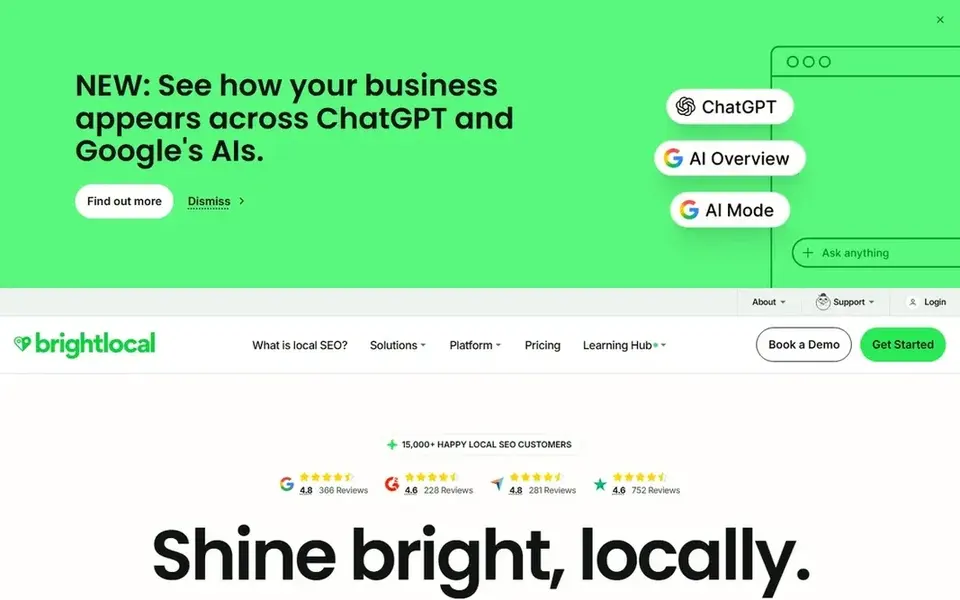
BrightLocal is the tool I recommend first to a single-location business that wants to know where its name, address and phone number are wrong. Its Citation Tracker scans a long list of directories and shows which listings match, which are missing and which have conflicting details. For a plumber, dentist or cafe, that is usually the whole job: find the errors, fix them, and keep them fixed.
The workflow is straightforward. You enter the business details once, run the audit, then work through the list of mismatches. BrightLocal groups results by directory and shows the live listing so you can compare it to your source data. For a local business with one address, this turns a vague worry about "citations" into a concrete to-do list you can finish in an afternoon.
The limits are mostly about scale. If you run many locations, the audit credits and reporting can feel tight, and some niche local directories still need a manual look. A business with one shop and a modest budget will get the most from it.
- Citation Tracker covers many directories
- duplicate detection is built in
- reports are easy to read
- Audit credits are limited on lower plans
- some directory data needs manual checking
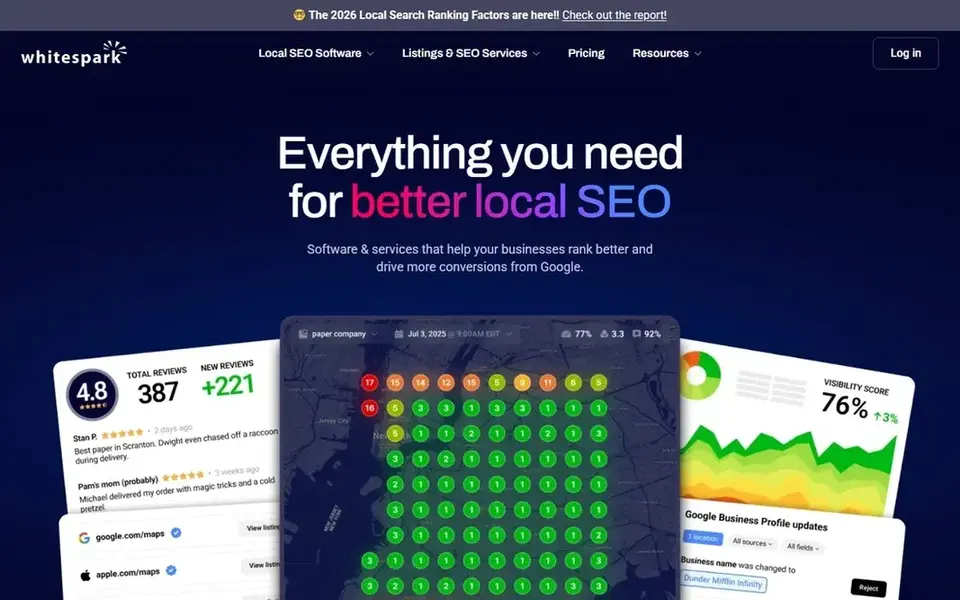
Whitespark is known for citation building and local link research rather than pure automation. Its citation finder helps you discover directories that matter for a specific city or industry, which is useful when a business serves a niche market and the big national directories are not enough. For an agency working with several local clients, that research layer is often the missing piece.
For citation audits, Whitespark is less about scanning everything automatically and more about targeted work. You use it to find the right directories, check whether the business is listed, and build or correct listings by hand. That suits a local business in a competitive niche where a handful of city-specific directories carry weight.
The trade-off is time. This is not a push-button sync tool, and a business owner without help may find it slow. Skip it if you want everything handled automatically and only care about the major directories.
- Strong citation finder for niche directories
- local link opportunities in the same workflow
- good for agencies
- More manual effort
- less automated sync than listing managers

Yext works from a central source of truth: you store the business data once and push it to a large network of directories and maps. For a franchise or a brand with dozens of locations, that consistency is the main value, because one wrong phone number can spread across every listing.
For citation audits, Yext shows where listings differ from your source data and lets you correct them from the dashboard. A local business with one location will usually find it expensive for the benefit, but a regional chain with many branches gets real control.
The main limit is cost as you add locations, and the fact that you are working inside Yext's network rather than fixing listings one by one yourself. Skip it if you have one shop and a small budget.
- Central control of listing data
- strong for many locations
- consistent updates across the network
- Pricing scales with locations
- less useful for a single small shop
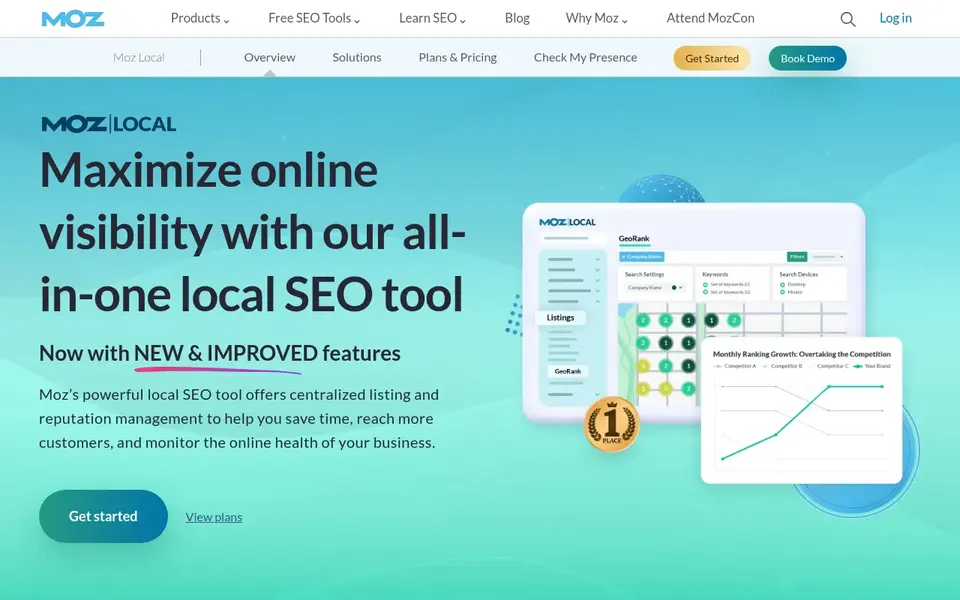
Moz Local is aimed at business owners who want a simple view of listing accuracy without a complex dashboard. You add the business, it checks the main data aggregators and directories, and it shows where details differ. For a small local business, that covers the basics without a steep learning curve.
On the audit side, Moz Local is more of a health check than a deep research tool. It helps you spot and fix mismatches in the places that feed other directories, which is often the highest-value fix. It is less suited to finding niche city directories by hand.
If you need granular control over every listing or work in an unusual industry with many small directories, Moz Local may feel limited. It fits the owner who wants the main listings correct and little else.
- Easy setup
- clear listing health view
- ties into Moz's wider local tools
- Limited control over individual listings
- fewer niche directories

Semrush Listing Management is part of the wider Semrush platform, so it makes sense for a local business or agency that already uses Semrush for keyword and site work. It handles business listing distribution and shows how listings compare across directories, keeping local data next to the rest of your SEO reporting.
For citation audits, the value is convenience: you check listings in the same place you review rankings and site health. That helps a small agency keep one dashboard for a client rather than juggling tools.
The limit is that it is not a standalone citation specialist, and the depth of citation data depends on your plan. If citations are your main job, a dedicated tool will usually go deeper. Skip it if you do not already use Semrush.
- Listing management inside a familiar SEO platform
- useful reporting
- good for teams with existing subscriptions
- Tied to Semrush plans
- citation depth varies by plan
Synup is a listings and local marketing platform built around managing many locations, often for agencies and multi-branch businesses. It combines listing sync with audit views, so you can see which locations have inconsistent data and correct them from a central dashboard.
For citation audits, Synup suits a business with several branches or an agency handling a portfolio of local clients. The audit becomes a recurring check rather than a one-off project, which is how citations should be managed.
The trade-off is setup effort and cost. A single-location business will not use most of it. Skip it unless you manage multiple locations or clients.
- Built for multi-location and agency work
- listing sync and audit in one place
- client reporting
- Setup takes planning
- more than a single shop needs
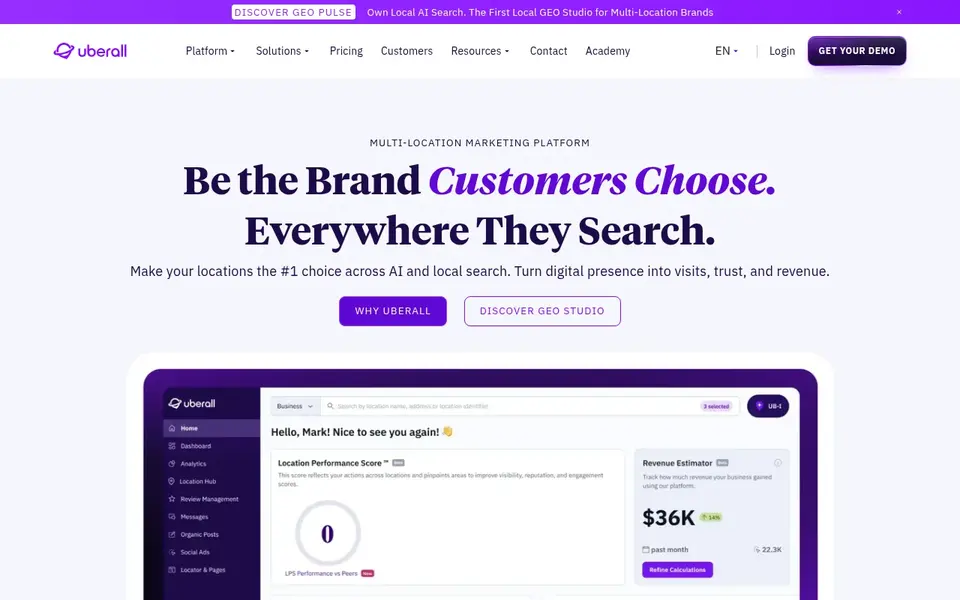
Uberall is aimed at larger brands and franchises that need control over listings across many locations and markets. It centralises business data and monitors how it appears across directories, which matters when a brand has hundreds of branches and no single person checking each one.
For citation audits, Uberall gives a brand-level view: which locations are inconsistent, which directories matter, and where data has drifted. That is useful for a franchise owner overseeing many sites.
For a small local business, Uberall is more than you need and the setup will feel heavy. Skip it unless you are managing a large location count.
- Strong for large location counts
- central data control
- listing monitoring
- Enterprise focus
- heavy for small businesses
How I chose
I built this list from vendor documentation and public sources rather than testing each tool myself. I read what each vendor says about citation audits, listing sync, duplicate handling and reporting, then matched those features to the way different local businesses actually work: a single shop, a multi-branch business, an agency with many clients, and a franchise. I also noted where vendors do not publish clear details, because that matters when you are deciding what to trust.
My filter was fit, not feature count. A tool with a long feature list is not better for a one-location cafe than a simpler audit tool that finds NAP errors quickly. I left out tools where the public information was too thin to describe honestly, and I avoided stating prices or ratings because those change and should be checked on the vendor's own page. Treat this as a starting point for your own shortlist.
What to check before you buy
- Confirm the tool checks the directories that matter in your city or industry, not just the big national ones.
- Check how it handles duplicates, because a duplicate listing can split ranking signals and confuse customers.
- Ask whether it can export a list of mismatches so you or a client can fix them manually.
- Confirm the tool lets you correct the source data first, so fixes do not get overwritten later.
- Check reporting: can you show a before-and-after view of listing accuracy for a client or manager?
- Read the plan limits on audit credits and locations, since these decide whether the tool still fits as you grow.
Frequently asked questions
What is a local citation audit?
A local citation audit is a check of how a business's name, address and phone number appear across online directories, maps and review sites. It finds missing listings, wrong details and duplicates. The goal is consistent data everywhere, which helps customers find the business and supports local search visibility.
How often should I run a citation audit?
Run a full audit when you start, then repeat it a few times a year and after any change to your address, phone number or business name. A move or rebrand is the most common cause of new mismatches, so check listings soon after the change and again a month later.
Do citations still matter for local rankings?
Citations are not the biggest ranking factor, but consistent business data supports local search and helps customers trust what they see. Wrong hours or a disconnected phone number cost real customers. Treat citations as part of a clean local presence rather than a shortcut to rankings.
Can I fix citations without a paid tool?
Yes. You can search for your business on the main directories and correct listings by hand. A paid tool saves time by scanning many directories at once and flagging duplicates. For a single location with a small budget, manual checks plus a free trial of an audit tool can be enough.
What is the difference between a citation audit and listing sync?
An audit finds where your data is wrong or missing. Listing sync pushes corrected data out to directories automatically. Audits are the diagnosis and sync is the treatment. Many tools now do both, but the audit should come first so you are not syncing bad data everywhere.
Sources
See where you really rank - block by block
ProMapRanker scans Google Maps across a grid of your service area. Simple monthly plans from $19, white-label on every plan.
Start freeBrowse all guides
← Best Listing Management Software for Physical Therapists in 2026Best Local Keyword Research Tools for 2026 →
 best listing management software for locksmiths
Best Listing Management Software for Locksmiths in 2026
A practical guide to the best listing management software for locksmiths in 2026, covering Google Business Profile, citations, reviews and multi-location tools.
Read → best listing management software for hotels
Best Listing Management Software for Hotels in 2026
A practical guide to the best listing management software for hotels in 2026, comparing how each tool handles Google Business Profile, maps and directories.
Read → best listing management software for cleaning companies
Best Listing Management Software for Cleaning Companies in 2026
A practical guide to the best listing management software for cleaning companies in 2026, covering Google Business Profile, citations, reviews and local rankings.
Read → local search visibility score
Local Search Visibility Score: How to Measure Total Local Visibility
What a local search visibility score is, how it is calculated, and how to track it over time.
Read → nap consistency local seo
NAP Consistency for Local SEO: The Cleanup Checklist
A practical NAP consistency checklist to audit and clean up your local listings for better rankings.
Read → how to track local rankings
How to Track Local Rankings: A Practical Guide for SMBs
A plain-English guide for small businesses on how to track local rankings without the agency jargon.
Read →More in Local SEO & Google Maps · All guides A to Z by date · Latest guides