 ProMapRanker
Best Listing Management Software for Hotels in 2026

Large groups pushing data to many directories · Pricing starts at: See website
Direct answer
My top pick for most hotels is Yext, because it is built around a central record that pushes hotel details to Google Business Profile, Apple Maps and a large set of travel and local directories at once. Yext does not publish a free plan, so check its pricing page for a quote. If you want a lower-cost way to keep Google and major data providers accurate, BrightLocal is a strong second, and Semrush Listing Management suits hotels that already use Semrush for other marketing work.
I compared these tools from vendor documentation, public help centres and product pages, and I did not run hands-on tests on each one. My focus was on how each product fits the way hotels actually work: several properties, seasonal details, amenities, and guests who search on maps before they book.
Key takeaways
- Hotels usually need one source of truth for name, address, phone, amenities and booking links, because a single wrong phone number on a directory sends guests to the wrong place.
- Google Business Profile matters most for "hotel near me" and map searches, so any tool you pick must sync it cleanly and let you manage multiple properties.
- Multi-property groups need location grouping and role-based access, not just a single-location dashboard.
- Directory coverage differs a lot between tools, so check whether the networks include the travel sites your guests actually use.
- Review features are useful for hotels, but only when they support replying to guests and never gate or filter reviews.
Quick comparison
| Pick | Great for | Pricing starts at | Free tier | |
|---|---|---|---|---|
| Yext | Large groups pushing data to many directories | See website | Not stated | Visit |
 BrightLocal | Independent hotels and small groups | See website | Not stated | Visit |
 Semrush Listing Management | Hotels already using Semrush | See website | Not stated | Visit |
 Uberall | Multi-country hotel brands and chains | See website | Not stated | Visit |
 Moz Local | Simple US-focused listings cleanup | See website | Not stated | Visit |
 Whitespark | Citation research and manual cleanup | See website | Not stated | Visit |
 BirdEye | Hotels combining reviews and listings | See website | Not stated | Visit |
The best listing management software for hotels compared
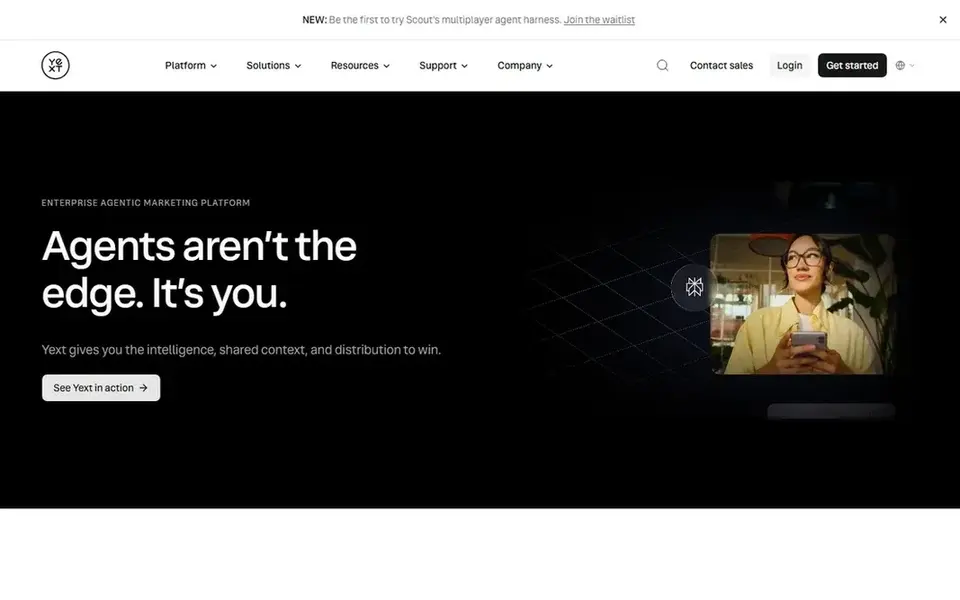
Yext is a listings and knowledge management platform built around a single structured record for each business location. For a hotel, that record can hold the address, phone, front desk hours, amenities, star rating category and booking page. It suits hotel groups and management companies that have several properties and want one place to edit details that then flow outward.
In a hotel workflow, Yext is most useful when you run more than one property or brand. You update a location once, and the change is pushed to Google Business Profile, Apple Maps, Bing Places and a long list of directories and data providers. That matters when a restaurant inside the hotel changes its hours or a spa adds a service, because guests often find those details through map listings rather than the hotel website.
The limits are cost and commitment. Yext is quote-based and usually sold on annual terms, which is hard to justify for a single small guesthouse. Skip it if you have one property and a tight budget, and look at BrightLocal or Moz Local instead.
- Central record for every property
- Wide directory and map network
- Strong Google Business Profile sync
- Quote-based pricing
- Annual contract terms
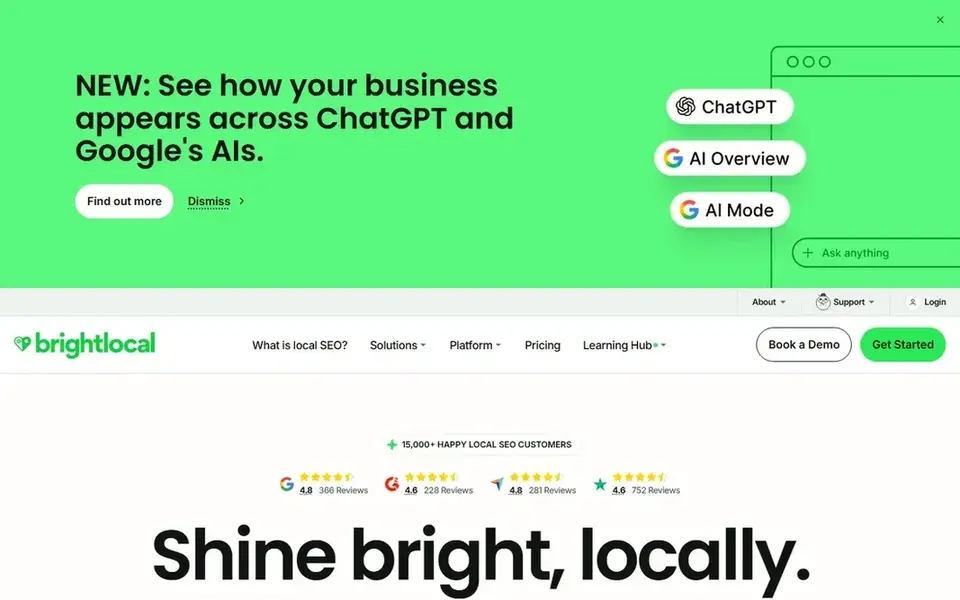
BrightLocal is a local marketing platform with a listings management module, citation audits and Google Business Profile tools. It fits independent hotels, bed and breakfasts and small groups that want to see what is wrong with their listings before paying for a big push to every directory.
For a hotel, the citation audit is the practical starting point. It shows where your address, phone and website differ across directories, which is common after a renovation, rebrand or phone system change. You can then fix the core data providers and the directories that matter for travel searches, and use the Google Business Profile tools to keep hours, photos and posts current. Review monitoring also helps front office staff reply to guest feedback.
The main limit is reach. BrightLocal does not push to as many directories as Yext or Uberall, so a large group with international properties may need more. It is a good fit for a single property or a handful of hotels that want control without a long contract.
- Clear listings audit and citation tracking
- Good Google Business Profile tools
- Review and reputation features in one place
- Directory network is narrower than Yext
- Some features sold as separate add-ons
Semrush Listing Management is an add-on inside the wider Semrush marketing platform. It is aimed at businesses that already use Semrush for keyword research, site audits and competitor tracking, and want to manage local listings in the same account.
For hotels, the value is context. You can check how your hotel website ranks for destination and amenity searches while also fixing the Google Business Profile and directory data that feeds map results. A marketing manager who already logs into Semrush for the hotel's website can keep listings work in the same place instead of adding another login. It handles the core data providers and Google well.
The limit is that listings are not the main product. If listings accuracy is your only job, a dedicated tool gives more directory coverage and clearer reporting. Skip it if you do not already pay for Semrush, because adding the platform just for listings rarely makes sense for a small hotel.
- Listings sit alongside keyword and site data
- Good for hotels with an SEO team
- Simple location dashboard
- Requires a Semrush subscription
- Listing network is not the widest
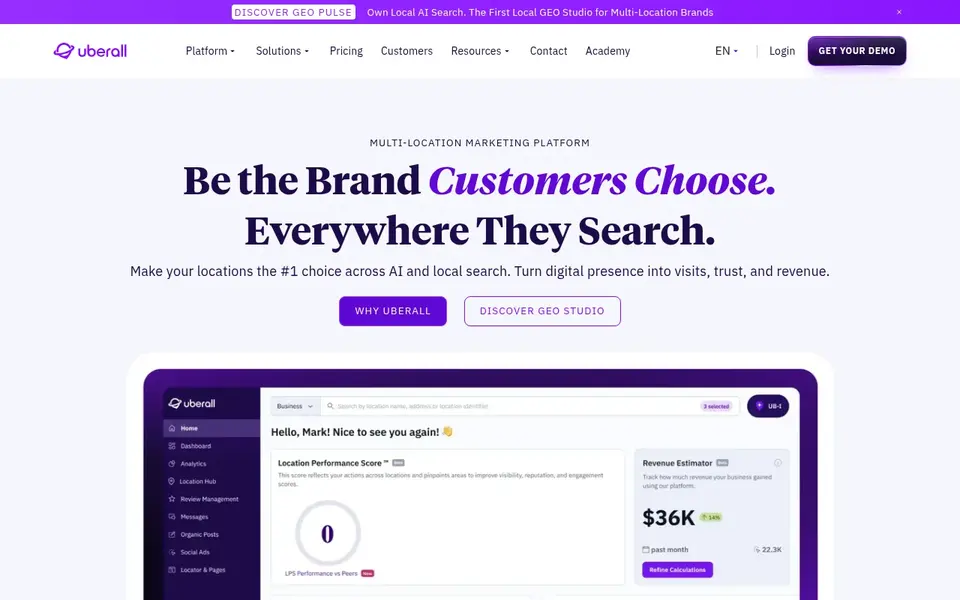
Uberall is a location marketing platform for multi-location brands, with listings, review management and local pages. It is built for companies that operate in several countries and need each property's data to be correct in the local language and format.
For hotel chains, that international angle is the reason to look at it. A group with properties in several countries has to deal with different directory ecosystems, and Uberall is designed to handle that scale. You can group locations by brand or region, give each property manager limited access, and keep amenities and opening hours consistent. Review replies can be handled per property.
The trade-off is setup effort. Uberall expects a real onboarding project, and pricing is quote-based. A single hotel or a small regional group will find it heavier than needed, and should look at BrightLocal or Moz Local first.
- Strong multi-location and multi-country support
- Directory coverage across many markets
- Review and local page features
- Setup takes time
- Pricing is quote-based
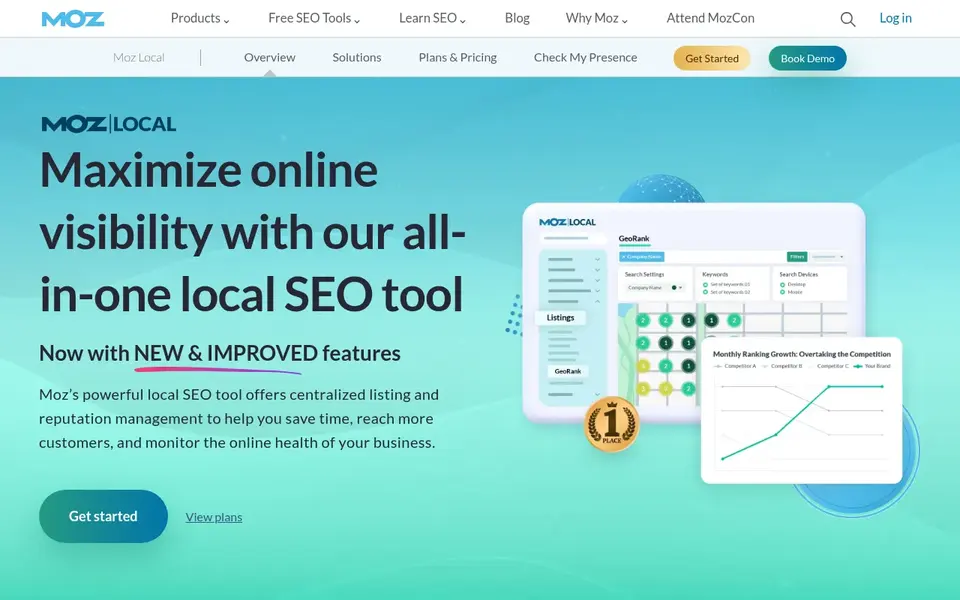
Moz Local is a listings management product from Moz, focused on pushing accurate business data to major data providers and directories. It is simple by design and suits hotels that mainly serve a domestic market and want their core details corrected without a complex platform.
For a US hotel, Moz Local covers the data providers that feed many map and directory results, so a corrected address or phone number spreads to the places guests check. You can manage several locations and see how each listing compares. It is a reasonable fit for a small hotel group that wants a clean baseline before spending on a bigger platform.
The limits are geographic and functional. Coverage outside the US is thinner, and the multi-location controls are less detailed than Uberall or Yext. Skip it if you run properties in several countries or need deep per-property permissions.
- Straightforward listings distribution
- Good data partner network in the US
- Easy to understand reporting
- Strongest coverage is in the US
- Fewer advanced multi-location controls
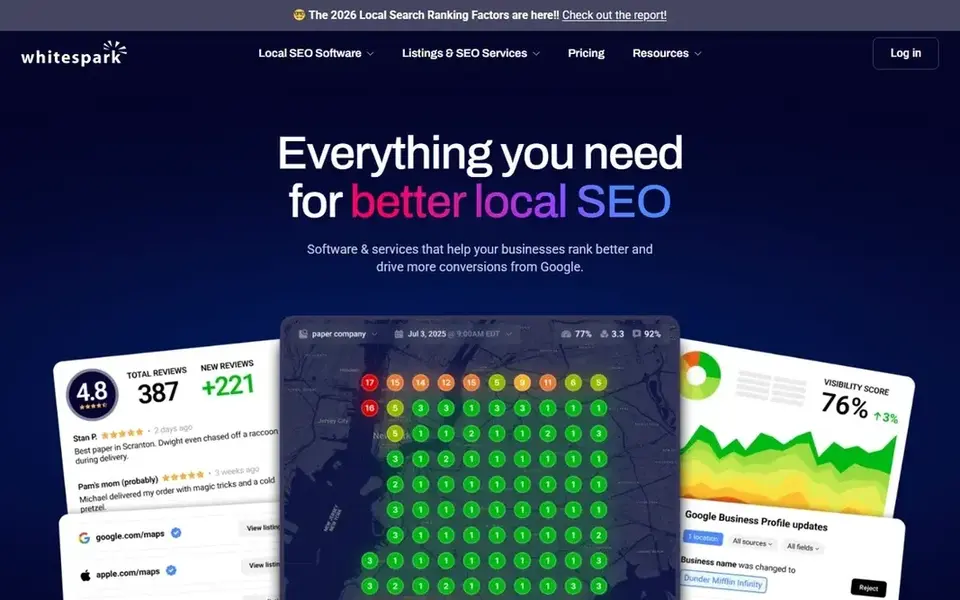
Whitespark is a local search toolset known for citation research, local rank tracking and citation building services. It is a good fit for hotels that want to find where their details are wrong and fix the important ones by hand, or for agencies managing several hotel clients.
In a hotel context, Whitespark helps you find the directories and local sites that matter for a destination, then build or correct listings there. That is useful for independent hotels that rely on local tourism sites, city guides and niche directories rather than a huge global network. The research shows you where competitors are listed, which is a practical starting point.
The limit is that it is not a single dashboard that pushes one record to hundreds of directories. Much of the work is manual or handled through its citation services. Skip it if you want a set-and-forget sync across a large network.
- Strong citation research tools
- Useful local search data
- Good for agencies managing hotel clients
- Less of a push-to-all-directories tool
- Manual work is often needed
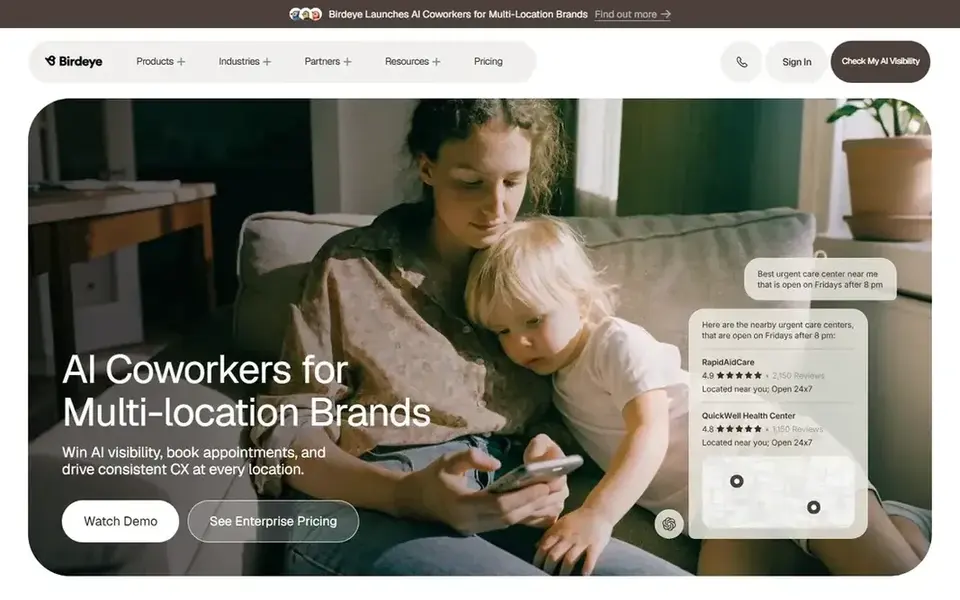
BirdEye is a reputation and customer experience platform with listings management included. It fits hotels that care most about guest reviews and want listing accuracy as part of the same tool, rather than a separate listings product.
For a hotel, reviews are part of the booking decision, so replying to guests quickly matters. BirdEye brings reviews from several sources into one inbox and lets staff reply, while also keeping core business details consistent across listings. That combination suits a property that gets steady review volume and wants front office staff to handle feedback in one place.
The limit is listing depth. BirdEye does not match Yext or Uberall for directory coverage and per-location data fields. Skip it if listings accuracy across many directories is your main goal, and use it only when reviews are the priority.
- Review management and reply tools
- Listings included in the same platform
- Good for guest feedback workflows
- Listing depth is lighter than dedicated tools
- Quote-based pricing
How I chose
I built this list from vendor documentation, public help centres and product pages, and I did not run hands-on tests on each tool. I looked at how each product handles the details hotels actually manage: multiple properties, amenities, front desk hours, booking links and review replies. I also checked whether the tool supports Google Business Profile properly and how wide its directory network is.
I left out tools that are mainly generic SEO suites without real listing management, and I did not include any tool I could not confirm exists with an official site. I also weighed the limits, because a large hotel group and a single guesthouse need different things. Where pricing is quote-based, I say so rather than guessing a figure. The result is a shortlist you can check against your own property count and markets.
What to check before you buy
- Confirm the tool syncs Google Business Profile directly and lets you edit hours, amenities and booking links per property.
- Check whether the directory network includes the travel and local sites your guests actually use in your country.
- Ask how multi-property grouping and user permissions work if more than one manager will edit listings.
- Confirm the tool supports review replies without any review gating or filtering features.
- Check how it handles seasonal hours and temporary closures, which hotels change often.
- Ask what happens to your data if you leave, and whether you can export your location records.
Frequently asked questions
What is the best listing management software for hotels?
For most hotels, Yext is the strongest fit because it pushes one central record to Google, maps and many directories. BrightLocal is a good choice for independent hotels that want audits and control at a lower commitment, and Uberall suits multi-country chains. The right pick depends on how many properties you run and which markets you serve.
Do hotels need listing management software at all?
If you have one property and your details are already correct on Google and the main directories, you can manage it manually. Software helps when you have several properties, frequent changes, or wrong phone numbers and addresses spreading across directories. It saves time and reduces guest confusion, but it is not mandatory for a small guesthouse.
Can listing software fix wrong information on Google Maps?
It can push corrected data to Google Business Profile if the tool is connected properly, but Google still decides what appears. Listing software helps you keep your own profile accurate and consistent, and it shows where other directories differ. It cannot guarantee a change on every third-party site, so check each profile after updates.
How does listing management help hotels with reviews?
Most listing platforms include review monitoring and reply tools, so front office staff can respond to guest feedback from one inbox. Use them to reply to reviews, not to filter or gate them. Google's guidelines do not allow review gating, so pick a tool that supports honest replies and does not offer selective review requests.
Should a hotel group use one tool for all properties?
Yes, if the tool supports location groups and role-based access. A single platform keeps brand details consistent and lets each property manager update local hours or amenities without changing the whole group. Check per-location permissions and reporting before you commit, because some tools are built for single locations and get messy at scale.
Sources
See where you really rank - block by block
ProMapRanker scans Google Maps across a grid of your service area. Simple monthly plans from $19, white-label on every plan.
Start freeBrowse all guides
← Best Listing Management Software for Cleaning Companies in 2026Best Listing Management Software for Locksmiths in 2026 →
 best listing management software for accountants
Best Listing Management Software for Accountants in 2026
A practical guide to the best listing management software for accountants in 2026, comparing tools for Google Business Profile, directories and reviews.
Read → best landscaping estimating software
Best Landscaping Estimating Software in 2026
A practical guide to the best landscaping estimating software in 2026, compared from vendor documentation and public sources for local landscaping businesses.
Read → best google review widget tools
Best Google Review Widget Tools in 2026
Compare the best Google review widget tools for local businesses in 2026. See which widgets display Google reviews, which have free plans, and what to check first.
Read → how to audit local citations
How to Audit Local Citations and Find Errors Fast
How to audit your local citations, spot NAP errors, and prioritize fixes for the biggest ranking impact.
Read → top local citation sites
Top Local Citation Sites Every Business Should Be On
The top local citation sites and data aggregators that feed the local ecosystem, with priorities.
Read → google maps rank tracker
Google Maps Rank Tracker: Track Your Map Pack Position Over Time
Track your Google Maps rankings over time with geo-grid scans and trend history. Here is how to do it right.
Read →More in Local SEO & Google Maps · All guides A to Z by date · Latest guides