 ProMapRanker
Best Listing Management Software for Physical Therapists in 2026

All-in-one local SEO for small clinics · Pricing starts at: See website
Direct answer
My top pick for most physical therapy clinics is BrightLocal, because it combines citation building, Google Business Profile auditing, review monitoring and local rank tracking in one dashboard that suits a single clinic or a small group. It has a free trial, so you can check the workflow before committing. If you mainly need to push accurate data to many directories at once, Yext is the stronger fit; if you want review-first reputation management, Birdeye is the better match.
I compared these tools by reading vendor documentation, help-centre articles and public product pages, and by checking how each one handles the workflows a physical therapy clinic actually deals with: appointment links, service categories, insurance-related descriptions and multi-location data. I did not run hands-on tests, so treat this as a documented feature comparison rather than a lab review.
Key takeaways
- Physical therapy clinics live or die on local search visibility, so consistent name, address and phone data across directories matters as much as the treatment you provide.
- Listing management tools differ widely: some focus on citation distribution, others on review generation, and some bundle local rank tracking and competitor analysis.
- Multi-location PT groups need bulk editing and location-level reporting, while solo practitioners can usually get by with a lighter, lower-cost tool.
- Review monitoring and response features are worth prioritising because prospective patients read reviews before booking an initial assessment.
- No tool replaces a properly completed Google Business Profile, so check that your categories, service areas and appointment links are correct before syncing anything.
Quick comparison
| Pick | Great for | Pricing starts at | Free tier | |
|---|---|---|---|---|
| BrightLocal | All-in-one local SEO for small clinics | See website | Free trial | Visit |
 Yext | Large-scale directory data distribution | See website | No free plan | Visit |
 Birdeye | Review generation and reputation management | See website | No free plan | Visit |
 Whitespark | Citation building for SEO-minded clinics | See website | Not stated | Visit |
 Moz Local | Simple citation management for US clinics | See website | No free plan | Visit |
 Semrush Listing Management | Teams already using Semrush | See website | No free plan | Visit |
 Synup | Multi-location PT groups needing bulk control | See website | Not stated | Visit |
The best listing management software for physical therapists compared
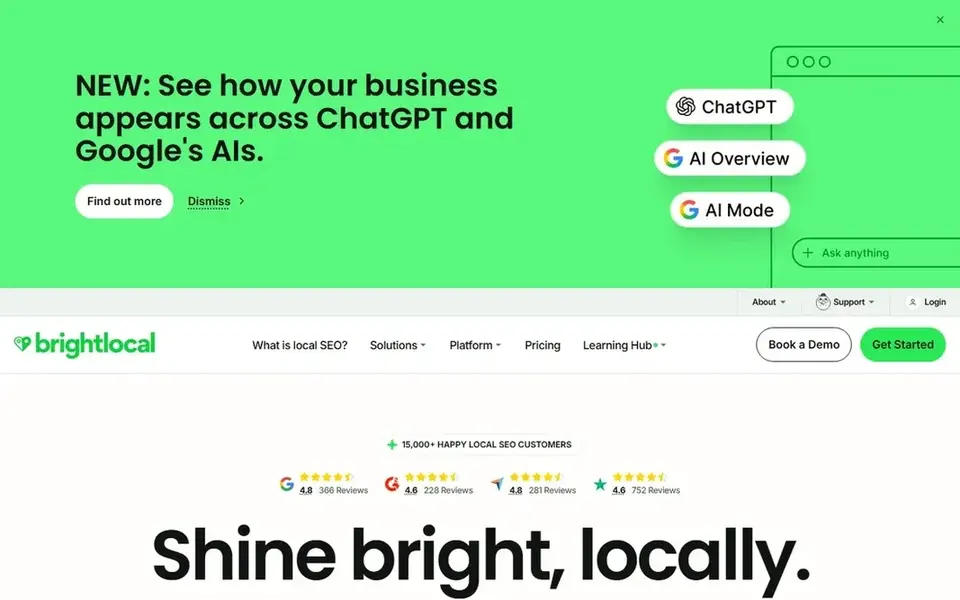
BrightLocal is a local SEO platform built around citation auditing, citation building, review monitoring and local rank tracking. For a physical therapy clinic, the most useful part is the citation audit: it scans the major directories, shows where your clinic name, address and phone number differ, and lets you fix the mismatches. That matters because a clinic listed as "Riverside Physio" on one directory and "Riverside Physical Therapy Clinic" on another splits its local signals.
The workflow suits a clinic manager rather than an SEO specialist. You add your practice details once, run an audit, then work through the list of inconsistent listings. Review monitoring pulls new reviews from Google and other platforms into one inbox so the front desk can respond without checking each site separately. Local rank tracking shows where the clinic appears for searches like "physical therapist near me" or "sports injury physio" in the surrounding area.
The limits are mostly about depth. BrightLocal's citation network is smaller than Yext's, so if you need distribution to hundreds of niche directories, it will not cover everything. It is also priced and structured with agencies in mind, so a solo practitioner may find parts of the dashboard unnecessary. Skip it if you only want review management and nothing else.
- Citation building and auditing in one place
- review monitoring with response tools
- local rank tracking by keyword and location
- Citation network is smaller than pure distributors
- some features are geared to agencies rather than clinic owners
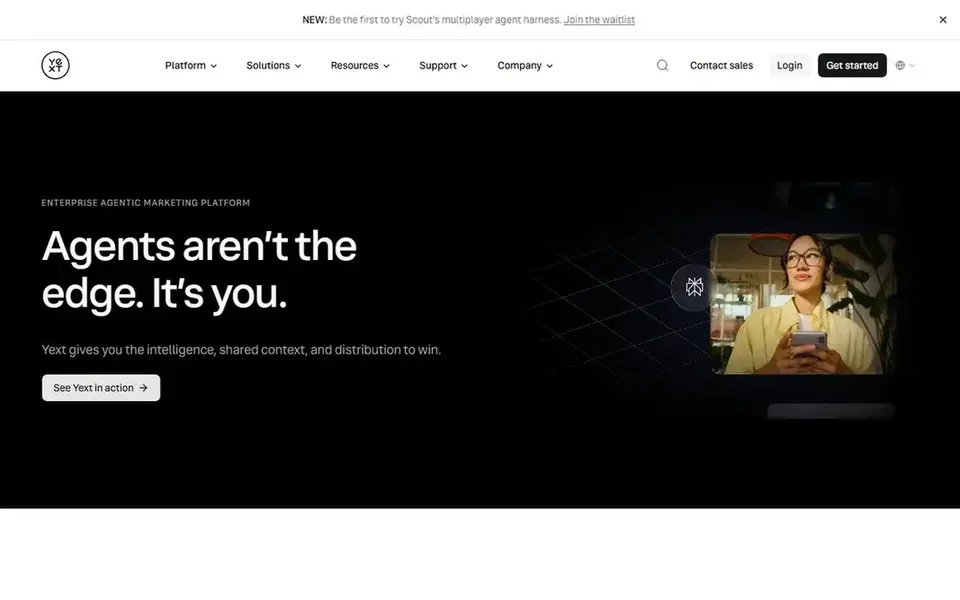
Yext is a listings and knowledge management platform that pushes business data to a large network of directories, maps and apps from a single source of truth. For a physical therapy group with several clinics, that central control is the main draw: update opening hours, phone numbers or service descriptions once and the change propagates across the network.
For PT practices, Yext handles the details that trip up clinics: multiple practitioners at one location, different service offerings per branch, and seasonal hour changes around holidays. It also supports structured data that feeds into search results, which can help a clinic appear correctly when someone searches for a physiotherapist in a specific suburb.
The trade-off is cost and commitment. Pricing is quote-based, contracts can run for a year or more, and the platform is more than a single-location clinic needs. If you run one practice and mainly want Google Business Profile help, a lighter tool will do the job with less overhead.
- Broad directory network
- central control of location data
- strong fit for multi-location groups
- Quote-based pricing
- contracts can be long
- overkill for a single clinic

Birdeye is a reputation management platform centred on getting more reviews and responding to them quickly. For a physical therapy clinic, that maps directly onto patient behaviour: most people check reviews before booking an initial assessment, and a steady flow of recent reviews signals an active practice.
The review request automation is the part that matters most. After a patient visit, the clinic can send a request by text or email, and the platform routes happy patients toward public review sites. Birdeye also includes listing sync, so your clinic data stays consistent across directories, and a unified inbox so replies to reviews and messages happen in one place.
The downside is that Birdeye is a review-first product. If your main problem is messy citation data across dozens of directories, a dedicated listing tool will be more direct. Pricing is quote-based, and the setup requires some configuration before it runs smoothly. Clinics that want a simple citation fix should look elsewhere.
- Automated review requests
- unified inbox for reviews and messages
- listing sync included
- Review features dominate the product
- pricing is quote-based
- setup takes time
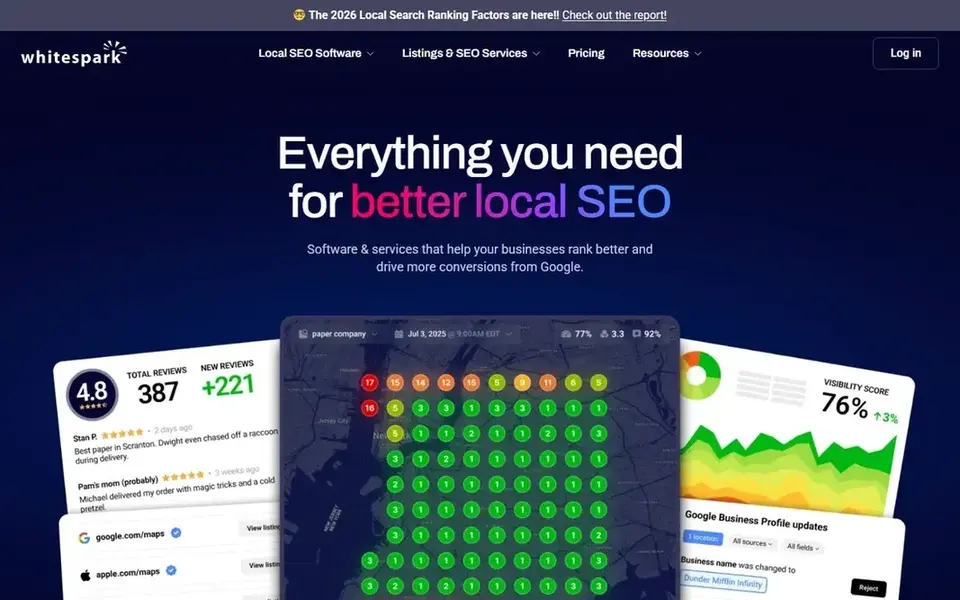
Whitespark is a Canadian local SEO company known for citation building and its local rank tracker. The citation finder is the standout feature: it identifies directories relevant to your city and industry, which is useful for a physical therapy clinic that wants to appear in local health directories, chamber of commerce listings and community sites rather than just the big national aggregators.
The citation building service is done partly by hand, which means a human checks the listings rather than relying only on automated distribution. For a clinic in a smaller city, that local knowledge can matter, because national directories often miss the regional health portals and community listings that locals actually use.
The limits are about audience. Whitespark is built for SEO professionals, so the interface and reporting assume some familiarity with local search concepts. A clinic owner without SEO background may find it harder to navigate than BrightLocal. It also does not offer a full review management suite, so you would pair it with a separate review tool.
- Strong citation research and building service
- local rank tracker
- citation finder for niche directories
- Built for SEO practitioners
- interface is less friendly for front-desk staff
- no broad review suite
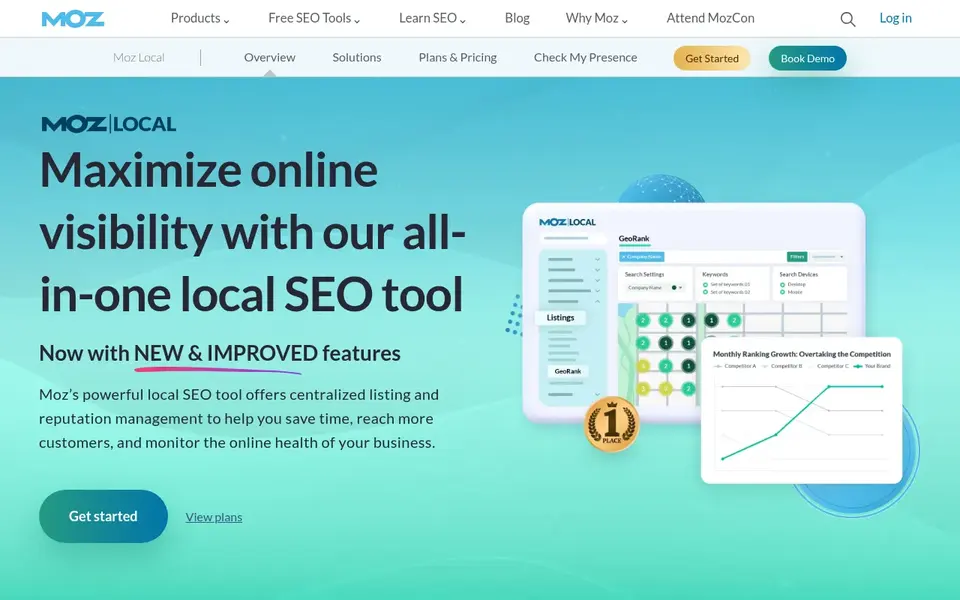
Moz Local is a listing management tool from Moz, one of the older names in SEO software. It focuses on distributing your business data to major directories and data aggregators, then monitoring whether the listings stay accurate. For a US-based physical therapy clinic, the coverage is solid and the setup is simple.
The workflow is minimal: enter your practice details, choose the locations, and let the tool push data to the directories it supports. Reporting shows which listings are verified and which need attention. For a clinic that just wants its name, address and phone number to match everywhere, that is enough.
The limits are geographic and structural. Moz Local's directory coverage is strongest in the United States, so clinics in the UK, Australia or Canada may find gaps. It also has fewer multi-location management features than Yext or Synup, which matters if you run several branches. There is no free plan, so you need to commit before you see the full dashboard.
- Straightforward citation management
- connects to Moz's broader SEO data
- clean reporting
- Directory coverage is strongest in the US
- fewer features for multi-location groups
- no free plan

Semrush is a large SEO platform, and its listing management module handles business data distribution and citation consistency. The advantage for a physical therapy clinic is having local listings, keyword research and competitor tracking in one subscription, which suits a practice that also invests in content or a website refresh.
For listings specifically, the module lets you manage location data, monitor duplicate listings and check how your clinic appears across directories. If your clinic already uses Semrush for keyword tracking or site audits, adding listing management avoids a second login and a second invoice.
The trade-off is focus. Listing management is a small part of a big platform, so you pay for many features a clinic may never use. If citations are your only problem, a dedicated tool is more direct and usually simpler to learn. Clinics with no existing Semrush subscription should compare carefully before buying the suite just for listings.
- Listing management inside a broader SEO suite
- useful keyword and competitor data alongside
- familiar interface for existing users
- Listing features are one module among many
- pricing reflects the full suite
- not the cheapest way to fix citations alone
Synup is a listings and local marketing platform aimed at businesses with multiple locations. For a physical therapy group with clinics across a city or region, the bulk editing features are the main reason to consider it: you can update hours, phone numbers or service descriptions across every branch from one screen.
The platform also combines review management, local pages and analytics, so a group can track how each clinic performs in local search and respond to reviews from a single dashboard. That is useful when a regional manager needs to see which branch is falling behind on review responses or listing accuracy.
The limits are scale and pricing. Synup is built for multi-location operations, so a single clinic will find it more than necessary. Pricing is quote-based, and onboarding a large group takes planning. Smaller practices should look at BrightLocal or Moz Local first.
- Bulk editing across many locations
- review and listing management combined
- local pages and analytics
- Smaller brand recognition
- pricing is quote-based
- setup requires planning for large groups
How I chose
I started with the workflows a physical therapy clinic actually runs: keeping name, address and phone data consistent, managing Google Business Profile details, handling reviews, and tracking local rankings for treatment-related searches. I read vendor documentation, help-centre articles and public product pages to see which tools cover those jobs directly and which treat them as side features. I also checked how each tool handles multiple practitioners at one location, since PT clinics often have several therapists listed under one address.
I then filtered by fit and limits. Tools built for enterprise groups were kept but flagged as overkill for solo clinics, and tools built for SEO agencies were noted as harder for front-desk staff. I did not run hands-on tests, so the comparison reflects documented features and public information rather than measured performance. Where a vendor does not state free-plan details clearly, I have said so rather than guessing.
What to check before you buy
- Confirm the tool supports the directories that matter in your country, not just US aggregators, because health directories and local portals vary by region.
- Check whether it can handle multiple practitioners at one address without merging their profiles incorrectly.
- Look for review monitoring and response features, since patient reviews influence booking decisions for physical therapy.
- Verify that Google Business Profile sync is included or clearly supported, because that is where most local searches end.
- Ask how bulk edits work if you run more than one clinic, and whether changes propagate to all directories at once.
- Read the contract terms for length and cancellation, especially with quote-based platforms like Yext and Birdeye.
Frequently asked questions
Do physical therapy clinics need listing management software?
Not strictly, but it helps. A clinic with one location can manage its Google Business Profile manually and fix major citations by hand. Software becomes worth it when you have inconsistent listings across many directories, several practitioners, or more than one branch, because manual checks get slow and error-prone.
What is the most important listing detail for a PT clinic?
Your name, address and phone number must match everywhere, and your Google Business Profile categories should reflect what you actually treat. Adding service descriptions and appointment links helps patients, but consistency is the foundation. Reviews also matter because patients often compare clinics by rating and recency before booking.
Can listing software help with Google Business Profile?
Most of these tools connect to Google Business Profile to sync hours, descriptions and location data, and some add review monitoring. They do not replace a complete profile, so check that your categories, service area and appointment link are correct in Google directly before relying on a third-party sync.
How much does listing management software cost?
Pricing varies widely and most vendors quote per location or per feature set, so I have not listed figures here. Check each vendor's pricing page for current details. For a single clinic, a lighter tool is usually enough; multi-location groups should expect quote-based pricing and longer contracts.
Is Yext or BrightLocal better for a small PT clinic?
For most single-location clinics, BrightLocal is the easier starting point because it bundles citation auditing, review monitoring and rank tracking at a scale that suits a small practice. Yext is better when you need broad directory distribution across many locations and can commit to its contract terms.
Sources
See where you really rank - block by block
ProMapRanker scans Google Maps across a grid of your service area. Simple monthly plans from $19, white-label on every plan.
Start freeBrowse all guides
← Best Listing Management Software for Locksmiths in 2026Best Local Citation Audit Tools in 2026 →
 best listing management software for hotels
Best Listing Management Software for Hotels in 2026
A practical guide to the best listing management software for hotels in 2026, comparing how each tool handles Google Business Profile, maps and directories.
Read → best listing management software for cleaning companies
Best Listing Management Software for Cleaning Companies in 2026
A practical guide to the best listing management software for cleaning companies in 2026, covering Google Business Profile, citations, reviews and local rankings.
Read → best listing management software for accountants
Best Listing Management Software for Accountants in 2026
A practical guide to the best listing management software for accountants in 2026, comparing tools for Google Business Profile, directories and reviews.
Read → geo grid rank tracker
Geo-Grid Rank Tracker: How Grid-Based Tracking Reveals Your True Rank
A geo-grid rank tracker shows how you rank across an entire area, not just one spot. Here is how it works.
Read → best llm keyword rank tracker software
Best LLM Keyword Rank Tracker Software in 2026
Compare the best llm keyword rank tracker software for AI search visibility, with prices, tracked engines, prompt limits, and honest limits for each tool.
Read → local seo for assisted living facilities
Local SEO for Assisted Living Facilities
A local SEO guide for assisted living facilities: Google Business Profile setup, reviews, and trust signals and family-decision-focused SEO.
Read →More in Local SEO & Google Maps · All guides A to Z by date · Latest guides