 ProMapRanker
Generative AI Tools for Research: 5 Options Compared in 2026

Discovering relevant research · Pricing starts at: See website
Direct answer
Our first pick is Semantic Scholar, best for discovering relevant research. Listed starting prices: Scite from $12 per month and Elicit from $11 per user a month. Scite is the stronger choice for citation context and claim support, while Elicit suits evidence synthesis and experiment design. The full list of 5 tools follows, with prices and free plan facts.
Choosing generative AI tools for research usually comes down to price, fit and limits. This ProMapRanker guide sets 5 tools side by side on those three points, with the facts kept short and checkable.
Key takeaways
- Top of the list is Semantic Scholar, which targets discovering relevant research.
- The cheapest monthly starting price in the list is $11 per user per month, offered by Elicit.
- ChatGPT stands alone as the one tool in this list with a free plan.
- Gemini suits general AI assistance across tasks.
- A fair warning about ChatGPT: not specialized for scholarly search.
Quick comparison
| Pick | Great for | Pricing starts at | Free tier | |
|---|---|---|---|---|
| Semantic Scholar | Discovering relevant research | See website | Not stated | Visit |
 Scite | Citation context and claim support | $12 per month | Free trial | Visit |
 Elicit | Evidence synthesis and experiment design | $11 per user a month | Free trial | Visit |
 ChatGPT | General research assistance and drafting | See website | Yes | Visit |
 Gemini | General AI assistance across tasks | See website | Not stated | Visit |
The best generative AI tools for research
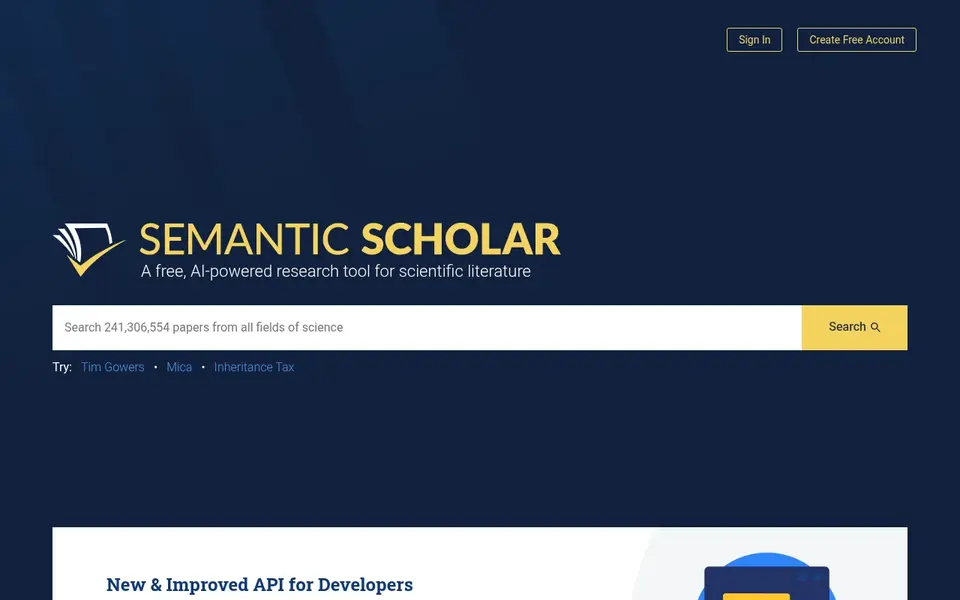
Semantic Scholar is a good fit for discovering relevant research. Choose Semantic Scholar when finding relevant papers is the immediate task. In practice, students and researchers who want a discovery layer before deeper synthesis will find it handy.
Trade-offs to know: Discovery-focused instead of drafting.
Semantic Scholar uses AI and engineering to understand the semantics of scientific literature and help scholars discover relevant research. It is well suited to early-stage exploration, when you have to map a field and find related work. Semantic Scholar is oriented toward discovery instead of evidence synthesis or drafting. Semantic Scholar does not show a starting price in this comparison, so check the vendor site for current pricing. Free access: Not stated.
Strengths: Understands scientific literature semantics.
- AI-powered research discovery
- Helps surface relevant papers
- Best used alongside synthesis tools
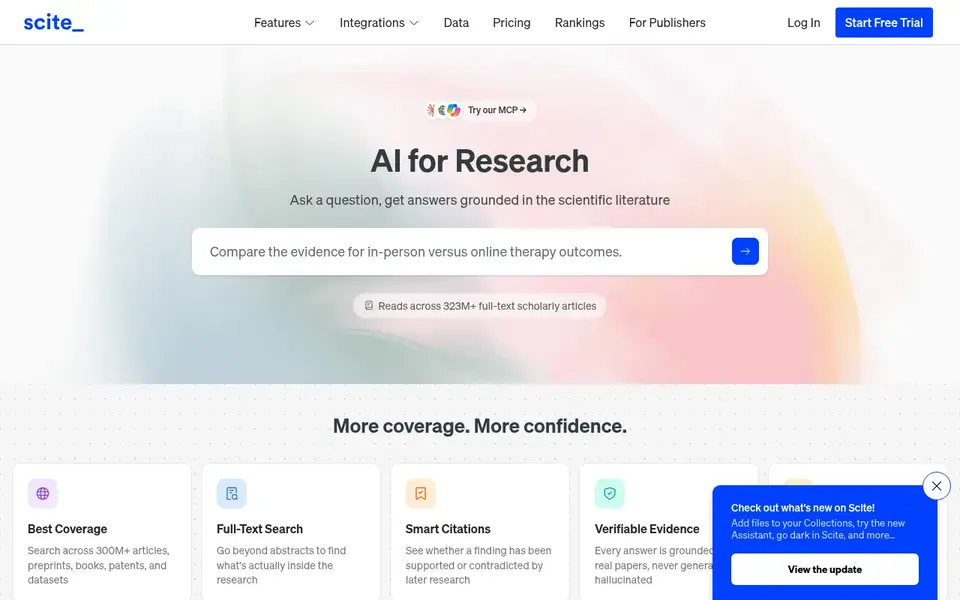
Pick Scite if this describes you: citation context and claim support. This makes it handy for researchers who require to judge the strength of evidence behind a statement.
From a buyer's view, pick Scite when understanding how claims are supported or contested is the primary goal. Scite starts at: $12 per month. Free access: Free trial.
Downsides: Centred on citation analysis.
- Citation-backed answers
- Spans a large scholarly corpus
- May need pairing with a writing tool
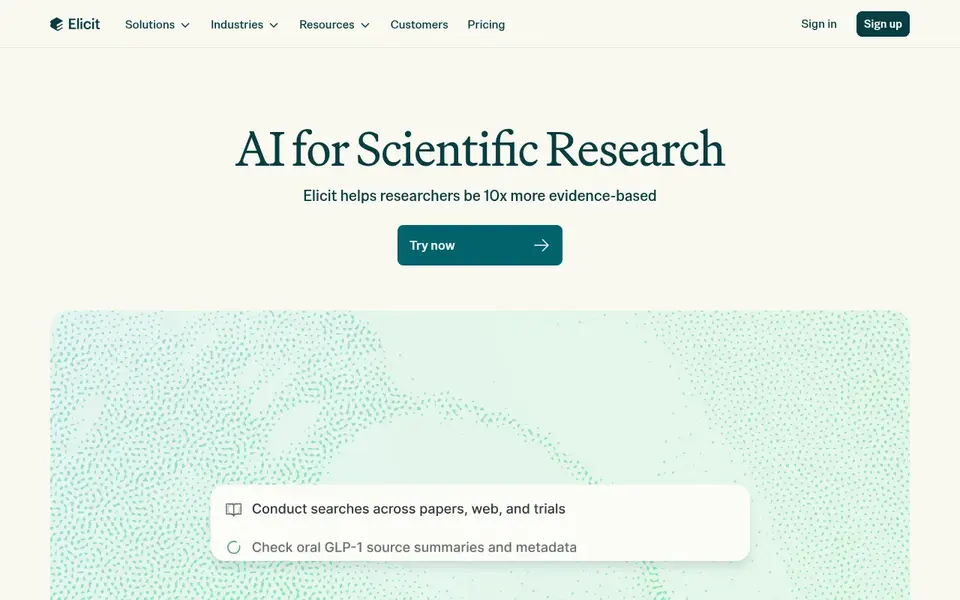
Elicit is built with evidence synthesis and experiment design in mind. Elicit is an AI research assistant designed for evidence synthesis, landscape understanding, and decision support. It helps users design programs and experiments, draft proposals, and weigh tradeoffs in one workspace.
For everyday use, if your central need is casual drafting or general chat, a general assistant may be more straightforward. On top of that, pick Elicit when evidence synthesis and decision framing are the core tasks. In practice, Elicit is oriented toward structured research workflows instead of open-ended conversation. Elicit starts at: $11 per user per month. On free options: Free trial.
Downsides: Most useful for structured research tasks.
- Supports program and experiment design
- Helps draft proposals and weigh tradeoffs
- General chat needs may need another tool
ChatGPT was built for general research assistance and drafting. In research, it is useful for brainstorming, drafting sections, explaining concepts, and routine analysis.
Where it is weaker: Outputs need verification against sources.
ChatGPT is not a dedicated scholarly search engine, so literature discovery and citation context are better handled elsewhere. This comparison lists no price for ChatGPT; ask the vendor. You can start on ChatGPT without paying.
- Answers questions and writes
- Builds images and code
- Not specialized for scholarly search
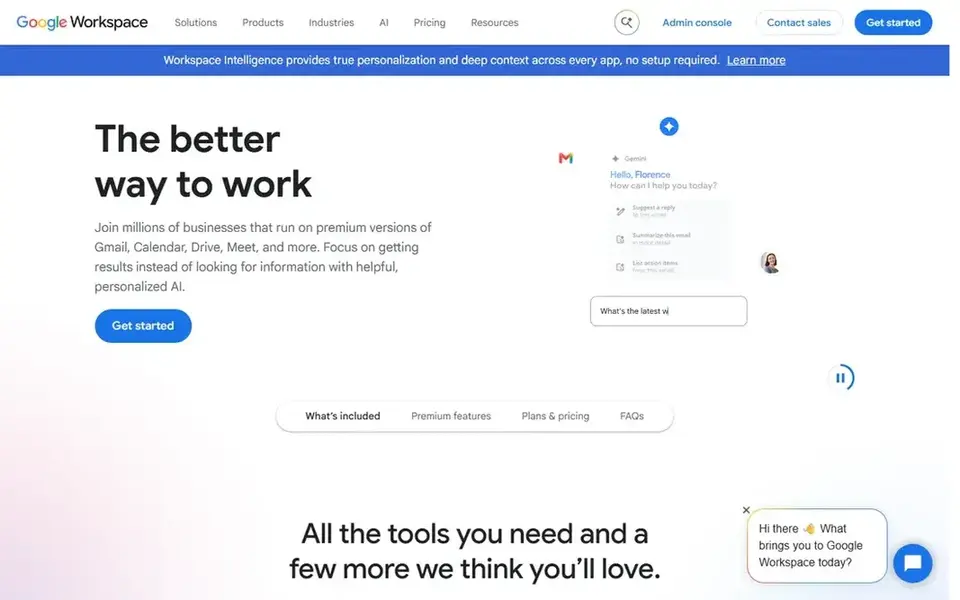
Gemini is aimed squarely at general AI assistance across tasks. In a research context it can help with early brainstorming, rewriting, and fast explanations.
What to check first: Not a specialized research database.
Gemini is a general-purpose AI assistant from Google, widely used for drafting, summarizing, explaining concepts, and working across everyday tasks. As for the details, claims and references should be checked against primary literature. Gemini does not show a starting price in this comparison, so check the vendor site for current pricing. Free options: Not stated.
- Suits alongside Google tools
- Handy for drafting and explanation
- Needs verification of claims
Our selection method
For each of the 5 tools we noted price, free plan or trial, fit for generative AI tools for research and the main limit, using vendor pages and documentation. Prices and plan limits come from vendor pages and can change, so confirm them on the vendor site before you buy. Order on the page follows fit for the typical buyer first, then price transparency and free access. Your own requirements should decide the final pick.
A buyer's checklist
- Ask Semantic Scholar, ChatGPT and Gemini for a written quote, since no starting price is shown.
- Look at the free plan from ChatGPT closely: its caps decide whether it is usable for real work.
- Take the trial from Scite and Elicit and push a live task through it before you pay.
- Read the limits listed for Semantic Scholar first: discovery-focused instead of drafting.
- Check the support hours and onboarding help Semantic Scholar offers; smaller vendors vary a lot here.
- Get the contract term, renewal terms and any onboarding fees from Scite in writing.
Frequently asked questions
Can I try these tools before paying?
Often, yes. ChatGPT has a free plan and Scite and Elicit offer a free trial. Use your own data and a real task during the test, and check what the free tier or trial limits before you rely on it.
What is the cheapest option for generative AI tools for research in this list?
On published monthly entry prices, Elicit is the lowest here at $11 per user per month. Entry price is only part of the cost, because seats, add-ons and billing terms can change the total.
Which options for generative AI tools for research have a free plan?
ChatGPT is the only tool in this list with a free plan. Free plans usually cap users, projects or features, so check the limits on the vendor page. Several others offer a trial instead. All 5 picks in this Generative AI tools for research comparison list a starting price, free plan details and the main limits on their cards above.
Which tool is best for a literature review?
The first pick on this list is Semantic Scholar, because it suits discovering relevant research. Scite is better for citation context and claim support, and Elicit for evidence synthesis and experiment design. Check price and limits against your own needs before choosing.
Do these tools publish their prices?
Not all of them. Semantic Scholar, ChatGPT and Gemini publish no starting price, so expect a quote request for those. The rest, Scite included, show a starting price, though seats and billing terms still change the final cost.
How should I choose between these tools?
Start with your primary task: discovery, synthesis, citation analysis, or drafting. Match the tool to that task first, then add a second tool for coverage.
Sources
See where you really rank - block by block
ProMapRanker scans Google Maps across a grid of your service area. Simple monthly plans from $19, white-label on every plan.
Start freeBrowse all guides
← Top 6 AI Reverse ETL Software, Compared on Price (2026)Innovative AI Platforms for Research in 2026: Top 6 Compared →
 best ai construction data analytics software
5 Best AI Construction Data Analytics Software for 2026
Best AI construction data analytics software: 5 contenders ranked by fit, with entry costs and free tiers. We note where every tool falls short. Numbers first.
Read → researchrabbit alternatives
ResearchRabbit Alternatives: 5 Tools Compared in 2026
ResearchRabbit alternatives in 2026: 5 contenders with entry costs and free tiers. Price notes and drawbacks come with each one. Full profiles inside.
Read → best ai data extraction tools
AI Data Extraction Tools: Best Picks of 2026
Weighing the best AI data extraction tools? We lined up 6 products by cost, free access and fit. Each pick comes with its main catch. Updated November 2026.
Read → best data observability tools
Best Data Observability Tools in 2026
Compare the best data observability tools in 2026. We review 9 platforms for freshness, lineage, anomaly detection, pricing, and team fit for data teams.
Read → best analytics software
Best Analytics Software in 2026
Compare the best analytics software for websites, products, and business data. We cover pricing, free plans, and the right fit for each team in 2026 today.
Read → bright data alternatives
Best Bright Data Alternatives in 2026
Need bright data alternatives? We compare 9 proxy and web data providers on price per GB, targeting, free trials, and ethical sourcing in detail in 2026.
Read →More in Data & Analytics · All guides A to Z by date · Latest guides