 ProMapRanker
ResearchRabbit Alternatives: 5 Tools Compared in 2026
Direct answer
Our first pick is Scite, best for Citation-backed answers and claim context. Listed starting prices: Scite from $12 a month, Litmaps from $10 per month and Elicit from $11 per user per month. If your case is different, Connected Papers suits visual exploration of related academic papers and Litmaps suits dynamic visualizations for literature reviews. The other 2 tools in the list cover narrower or pricier cases.
ProMapRanker compared 5 tools for ResearchRabbit. The goal is a practical shortlist: published prices, free plan facts, best-fit use cases and honest limits for every entry.
Key takeaways
- This list starts with Scite, which is built for Citation-backed answers and claim context.
- Scite, Elicit and the 3 others all need a premium plan or a trial, since no free plan is listed.
- One limit worth knowing about Scite: focus is on citation context, not mapping.
- The lowest published monthly entry price here is $10 per month, from Litmaps.
Quick comparison
| Pick | Great for | Pricing starts at | Free tier | |
|---|---|---|---|---|
 Scite | Citation-backed answers and claim context | $12 a month | Free trial | Visit |
 Connected Papers | Visual exploration of related academic papers | See website | Not stated | Visit |
 Litmaps | Dynamic visualizations for literature reviews | $10 per month | Not stated | Visit |
 Semantic Scholar | AI-assisted discovery across scientific literature | See website | Not stated | Visit |
 Elicit | Evidence synthesis and research planning | $11 per user per month | Free trial | Visit |
Every option for ResearchRabbit explained
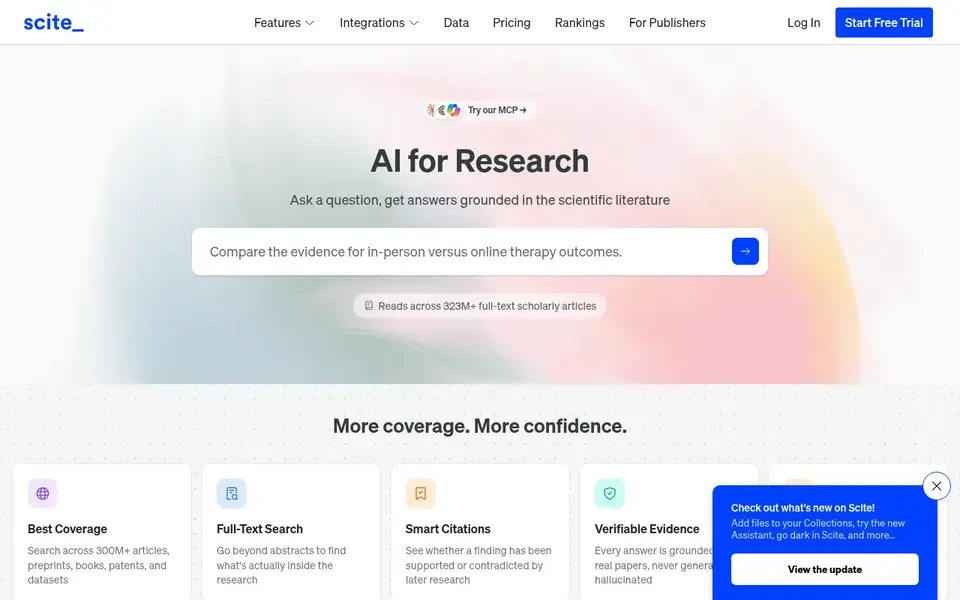
Scite works best for Citation-backed answers and claim context. Scite presents itself as AI for research that searches a very large body of scholarly articles to provide citation-backed answers and present how each claim is supported or disputed.
Confirm how its citation classifications apply to your discipline before leaning on them. If you chiefly have to branch out visually across related papers, another choice here suits better. What you pay to start with Scite: $12 per month. Free access: Free trial.
Trade-offs to know: Focus is on citation context, not mapping.
- Citation-backed answers
- Useful for checking contested findings
- May feel narrow for early exploration
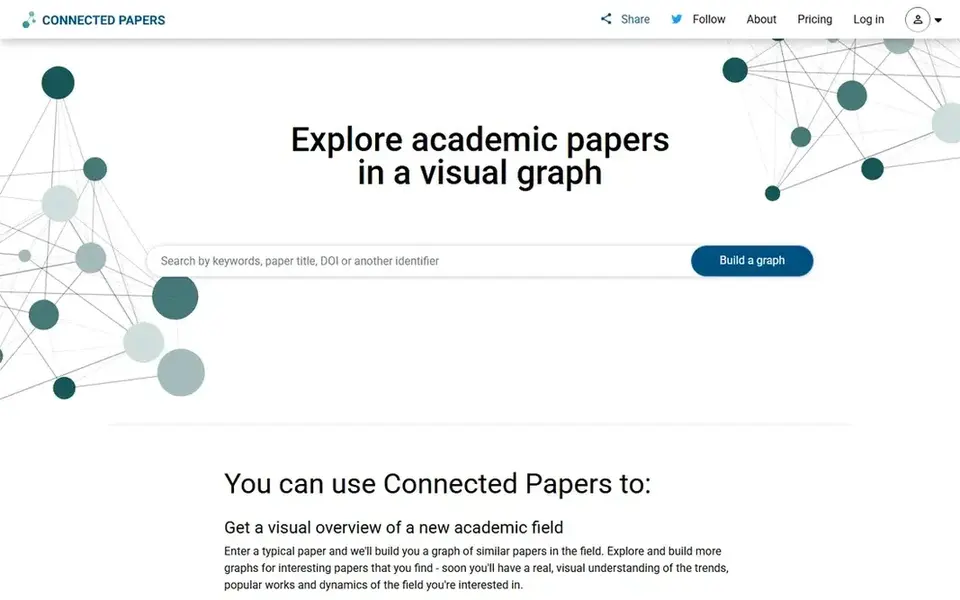
Connected Papers is a good fit for visual exploration of related academic papers. The visual approach is useful for exploration but restricted for structured review work like extracting findings or weighing evidence. Check how well the graph includes your specific discipline before based on it.
Trade-offs to know: Graph view can get crowded.
It presents related work as a graph, which fits people who orient themselves better by seeing clusters and connections than by reading lists. It is a solid fit early in a project when you are mapping a topic and want to branch out from a seed paper. This comparison lists no price for Connected Papers; ask the vendor. On free options: Not stated.
- Visual graphs of related papers
- Fast orientation in a new field
- Less suited to evidence synthesis
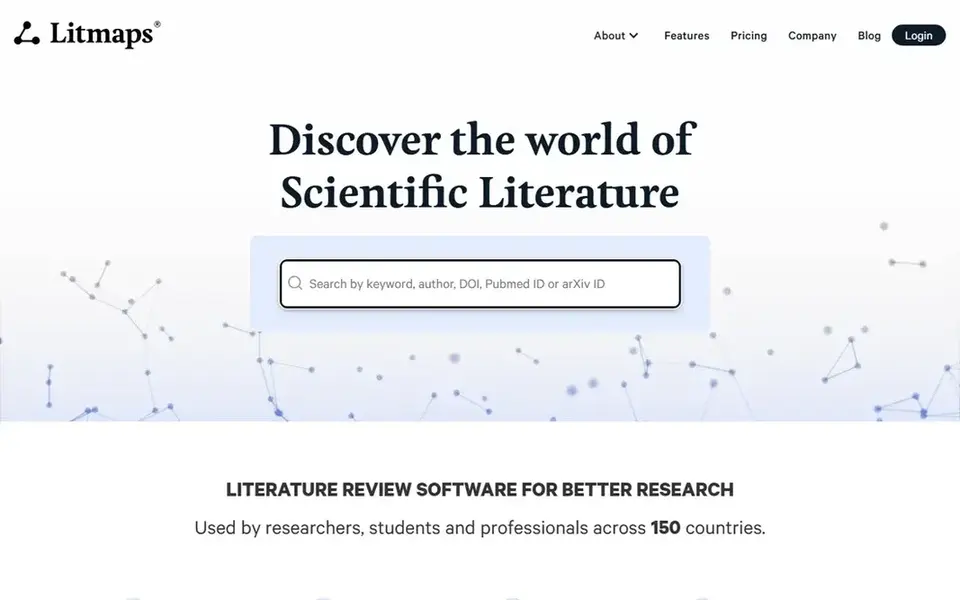
Litmaps works best for dynamic visualizations for literature reviews. Teams needing citation context analysis should look at other choices here.
Since it centers on visualization and review acceleration, it is not designed as a claim-level evidence checker or a general-purpose academic search engine. On top of that, Litmaps describes itself as a literature review assistant that accelerates the whole review process, helping researchers discover important papers quicker and transforming how they work through dynamic visualizations. Price to start with Litmaps: $10 per month. Free access: Not stated.
The main drawbacks: Visual-first workflow may not suit everyone.
- Helps surface important papers quicker
- Dynamic visualizations
- Not a full evidence synthesis suite
Semantic Scholar
Great for: AI-assisted discovery across scientific literature
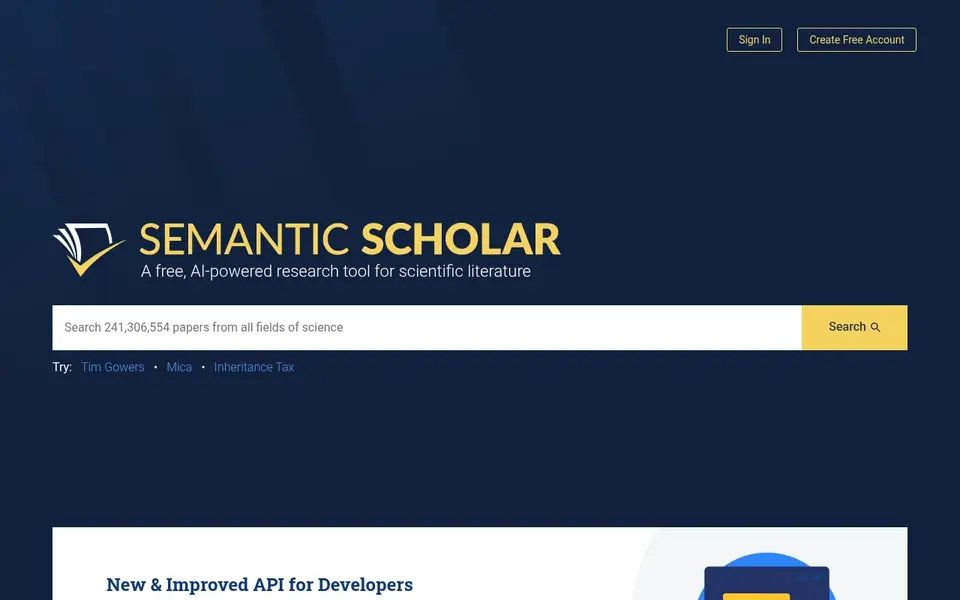
Think of Semantic Scholar for AI-assisted discovery across scientific literature. Semantic Scholar is an AI-powered research tool built to help scholars discover relevant research by applying semantics and engineering to scientific literature. Its strength is discovery, so it does not replace dedicated literature review or evidence synthesis workflows.
Where it falls short: Less centred on visual citation mapping.
More specifically, researchers who need visual graphs of citation relationships or claim-level citation context should pair it with a more specialized choice. Beyond that, confirm coverage for your discipline on the vendor site before relying on it alone. No starting price is listed for Semantic Scholar here; confirm pricing on the vendor site. Free plan details: Not stated.
- AI relevance signals for finding related work
- Straightforward starting point for discovery
- Depth of filtering varies by field
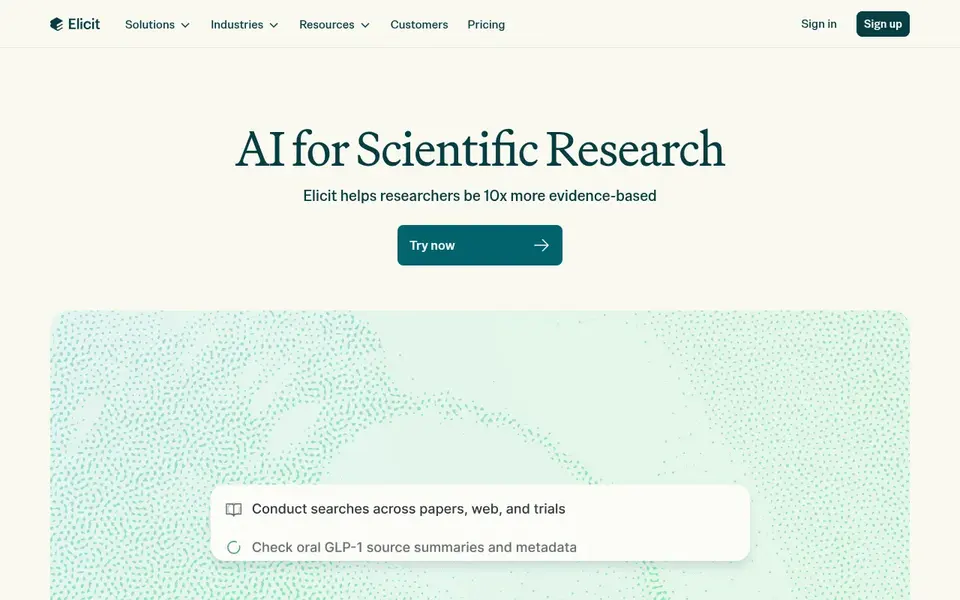
Think of Elicit for evidence synthesis and research planning. It suits researchers and teams who require help beyond finding papers, including structuring evidence and planning work.
It is a reasonable choice when your workflow spans synthesis and planning instead of discovery alone. Starting cost for Elicit: $11 per user per month. Free plan details: Free trial.
The main drawbacks: Wide scope can feel unfocused.
- Helps with landscape and experiment design
- Also aids proposal drafting
- Not a visual citation mapper
What went into this list
Selection started from tools commonly considered for ResearchRabbit, then narrowed to 5 that have clear pricing information or a clear quote process. Prices and plan limits come from vendor pages and can change, so confirm them on the vendor site before you buy. The order reflects how well each tool fits the most common buying scenario for ResearchRabbit, then price clarity, then free plan access. It is a starting point, not a verdict.
A buyer's checklist
- Confirm the entry price on the vendor page. For Connected Papers and Semantic Scholar that means a quote rather than a fixed price.
- Take the trial from Scite and Elicit and push a live task through it before you pay.
- Before choosing Scite, weigh its main limit: focus is on citation context, not mapping.
- Find out whether the entry plan of Connected Papers covers your must-haves or only a trimmed-down version.
- Check whether Semantic Scholar bills monthly or annually, and what cancelling early costs.
Frequently asked questions
Do these tools publish their prices?
Not all of them. Connected Papers and Semantic Scholar publish no starting price, so expect a quote request for those. The rest, Scite included, show a starting price, though seats and billing terms still change the final cost.
Is Scite the right pick for everyone comparing ResearchRabbit?
No single tool suits every team. Scite comes first because it fits Citation-backed answers and claim context, while Connected Papers suits visual exploration of related academic papers and Litmaps suits dynamic visualizations for literature reviews. Match the tool to your own size, budget and workflow before deciding.
Which alternatives are best for visual literature mapping?
For most readers this guide would start with Scite, built for Citation-backed answers and claim context. Connected Papers is the alternative for visual exploration of related academic papers, and Litmaps for dynamic visualizations for literature reviews. The right answer depends on budget and workflow.
Does any tool for ResearchRabbit here have a free plan?
A permanent free plan is not offered by Scite, Elicit or the other tools here. Scite, Elicit offer a trial. Plan a short evaluation period instead.
Can I try these tools before paying?
Often, yes. Scite and Elicit offer a free trial. Use your own data and a real task during the test, and check what the free tier or trial limits before you rely on it.
Sources
See where you really rank - block by block
ProMapRanker scans Google Maps across a grid of your service area. Simple monthly plans from $19, white-label on every plan.
Start freeBrowse all guides
← AI Data Extraction Tools: Best Picks of 20265 Best AI Construction Data Analytics Software for 2026 →
 best ai data clean room software
AI Data Clean Room Software: 5 Options Compared in 2026
5 options for the best AI data clean room software, with entry costs, free tiers and the buyer each one serves. Every tool lists pros and cons. No hype.
Read → best software for real-time ai data processing
6 Best Software for Real-Time AI Data Processing in 2026
Best software for Real-Time AI data processing: 6 tools compared on price, free plans and fit. Fit and flaws are laid out for each entry. Skim the table first.
Read → best machine learning tools for data integration
Best Machine Learning Tools for Data Integration in 2026
Weighing the best machine learning tools for data integration? We lined up 5 products by cost, free access and fit. Real limits included. Numbers first.
Read → best ai tools for academic research
Best AI Tools for Academic Research (2026)
6 products for the best AI tools for academic research, ranked by fit, with starting costs and free tiers. Weak spots flagged for every entry. Facts only.
Read → best ai search analytics platforms
Best AI Search Analytics Platforms in 2026
Best AI search analytics platforms compared for tracking brand mentions in AI answers, with prices, engines covered and what each tool does with the data.
Read → best data aggregation tools
Best Data Aggregation Tools in 2026
Best data aggregation tools in 2026 compared: managed ELT, open source pipelines, and streaming options for warehouses, analytics, and growing teams today.
Read →More in Data & Analytics · All guides A to Z by date · Latest guides