 ProMapRanker
Best AI Search Analytics Platforms in 2026

Key takeaways
- Prompt tracking is the core feature, but engines covered and prompt limits decide whether a tool fits your market.
- Entry prices range from free and $29 per month to quote-only enterprise plans.
- Some tools only monitor, while others add content fixes, crawler analytics or revenue attribution.
- No tool can control what a model says, so use the data to fix source pages and content gaps.
Quick comparison
| Pick | Great for | Pricing starts at | Free tier | |
|---|---|---|---|---|
 Profound | Enterprise brands and agencies | See website | Free trial | Visit |
 Peec AI | Agencies and mid-market teams | See website | Free trial | Visit |
 Otterly AI | Small teams starting AI tracking | $29 per month | Free trial | Visit |
 Brandlight | Large brands buying through sales | See website | No | Visit |
 Scrunch AI | Monitoring plus site fixes | $250 per month | Free trial | Visit |
 Goodie | Tracking tied to optimisation actions | $399 per month | Free trial | Visit |
 AthenaHQ | Trying many engines before paying | Free | Yes | Visit |
 Ahrefs Brand Radar | SEO teams already using Ahrefs | $199 per month | Free trial | Visit |
The best AI search analytics platforms
AI search analytics is a new category with a simple question at its centre: when someone asks an AI assistant about your product, does it mention you, and does it get the facts right. The tools below track prompts across chatbots and AI overviews, and they differ on price, prompt limits, engines covered and whether they help you fix what the models say. Treat every visibility score as a trend, not an exact measurement.
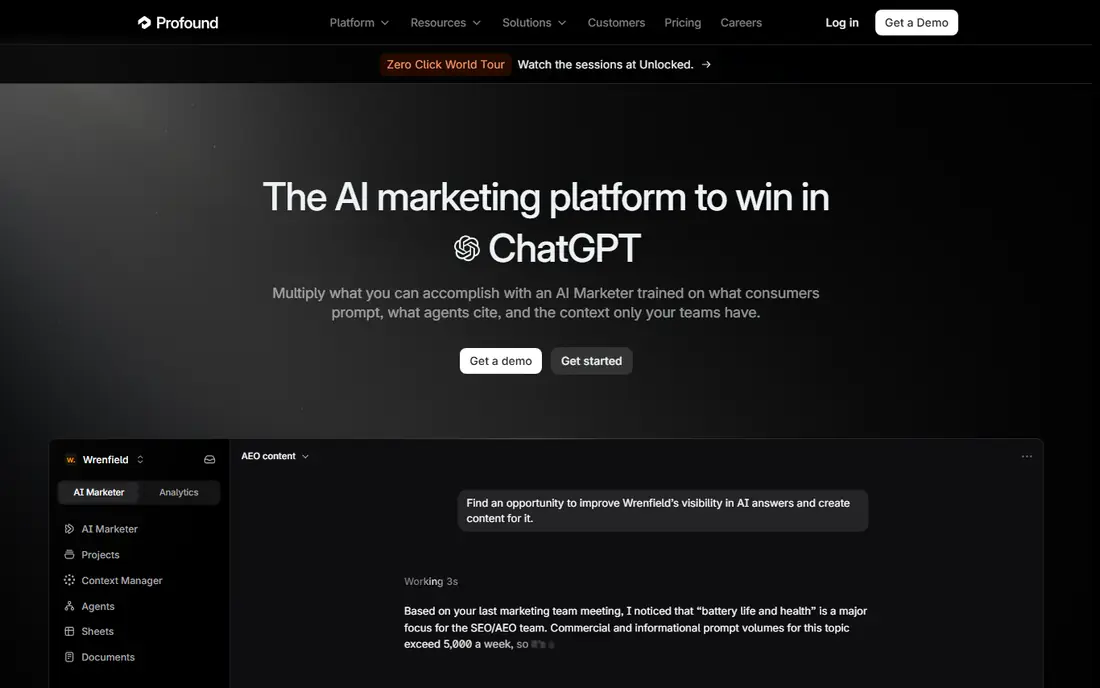
Profound is the enterprise name that comes up most in this category, and its strength is depth: it tracks which pages AI models cite, what people actually ask in your category, and how visibility differs by platform. That citation data turns a vague visibility score into a concrete editing list, because you can see exactly which source pages the models pull from. For a large brand, that is the difference between guessing and fixing.
Brand pricing is quote-based after a free seven-day trial, which runs a fixed prompt set on ChatGPT, Gemini and Google AI Overviews. The catch is access: small teams will find the trial short and the enterprise pricing opaque, so Profound fits brands with a real content budget, not a solo site testing the category.
- Deep citation and conversation demand data
- Up to nine engines on enterprise plans
- AI Marketer agent
- No published brand price after trial
- Trial prompts cannot be customised
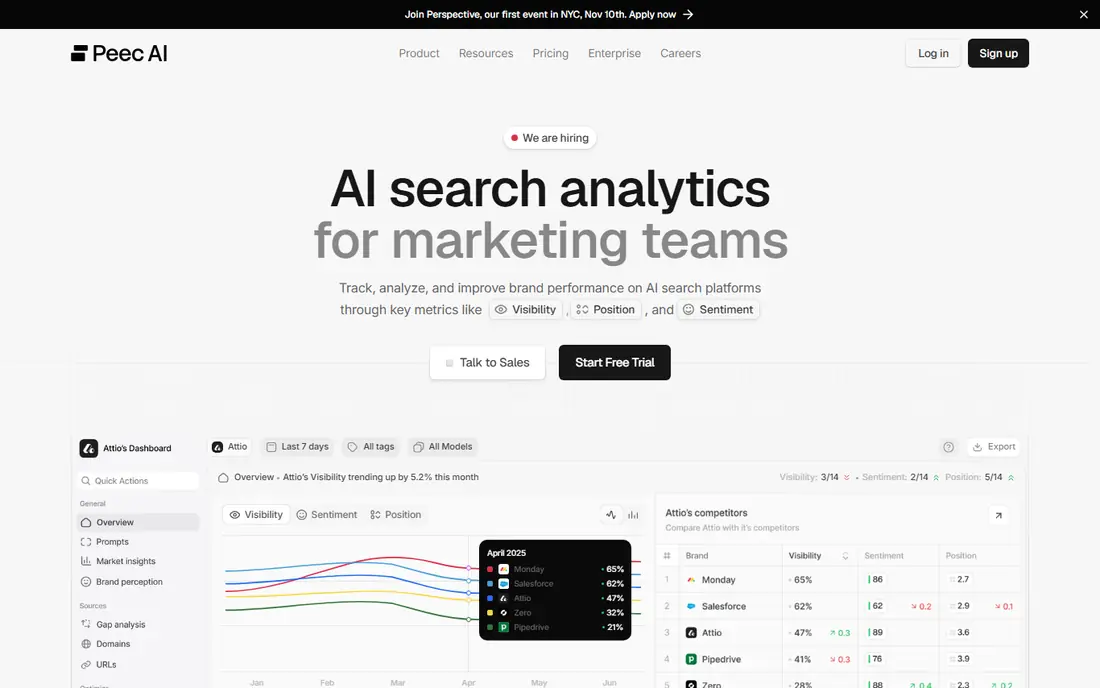
Peec AI, based in Berlin, is a clean daily tracker for teams that need prompt-level data across several engines without enterprise complexity. It covers ChatGPT, Gemini, AI Overviews, AI Mode, Copilot and other engines depending on plan, and agencies value unlimited seats for client work. If your main need is reliable daily visibility data, Peec AI is a strong mid-market choice.
We list pricing as See website because recent sources showed different entry figures in euros, and the current plan page is the reliable source. The catch is scope: Peec AI is deliberately monitoring-focused, so teams that want the tool to fix pages or serve optimised content will need a second product for that work.
- Daily prompt tracking across major engines
- Unlimited seats on many plans
- Clean analytics
- Published entry price varied by source and currency
- Monitoring focus over remediation
Otterly AI is the budget entry point that still feels like a real tool rather than a demo. For $29 per month you get daily tracking on a small prompt set across the engines most buyers check first, plus recommendations for what to improve. Small teams that want to learn whether AI search matters for their niche can start here without an enterprise conversation.
The Lite plan was listed at $29 per month for 15 prompts, with higher plans adding engines and prompts. The catch is limits: 15 prompts cover one product or topic well, but a business with several products will need a higher tier, and Gemini, AI Mode and Claude sit as add-ons on some plans.
- Lowest credible entry price
- Covers ChatGPT, AI Overviews, Perplexity and Copilot
- Entry plan covers few prompts
- Some engines are paid add-ons
Brandlight positions itself as an execution partner for very large brands rather than a self-serve dashboard, which suits chief marketing teams that want help acting on the data, not just charts. Its enterprise focus means account support and custom measurement are part of the pitch, and it is often compared with Profound for large-brand work. If your organisation buys through sales and wants a partner, Brandlight belongs on the shortlist.
Pricing is quote-only and not published, so we list it as See website. The catch is verification: with less public pricing and feature detail than self-serve rivals, you will need a demo and a written scope to judge whether Brandlight fits, and small teams should skip it in favour of a priced, trial-based tool.
- Enterprise AI visibility tracking
- Execution partner positioning
- Fortune 500 focus
- Quote-only pricing
- Public feature depth is limited
Scrunch AI goes beyond counting mentions: it adds AI crawler analytics and an agent experience layer that serves optimised pages to AI crawlers, plus audits of what those crawlers see. That combination suits teams that already know they have a visibility problem and want to fix the source site, not just watch the score move. It is one of the few tools here that treats the website as part of the product.
Pricing was listed from $250 per month billed annually, or $300 month to month, with a seven-day trial. The catch is change: Scrunch was reported as acquired in recent tool listings, so confirm the current product, pricing and support status on its own site before committing to an annual plan.
- Monitoring plus AI crawler analytics
- Serves optimised pages to AI agents
- Site audits
- Entry price is high for small teams
- Company was reported as acquired, so check current status
Goodie, listed as higoodie.com, is for brands that want tracking to lead directly to work: each month includes optimisation actions alongside visibility data, and it puts weight on revenue attribution rather than vanity scores. That action link matters, because a dashboard that only reports a falling score leaves the team asking what to do next. Goodie tries to answer that question inside the same tool.
The Explorer plan was listed at $399 per month, with a seven-day trial and 120 prompts on some comparisons. The catch is price and size: $399 per month is a serious commitment for a smaller vendor, so ask for a trial on your own prompts and check attribution claims against your own analytics before paying.
- Visibility tracking wired to optimisation actions
- Revenue attribution focus
- Prompt coverage across major engines
- High entry price
- Smaller vendor with less public track record
AthenaHQ is the try-before-you-pay option in this list, with a free Essential plan that includes a $25 credit, so a team can test real prompts across several engines before spending anything. Paid plans broaden engine coverage and add an optimisation agent, and its revenue attribution focus suits teams that need to connect AI visibility to business results. For a cautious first step, the free plan is genuinely useful.
The free plan is available, with Starter listed at $295 per month in recent comparisons. The catch is the jump: moving from free to Starter is a large step, so use the free credit to prove the tool covers your engines and prompts before you commit to that price.
- Free plan with a credit to test
- Broad engine coverage on paid plans
- Optimisation agent
- Starter plan is expensive
- Free plan limits may be tight for ongoing use
Ahrefs Brand Radar suits SEO teams that already live in Ahrefs, because it adds AI mention tracking to the keyword, backlink and content data they already use. It can research any brand in its prompt index, not only your own site, which makes competitor checks easy, and it covers AI Overviews, Gemini, ChatGPT, Perplexity, Copilot and AI Mode. If your team already pays for Ahrefs, the add-on is a natural extension.
Brand Radar add-ons were listed from $199 per month per platform, or $699 per month for all platforms, on top of an Ahrefs plan. The catch is cost and freshness: the all-in price is high, and monthly chatbot refreshes mean the data is less live than a daily tracker, so compare it against a dedicated daily tool if freshness matters.
- AI mention data inside a familiar SEO suite
- Large prompt index
- Research any brand, not only your own
- Add-on pricing on top of an Ahrefs plan
- Monthly chatbot refresh limits freshness
How we picked these
We compared official pricing pages and recent AI visibility tool comparisons, and we kept only tools that track brand mentions in AI answers and are still operating. Prices are entry figures from October 2026 checks, and where sources disagreed we marked the price as See website rather than choosing a figure. We did not run a paid tracking campaign for this guide, so engine and feature notes reflect published plans and public comparisons, not a live account test, and visibility scores should be read as trends.
How to choose an AI search analytics platform
Start with your prompt list, not the dashboard. Write the twenty questions your customers actually ask, including comparison and problem questions, then check which tools cover those prompts and engines. A tool that tracks the wrong questions will report a reassuring score while missing the queries that drive sales.
Check prompt limits and refresh frequency together. A cheap plan with fifteen prompts and monthly refreshes may be fine for one product, while a multi-product brand needs more prompts and daily data. Ask how often each engine is checked and whether you can add prompts mid-month without a plan change.
Decide whether you need monitoring or fixes. Monitoring-only tools are cheaper and cleaner for reporting, while tools with crawler analytics, page optimisation or attribution help you act on the data. If your team already has content and developer time, monitoring may be enough; if not, a tool that suggests fixes can save months.
Frequently asked questions
Which tool is best for AI search analytics for a small team?
Otterly AI is the most affordable credible starting point, at $29 per month for a small prompt set. AthenaHQ free plan is a good way to test engines first, while Peec AI suits a growing team that needs more prompts and seats.
What are the best AI search analytics tools for agencies?
Peec AI and Profound suit agencies, with multi-client workspaces and broad engine coverage, though Profound is enterprise-priced after trial. Check seat limits, client reporting and prompt allowances, since those decide agency costs more than the headline plan price.
What is the best AI search analytics platform for enterprise brands?
Profound and Brandlight lead for enterprise brands, with deep citation data, conversation demand analysis and sales-led support. Both are quote-based for full plans, so request a demo on your own prompts and a written scope before comparing them.
How accurate are AI visibility scores?
Visibility scores are directional trends, not exact measurements, because models give different answers by prompt wording, location and time. Use them to spot rising or falling topics and to find pages the models cite, then verify important claims on your own site and in the models directly.
Do I need a separate AI search tool if I already use Ahrefs or Semrush?
If you already use Ahrefs, Brand Radar adds AI mentions without a new vendor, and Semrush offers a similar AI visibility add-on. A dedicated tool may still be better if you need daily refreshes, more engines or crawler analytics that a suite add-on does not provide.
Sources
See where you really rank - block by block
ProMapRanker scans Google Maps across a grid of your service area. Simple monthly plans from $19, white-label on every plan.
Start freeKeep reading
 top rated pdf scanner software
Best PDF Scanner Software in 2026
Looking for top rated pdf scanner software? We compare 8 scanner apps on scan quality, OCR, price, watermarks and privacy to find your best fit for daily use.
Read → expensify alternatives
Best Expensify Alternatives in 2026
Looking for expensify alternatives? We compare 8 top expense tools on price, cards, receipts and approvals to help your team pick the right one in 2026.
Read → best tools for drawing diagrams
Best Tools for Drawing Diagrams in 2026
Compare the best tools for drawing diagrams, from Lucidchart and Miro to free diagrams.net. See pricing, templates, and collaboration features for teams.
Read →