 ProMapRanker
Best Expensify Alternatives in 2026

Key takeaways
- Ramp and Brex offer a free core plan built around their own corporate cards, which suits card-first teams.
- Zoho Expense and BILL Spend and Expense give small teams a low cost route into receipt capture and approvals.
- Navan stands out when travel booking and expenses need to sit in one place.
- SAP Concur and Sage Expense Management fit larger or more formal finance teams, but their setup takes more care.
- The cheapest headline price is not always the cheapest total cost, so check card fees, payment fees and plan minimums.
Quick comparison
| Pick | Great for | Pricing starts at | Free tier | |
|---|---|---|---|---|
 Ramp | Card-first startups and growth teams | Free | Yes | Visit |
 Brex | Startups and mid-market finance teams | Free | Yes | Visit |
 Zoho Expense | Small teams and Zoho users | $3 per user per month | Yes | Visit |
 Navan | Travel-heavy teams | $15 per user per month | Yes | Visit |
 SAP Concur | Large teams with formal policies | See website | No | Visit |
 Sage Expense Management | Teams keeping their own cards | $11.99 per user per month | No | Visit |
 BILL Spend and Expense | Small teams wanting free spend control | Free | Yes | Visit |
 Rydoo | Multi-country expense teams | $9 per user per month | No | Visit |
The best expensify alternatives
We compared these tools on published pricing, card models, receipt capture, approvals and accounting links. None of them is Expensify itself, and each one takes a different route to the same goal: fewer manual expense reports.
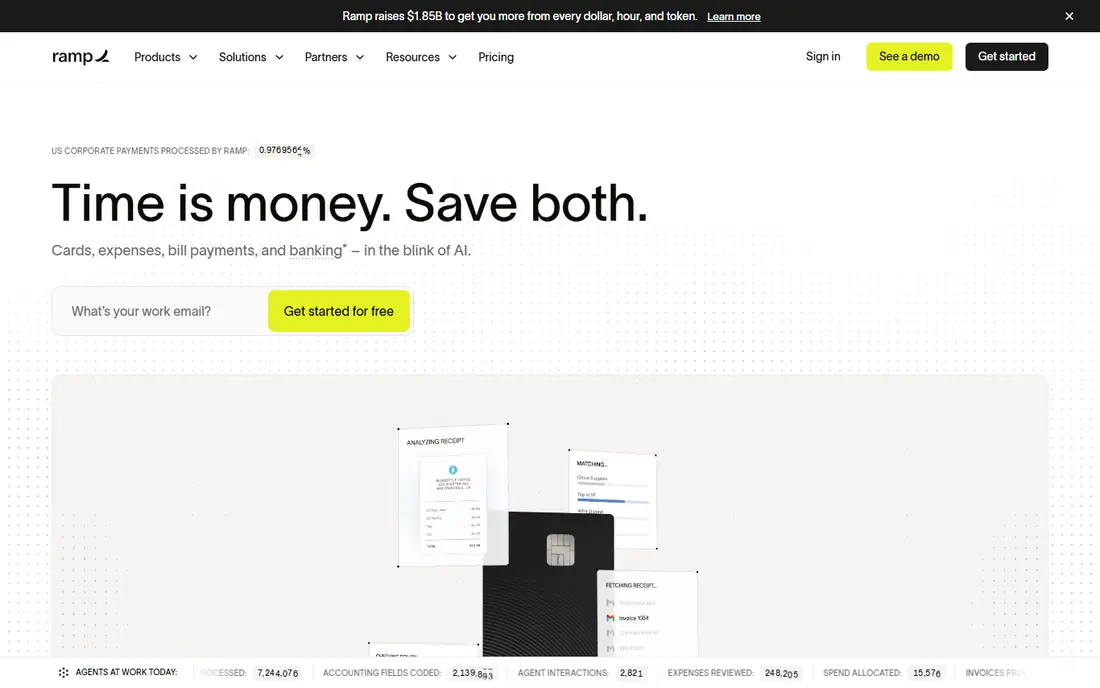
Ramp replaces the expense report with card controls and automatic capture. Staff photograph a receipt, Ramp matches it to the card transaction, and policy checks run as spend happens rather than at month end. That order matters for finance teams that spend most of their time chasing missing receipts.
The catch is the model. Ramp works best when card spend moves to Ramp, so a team that must keep bank cards elsewhere will get less value. Plus, at $15 per user per month, adds deeper approvals and controls. Check the current platform fee before you sign, since it varies with team size.
- Free core plan with cards and expense tools
- Receipt matching and policy checks
- Links to QuickBooks, Xero and NetSuite
- Free tier needs a Ramp card
- Plus adds a platform fee that is not a single flat figure
- Advanced controls sit on paid plans
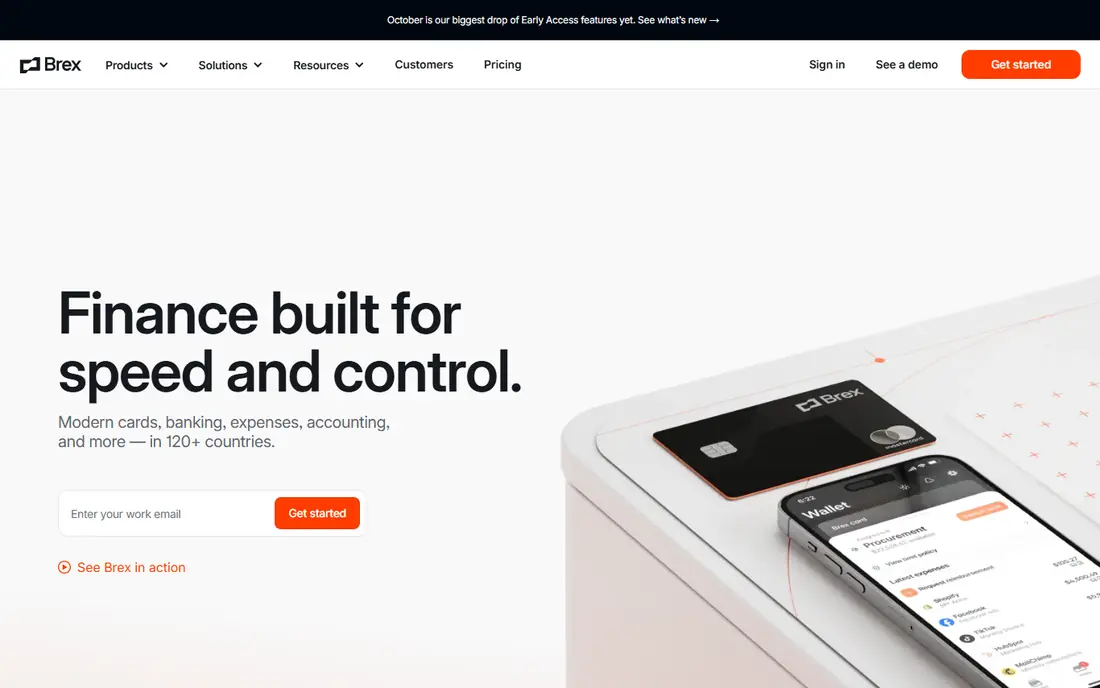
Brex pairs corporate cards with expense management, reimbursements and travel booking. Essentials is free and covers the basics: cards, spend limits, approvals and accounting links. For a young company, that is a full finance workflow without a seat fee.
Premium is where multi-entity support, custom expense policies and dynamic approval chains appear. If your company runs more than one entity or needs tighter audit trails, budget for that step. Brex is less appealing if you need a tool that works fully apart from a card program.
- Free Essentials plan with cards and expense tools
- No personal guarantee on its card products
- Travel booking and bill pay in the same account
- Premium controls cost $12 per user per month
- Some deeper ERP links sit on paid tiers
- Eligibility rules apply
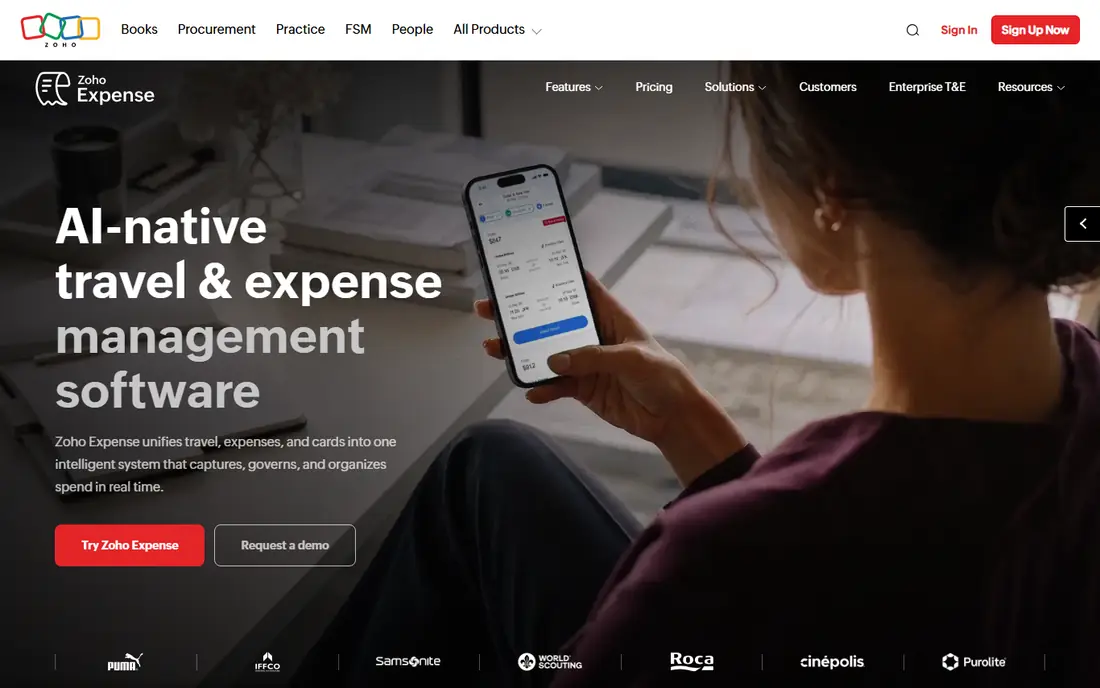
Zoho Expense is the plain, low cost option in this list. It handles expense reports, approvals, mileage and multi-currency spending, and it fits neatly with Zoho Books, Zoho CRM and other Zoho apps. Small teams that already use Zoho will find setup short.
The free plan is best for a micro team. It allows 3 users and a limited number of automated scans each month, so a busier team should price Standard at $3 per user per month billed annually. That is still cheap, but add Zoho Books if you want bank feeds, since that is a separate product.
- Free plan for up to 3 users
- Low paid starting price
- Mileage, multi-currency and approval tools
- Free plan caps automated receipt scans
- Bank feeds need Zoho Books
- Card reconciliation sits on paid plans
Navan starts from travel, which changes how expenses feel. Staff book flights and hotels inside policy, and the trip cost flows into expenses without a second entry step. Managers see travel spend and general expenses in one place, which helps when travel is a large share of spend.
Travel itself is free for companies with up to 300 employees on Business, while expense management is free for the first 5 monthly expensing users and then $15 per user per month. That split is good for a team that travels often but has few people filing expenses. It is less neat for a team that wants deep accounts payable tools as well.
- Travel booking and expenses in one system
- First 5 monthly expensing users free on Business
- 24/7 travel support
- Expense pricing starts after the free user allowance
- Larger companies need an Enterprise quote
- No bill pay depth to match Ramp
SAP Concur is the enterprise pick. It covers Concur Expense, Concur Travel and Concur Invoice, with audit tools and reporting that suit companies with strict controls, many locations or complex travel rules. Its integration set is broad, including SAP, NetSuite, QuickBooks and Xero.
Pricing is quoted per expense report rather than per seat, with Base reported from $7 per report and Plus from $11 per report, and Premium by quote. That model can suit a company with many occasional filers, but it makes budgeting harder. Small teams should trial a lighter tool first, since Concur rewards careful setup.
- Deep policy, audit and travel controls
- Large integration set
- Per-report pricing with unlimited users
- Pricing is complex and partly quote based
- Implementation can be slow
- Small teams may find it heavy
Sage Expense Management, formerly Fyle, is built for finance teams that do not want to change cards. Real-time card feeds bring transactions in, staff send receipts by text or email, and the system codes and matches them before sync to QuickBooks, Xero or Sage Intacct. That is a strong fit for a company with an established card program.
Growth starts at $11.99 per active user per month billed annually, with a 5-user minimum, and Business is $14.99 with a 10-user minimum. Active user billing helps, since only people who file or have card activity count. The lack of a free plan means a trial or demo is the right first step.
- Works with existing Visa and Mastercard feeds
- Charges only active users
- Receipt capture by text, email and app
- No free plan
- Minimum billing applies
- Two-way ERP links may carry a one-time fee
BILL Spend and Expense, formerly Divvy, gives teams free cards, budgets and expense tracking. Managers set budgets by team or vendor, staff spend within those limits, and receipts flow into the same view. For a small team, that removes much of the monthly report chase.
The free plan is the main draw, but read the edges. Accounts payable and receivable are separate paid subscriptions, and checks, ACH and instant transfers can carry per-transaction fees. If your main pain is vendor bill payment rather than card spend, price the full BILL bundle before you judge the cost.
- Free core spend and expense plan
- Virtual and physical cards with budgets
- Links to major accounting tools
- Full accounts payable is a separate paid product
- Some payment types carry transaction fees
- Credit lines depend on approval
Rydoo suits teams that file expenses across countries and currencies. Staff submit expenses on mobile, managers approve in real time, and mileage can be worked out with map-based distances. Finance gets a clean trail without asking staff to learn a complex system.
Essentials is reported at $9 per user per month billed annually, with Pro at $11, both from 5 users. That minimum matters for a very small team. Rydoo is less of a card platform than Ramp or Brex, so pair it with your existing cards and check accounting links for your region before you commit.
- Clear mobile expense flow
- Mileage and per diem tools
- Multi-currency and multi-country support
- No free plan
- Entry plans start from 5 users
- Advanced plans climb quickly for larger teams
How we picked these
We compared official pricing pages, feature pages and app store listings, plus public reviews, for tools that truly replace Expensify for business expense work. We kept only tools that exist and work in October 2026, and we left out Expensify itself, since this list is about alternatives. Where a price could not be pinned to a single published figure, we wrote See website rather than guessing.
What to check before you switch
Start with your card position. Card-first tools such as Ramp, Brex and BILL give the most value when you move spend to their cards. Report-first tools such as Zoho Expense, Sage Expense Management and Rydoo fit better when you must keep existing cards.
Next, count who actually files. Per-user pricing punishes a large occasional filer base, while per-report pricing or active-user billing can be cheaper for that shape. Check minimums too, since several tools in this list start from 5 or 10 users.
Then test the approval path with a real trip. Submit a receipt, a mileage claim and an out-of-policy item, and see how each one routes. A tool that looks tidy in a demo can still create extra steps for managers. Finally, confirm the accounting sync for your exact system and chart of accounts, and ask about payment fees, implementation fees and contract length before you sign.
Frequently asked questions
What is the best alternative to Expensify for a small business?
Zoho Expense and BILL Spend and Expense are strong low cost starts. Zoho Expense suits a tiny team that wants classic reports, while BILL suits a team that wants free card budgets. Ramp is also worth a look if you are happy to use its cards.
Which Expensify alternative is free?
Ramp, Brex and BILL Spend and Expense all offer a free core plan, and Zoho Expense offers a free plan for up to 3 users. Free plans differ in limits, so check receipt scan caps, user counts and which accounting links are included.
Do these tools work without a corporate card?
Yes, in part. Zoho Expense, Sage Expense Management and Rydoo work with existing cards and reimbursement claims. Ramp, Brex and BILL are built around their own cards, so they give less value if you cannot move card spend.
Which alternative is best for travel expenses?
Navan is the clearest pick for travel, since booking and expenses share one system and policy. SAP Concur also handles travel at enterprise scale, while Ramp and Brex cover travel booking as part of a wider spend platform.
How much do Expensify alternatives cost per month?
Prices in this list run from free core plans to $15 per user per month for Navan expense users, $11.99 for Sage Expense Management Growth, and quote-based pricing for SAP Concur. Always add card fees, payment fees and any platform fee to the seat price.
Sources
See where you really rank - block by block
ProMapRanker scans Google Maps across a grid of your service area. Simple monthly plans from $19, white-label on every plan.
Start freeKeep reading
 top rated pdf scanner software
Best PDF Scanner Software in 2026
Looking for top rated pdf scanner software? We compare 8 scanner apps on scan quality, OCR, price, watermarks and privacy to find your best fit for daily use.
Read → best tools for drawing diagrams
Best Tools for Drawing Diagrams in 2026
Compare the best tools for drawing diagrams, from Lucidchart and Miro to free diagrams.net. See pricing, templates, and collaboration features for teams.
Read → best shopping cart software
Best Shopping Cart Software in 2026
Looking for the best shopping cart software? We compare 8 cart platforms on price, fees, hosting, design and scale to help your store choose well today.
Read →