 ProMapRanker
Best Shopping Cart Software in 2026

Key takeaways
- Shopify leads for most small businesses that want a hosted store and a large app set.
- WooCommerce leads for WordPress users who want full control and no platform fee.
- BigCommerce suits larger catalogs and B2B selling without platform transaction fees.
- Wix and Squarespace suit design-led small stores, while Ecwid suits adding a store to an existing site.
- Platform fees, payment fees and app costs matter as much as the monthly subscription.
Quick comparison
| Pick | Great for | Pricing starts at | Free tier | |
|---|---|---|---|---|
 Shopify | Most small businesses | $29 per month | No | Visit |
 WooCommerce | WordPress users | Free | Yes | Visit |
 BigCommerce | Larger catalogs and B2B | $29 per month | No | Visit |
 Wix | Design-led small stores | $29 per month | Yes | Visit |
 Squarespace | Creative stores | $19 per month | No | Visit |
 Adobe Commerce | Enterprise stores | See website | Yes | Visit |
 Ecwid | Adding a store to a site | $5 per month | Yes | Visit |
 Square Online | Local sellers on Square | See website | Yes | Visit |
The best shopping cart software
We compared hosted and self-hosted cart platforms on subscription price, transaction fees, hosting, design tools, app range and scale. A shopping cart is more than a checkout button, so we also weighed inventory, shipping, discounts and multi-channel selling.

Shopify is the default hosted pick for a reason. Hosting, SSL, security updates and checkout come in the subscription, so a small team can launch without managing servers. The app store covers reviews, email, shipping, subscriptions and many other jobs, and Shopify Payments removes the platform transaction fee.
Basic is $29 per month billed annually, or $39 month to month, with Grow at $79 and Advanced at $299 on annual billing. Shopify Plus starts from about $2,300 per month for larger brands. If you use a third-party gateway, Shopify charges a platform fee that falls as the plan rises, so factor payment choice into the total cost.
- Hosted store with security and updates included
- Large app store
- Strong checkout and POS links
- Platform fee applies on third-party gateways
- App costs add up
- Theme customisation has limits on lower tiers
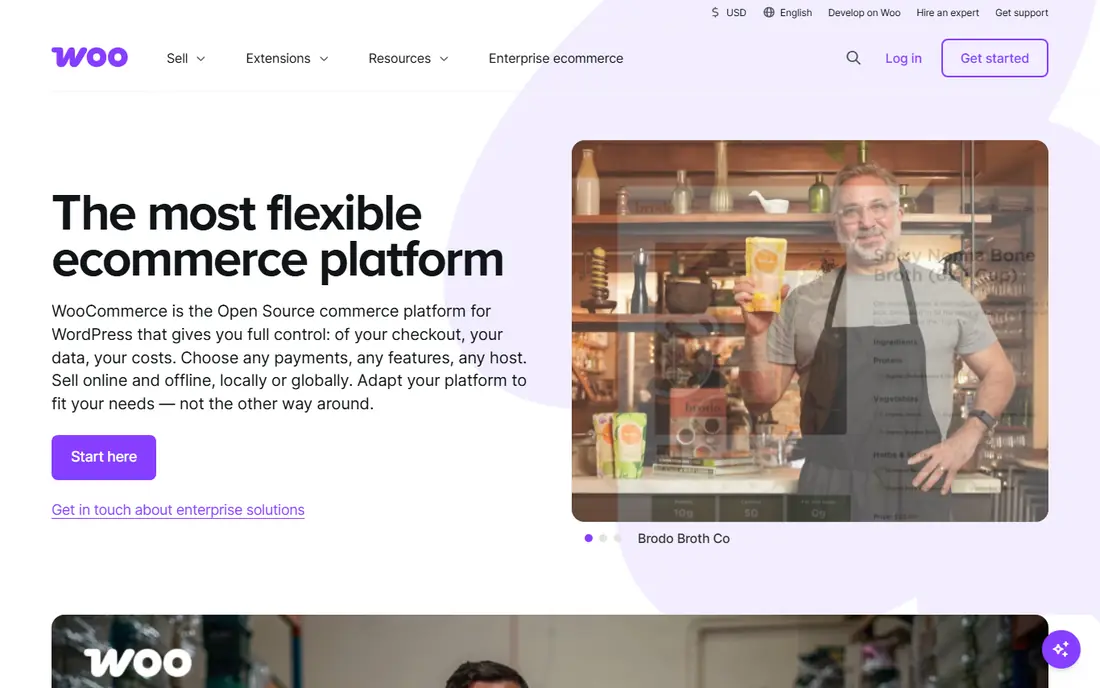
WooCommerce turns a WordPress site into a store. The plugin itself is free, and WooCommerce charges no platform transaction fee, so you pay only your payment processor. That control appeals to WordPress users who want custom URLs, content and checkout flows without a hosted platform limit.
The catch is ownership of the stack. Hosting, SSL, backups, security and updates are your job, or your host's job for a fee. A simple store can stay lean, while a complex store may spend more on hosting, premium extensions and maintenance than a hosted plan costs. Budget for that total, not just the free plugin.
- Free plugin with no platform fee
- Full control over design and data
- Huge WordPress extension range
- You pay for hosting, security and updates
- Setup takes more time
- Extension costs vary widely

BigCommerce is a hosted platform with more built-in commerce depth than many rivals. It handles large catalogs, multi-channel selling and B2B features such as bulk pricing and quoting without as many paid apps. It also charges no platform transaction fee on any plan or gateway.
Core is $29 per month billed annually, or $39 month to month, with Growth at $79 and Scale at $299 on annual billing. The main warning is sales-based plan movement: as annual online sales rise, BigCommerce may move you to a higher plan. Check the current sales thresholds before you pick a tier.
- No platform transaction fees
- Strong built-in B2B and catalog tools
- Hosted security and updates
- Plan moves up as annual sales grow
- Theme and app range is smaller than Shopify
- Setup is more involved than Wix
Wix suits a small business that wants a good-looking site and a store in one place. Its editor, templates and AI builder help a non-technical owner build pages fast, and commerce plans add products, payments, shipping and discounts. Service sellers and small product stores will find the workflow simple.
Commerce starts with Core at $29 per month billed annually. Business plans run higher for more marketing and automation features. The free plan lets you test design, but you need a paid commerce plan to accept payments. Watch app costs, since loyalty, upsell and SMS tools in the Wix App Market can add monthly fees.
- Easy drag-and-drop design
- Commerce tools built into the site builder
- Free plan for testing design
- Free plan cannot sell
- App costs can stack up
- Less suited to very large catalogs
Squarespace is the design pick for creatives, photographers, makers and small brands that sell visual products. Templates look polished with little effort, and the same dashboard covers pages, blogging, email and commerce. That single dashboard keeps a small team from juggling several tools.
Basic commerce starts at $19 per month billed annually, with a 2 percent transaction fee, while Core at $29 removes that fee for physical products. Advanced, at $99, adds subscriptions and advanced shipping. Squarespace suits a small catalog well, but a large or complex store may outgrow its app range.
- Polished templates for visual brands
- Commerce and content in one dashboard
- Simple setup
- Smaller app range than Shopify
- Transaction fee on Basic
- Fewer advanced commerce tools
Adobe Commerce, formerly Magento Commerce, is the enterprise pick for stores with complex catalogs, multiple storefronts or deep B2B needs. It gives developers full control over checkout, pricing, promotions and integrations, and it scales to very large operations. Magento Open Source is free to download for teams that can host it themselves.
The cost is the barrier. Adobe Commerce pricing is quote based, with older public ranges starting near $22,000 per year and rising with revenue, plus development and hosting costs. A small store should not start here. A large brand with a development team and complex requirements will get value that hosted tools cannot match.
- Deep customisation for complex catalogs
- Strong B2B tools
- Open-source version available
- Needs developers for most builds
- Enterprise pricing is quote based
- Hosting and maintenance costs are high
Ecwid, by Lightspeed, is different from the other tools here. Instead of rebuilding your site, you embed a store widget into WordPress, Squarespace or a hand-coded site. That suits a business with an established site that wants to start selling without a migration.
Starter is $5 per month billed annually, with a free plan for up to 10 products. Venture and higher tiers raise product limits and add social selling and digital goods. Ecwid charges no platform transaction fee, but it supports only one store currency, with display conversion only. Check that limit if you sell across currencies.
- Embeds a store into an existing site
- Free plan for a tiny catalog
- No platform transaction fees
- Single store currency
- Product limits on lower tiers
- Design control is narrower than a full platform
Square Online suits a local seller already using Square for in-person payments. Inventory, orders and payments can share one Square account, so a shop, market stall and website stay in step. Setup is simple, and the free plan covers a basic store.
Paid tiers add a custom domain, advanced shipping, discounts and other commerce tools, with current pricing listed on the Square site and varying by plan. Square charges payment processing fees, as every platform does, so compare those with your current processor. A large online-only brand may still prefer Shopify or BigCommerce for app depth.
- Free plan for a basic store
- Tight link to Square POS and payments
- Simple setup for local sellers
- Less flexible than Shopify for large stores
- Payment processing fees apply
- Advanced features need paid tiers
How we picked these
We compared official pricing pages, feature pages and recent commerce comparisons for cart platforms that work in the US in October 2026. We kept hosted and self-hosted options, plus an embed option, so readers with different sites can compare fairly. Where pricing varies by billing period or quote, we used annual-billing figures or wrote See website.
What to check before you choose a cart
Start with total cost, not the headline plan. Add payment processing, platform fees, apps, themes, hosting for self-hosted tools, and shipping tools. A $29 plan with several paid apps can cost more than a $39 plan with those features built in.
Next, test checkout as a customer. Add a product, apply a discount, check shipping options and complete a test order. A checkout that feels slow or confusing will cost sales no matter how good the admin dashboard looks. Then check migration: can you export products, customers and orders if you later move? Finally, confirm the sales channels you need, such as Instagram, Google, Amazon or in-person POS, since not every platform covers each channel equally.
Frequently asked questions
What is the best free shopping cart software?
WooCommerce is free as a plugin, though hosting costs extra. Ecwid offers a free plan for up to 10 products, and Square Online offers a free plan for a basic store. Wix also offers a free plan, but it cannot sell until you upgrade to a commerce plan.
Is Shopify or WooCommerce better?
Shopify is better if you want hosting, security and updates handled for a monthly fee. WooCommerce is better if you use WordPress and want full control with no platform fee, and you are happy to manage hosting and updates.
What is the best shopping cart platform for small business?
Shopify is the safest default for most small product businesses, while Wix or Squarespace suit design-led small stores. Ecwid suits a business that already has a site and wants to add selling without rebuilding.
Do shopping cart platforms charge transaction fees?
Some do. Shopify charges a platform fee on third-party gateways, Squarespace charges 2 percent on Basic, and BigCommerce, WooCommerce and Ecwid charge no platform fee. Every platform still passes payment processor fees, usually near card rates, so check both figures.
Which cart is best for B2B selling?
BigCommerce and Adobe Commerce lead for B2B, with bulk pricing, quoting and multi-storefront tools. BigCommerce suits mid-market B2B without enterprise overhead, while Adobe Commerce suits large, complex B2B operations with development support.
Sources
See where you really rank - block by block
ProMapRanker scans Google Maps across a grid of your service area. Simple monthly plans from $19, white-label on every plan.
Start freeKeep reading
 top rated pdf scanner software
Best PDF Scanner Software in 2026
Looking for top rated pdf scanner software? We compare 8 scanner apps on scan quality, OCR, price, watermarks and privacy to find your best fit for daily use.
Read → expensify alternatives
Best Expensify Alternatives in 2026
Looking for expensify alternatives? We compare 8 top expense tools on price, cards, receipts and approvals to help your team pick the right one in 2026.
Read → best tools for drawing diagrams
Best Tools for Drawing Diagrams in 2026
Compare the best tools for drawing diagrams, from Lucidchart and Miro to free diagrams.net. See pricing, templates, and collaboration features for teams.
Read →