 ProMapRanker
Best Data Aggregation Tools in 2026

Key takeaways
- Fivetran is a strong starting point for many teams, while the other options cover different budgets and work styles.
- Airbyte suits readers who already use its wider ecosystem or need its particular strengths.
- Free plans are useful for a trial, but paid plans usually add the limits, controls, and support that larger groups need.
- Check pricing on the vendor site before you commit, since plans and limits change during the year.
Quick comparison
| Pick | Great for | Pricing starts at | Free tier | |
|---|---|---|---|---|
 Fivetran | Managed ELT with broad connectors | See website | Yes | Visit |
 Airbyte | Open source ELT with cloud option | $20 per month | Yes | Visit |
 Stitch | Simple extract and load | $100 per month | Free trial | Visit |
 Hevo Data | No-code ELT for small teams | See website | Yes | Visit |
 Integrate.io | Fixed-fee ETL and ELT | $1,999 per month | Free trial | Visit |
 Estuary Flow | Streaming and batch in one tool | See website | Yes | Visit |
 Matillion | Warehouse-native ELT | See website | Free trial | Visit |
 Azure Data Factory | Microsoft cloud data integration | See website | Free trial | Visit |
 AWS Glue | Serverless Spark ETL in AWS | See website | Free trial | Visit |
The best data aggregation tools
We compared official feature pages, pricing pages, and app store listings for this list. The options below cover different budgets, team sizes, and work styles, so start with the fit for your group rather than the longest feature list.
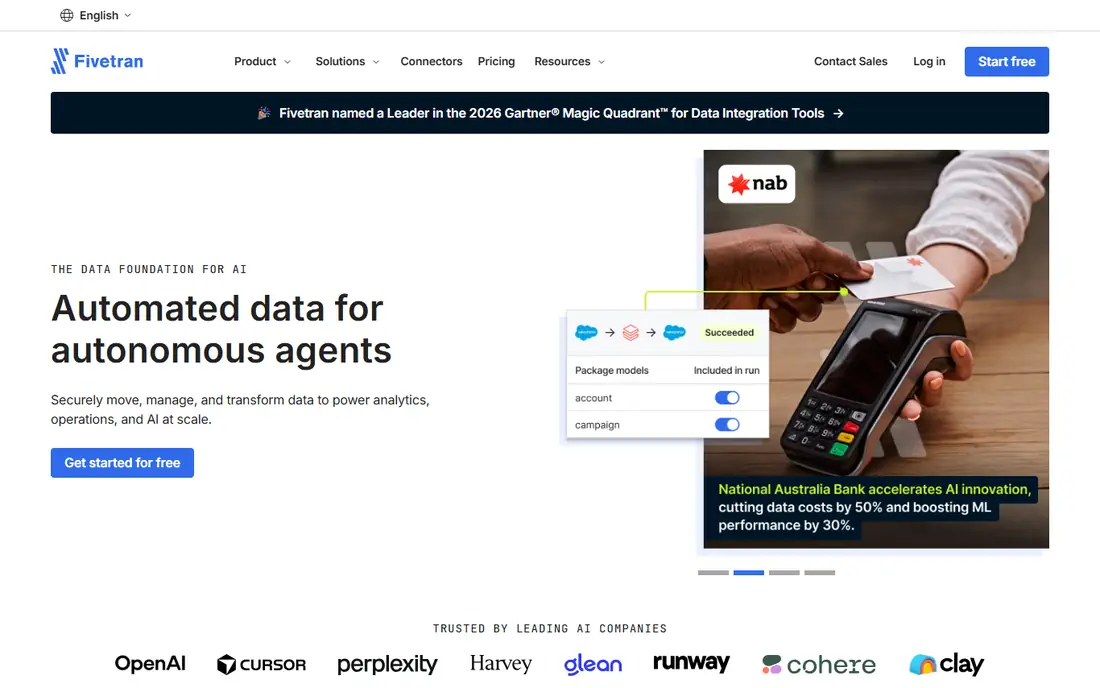
Fivetran is a fully managed ELT platform known for stable connectors and automated schema handling. A team can move data from apps and databases into a warehouse with little pipeline upkeep, which frees analysts to work on reports rather than sync logs.
The trade is usage-based cost, which can rise with data volume, and less custom control than an open source tool. For teams that want reliability over tuning, Fivetran is often the first tool to price.
- Automated schema handling
- Many connectors
- Low ops work
- Usage-based costs can rise with volume
- Less custom control
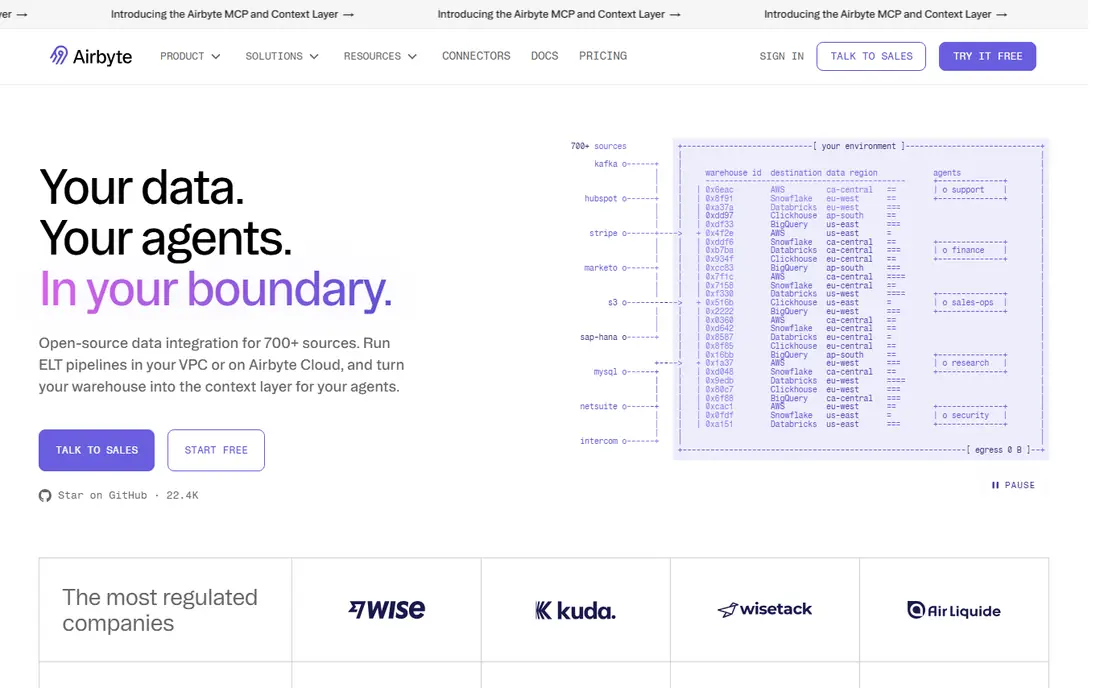
Airbyte combines an open source core with a cloud option, plus a large connector catalog and a kit for building custom connectors. Teams can self-host for control or use the cloud for less upkeep, and switch approach as needs change.
Cloud costs depend on volume, while self-hosting needs ops work for updates and monitoring. For teams that want flexibility and a large catalog without full vendor lock-in, Airbyte is a strong pick.
- Large connector catalog
- Self-host or cloud
- Custom connector kit
- Cloud costs depend on volume
- Self-host needs ops work
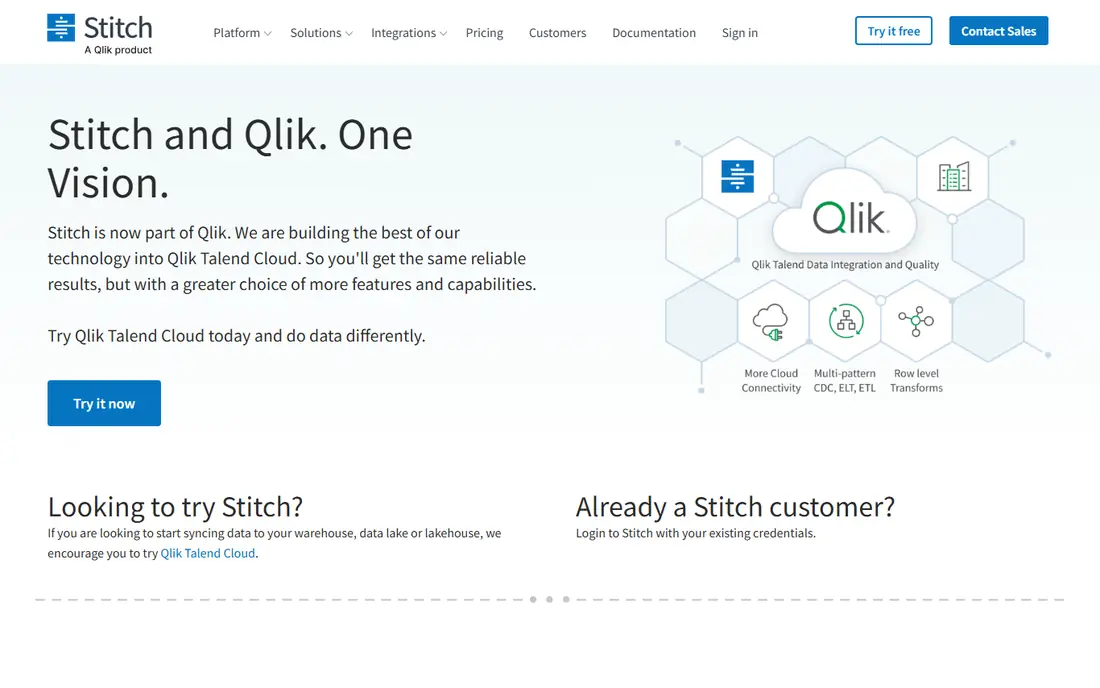
Stitch, from Talend, focuses on simple extract and load, with row-based tiers and a quick setup. Small teams can start moving data into a warehouse without building a complex pipeline or learning a large platform first.
Advanced transforms and change data capture are more limited than in larger platforms, so teams with complex needs may outgrow Stitch. For a simple, fast start, its clarity is a real plus.
- Simple setup
- Row-based tiers
- Quick start
- Fewer advanced transforms
- Limited change data capture
Hevo Data gives no-code ELT for small and mid-size teams, with real-time options and drag-and-drop transforms. A team without a dedicated data engineer can set up pipelines and monitor them from one dashboard.
Event-based pricing needs care, since each insert, update, and delete counts toward volume. Advanced control is also more limited than code-first tools. For no-code teams, Hevo is a practical, friendly option.
- No-code setup
- Real-time options
- Drag-and-drop transforms
- Event-based pricing needs care
- Advanced control is limited
Integrate.io offers fixed-fee ETL, ELT, change data capture, and reverse ETL in one platform, with many transform steps. That fixed fee can help teams with predictable budgets, since costs do not rise with every extra row in the same way usage models do.
The entry price is high for small teams, and setup suits teams with data staff. For mid-size teams that need several pipeline types in one place, Integrate.io is worth a quote.
- Fixed fee
- ETL, ELT, and reverse ETL in one place
- Many transforms
- High entry price
- Setup suits teams with data staff
Estuary Flow combines streaming change data capture with batch loading, so a team can handle real-time events and regular syncs in one tool. That mix suits teams that need fresh data for dashboards and apps, not just nightly loads.
As a newer platform, Estuary needs careful volume math, since pricing depends on data moved and connectors used. For teams with streaming needs, its low-latency approach is a clear advantage.
- Streaming change data capture
- Batch and real-time together
- Free tier
- Newer platform
- Pricing needs volume math
Matillion is a warehouse-native ELT tool, with push-down transforms that run inside the warehouse, plus Python and SQL support. That design suits teams that want transforms close to their data, rather than in a separate processing layer.
Pricing is quote-only, and the tool is warehouse-centric, so teams with other targets may need another product. For warehouse-first teams, Matillion gives strong transform control.
- Push-down transforms in the warehouse
- Python and SQL support
- Agentic pipeline help
- Quote-only pricing
- Warehouse-centric, less for other targets
Azure Data Factory is Microsoft cloud data integration, with visual and code pipelines and strong links to Azure services. Teams already in Azure can move and transform data without adding a separate vendor for every job.
The tool is Azure-centric, so teams on other clouds may prefer a neutral platform. Complex pipelines also take learning. For Microsoft shops, Data Factory is a natural, pay-as-you-go choice.
- Visual and code pipelines
- Many Azure links
- Pay-as-you-go
- Azure-centric
- Learning curve for complex pipelines
AWS Glue gives serverless Spark-based ETL inside AWS, with visual and code options and strong links to AWS storage and catalogs. Teams in AWS can build pipelines without managing Spark clusters themselves.
The tool is AWS-centric, and costs depend on compute use, so a team should estimate job size before scaling. For AWS-native teams, Glue is a practical, integrated pick.
- Serverless Spark ETL
- Visual and code options
- AWS links
- AWS-centric
- Costs depend on compute use
How we picked these
We started with products that exist and work in October 2026 and that fit the topic directly, not products that only touch it in passing. We checked each vendor site for current plans and free tiers, and we left a price as See website where we could not confirm it from the vendor page during this review. We favored a mix of widely used leaders and smaller options with a clear purpose, and we noted an honest drawback for each pick.
We did not claim hands-on testing that did not happen. Our comparison rests on official feature pages, pricing pages, app store listings, and public documentation. That approach keeps the focus on facts a reader can check again before buying, rather than on claims about a private trial.
How to choose a data aggregation tool
Start with your target warehouse and your main sources, since a tool that lacks a key connector will stall a project. Then estimate monthly volume, including updates and deletes, and compare pricing on that real figure, not on a demo size. A tool that looks cheap at low volume can become costly at production volume.
Next, run a pilot with two or three real sources, and check schema changes, error handling, and monitoring together. A pipeline that fails quietly is worse than one that fails loudly, since bad data can reach reports unnoticed. Finally, name an owner for pipelines, set alerts for failures, and review costs monthly, since data volume tends to grow. Document each source, each transform, and each destination in one place, so a new team member can trace a number back to its origin without guessing. That documentation also helps during audits, when a reviewer asks how a figure was built and which source fed it. Test a restore or re-run after a failure too, since a pipeline that cannot recover cleanly will leave gaps in reports that are hard to explain later.
Frequently asked questions
What is the best data aggregation tool?
Fivetran suits teams that want managed reliability, Airbyte suits teams that want open source flexibility, and Stitch suits teams that want a simple start. The best pick depends on your warehouse, volume, and whether you have data engineers on staff.
What is the difference between ETL and ELT?
ETL transforms data before loading it into a target, while ELT loads raw data first and transforms it inside the warehouse. ELT suits modern warehouses with strong compute, while ETL suits cases where data must be cleaned before it lands.
Are free data aggregation tools good enough?
Open source tools such as Airbyte self-hosted can handle real work, but you pay in ops time for updates, monitoring, and fixes. Managed tools cost money but save that time, so the real choice is between engineering time and vendor fees.
How is data aggregation pricing calculated?
Pricing varies by vendor, using rows, events, data volume, credits, or compute hours. Always estimate your monthly volume, including updates and deletes, before comparing prices, since a low headline price can rise fast with real data.
Do we need change data capture?
Change data capture matters when you need fresh data, track updates, or avoid full reloads. If nightly batch loads are enough, a simpler tool will do. If dashboards or apps need near-real-time data, pick a tool with streaming capture.
Sources
See where you really rank - block by block
ProMapRanker scans Google Maps across a grid of your service area. Simple monthly plans from $19, white-label on every plan.
Start freeKeep reading
 zoro.to alternatives
Best Zoro.to Alternatives in 2026
We compare the best zoro.to alternatives in 2026, listing only legal licensed anime streaming services, from Crunchyroll to free options for fans today.
Read → zip alternatives
Best Zip Alternatives in 2026
We compare the best zip alternatives for buy now, pay later in 2026, covering pay-in-4 plans, fees, spending limits, and credit reporting options today.
Read → yesware alternatives
Best Yesware Alternatives in 2026
Compare the best yesware alternatives for sales email tracking, templates, and sequences, with current pricing and honest tradeoffs for small sales teams.
Read →