 ProMapRanker
Local Linking: A Complete Guide
As Md Shihab Mia, founder of ProMapRanker, I understand the critical role every signal plays in local search visibility. Many businesses focus heavily on Google Business Profile optimization and reviews, but overlook a powerful, often misunderstood ranking factor: **local linking**. Local linking refers to the process of acquiring backlinks from geographically relevant websites and online entities within your service area or community. These links act as strong trust signals to search engines, indicating your business's authority, relevance, and strong connection to its local environment. By strategically building a profile of high-quality local links, businesses can significantly boost their local search rankings, improve Google Map Pack visibility, and ultimately drive more qualified local traffic and customers.
What are Local Links and Why Do They Matter for Your Business?
Local links are inbound links to your website originating from other websites that are geographically relevant to your business or its service area. They signal to search engines, particularly Google, that your business is a legitimate, valuable, and interconnected part of the local community. These specific signals contribute significantly to your local search authority, influencing your visibility in Google's local pack and organic search results.
Unlike general backlinks, which primarily boost overall domain authority, local links specifically enhance your local relevance and trust. Google's local search algorithm places a high value on proximity, prominence, and relevance. Local links directly contribute to prominence and relevance by demonstrating that other local entities vouch for your business. For example, a link from your local Chamber of Commerce or a local news outlet carries more weight for local search than a link from a national, unrelated blog. This local endorsement helps Google understand that your business is a trusted fixture in its community, making you a more prominent result for geographically relevant searches. Without a robust local link profile, even a perfectly optimized Google Business Profile (GBP) might struggle to compete against businesses with stronger local authority signals.
What Are Examples of Local Links?
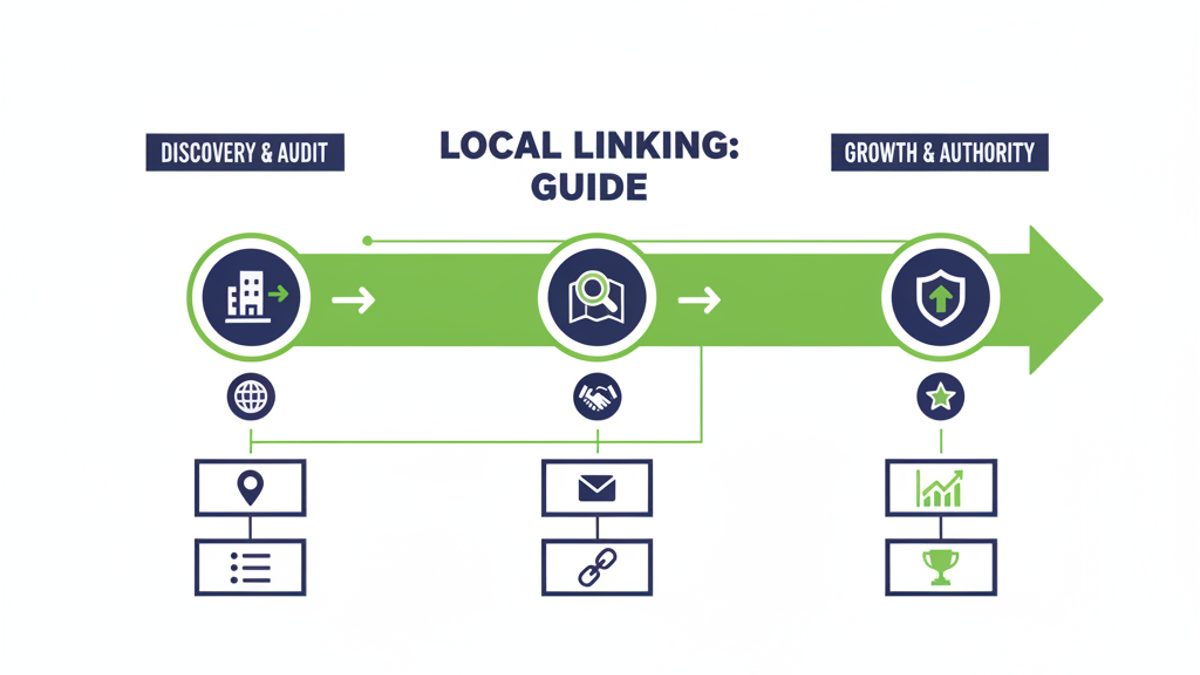
Examples of local links include any hyperlink pointing to your business's website from another online entity that has a strong geographic connection to your service area. These can range from structured citations on local directories to editorial mentions on community blogs or news sites. The key characteristic is their inherent local relevance.
Here are specific examples of local links:
- Local Business Directories and Citations: These are foundational. Examples include Yelp, Yellow Pages, TripAdvisor (for hospitality), and industry-specific local directories. Consistency of your Name, Address, and Phone number (NAP) across these platforms is crucial. A citation on a local directory, even if nofollow, still reinforces your local presence. For a comprehensive list, see our guide on best citation sites for local SEO.
- Local Chamber of Commerce or Business Associations: Membership often includes a link from their member directory. These are highly credible links due to the authoritative nature of these organizations.
- Local News Websites and Media Outlets: Mentions or features in local newspapers, online magazines, or community news blogs often include backlinks. This could be through press releases, event coverage, or expert commentary.
- Local Event Sponsorships: Sponsoring a local charity run, school fair, or community festival often earns you a logo placement and a link on the event's website.
- Local Blogs and Influencers: Partnerships with local bloggers, food critics, or community influencers who review local businesses or create local guides.
- Complementary Local Businesses: Collaborations with non-competing local businesses that serve a similar customer base. For instance, a local real estate agent linking to a trusted local moving company, or a bakery linking to a local coffee shop on a "local favorites" page.
- Local Educational Institutions: Links from local schools, colleges, or universities, especially if your business offers internships, sponsors student events, or provides discounts to students/faculty.
- Community Organizations and Non-profits: If your business supports or partners with local charities, churches, or community groups, you might receive a link from their "partners" or "supporters" page.
How to Get Local Links: Actionable Strategies to Boost Your Local SEO
Acquiring high-quality local links requires a proactive, strategic approach focused on community engagement and providing value. Instead of simply requesting links, aim to build relationships and become an indispensable part of your local ecosystem. The most effective strategies involve a mix of foundational work, community involvement, and content creation.
Here are proven strategies to get local links:
1. Optimize and Expand Your Local Citations
Ensuring your business is listed accurately and consistently across a wide range of local directories is the foundational step. These are often referred to as "local citations" and, while some may be nofollow, they build a strong signal of local presence. Focus on core directories like Yelp, Yellow Pages, and industry-specific sites (e.g., Healthgrades for doctors, Avvo for lawyers). Ensure your NAP (Name, Address, Phone number) is identical across all listings. Inconsistent NAP data can confuse search engines and dilute your local authority. A comprehensive local citations strategy is crucial for local SEO.
- Action: Use a tool like ProMapRanker's GBP audit to identify existing citations and potential inconsistencies. Aim for 20+ high-quality, relevant directories.
- Pro Tip: Beyond the big names, seek out niche directories specific to your industry or local area. For example, a local pet store should be listed on local pet-related sites.
2. Engage with Your Local Chamber of Commerce and Business Associations
Membership in your local Chamber of Commerce or other business associations (e.g., Main Street associations, BNI chapters) almost always includes a profile page with a link back to your website. These are highly authoritative local links because these organizations are trusted entities within the community. Active participation, such as attending meetings or sponsoring events, can further solidify these relationships and potentially lead to additional mentions.
- Action: Join your local Chamber of Commerce and ensure your member profile is fully completed with a link to your website. Actively participate in their events.
3. Sponsor Local Events, Teams, or Charities
Community involvement is a powerful local link-building tactic. Sponsoring a local youth sports team, a school fundraiser, a community festival, or a local charity event often results in your business logo and a link being placed on the event's website or the organization's "sponsors" page. This not only earns you valuable local links but also boosts your brand's reputation within the community.
- Action: Identify 2-3 local non-profits, schools, or community events that align with your business values. Reach out to inquire about sponsorship opportunities and associated website recognition.
4. Partner with Complementary Local Businesses
Forge relationships with other local businesses that serve a similar customer base but are not direct competitors. For example, a local florist could partner with a wedding planner, or a coffee shop with a bookstore. You can create joint promotions, co-host events, or simply link to each other's "local resources" or "partners" pages. These links are highly relevant and natural.
- Action: Brainstorm 5-10 local businesses whose customers would also benefit from your services. Reach out with a genuine collaboration idea, such as a reciprocal mention on a "local favorites" page or a joint discount offer.
5. Create Local-Centric Content and Outreach
Develop valuable content that is specifically relevant to your local community. This could include:
- Local guides (e.g., "Top 10 Family-Friendly Parks in [Your City]")
- Interviews with local personalities or business owners
- Hyperlocal news or event coverage
- Case studies featuring local clients
Once you have compelling local content, reach out to local bloggers, news outlets, and community websites who might be interested in linking to your resource or featuring your story. For example, if you create a definitive guide to local hiking trails, local outdoor recreation blogs or news sites might link to it.
- Action: Publish a high-quality piece of content focused on a local topic relevant to your business. Identify 3-5 local websites or bloggers who might find this content valuable and pitch it to them.
6. Turn Unlinked Mentions into Links
Sometimes, local news sites, blogs, or community pages might mention your business without actually linking to your website. This is an "unlinked mention" and represents a golden opportunity. Use tools to monitor mentions of your brand name online. When you find an unlinked mention, reach out politely to the website owner or editor, thank them for the mention, and simply ask if they would consider adding a link to your site for the benefit of their readers.
- Action: Set up Google Alerts for your business name and key personnel. Regularly search Google for "[Your Business Name] [Your City]" to find unlinked mentions.
7. Offer Testimonials to Other Local Businesses
If you genuinely use and appreciate another local business's services, offer to write a testimonial for their website. Many businesses are happy to feature testimonials, and often include a link back to your website as the source. This is a natural, value-driven way to earn a reciprocal link.
- Action: Identify 2-3 local businesses you genuinely patronize. Reach out to offer a testimonial in exchange for a link back from their site.
8. Contribute to Local Resource Pages
Many local universities, city councils, tourism boards, or community centers maintain "resources" or "local business" pages. These pages often list local services, attractions, or businesses that are beneficial to their audience (students, residents, visitors). Research these pages and see if your business qualifies for inclusion. If so, politely request to be added.
- Action: Search Google for "[Your City] resources," "[Your City] local businesses," or "[Your City] directory" to find these pages. Check their criteria and contact information for submission.
Measuring the Impact of Your Local Linking Efforts
Building local links is an investment, and like any investment, its effectiveness should be measured. It's not enough to simply acquire links; you need to understand how they contribute to your overall local SEO performance. Key metrics go beyond just "more links" and dive into actual visibility and traffic.
- Local Search Rank Tracking: The most direct measure. Monitor your rankings for your primary keywords across your service area. ProMapRanker specializes in geo-grid rank tracking, providing a visual heatmap of your Google Map Pack and local organic performance across a specified grid (e.g., a 5x5 grid at 1-mile intervals). This shows you exactly where your local linking efforts are moving the needle.
- Share of Local Voice (SoLV) and Average Rank Position (ARP): These advanced metrics, available through ProMapRanker, give you a holistic view of your visibility. SoLV measures your percentage of top positions across a set of keywords and locations, while ARP provides an average rank across the same criteria. Improvements here often correlate directly with increased local authority from links.
- Referral Traffic: Check Google Analytics to see how much traffic is coming from your newly acquired local links. High referral traffic from a local source indicates a quality link that is driving engaged visitors.
- Domain Authority (DA) / Domain Rating (DR): While these are third-party metrics and not Google's own, they can offer a directional indication of your website's overall authority, which local links contribute to. Look for gradual increases.
- Google Business Profile Insights: Monitor direct searches, discovery searches, website visits, and calls from your GBP. Strong local links contribute to higher visibility, which in turn leads to more GBP interactions.
Understanding these metrics allows you to refine your local linking strategy, focusing on the types of links that deliver the most tangible results for your business. Regular monitoring with a robust tool like ProMapRanker is essential for effective local SEO. Start tracking your local performance with ProMapRanker today!
Common Mistakes to Avoid in Local Link Building
While local link building is powerful, missteps can not only waste time but potentially harm your local SEO. Avoid these common pitfalls:
- Buying Links: Google strictly prohibits buying or selling links that pass PageRank. This is a clear violation of Google's Webmaster Guidelines and can lead to manual penalties or algorithmic demotions. Focus on earning links naturally.
- Irrelevant Links: Acquiring links from websites that have no thematic or geographic relevance to your business offers little to no value and can even appear spammy. A link from a national blog about knitting to a local car repair shop, for example, is irrelevant.
- Ignoring NAP Consistency: Even the best local links won't fully compensate for inconsistent Name, Address, Phone number (NAP) across your online presence. Discrepancies confuse search engines about your business's identity.
- Only Focusing on Quantity, Not Quality: A few high-quality, authoritative local links are far more valuable than dozens of low-quality, spammy links from irrelevant sources. Prioritize relevance, authority, and geographic proximity.
- Neglecting Your Google Business Profile: Local links support your GBP, but they don't replace it. A fully optimized, regularly updated GBP with positive reviews is still the cornerstone of local SEO. Use our free GBP audit to ensure your profile is in top shape.
- Failing to Diversify Your Link Profile: Relying on just one type of local link (e.g., only directories) makes your profile look unnatural. Aim for a mix of citations, editorial links, community links, and partnership links.
Step-by-Step: Building Your First 10 Local Links
Here’s a practical checklist to kickstart your local link-building journey:
- Claim and Optimize Your Google Business Profile: This isn't a link, but it's the absolute foundation. Ensure it's 100% complete and verified. (0 links)
- Identify 5 Core Local Directories: List the top 5 most prominent local directories (e.g., Yelp, Yellow Pages, TripAdvisor, your industry-specific directories). Ensure your NAP is consistent and accurate on all. (5 links/citations)
- Join Your Local Chamber of Commerce: Become a member and complete your profile with a link to your site. (1 link)
- Find 2 Complementary Local Businesses: Identify two non-competing businesses you can genuinely partner with. Propose a "local resources" or "partners" page exchange. (2 links)
- Sponsor a Small Local Event or Charity: Find one local event or charity that aligns with your brand and offers a link in return for sponsorship. (1 link)
- Create One Local-Centric Content Piece: Develop a valuable guide or resource about your local area (e.g., "Best Coffee Shops in [Your Town]"). Share it with local bloggers or community sites. (Potentially 1+ links)
- Monitor for Unlinked Mentions: Set up Google Alerts for your business name. If you find a mention, politely request a link. (Ongoing)
By following these steps, you'll establish a solid foundation for local linking and start seeing improvements in your local visibility.
Quality vs. Quantity in Local Link Building
When it comes to local links, the common adage "quality over quantity" holds especially true. While a broad base of local citations is important for foundational presence, the true power comes from highly authoritative and relevant links.
| Factor | Quality Local Links | Quantity (Low Quality) Local Links |
|---|---|---|
| Source Authority | High domain authority (e.g., Chamber of Commerce, local news, university) | Low domain authority, spammy directories, irrelevant sites |
| Relevance | Highly relevant to your local area and industry | Irrelevant, generic, or global directories |
| Impact on Rankings | Significant positive impact on local pack and organic rankings | Minimal or negative impact, potential for penalties |
| Trust Signals | Strong trust signals to Google, builds local prominence | Weak or negative trust signals |
| Traffic Potential | Drives targeted referral traffic from local audiences | Little to no referral traffic |
| Effort Required | More effort, relationship building, content creation | Less effort, often automated or paid (risky) |
Focus your energy on earning links from trusted local sources. These links not only pass significant SEO value but also bring genuinely interested local visitors to your site.
ProMapRanker's Role in Optimizing Your Local Visibility
At ProMapRanker, we understand that effective local SEO goes beyond basic keyword tracking. Our platform provides the advanced tools you need to not only monitor your local rankings but also to identify opportunities and measure the impact of your efforts, including local linking strategies.
- Geo-Grid Rank Tracking: Visualize your local rankings across a precise grid, showing you exactly how your local linking efforts influence your visibility across your service area. Understand your geo-grid heatmap SEO to pinpoint strengths and weaknesses.
- Share of Local Voice (SoLV) & Average Rank Position (ARP): Get a comprehensive overview of your local market dominance and average performance for critical keywords.
- Google Business Profile Audits: Our in-depth audits help you identify areas for improvement, from NAP consistency (crucial for local citations) to review management and service optimization.
- Competitor Analysis: See who's outranking you locally and analyze their link profiles to uncover new opportunities for your own strategy.
By integrating your local linking strategy with ProMapRanker's robust analytics, you gain actionable insights to truly dominate your local search market. Don't just track, understand and optimize. Sign up for ProMapRanker today and take control of your local search presence.
Frequently asked questions
Are local links the same as local citations?
No, while related, local links and local citations are distinct. A local citation is primarily a mention of your business's NAP (Name, Address, Phone number) on a directory or website, which may or may not include a clickable link. A local link specifically refers to a clickable hyperlink from a local, relevant website back to your site, which passes SEO authority and potential referral traffic.
How many local links do I need?
There isn't a magic number, as the quality of local links significantly outweighs quantity. Focus on acquiring a diverse profile of high-quality, geographically relevant links from authoritative sources. A few strong links from your Chamber of Commerce, local news, or complementary businesses will have a greater impact than dozens of low-quality directory listings.
Can local links hurt my SEO?
Yes, if acquired through spammy, manipulative, or irrelevant tactics, local links can definitely harm your SEO. Google's algorithm penalizes "link schemes," which include buying links, excessive link exchanges, or using automated programs to create links. Always prioritize earning natural, editorially given links from reputable local sources.
How long does it take for local links to show results?
The impact of local links can vary, but generally, it takes time. You might start seeing minor improvements in local rankings within a few weeks to a few months, especially for highly authoritative links. However, significant, sustained improvements that move the needle on a geo-grid heatmap often require consistent effort over 3 to 6 months or even longer, as Google's algorithm processes and weighs these new signals.
What's the difference between local links and general backlinks?
General backlinks are any links from external websites to yours, contributing to overall domain authority and organic rankings. Local links are a specific subset of backlinks distinguished by their strong geographic relevance to your business or service area. They primarily boost your local search authority, influencing performance in the Google Map Pack and local organic results for geographically targeted queries.
See where you really rank - block by block
ProMapRanker scans Google Maps across a grid of your service area. Simple monthly plans from $19, white-label on every plan.
Start free