 ProMapRanker
What Grid Size Should You Use? Balancing Detail and Cost
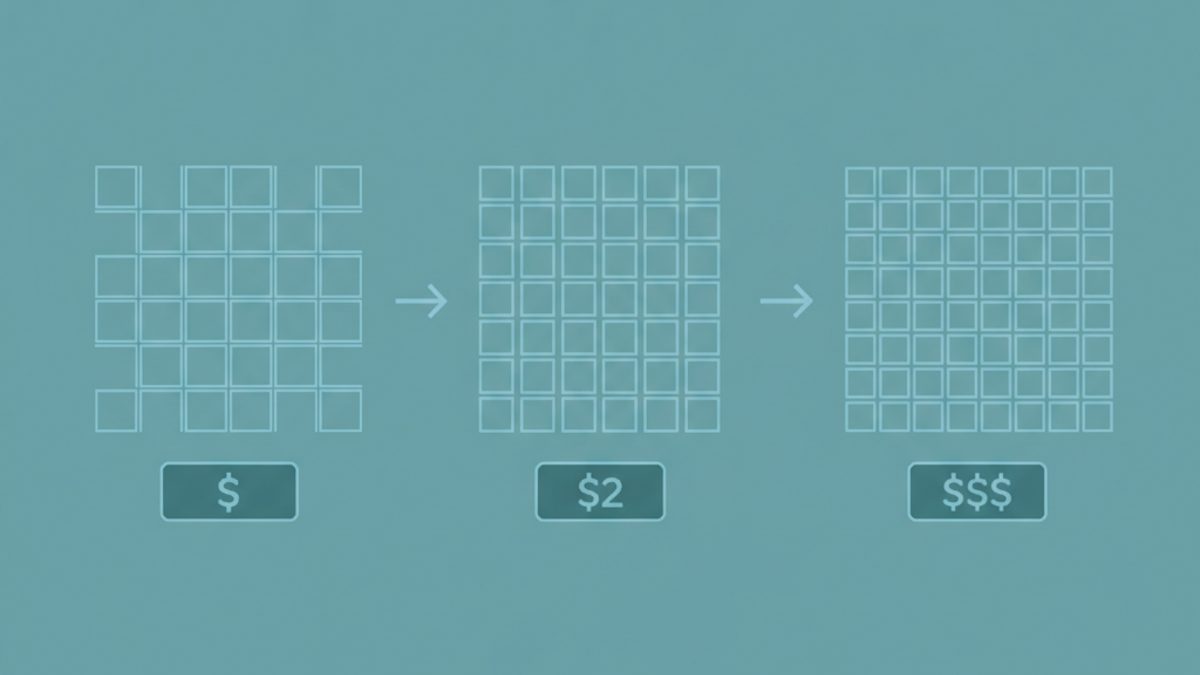
Choosing the right geo grid size is one of the most critical decisions for effective local SEO rank tracking. The optimal geo grid size for local rank tracking typically ranges from a hyper-local 0.5x0.5 mile grid for businesses with a very tight service radius, to a broader 5x5 mile grid for wider service areas or initial competitive analysis. The ideal selection balances the need for granular, actionable insights against the associated scanning costs, directly depending on your business type, target audience density, and competitive landscape.
At ProMapRanker, we understand that "geo grid" often conjures images of physical construction materials. However, in the world of local SEO, a geo grid is a virtual map overlay, divided into precise points from which we simulate Google searches to track your business's ranking performance across a specific geographic area. This article will guide you through selecting the perfect grid resolution to maximize your local visibility insights without unnecessary expense.
What is a Geo Grid in Local SEO, and Why Does Size Matter?
In local SEO, a geo grid is a digital representation of a geographic area, divided into a series of equidistant points or cells, each representing a distinct search location. Size matters because it dictates the granularity of your rank tracking data, revealing how your Google Business Profile (GBP) ranking fluctuates as a user's physical location changes, which is crucial for identifying hyper-local strengths and weaknesses.
Google's local search results are highly localized. A user searching for "plumber near me" will see different results if they are 1 mile north versus 1 mile south of your business. Without a geo grid, you're tracking your ranking from a single point, often your business address, which doesn't reflect the complex reality of local search. A geo grid allows you to simulate searches from dozens or even hundreds of points within your service area, providing a comprehensive view of your local search performance. The smaller the grid cell (e.g., 0.5x0.5 miles), the more search points are scanned within a given area, offering a highly detailed, "street-level" view of your rankings. Conversely, larger grid cells (e.g., 5x5 miles) provide a broader, less granular overview, which can be useful for understanding regional trends but may miss critical hyper-local nuances.
How Does Geo Grid Size Impact Your Local Rank Tracking Data?

Geo grid size directly influences the depth and precision of your local rank tracking data. Smaller grid cells (like 0.5x0.5 miles) yield highly granular insights, pinpointing exact areas where your business ranks well or poorly, enabling precise optimization. Larger cells (such as 5x5 miles) offer a broader, less detailed perspective, suitable for understanding general regional performance rather than specific neighborhood-level fluctuations.
Imagine a local coffee shop. If they use a 5x5 mile grid, they might see an average rank of #3 for "coffee shop" within that entire area. This tells them they're doing well generally. However, if they switch to a 0.5x0.5 mile grid, they might discover they rank #1 within a quarter-mile radius of their shop, but drop to #7 in a dense residential area just 1.5 miles away. This level of detail, which we refer to as Share of Local Voice (SoLV) at ProMapRanker, allows them to identify underserved pockets, target local ad campaigns more effectively, or even consider opening a new location. Smaller grids help uncover specific Google Business Profile optimization opportunities, identify competitor strongholds, and validate the impact of local SEO efforts down to the block level. As Google Business Profile Help states, local results are primarily based on relevance, distance, and prominence; a detailed geo grid helps you understand how these factors play out across your service area.
What Factors Should You Consider When Selecting Your Geo Grid Size?
Selecting the ideal geo grid size depends on several key factors, including your business's specific service radius, the density of your target audience, the intensity of your local competition, and your available budget. Hyper-local businesses benefit most from smaller, more detailed grids, while those covering extensive areas or with limited budgets might opt for larger, more cost-effective options.
Let's break down these critical considerations:
-
Your Business's Service Area:
A brick-and-mortar business like a restaurant or a local salon typically serves customers within a 1-3 mile radius. For these businesses, a 0.5x0.5 mile or 1x1 mile grid is often ideal, providing the necessary detail to understand local performance. Conversely, a service area business (SAB) like an HVAC company or a plumbing service might cover a 20-30 mile radius. In such cases, a 2x2 mile or even a 5x5 mile grid might be more appropriate to cover the entire service area without incurring prohibitive costs for hyper-granularity across a vast region. ProMapRanker allows you to define custom shapes for your grids, ensuring you only scan the areas that matter to you.
-
Target Audience Density:
Is your business located in a densely populated urban center or a sprawling rural area? In a city like New York or London, where businesses are tightly packed and search behavior is highly localized, a 0.5x0.5 mile grid might be essential to differentiate your performance block by block. In a less dense suburban or rural area, a 1x1 mile or 2x2 mile grid might offer sufficient detail without over-scanning empty spaces.
-
Competitor Landscape:
If you operate in a highly competitive niche with many local competitors vying for the top spots (e.g., "dentist," "personal injury lawyer"), a smaller grid provides the precision needed to identify competitor strongholds and opportunities for improvement. Understanding exactly where competitors outrank you, even by a few blocks, can inform targeted local SEO strategies, from building local citations in specific neighborhoods to optimizing your GBP description for particular services. Our competitive analysis tools thrive on granular data.
-
Budget & Scan Frequency:
The number of scan points directly correlates with the cost of your rank tracking. A 0.5x0.5 mile grid covers 4x more points than a 1x1 mile grid over the same area, multiplying scanning costs. A 5x5 mile grid covers 25x more area than a 1x1 mile grid, but with much fewer points per square mile. You need to balance the desire for granular data with what your budget allows. For instance, you might opt for a 1x1 mile grid scanned daily for core keywords, and a 2x2 mile grid scanned weekly for broader terms or less critical locations. ProMapRanker offers flexible pricing plans to accommodate various needs, helping you manage your local rank tracking investment.
-
Type of Business:
A specific example is the difference between a brick-and-mortar store and a service area business. A single-location restaurant needs hyper-local data for a small radius. An HVAC company, however, needs to track across an entire county or multiple counties. Their optimal grid sizes will naturally differ significantly.
Practical Geo Grid Size Recommendations for Different Business Types
Tailoring your geo grid size to your business type ensures you gather the most relevant and actionable data. Hyper-local establishments like restaurants thrive on 0.5x0.5 mile grids for precision. Service area businesses such as plumbers or electricians often find 1x1 or 2x2 mile grids effective for covering their broader operational zones. Multi-location retailers or national chains might utilize 5x5 mile grids for a high-level overview of regional performance.
Here's a practical guide:
| Business Type | Recommended Geo Grid Size | Why This Size Works |
|---|---|---|
| Hyper-local Brick & Mortar (e.g., coffee shop, barber, boutique, restaurant) | 0.5x0.5 miles (or even 0.25x0.25 miles in dense urban cores) | Customers are typically within a very short walking or driving distance. Highly granular data reveals hyper-local ranking variations, crucial for foot traffic and local visibility. |
| Single-Location Service Area Business (SAB) (e.g., plumber, electrician, locksmith, pest control) | 1x1 mile to 2x2 miles | These businesses cover a wider radius (5-30 miles). This grid size balances cost with sufficient detail to identify service gaps and opportunities across their operational zone. |
| Regional Business / Multiple Locations (e.g., regional law firm, small chain of auto repair shops, healthcare clinics) | 2x2 miles to 5x5 miles | Focuses on understanding performance across multiple branches or a larger geographical region. Provides a good balance between detail for each location and a broader view of market share. |
| National Chain with Local Branches (e.g., large retail chains, banks, national franchises) | 5x5 miles to 10x10 miles | Primarily used for high-level competitive analysis, identifying broad regional trends, and assessing overall market penetration for dozens or hundreds of locations. Can be supplemented with smaller grids for struggling individual locations. |
Remember, these are starting points. Your specific circumstances might warrant adjustments. For example, a "pizza delivery" business might need a highly granular grid (0.5x0.5 miles) even if it's an SAB, because delivery zones are often hyper-competitive and distance-sensitive.
The Cost-Benefit Analysis of Geo Grid Resolution
Higher resolution geo grids, characterized by smaller cell sizes, deliver superior data granularity, which is invaluable for precisely identifying local SEO strengths and weaknesses. However, this enhanced detail comes with increased costs due to the exponential rise in scan points. A judicious balance involves weighing the tangible value of these detailed insights against the financial investment required for more frequent or finer scans.
The cost of geo grid scanning platforms, including ProMapRanker, is typically tied to the number of scan points and the frequency of scans. Let's consider the mathematical implications:
- A 1x1 mile grid contains 1 point per square mile.
- A 0.5x0.5 mile grid contains 4 points per square mile (2x2 grid within each mile).
- A 0.25x0.25 mile grid contains 16 points per square mile (4x4 grid within each mile).
This means scanning a 10x10 mile area:
- With a 1x1 mile grid: 100 scan points.
- With a 0.5x0.5 mile grid: 400 scan points.
- With a 0.25x0.25 mile grid: 1600 scan points.
As you can see, decreasing the grid cell size rapidly increases the number of scan points, which in turn increases the cost. For businesses operating with a modest local SEO budget, starting with a 1x1 or 2x2 mile grid and then selectively deploying smaller grids in areas identified as critical or underperforming is a smart strategy. At ProMapRanker, we empower you to track key metrics like Share of Local Voice (SoLV) and Average Rank Position (ARP) across your chosen grid. Finer grids provide more accurate SoLV and ARP figures, allowing you to react faster to rank fluctuations and optimize your Google Business Profile with greater precision.
Step-by-Step Guide: How to Choose Your Optimal Geo Grid Size
Choosing the right geo grid size doesn't have to be overwhelming. Follow these steps to make an informed decision:
- Define Your Primary Service Area: Clearly outline the geographical boundaries where your business primarily operates and seeks customers. Is it a 3-mile radius, a specific set of zip codes, or an entire county? Visualizing this on a map is crucial.
- Identify Key Competitors: Determine who your main local competitors are and where they are located. A higher density of competitors in a particular area might necessitate a more granular grid to track your performance against theirs effectively.
- Consider Your Budget: Be realistic about your financial allocation for local SEO tools. Smaller grids mean more scan points and higher costs. Determine if the increased insights from a finer grid justify the additional expense for your business goals.
- Start with a Moderate Grid (e.g., 1x1 or 2x2 miles): For most businesses, a 1x1 or 2x2 mile grid is a solid starting point. This provides a good balance of detail and coverage, allowing you to get a baseline understanding of your local rankings without immediately overspending.
- Analyze Initial Results and Adjust: After running your first few scans, review the data. Do you see significant rank variations within a single grid cell that suggest you need more detail? Or is your performance relatively consistent, indicating a larger grid might suffice? Use heatmap visualizations (like those in ProMapRanker) to identify these patterns.
- Monitor and Refine: Local SEO is not a "set it and forget it" endeavor. Continuously monitor your geo grid data, especially after making significant changes to your Google Business Profile, website, or local link building efforts. Adjust your grid size as your business grows, your service area expands, or competitive dynamics shift.
Ready to see your local rankings with precision? Start a free trial with ProMapRanker and get a comprehensive Google Business Profile audit today.
Integrating Geo Grid Data with Your Local SEO Strategy
Geo grid data provides invaluable insights that should directly inform your broader local SEO strategy. It allows you to move beyond assumptions and make data-driven decisions.
- Google Business Profile Optimization: If your geo grid reveals poor rankings in a specific neighborhood, investigate if your GBP listing is fully optimized for that area. This might involve updating service areas, adding location-specific photos, or encouraging reviews from customers in that region. Our GBP audit tool can highlight these opportunities.
- Content Strategy: Use geo grid data to identify keywords that perform poorly in certain areas. This can inform the creation of localized landing pages or blog posts targeting those specific locations, incorporating local landmarks or community events.
- Local Citation Building: If you're struggling to rank in a particular part of your service area, focus your local citation building efforts on directories and platforms relevant to that specific locale. Ensure your NAP (Name, Address, Phone) consistency is flawless across all listings, a key local ranking factor as highlighted in our NAP consistency guide.
- Advertising Decisions: Geo grid heatmaps can pinpoint areas where organic visibility is low, indicating potential opportunities for targeted local ad campaigns (e.g., Google Local Service Ads or geo-fenced social media ads) to fill those gaps.
- Competitive Analysis: Use your grid to see where competitors dominate. This can help you understand their strengths (e.g., more reviews, better website authority) and develop strategies to outperform them, as detailed in our Google Maps ranking factors breakdown.
ProMapRanker's Approach to Geo Grid Tracking
At ProMapRanker, we've designed our platform to make geo grid local rank tracking intuitive, powerful, and actionable. We offer fully customizable grid sizes, allowing you to define your scan area and resolution with precision, from micro-grids for dense urban centers to expansive grids for broad service areas. Our proprietary Share of Local Voice (SoLV) and Average Rank Position (ARP) metrics provide clear, quantifiable insights into your local market presence, going beyond simple rank numbers.
Our platform also includes robust competitive analysis features, enabling you to overlay competitor performance on your grids and identify critical areas for improvement. Furthermore, we are at the forefront of tracking not just Google Maps rankings, but also AI Overview visibility, giving you a holistic view of your potential customer's search journey. We believe in providing the tools necessary for comprehensive local search rank tracking, ensuring you have the data to dominate your local market.
Frequently asked questions
What size geo grid do I need for local SEO?
The ideal geo grid size depends on your business's service radius, target audience density, and budget. For hyper-local businesses like restaurants, 0.5x0.5 mile grids are often best. Service area businesses (e.g., plumbers) typically benefit from 1x1 or 2x2 mile grids, while larger enterprises might use 5x5 mile grids for broader overviews. Always balance desired data granularity with scan costs.
What are some examples of geo grids in local SEO?
In local SEO, a geo grid is a virtual map overlay. Examples include a 0.5x0.5 mile grid around a coffee shop to track its ranking for "best coffee" from every block, or a 2x2 mile grid covering a city to monitor an HVAC company's visibility for "AC repair" across its service area. ProMapRanker uses these grids to simulate user searches from specific points.
What are the disadvantages of using a very small geo grid?
While very small geo grids (e.g., 0.25x0.25 miles) offer extreme granularity, their primary disadvantage is significantly increased cost due to the exponential rise in scan points required to cover a given area. They can also generate an overwhelming amount of data, making it harder to identify overarching trends without advanced analytical tools. For many businesses, the marginal benefit of hyper-granularity beyond 0.5x0.5 miles might not justify the extra expense.
How often should I run geo grid scans?
For most local businesses, running geo grid scans daily or every other day provides a sufficiently timely view of rank fluctuations and the impact of SEO efforts. Highly competitive niches or businesses making frequent GBP changes might benefit from daily scans. Less active businesses or those monitoring broader trends might find weekly scans adequate. ProMapRanker allows for flexible scan scheduling to match your needs.
Can I track Google Maps and AI Overview rankings with the same grid?
Yes, platforms like ProMapRanker are designed to track both Google Maps (Local Pack) rankings and your visibility within Google's AI Overview (or SGE) using the same geo grid. This integrated approach ensures you have a comprehensive understanding of your local search presence across all critical visibility points, allowing you to optimize for both traditional local results and the evolving AI-powered search landscape. Learn more in our article: Track Maps and AI Rank on the Same Grid.
Does geo grid size impact my Google Business Profile ranking?
No, the geo grid size you choose for tracking purposes does not directly impact your Google Business Profile (GBP) ranking. Your GBP ranking is determined by Google's algorithms based on factors like relevance, distance, and prominence. However, the insights gained from an appropriately sized geo grid can indirectly improve your ranking by revealing areas where your GBP needs optimization, guiding your SEO strategy to make data-driven improvements that positively influence your visibility.
See where you really rank - block by block
ProMapRanker scans Google Maps across a grid of your service area. Simple monthly plans from $19, white-label on every plan.
Start free