 ProMapRanker
Google Maps Rankings Factors: A Complete Guide
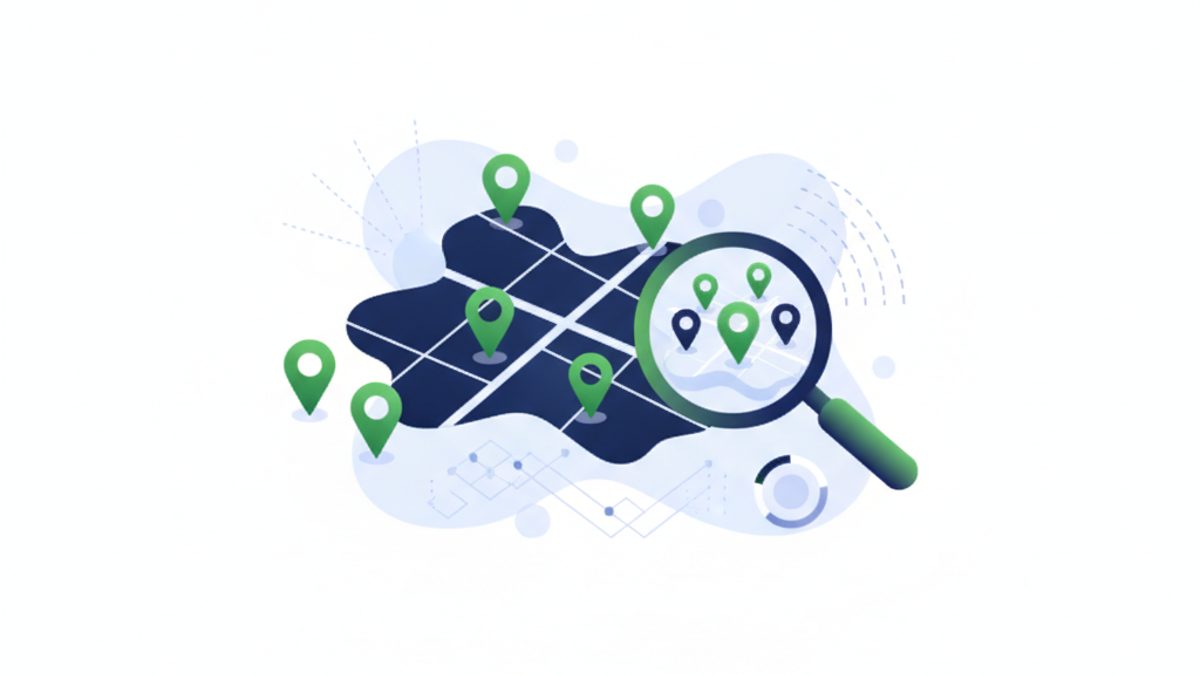
As the founder of ProMapRanker, I've spent years analyzing what truly drives local visibility. Google Maps rankings are primarily determined by three core factors: Proximity, Relevance, and Prominence. These aren't isolated elements but work together in Google's algorithm to present the most useful local businesses to searchers. Proximity gauges how close a business is to the searcher or search location, relevance assesses how well a business matches the search query, and prominence reflects how well-known and authoritative a business is both online and offline. Optimizing for these factors is crucial for appearing in the coveted Map Pack and dominating local search results.
Understanding these factors is the first step; mastering them requires a data-driven approach and continuous optimization. This guide will break down each component, offering concrete strategies and actionable insights to help your business climb the Google Maps rankings and earn more local customers.
What are the primary Google Maps ranking factors?
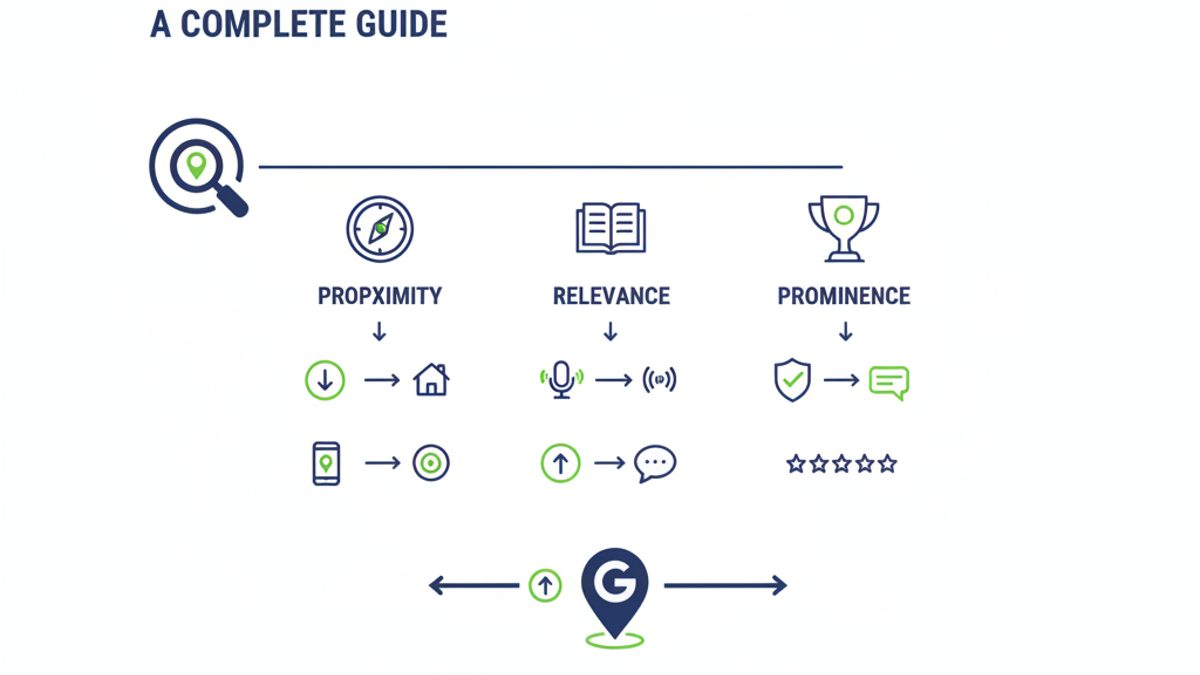
Google Maps rankings are fundamentally governed by three intertwined factors: Proximity, Relevance, and Prominence. Proximity measures the physical distance between the searcher and the business, relevance evaluates how well a business's offerings match the user's search query, and prominence reflects the business's overall authority and recognition, both online and in the real world.
These three factors work in concert. A business might be very close (high proximity) but rank poorly if it's not relevant to the search query or lacks prominence. Conversely, a highly prominent business might not appear if it's too far from the searcher. Google's goal is to deliver the most helpful and accurate local results, balancing these elements to serve the best user experience. My team at ProMapRanker consistently sees these three pillars as the foundation for any successful local SEO strategy.
- Proximity: How close the business is to the searcher's location or the location specified in the query (e.g., "plumber near me" or "restaurants in downtown Seattle").
- Relevance: How well a business's Google Business Profile (GBP) and associated website match what a user is searching for. This involves categories, services, descriptions, and keywords.
- Prominence: The overall reputation and authority of the business. This includes factors like the quantity and quality of reviews, website authority, local citations, and even real-world recognition.
How does Google Business Profile (GBP) optimization impact local rankings?
Google Business Profile (GBP) optimization is arguably the most critical direct lever for local rankings, acting as the primary source of information Google uses to understand your business. A fully optimized GBP ensures Google has accurate, comprehensive data about your services, location, hours, and attributes, directly influencing your relevance and prominence in local searches.
Think of your GBP as your digital storefront on Google Maps and Search. Neglecting it is like having a physical store with no signage or clear operating hours. Comprehensive and accurate information directly feeds Google's algorithm, helping it match your business with relevant searches. Our Google Business Profile audit tools at ProMapRanker consistently highlight optimization gaps that, once addressed, lead to significant ranking improvements.
Key GBP optimization elements include:
- Accurate Business Name, Address, Phone (NAP): Ensure consistency across all online platforms. Any discrepancies can confuse Google and dilute your prominence.
- Primary and Secondary Categories: These are crucial for relevance. Choose the most specific primary category that describes your core business, then add up to nine secondary categories. Google Business Profile Help recommends being specific.
- Complete Services/Products List: Detail every service or product you offer. This adds keyword relevance and helps Google understand your full scope.
- Business Description: Use this space to describe your business, incorporating relevant keywords naturally.
- Hours of Operation: Keep these updated, including special hours for holidays. Inaccurate hours lead to poor user experience.
- Photos and Videos: High-quality, relevant media significantly boosts engagement and prominence. Businesses with more photos tend to receive more clicks and direction requests. Aim for at least 10-15 high-quality photos.
- Q&A Section: Actively monitor and answer questions. You can also seed your own FAQs to provide helpful information.
- Google Posts: Regularly post updates, offers, events, or news. This signals activity and freshness to Google, improving engagement.
- Attributes: Add specific attributes like "women-led," "wheelchair accessible," or "online appointments" to further enhance relevance for niche searches.
What role does proximity play in Google Maps search results?
Proximity is a dynamic and often unchangeable factor that measures how close a business is to the searcher's physical location or the location specified in their query. It's a primary filter for Google Maps, meaning businesses physically closer to the search point often receive preferential visibility, even if other factors are slightly weaker.
While you can't move your physical business location, understanding proximity is vital for local SEO. It's why a business might rank #1 for someone searching across the street, but not appear at all for someone searching five miles away. ProMapRanker's geo-grid local rank tracking allows you to visualize your rankings across a specific geographic area (e.g., a 5x5 grid at 1-mile intervals), revealing how your visibility changes based on the searcher's position. This helps you identify areas where your business needs to build more prominence and relevance to overcome proximity limitations.
Factors related to proximity:
- Searcher's Location: For "near me" searches, Google uses the searcher's device location.
- Query-Defined Location: If a user searches for "plumber Seattle," Google prioritizes businesses within Seattle.
- Service-Area Businesses (SABs): If you don't have a physical storefront, defining your service areas accurately in GBP is crucial. Google uses this to understand your operational reach.
- Geo-Grid Analysis: Tools like ProMapRanker show how your rankings vary across a map, revealing proximity's true impact. You might rank #1 in your immediate vicinity but drop significantly a few miles out.
How important are customer reviews and ratings for Google Maps SEO?
Customer reviews and ratings are paramount for Google Maps SEO, significantly influencing both a business's prominence and trust. They serve as powerful social proof, signaling to Google and potential customers that your business is reputable and provides valuable services. A higher volume of positive reviews, coupled with timely responses, can dramatically improve your local rankings.
Google explicitly states that review count and review score are part of prominence. A business with a 4.5-star rating from 150 reviews will generally outrank a similar business with a 3.0-star rating from 15 reviews, assuming other factors are equal. Furthermore, the sentiment within reviews can provide Google with additional relevance signals. My experience at ProMapRanker shows businesses actively managing their reviews gain a substantial competitive edge.
Strategies for leveraging reviews:
- Quantity: Actively solicit reviews from satisfied customers. More reviews generally mean more prominence. Aim for at least 50-100 reviews for competitive local markets.
- Quality/Star Rating: Strive for a high average star rating (ideally 4.5 stars or higher). Google uses this as a direct quality signal.
- Recency: Recent reviews are more impactful than old ones. Implement a continuous review generation strategy.
- Review Content (Keywords): Google can analyze the text within reviews for relevance. Customers mentioning "best pizza in town" or "reliable HVAC service" can reinforce your business's relevance for those terms.
- Owner Responses: Respond to ALL reviews, positive and negative. This shows engagement, customer care, and signals to Google that you're an active business owner. Aim to respond to 100% of reviews within 24-48 hours.
- Handling Negative Reviews: Address negative feedback professionally and constructively. A thoughtful response can mitigate damage and even turn a negative into a positive.
Do website factors influence Google Maps rankings?
Yes, website factors play a crucial, albeit indirect, role in Google Maps rankings by boosting your business's overall prominence and relevance. Google uses signals from your website, such as its mobile-friendliness, loading speed, content quality, and backlinks, to assess your business's authority and trustworthiness, which then feeds into your local visibility.
While your Google Business Profile is the direct pipeline to Maps, your website acts as the deeper well of information and authority. A well-optimized website reinforces the information on your GBP and provides Google with more context about your services and expertise. For instance, a fast-loading, mobile-responsive website with local content signals a high-quality online presence. Google Search Central emphasizes website quality for overall search performance, which extends to local. ProMapRanker's tools often highlight how a strong website can differentiate businesses with similar GBP profiles.
Key website factors to optimize:
- Mobile-Friendliness: Your website must be responsive and provide an excellent experience on mobile devices. Over 60% of Google searches are on mobile.
- Page Speed & Core Web Vitals: Fast-loading pages are critical for user experience and SEO. Aim for a Largest Contentful Paint (LCP) under 2.5 seconds, a First Input Delay (FID) or Interaction to Next Paint (INP) under 200ms, and a Cumulative Layout Shift (CLS) under 0.1, as outlined by Core Web Vitals.
- Local Content: Create service pages, location pages (if applicable), and blog posts that target local keywords and areas. For example, "HVAC repair Houston" or "best coffee shops in Austin."
- Local Schema Markup: Implement
LocalBusinessschema from Schema.org on your website. This explicitly tells Google your business's name, address, phone number, hours, and services, enhancing relevance. - NAP Consistency: Ensure your website's NAP matches your GBP exactly.
- Backlinks: High-quality backlinks from relevant local websites (e.g., local chambers of commerce, news sites, community blogs) signal authority and trustworthiness to Google.
- User Experience (UX): An intuitive, easy-to-navigate website encourages longer visits and lower bounce rates, which are positive signals.
How do local citations and directories affect map pack visibility?
Local citations, which are mentions of your business's Name, Address, and Phone number (NAP) on other websites, contribute significantly to your prominence and trustworthiness in Google Maps. Consistent and accurate citations across numerous reputable directories and local platforms reinforce your business's existence and legitimacy to Google, helping it confidently display your listing.
While the direct impact of individual citations might have evolved, their collective effect on NAP consistency and overall online presence remains vital. Inconsistent NAP information across different platforms can confuse Google, potentially hurting your rankings. Aim for citations on at least 20-30 high-authority directories. ProMapRanker offers tools to check business listings consistency, a common issue we see hurting local rankings.
Key aspects of local citations:
- NAP Consistency: This is the most crucial aspect. Your business name, address, and phone number must be identical across all citation sources, including your Google Business Profile and website.
- Volume & Quality: Aim for a good number of citations from high-authority, relevant directories (e.g., Yelp, Yellow Pages, industry-specific directories, local chambers of commerce).
- Data Aggregators: Ensure your information is consistent with major data aggregators like Factual, Infogroup, and Neustar Localeze, as these feed many smaller directories.
- Niche/Industry-Specific Directories: Listings on directories relevant to your specific industry (e.g., Avvo for lawyers, Healthgrades for doctors) are highly valuable for relevance.
- Building Citations: Manually create or update listings on key directories. Use tools to find existing inconsistent citations and correct them.
What is the impact of user engagement on Google Maps rankings?
User engagement on your Google Business Profile directly signals to Google how useful and appealing your business is to potential customers, thereby influencing your prominence. Higher engagement rates, such as clicks for directions, calls, website visits, or photo views, indicate a positive user experience and suggest your business is a valuable result for specific queries.
Google's algorithm is designed to serve the most helpful results. If users frequently interact with your GBP listing after a search, it tells Google that your business is meeting their needs. This positive feedback loop can boost your visibility. ProMapRanker's local SEO metrics include tracking these engagement signals to help you understand your GBP's performance.
Types of user engagement signals:
- Clicks for Directions: When users click to get directions to your business.
- Phone Calls: When users click the "call" button on your GBP.
- Website Clicks: When users click through to your website from your GBP.
- Photo Views: How many times your GBP photos are viewed.
- Review Interaction: Users reading reviews, asking questions, or liking responses.
- Time Spent on Listing: Though not directly measurable, a comprehensive, engaging GBP encourages users to spend more time exploring your profile.
How does the competitive landscape influence local rankings?
The competitive landscape profoundly influences local rankings because Google Maps operates on a relative basis; your ranking isn't just about your own optimization, but how your business performs compared to your local competitors. In a crowded market, even a perfectly optimized GBP might struggle to rank if competitors have superior prominence, more reviews, or stronger website authority.
Understanding your competitors' strengths and weaknesses is crucial for formulating an effective strategy. My team developed the Share of Local Voice (SoLV) and Average Rank Position (ARP) metrics within ProMapRanker precisely for this reason. By analyzing your performance against competitors across a geo-grid, you can identify specific areas where you need to improve to capture more local search visibility. For example, if competitors have 200+ reviews and you have 50, you know where to focus your efforts.
Key competitive analysis points:
- Competitor GBP Optimization: Analyze their categories, photos, posts, and attributes. Are they using something you're missing?
- Review Volume and Sentiment: How many reviews do top competitors have? What's their average star rating? Are there common themes in their reviews that you can leverage or address?
- Website Authority: Assess their website's backlink profile, content quality, and mobile experience.
- Local Link Building: Identify local directories or partners where competitors have listings or links that you don't.
- Service Area Overlap: Understand which areas your competitors are strong in and where there might be gaps you can exploit.
Practical Steps to Improve Your Google Maps Rankings
Improving your Google Maps rankings requires a consistent, multi-faceted approach. Here's a practical checklist to guide your efforts:
- Optimize Your Google Business Profile Fully:
- Claim and verify your GBP.
- Select the most accurate primary category and up to nine secondary categories.
- Complete all fields: hours, services, products, website, phone number.
- Write a compelling business description with relevant keywords.
- Upload at least 10-15 high-quality photos and videos (exterior, interior, team, products/services).
- Actively use Google Posts for updates, offers, and events.
- Answer all questions in the Q&A section, and consider seeding your own FAQs.
- Add relevant attributes (e.g., "online appointments," "wheelchair accessible").
- Cultivate and Manage Customer Reviews:
- Implement a system to consistently solicit new reviews from satisfied customers (e.g., email follow-ups, QR codes in-store).
- Respond to every review (positive or negative) within 24-48 hours, showing appreciation or addressing concerns professionally.
- Encourage review content that includes keywords related to your services and location.
- Ensure NAP Consistency Across the Web:
- Verify your business Name, Address, and Phone number are identical on your GBP, website, and all major online directories (Yelp, Facebook, industry-specific sites).
- Use tools to identify and correct any inconsistent or outdated citations.
- List your business on at least 20-30 relevant, high-authority local and industry-specific directories.
- Optimize Your Website for Local SEO:
- Ensure your website is mobile-responsive and loads quickly (check Core Web Vitals).
- Create dedicated service and location pages with locally optimized content.
- Embed your Google Map and prominently display your NAP on your website.
- Implement
LocalBusinessschema markup on your homepage and relevant internal pages. - Build high-quality backlinks from other local businesses, organizations, and news sites.
- Monitor and Adapt with Geo-Grid Rank Tracking:
- Use a geo-grid local rank tracker like ProMapRanker to see your true local visibility across your service area. This reveals how your rankings change from different search locations.
- Analyze your Share of Local Voice (SoLV) and Average Rank Position (ARP) to understand your competitive standing.
- Regularly audit your Google Business Profile and website performance based on ranking data.
- Keep an eye on competitor activities and adjust your strategy accordingly.
Implementing these steps systematically and consistently is the key to long-term success in Google Maps. At ProMapRanker, we empower businesses to execute these strategies with precision, providing the local rank tracking and audit tools necessary to see real results. Start your free trial today and see exactly where you stand!
Google Business Profile Elements and Their Ranking Impact
This table summarizes how various Google Business Profile elements contribute to your Google Maps rankings, directly or indirectly:
| GBP Element | Primary Impact | Notes/Explanation |
|---|---|---|
| Business Name | Relevance, Prominence | Must be your true business name. Keyword stuffing can lead to suspension. |
| Primary Category | Relevance (HIGH) | Most critical factor for matching search queries. Choose accurately. |
| Secondary Categories | Relevance | Broadens your reach for related searches. |
| Address | Proximity (HIGH) | Defines your physical location for "near me" searches. |
| Phone Number | Prominence, User Engagement | Enables direct contact, signals legitimacy. |
| Website Link | Prominence, Relevance | Drives traffic to your site, contributes to overall domain authority. |
| Hours of Operation | User Experience, Prominence | Ensures users know when you're open; reduces negative experiences. |
| Business Description | Relevance | Opportunity to use keywords and describe your unique selling points. |
| Photos & Videos | Prominence, User Engagement | Increases clicks, views, and trust. Signals an active business. |
| Reviews & Ratings | Prominence (HIGH), Relevance | Crucial for social proof, trust, and keyword signals in review text. |
| Q&A Section | Relevance, User Engagement | Provides valuable information, signals activity. |
| Google Posts | Prominence, Relevance | Signals activity, showcases offers/news, can contain keywords. |
| Attributes | Relevance | Helps you appear for specific niche searches (e.g., "wheelchair accessible"). |
Frequently asked questions
How long does it take to see Google Maps ranking improvements?
Visible improvements in Google Maps rankings can vary widely, typically ranging from a few weeks to several months. Factors like the competitiveness of your industry, the extent of your previous optimization efforts, and the consistency of your ongoing strategy play a significant role. Businesses starting with a poorly optimized profile often see quicker initial gains.
Can I rank in Google Maps without a physical address?
Yes, you can rank in Google Maps without a physical storefront, especially if you're a Service-Area Business (SAB). For SABs, you must hide your physical address on your Google Business Profile and instead define the specific service areas where you operate. While proximity to a central point still matters, Google will prioritize your relevance and prominence within your defined service areas.
What is the Google Maps 3-Pack?
The Google Maps 3-Pack, also known as the Local Pack, is a prominent block of three local business listings that appears at the top of Google's organic search results for local-intent queries (e.g., "pizza near me"). It includes the business name, rating, address, and sometimes a phone number, along with a small map, offering high visibility and driving significant traffic.
Do backlinks matter for Google Maps rankings?
Yes, backlinks indirectly matter for Google Maps rankings. While they don't directly influence your GBP, a strong backlink profile to your website significantly boosts your website's authority and prominence. Google often uses signals from your website as a proxy for your business's overall legitimacy and importance, which in turn can positively impact your local map rankings.
How often should I update my Google Business Profile?
You should aim to update your Google Business Profile regularly, ideally at least once a week. This includes posting new Google Posts, responding to new reviews and Q&As, and adding new photos. Essential information like hours or services should be updated immediately when changes occur. Consistent activity signals to Google that your business is active and engaged, boosting its prominence.
Mastering Google Maps rankings is an ongoing journey that demands attention to detail, strategic execution, and continuous monitoring. By focusing on Proximity, Relevance, and Prominence, and leveraging tools like ProMapRanker for precise geo-grid tracking and GBP auditing, you can significantly enhance your local visibility and attract more customers. Don't just guess at your local SEO; measure it, optimize it, and dominate your local market. Get your free Google Business Profile audit today and start making data-driven decisions.
See where you really rank - block by block
ProMapRanker scans Google Maps across a grid of your service area. Simple monthly plans from $19, white-label on every plan.
Start free