 ProMapRanker
Best Review Request Software for Auto Repair Shops in 2026

Automated requests after each repair job · Pricing starts at: See website
Direct answer
NiceJob is my top pick for auto repair shops because it is built around turning a finished job into a review request without staff having to chase anyone. It offers a free trial, so check the pricing page for current terms. If you want a wider reputation platform with messaging, look at Birdeye, and if you want simple, low-cost email and SMS requests, look at Grade.us.
I compared these tools from vendor documentation and public sources, not from hands-on tests. I looked at how each one fits the way an auto repair shop actually works: the advisor closes the ticket, the customer pays, and the car leaves the lot. The tools below differ mostly in how they handle that handoff, how they send the request, and how much else they bundle in.
Key takeaways
- Auto repair shops collect reviews best when the request goes out right after the customer picks up the car, so timing and automation matter more than a long feature list.
- A good tool should pull customer details from your shop management system or accept a simple CSV upload, because advisors will not type requests by hand.
- SMS requests get more attention than email for service reminders, but you need clear consent and an easy opt-out to stay within the rules.
- Review monitoring and reply tools save time when one advisor handles the front desk and cannot watch every platform all day.
- Keep the request honest: ask every customer, never filter by mood, and never offer an incentive for a positive review.
Quick comparison
| Pick | Great for | Pricing starts at | Free tier | |
|---|---|---|---|---|
| NiceJob | Automated requests after each repair job | See website | Free trial | Visit |
 Birdeye | One inbox for reviews and customer messages | See website | Not stated | Visit |
 Grade.us | Low-cost email and SMS review requests | See website | Free trial | Visit |
 Podium | Shops that want texting and reviews together | See website | Not stated | Visit |
 Broadly | Independent shops wanting requests plus inbox | See website | Not stated | Visit |
 ReviewTrackers | Multi-location review monitoring and response | See website | Not stated | Visit |
 Whitespark | Review requests tied to local SEO work | See website | No free plan | Visit |
The best review request software for auto repair shops compared
NiceJob is a reputation tool built around getting a customer to say something nice right after a good experience, then helping the business show it off. For an auto repair shop, that maps well to the moment a customer pays and picks up the keys. The product is aimed at small local businesses, so the setup is lighter than enterprise reputation platforms.
In a shop, the workflow usually looks like this: the advisor marks a job complete in the shop management system or uploads a customer list, and NiceJob sends an email or text asking for feedback. Customers who are happy are nudged toward a public review, and the shop can reply from one dashboard. You can also collect photos and short stories, which suits shops that want to show finished work.
The limits are mostly about scale and integration depth. If your shop management system is unusual or very old, check the integration list before you commit. A single-location shop with a steady stream of jobs will get the most from it; a large multi-location group may want a heavier platform.
- Request automation tied to customer milestones
- simple campaign setup for email and SMS
- review monitoring and reply tools
- photo and story collection from customers
- Pricing scales with request volume
- fewer deep integrations than large reputation platforms
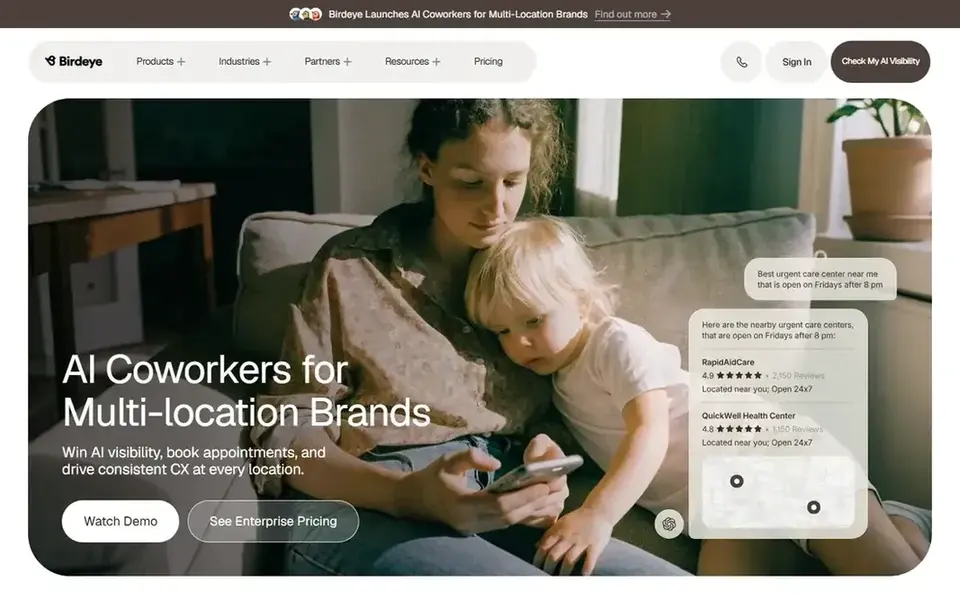
Birdeye is a broad reputation and customer experience platform. It handles review requests, review monitoring, messaging and listings, which makes it a fit for a shop that is tired of juggling separate tools for texts, reviews and directory updates.
For auto repair, the useful part is the single inbox. An advisor can answer a text about a repair, reply to a Google review and send a follow-up request without switching apps. Requests can go out by SMS or email after a job, and the platform tracks which customers responded. Multi-location shops get roll-up reporting.
The downside is weight. A one-bay shop with one advisor will pay for features it never opens. It also takes more setup than a focused request tool. Skip it if you only want a simple post-job review request and nothing else.
- Review requests across email, SMS and other channels
- unified inbox for reviews and messages
- listing and reputation management in one place
- reporting for multiple locations
- More product than a single shop needs
- setup and cost grow with features
Grade.us is a review management tool that focuses on the request itself. You build a campaign, add customers, and it sends the ask by email or text, then routes happy customers toward a public review. It is popular with agencies and small businesses that want the job done without a large platform.
In an auto repair shop, it works well as a simple post-service follow-up. The advisor uploads the day's tickets or connects a supported system, and requests go out on a schedule. You can set up different campaigns for different services, which helps if you want a different message after a big transmission job than after an oil change.
The trade-offs are integration depth and polish. If your shop management system is not on the supported list, you will be uploading files. It is a good fit for a shop that wants control and a lower entry point, less so for a group that wants everything connected.
- Straightforward request campaigns
- email and SMS options
- review monitoring and reply
- agency-friendly pricing tiers
- Fewer shop management integrations
- interface is plainer than bigger platforms
Podium is best known for business texting, and review requests are one piece of that. A shop can text a customer about an estimate, send a payment link, and follow up with a review request in the same thread. For shops where customers already expect a text, that flow feels natural.
The auto repair use case is the front desk conversation. Instead of calling and leaving a voicemail, the advisor texts an update, then sends the review ask after the car is picked up. The platform tracks who responded and shows reviews in one place.
The main caution is scope. You are buying a messaging platform, not just a review tool, and the price reflects that. If your shop does not want to manage inbound texts, a focused review request tool is simpler and cheaper.
- Text messaging with customers
- review request invites
- payments and messaging in one place
- good mobile experience for staff
- Review requests are part of a larger messaging product
- pricing reflects the full platform
Broadly is a customer interaction tool for local service businesses. It combines review requests, a messaging inbox, web chat and lead capture, which suits a shop that wants one place to handle customer contact after the repair.
For auto repair, the value is the follow-up loop. The shop sends a request after the job, watches for replies in the inbox, and can answer questions before they turn into a bad review. The review request can be customized so it reads like the shop, not a generic template.
It is not a plug-and-play tool. Someone needs to set up the campaigns, connect the customer source and train the front desk. A shop with no one to own that setup should look at a simpler request tool first.
- Review requests by email and SMS
- a simple inbox for customer messages
- web chat and lead capture
- built for local service businesses
- Setup needs planning
- smaller integration list than enterprise tools
ReviewTrackers is a review management platform with strong monitoring and response features. It is built for businesses that need to watch many locations and many platforms at once, which fits a small group of repair shops more than a single bay.
In an auto repair context, it helps when the owner wants to see every review across three or four shops and make sure each one gets a reply. The dashboard shows what customers are saying about wait times, estimates and repairs, and the response workflow keeps replies consistent.
The review request side is present but not the main event. If your priority is a steady stream of post-job requests, a request-focused tool does that better. If your priority is watching and answering reviews across locations, this is a strong option.
- Review monitoring across many platforms
- response tools and workflows
- location-level reporting
- sentiment analysis
- Request automation is secondary
- heavier than a single shop needs
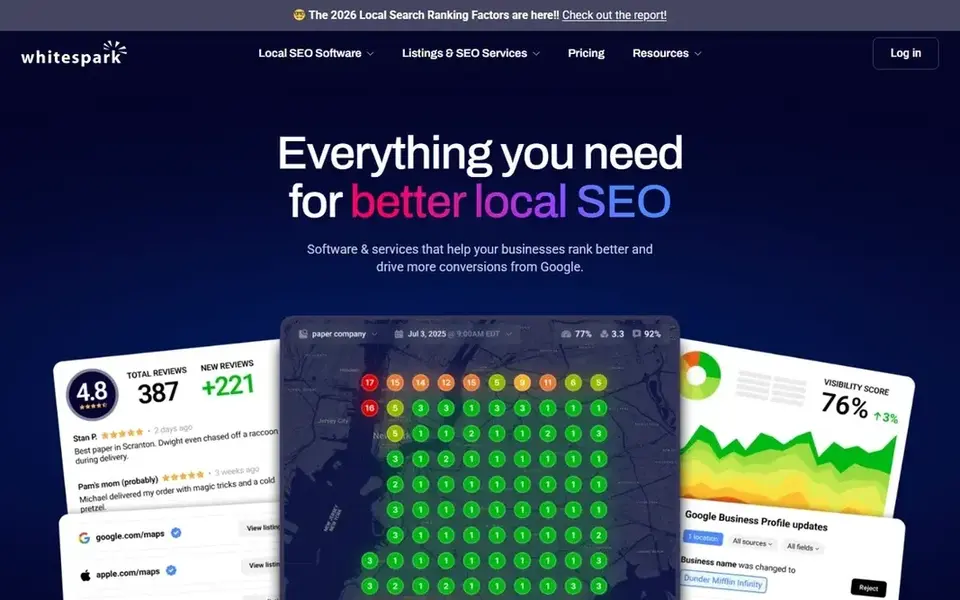
Whitespark is a local SEO company with tools for citations and reviews. Its review request tool lets a business send asks by email or SMS and track the results, and it sits alongside citation building and local ranking tools.
For an auto repair shop that is already working on local search, this keeps review requests and local SEO in one place. The shop can send requests after jobs, watch new reviews come in, and use the same account for citation work that supports Google Business Profile.
It is not the most automated option for a busy front desk. If you want requests to fire automatically from your shop management system with no manual step, a dedicated request tool is a better fit. It suits shops that already have someone doing local SEO.
- Review request tool built by a local SEO company
- citation and listing tools in the same suite
- simple campaign setup
- good for shops already doing local SEO
- Less of a set-and-forget automation tool
- not a full customer messaging platform
How I chose
I compared these tools by reading vendor documentation and public sources, then judging each one against how an auto repair shop actually operates. I did not run hands-on tests, and I did not rely on client results or case studies. The question I kept asking was simple: can a service advisor send an honest request after a finished job without adding work to the front desk?
I weighted four things: how requests are triggered, whether email and SMS are both supported, how reviews are monitored and answered, and how much extra platform comes with the tool. I also noted limits, because a shop that only needs post-job requests should not pay for a full messaging suite. Where pricing was not clearly documented, I left it as "see website" rather than guess.
What to check before you buy
- Confirm how the tool gets customer details: a direct integration with your shop management system, a CSV upload, or manual entry.
- Check that both email and SMS requests are supported, and that consent and opt-out handling are built in.
- Ask whether requests can be timed to the moment a job is closed or the car is picked up, not just sent on a fixed daily schedule.
- Look at review monitoring and reply tools, since one advisor often handles reviews between customers.
- Check how the tool handles negative feedback, so unhappy customers reach the shop before they post publicly.
- Read the contract terms for request volume, location limits and cancellation before you commit.
Frequently asked questions
Do review request tools break Google's review policies?
Only if you use them to filter customers or offer incentives. Google's guidelines prohibit review gating, paying for reviews and asking only happy customers. A compliant tool asks every customer the same way and lets them choose where to post. Check that the vendor does not push selective sending as a feature.
Should an auto repair shop ask by text or email?
Text usually gets a faster response, especially for customers who just picked up a car. Email is better for older customers and for shops without clear SMS consent. Many tools support both, so you can use text as the default and email as a fallback.
How soon after a repair should the request go out?
Same day is usually best, while the repair and the pickup experience are fresh. Some shops wait a few hours so the customer has driven the car. Avoid sending days later, because the customer has moved on and the request feels random.
Can I connect the tool to my shop management system?
Some tools integrate with common shop management systems, and others rely on CSV uploads or manual entry. Check the vendor's integration list against the system you use before you buy. If there is no integration, plan who will upload customer lists each day.
Do I need a full reputation platform or just a request tool?
A single shop with a steady workflow usually does fine with a focused request tool plus review monitoring. A small group with multiple locations and a shared front desk benefits from a platform with one inbox and location reporting. Buy for the workflow you have, not the one you might have later.
Sources
See where you really rank - block by block
ProMapRanker scans Google Maps across a grid of your service area. Simple monthly plans from $19, white-label on every plan.
Start freeBrowse all guides
← Best Review Management Software for Tutoring Centers in 2026Best Review Request Software for Car Dealerships in 2026 →
 best review management software for moving companies
Best Review Management Software for Moving Companies in 2026
A moving company owner's guide to review management software: request reviews after jobs, reply to feedback, and track reputation. Compared for 2026.
Read → best review management software for landscapers
Best Review Management Software for Landscapers in 2026
A landscaper's guide to review management software in 2026: request reviews after jobs, reply fast, and show proof on your Google Business Profile.
Read → best review management software for junk removal companies
Best Review Management Software for Junk Removal Companies in 2026
A practical guide to the best review management software for junk removal companies in 2026, compared from vendor documentation and public sources.
Read →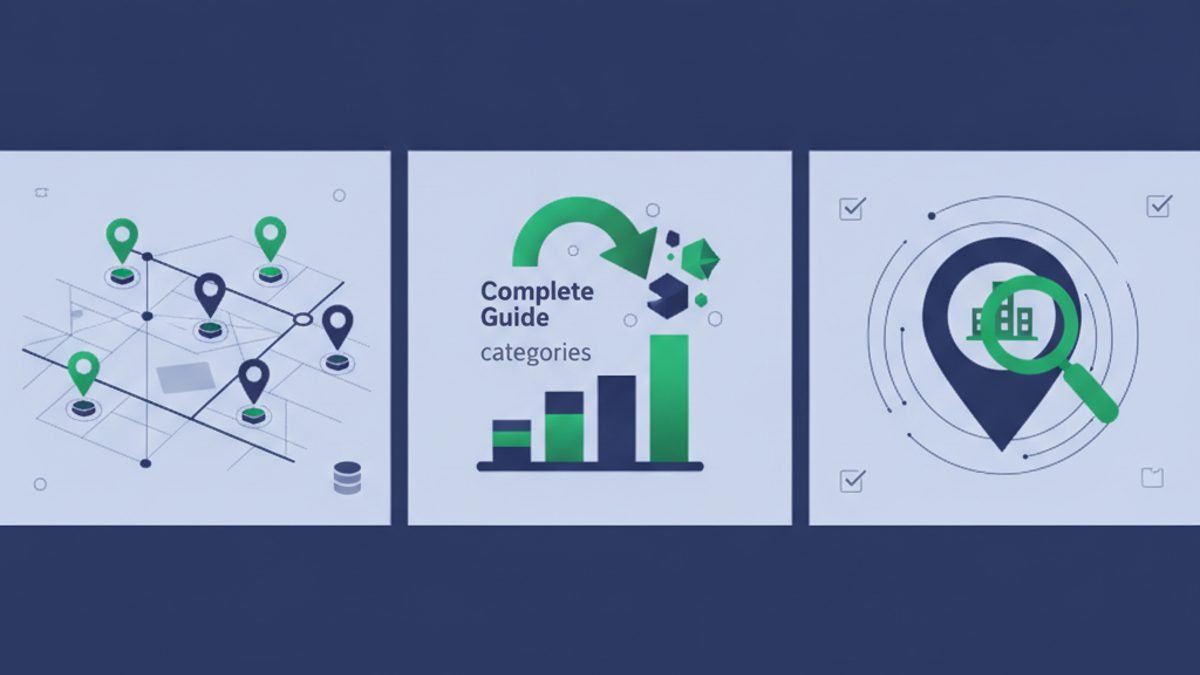 citations by category
Citations By Category: A Complete Guide
Everything you need to know about citations by category: what it is, why it matters for local SEO, and exactly how to act on it.
Read → gbp optimization
GBP Optimization: How to Optimize a Google Business Profile for Local SEO
GBP optimization explained: a local-SEO-focused walkthrough to turn your profile into a lead engine.
Read → best copilot rank tracker software
Best Copilot Rank Tracker Software in 2026
Best Copilot rank tracker software compared for 2026: tools that track brand mentions, citations and links inside Microsoft Copilot answers every day.
Read →More in Local SEO & Google Maps · All guides A to Z by date · Latest guides