 ProMapRanker
Best Reputation Management Software for Day Spas (2026)

Review requests after spa appointments · Pricing starts at: See website
Direct answer
My top pick for day spas is NiceJob, because it is built around getting reviews from customers after a service and turning happy clients into referrals, which matches how a spa actually earns reviews. Pricing is quote-based, so check its pricing page. If you mainly need review replies and a full inbox across several locations, look at Birdeye, and if you want review requests tied to your booking and payment workflow, Weave is worth a look.
I compared these tools from vendor documentation and public sources, not from hands-on tests. I looked at how each one handles review requests after an appointment, review replies, listings and the daily front-desk workflow a spa actually runs. The notes below focus on fit for a day spa, not on feature counts.
Key takeaways
- Day spas collect reviews after appointments, so software that triggers a request when a treatment is marked complete fits better than a tool that only monitors mentions.
- A review request that goes out by text within a few hours of checkout usually lands better than an email sent days later.
- You need one place to read and answer reviews on Google, Yelp and Facebook, because spa clients spread their feedback across all three.
- Software that nudges staff to ask for reviews in person, then follows up automatically, tends to fit the front-desk routine better than a purely automated tool.
- Check that the tool follows Google's review policies, meaning no incentives, no review gating and no filtering out unhappy customers.
Quick comparison
| Pick | Great for | Pricing starts at | Free tier | |
|---|---|---|---|---|
| NiceJob | Review requests after spa appointments | See website | No free plan | Visit |
 Birdeye | Busy multi-location spa groups | See website | No free plan | Visit |
 Weave | Spas tying reviews to booking and payments | See website | No free plan | Visit |
 Podium | Front-desk texting plus review requests | See website | No free plan | Visit |
 GatherUp | Simple review collection on a budget | See website | Free trial | Visit |
 Grade.us | Agencies managing several spa clients | See website | Free trial | Visit |
 Semrush Local | Spas already using Semrush for SEO | See website | No free plan | Visit |
The best reputation management software for day spas compared
NiceJob is a reputation and customer marketing tool aimed at local service businesses, and a day spa fits that shape well. You add a client after a treatment, and the tool asks for a review by text or email. It also handles referrals and repeat-customer campaigns, which matters for spas because a facial or massage client who books again is worth more than a one-off visit.
In a spa workflow, the front desk marks an appointment as complete at checkout, and the review request goes out shortly after. That timing is close to the moment a client is relaxed and happy, which is when a review is easiest to leave. You can route happy clients toward Google and keep the ask personal rather than generic.
The limit is that NiceJob is not a full inbox for every channel, and pricing is quote-based, so a one-room spa should ask for a small plan. Skip it if you need deep social monitoring or a large multi-location dashboard.
- Review requests triggered by completed jobs
- built-in referral and repeat-customer tools
- simple dashboard for a small front desk
- Pricing is quote-based
- fewer social listening features than bigger suites
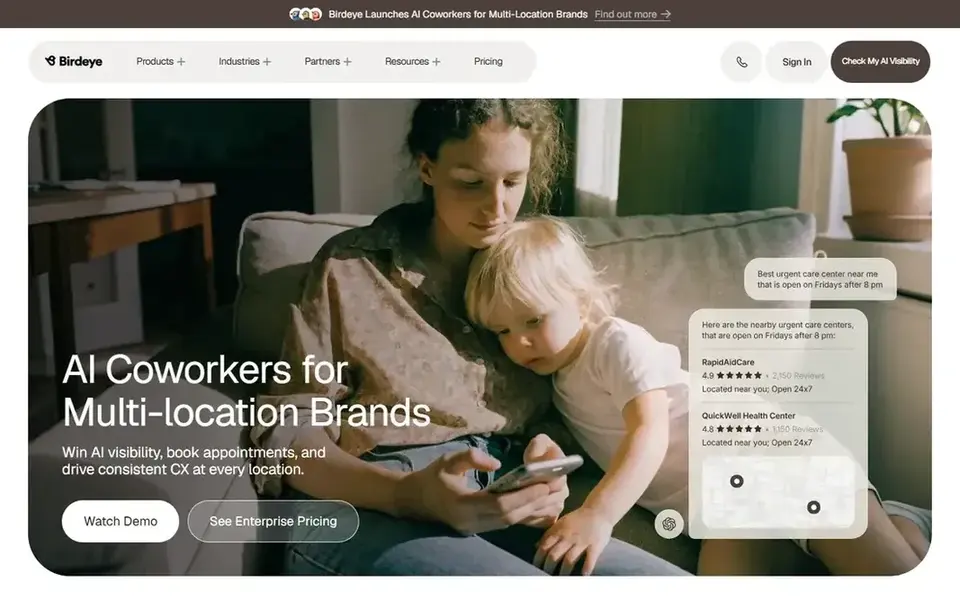
Birdeye is a reputation and customer experience platform used by multi-location service businesses. For a spa group with two or more sites, it puts reviews, messages and business listings in one place so a manager can see each location side by side. That helps when one branch gets steady five-star feedback and another is slipping.
For day spas, the useful part is the shared inbox. A client might mention a therapist by name on Google, ask about a package on Facebook and leave a Yelp review in the same week. Birdeye lets one person answer all of it without logging into three tabs, and it can send review requests after appointments.
The downside is setup effort and cost. A single-room spa will likely find it heavier than needed. It suits groups with staff who can own the inbox daily.
- Reviews, messages and listings in one inbox
- good multi-location reporting
- automated review requests
- Setup takes time
- pricing is quote-based and aimed at larger businesses

Weave is a communication platform for appointment-based businesses, and it bundles phones, scheduling reminders, payments and review requests. For a day spa, that means the same system that texts a client about tomorrow's appointment can also ask for a review after checkout. Fewer separate logins is a real benefit for a small front desk.
The spa-specific angle is the reminder flow. A client who gets a text reminder the day before is already in the habit of reading spa texts, so a review request after the visit feels familiar rather than out of nowhere. That continuity tends to help response rates.
The limit is that Weave works best when you adopt its phone and payment tools too. If you already have a booking system you like, check integration before committing.
- Reviews connected to phone, scheduling and payments
- text reminders for appointments
- one system for the front desk
- Built around its own phone system
- pricing is quote-based
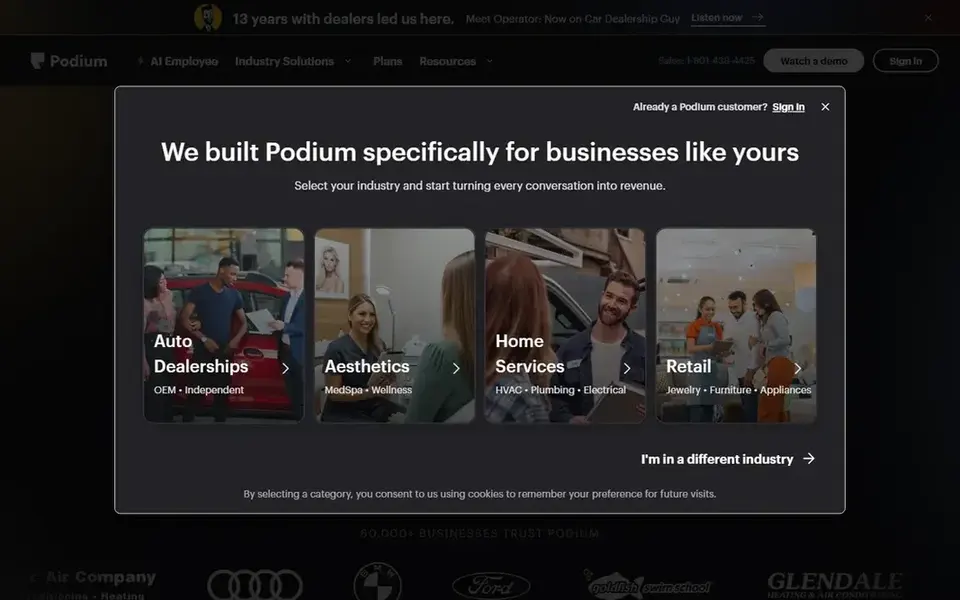
Podium is a messaging and reputation tool built around texting, which suits spas because clients already text to ask about availability, parking or a patch test. The front desk can answer texts and send a review invite in the same thread after a visit.
For a day spa, the practical use is the post-visit text. A therapist finishes a massage, the client pays, and a short text asks how it went with a link to Google. Because the client is already texting the spa, the ask does not feel cold.
One limitation is cost. Podium's stronger features sit in higher tiers, and a small spa should map out which add-ons it truly needs before signing.
- Strong text messaging for the front desk
- review invites by text
- inbox that handles web chat and texts
- Costs climb with add-ons
- pricing is quote-based
GatherUp is a review collection and monitoring tool with a free trial, aimed at small businesses that want the basics done well. For a day spa, it does the core job: send a review request after an appointment, collect feedback on Google, Facebook and Yelp, and show you what came in.
The spa fit is the simplicity. A small team does not need a heavy platform to ask for reviews and reply to them. GatherUp also lets you send a private feedback request first, which is fine as long as you do not filter or gate reviews, since Google does not allow review gating.
The limit is that it is not a full messaging inbox. If your front desk lives in texts and web chat, a bigger tool may fit better.
- Straightforward review requests by email and text
- review monitoring across major sites
- simple reporting
- Fewer messaging features than bigger suites
- interface is plain
Grade.us is a review management tool often used by agencies that run reputation for local clients. If you are a spa owner working with a marketing agency, or you run several spa accounts, it lets you manage review requests and reporting from one login.
For day spas, the useful part is the campaign setup. You can build a request that goes out after a treatment, with a short message that fits a spa's tone, and track which clients responded. Client reporting is easy to hand to a spa owner who does not want a complex dashboard.
The limit is the interface, which feels older than newer tools, and integrations are thinner. A single spa that wants a polished app may prefer another option.
- White-label options for agencies
- review requests by email and text
- simple client reporting
- Interface feels dated
- fewer integrations than larger platforms
Semrush Local adds listings management and review tools to Semrush's SEO platform. For a day spa that already tracks local search terms like "massage near me" or "facial in [city]", it keeps reputation work next to the keyword and site data in the same account.
The spa fit is the combined view. You can see which treatments drive search interest, check that your Google Business Profile and directory listings are consistent, and manage review replies without switching tools. That helps a spa owner who handles their own marketing.
The limit is that reviews are a smaller part of a large platform. If reputation is your only need, a dedicated tool is simpler. Pricing is quote-based, so confirm what the local add-on costs.
- Listings and review management next to keyword and site data
- good for spas running their own SEO
- one login for local and organic work
- Review features are one part of a bigger suite
- pricing is quote-based
How I chose
I started from vendor documentation and public sources for each tool, then filtered for how a day spa actually operates. That means review requests after a treatment, a front desk that is often busy at checkout, clients who book by phone, text or an online system, and feedback that lands on Google, Yelp and Facebook rather than one site. I did not run hands-on tests, so treat the notes as a starting point for your own trial.
I also weighed limits honestly. Some tools are built around their own phone or payment system, which is fine if you adopt the whole stack but awkward if you do not. Others are simple review collectors with fewer messaging features. I avoided tools that encourage review gating, incentives or buying reviews, because those break Google's guidelines and can cost a spa its review profile. The ranking reflects fit for a typical day spa, not the size of the vendor.
What to check before you buy
- Confirm the tool can send a review request by text shortly after checkout, since spa clients rarely check email the same day.
- Check that it monitors and lets you reply to Google, Yelp and Facebook in one inbox, because spa feedback spreads across all three.
- Ask whether review requests can include the therapist or treatment name, so replies feel personal rather than generic.
- Make sure the tool does not gate reviews or offer incentives, since Google's policies prohibit both.
- Check how it handles multiple locations if you run more than one spa, including separate review streams and reporting.
- Ask about setup help and how long onboarding takes, because a busy front desk will not have time for a long migration.
Frequently asked questions
What is the best reputation management software for a small day spa?
For a small spa, NiceJob is a good starting point because it focuses on review requests after appointments and simple referral tools. GatherUp is a lighter option with a free trial if you only need review collection and replies. Both keep the workflow simple enough for a front desk that is busy at checkout.
How do I get more Google reviews for my spa without breaking the rules?
Ask every client, in person and by text, shortly after the visit, and make it easy with a direct link. Do not offer discounts or free add-ons for reviews, do not filter out unhappy clients before they reach Google, and do not write reviews yourself. Those practices break Google's guidelines and can get reviews removed.
Should a spa reply to every review?
Yes, reply to positive and negative reviews. A short, specific reply that mentions the treatment or therapist shows you read it, and it gives future clients a sense of how you handle feedback. Software that puts all reviews in one inbox makes this a quick daily task rather than a chore.
Do I need separate software for Yelp and Google reviews?
Most reputation tools pull reviews from Google, Yelp and Facebook into one inbox, so you reply in one place. Check the specific integrations before you buy, because coverage varies by tool and by country. A spa in a city where Yelp is strong should confirm Yelp support.
Can reputation software help with spa bookings?
Some tools, like Weave and Podium, connect review requests to appointment reminders and front-desk texting, which keeps clients engaged between visits. Others focus only on reviews. If bookings are your priority, check how the tool connects to your existing booking system before you commit.
Sources
See where you really rank - block by block
ProMapRanker scans Google Maps across a grid of your service area. Simple monthly plans from $19, white-label on every plan.
Start freeBrowse all guides
← Best Reputation Management Software for Computer Repair Shops (2026)Best Reputation Management Software for Driving Schools in 2026 →
 best reputation management software for car dealerships
Best Reputation Management Software for Car Dealerships in 2026
A dealer-focused guide to reputation management software for car dealerships in 2026, covering review requests, responses, listings and lead tracking.
Read → best reputation management software for auto repair shops
Best Reputation Management Software for Auto Repair Shops (2026)
A practical guide to the best reputation management software for auto repair shops in 2026, covering review requests, replies, listings and tracking.
Read → best local seo tools for tattoo shops
Best Local SEO Tools for Tattoo Shops in 2026
A practical guide to the best local SEO tools for tattoo shops in 2026, covering Google Business Profile, reviews, citations and map rankings.
Read → best copilot rank tracker software
Best Copilot Rank Tracker Software in 2026
Best Copilot rank tracker software compared for 2026: tools that track brand mentions, citations and links inside Microsoft Copilot answers every day.
Read → local seo for florists
Local SEO for Florists
A local SEO guide for florists: Google Business Profile setup, reviews, and same-day delivery and occasion-based local SEO.
Read → local seo for cleaning companies
Local SEO for Cleaning Companies
How cleaning companies rank higher in local search: GBP optimization, service-area setup, and review generation.
Read →More in Local SEO & Google Maps · All guides A to Z by date · Latest guides