 ProMapRanker
Best Local SEO Tools for Pediatricians in 2026

All-in-one local SEO for small practices · Pricing starts at: See website
Direct answer
BrightLocal is my top pick for pediatric practices because it handles the three jobs a small practice actually needs: Google Business Profile audits, local rank checks and review monitoring in one dashboard. Pricing is quote-based, so check its pricing page for current plans. If you mainly need review requests after well-child visits, look at Birdeye; if you want to check how you rank across a city's neighborhoods, look at Local Falcon.
I put this list together from vendor documentation and public sources, not from hands-on testing. I looked at what each tool does for a small medical practice, how the workflow fits a front desk, and where each one stops being useful. Prices change, so I send you to each vendor's own page rather than quoting figures.
Key takeaways
- A pediatric practice lives or dies on the map pack, so tools that track grid rankings around your office matter more than broad keyword suites.
- Review tools should fit the front-desk workflow, because parents usually leave feedback after a visit, not weeks later.
- Listing management keeps your name, address, phone and hours consistent across directories, which matters when you have multiple clinic locations.
- Rank tracking for a practice should use a radius around each office, not a single city-level position.
- Reporting tools help you show a practice owner or partner group what changed month to month without manual spreadsheets.
Quick comparison
| Pick | Great for | Pricing starts at | Free tier | |
|---|---|---|---|---|
| BrightLocal | All-in-one local SEO for small practices | See website | Free trial | Visit |
 Birdeye | Review requests after each visit | See website | No free plan | Visit |
 Local Falcon | Map grid rank tracking around each office | See website | Free trial | Visit |
 Whitespark | Citation building and local rank tracking | See website | Free trial | Visit |
 Yext | Central listing control for multi-site practices | See website | No free plan | Visit |
 CallRail | Tracking calls from the profile and site | See website | Free trial | Visit |
 Semrush | Keyword and competitor research | See website | Free trial | Visit |
The best local SEO tools for pediatricians compared
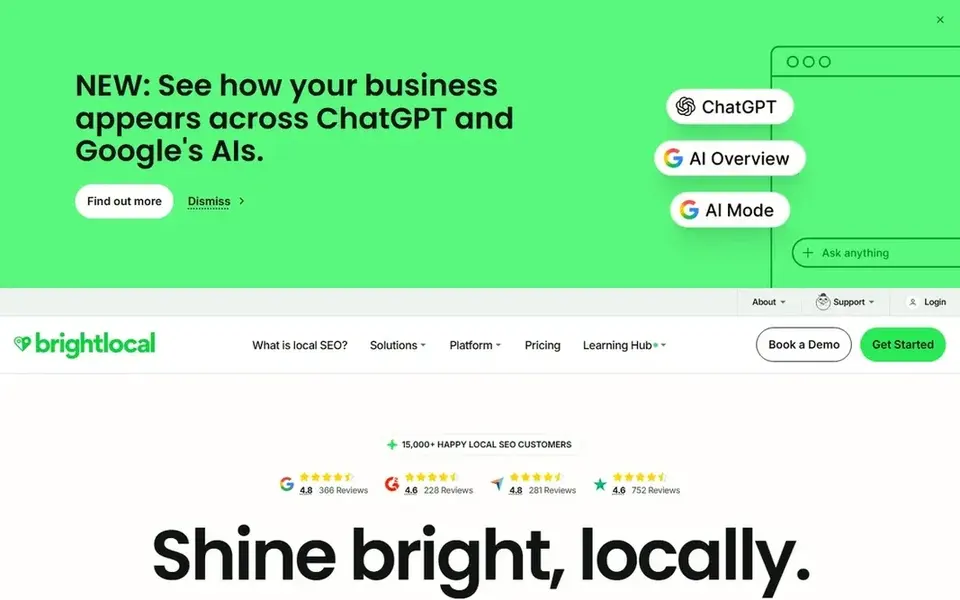
BrightLocal is a local SEO platform aimed at agencies and small businesses, and a solo pediatric practice or a two-office group fits it well. It covers the basics a clinic needs: a Google Business Profile audit that flags missing hours, categories or photos, local rank tracking, review monitoring and citation checks. For a practice that does not want five separate logins, that combination saves time.
In a pediatric setting, the profile audit is the part I would use first. It catches the details parents check before booking, like holiday hours, insurance notes in the description and whether the appointment link works. Rank tracking then shows whether the office appears when someone searches "pediatrician near me" from a few miles away, which is closer to real parent behavior than a single city-wide position.
The limit is depth. If you run a large multi-site group with complex listing data, you may outgrow it. A single clinic or a small group should be fine.
- Combines profile audits, rank tracking and review monitoring
- citation building is built in
- reports are easy to read for a practice owner
- Some features sit behind higher plans
- not built for large hospital systems
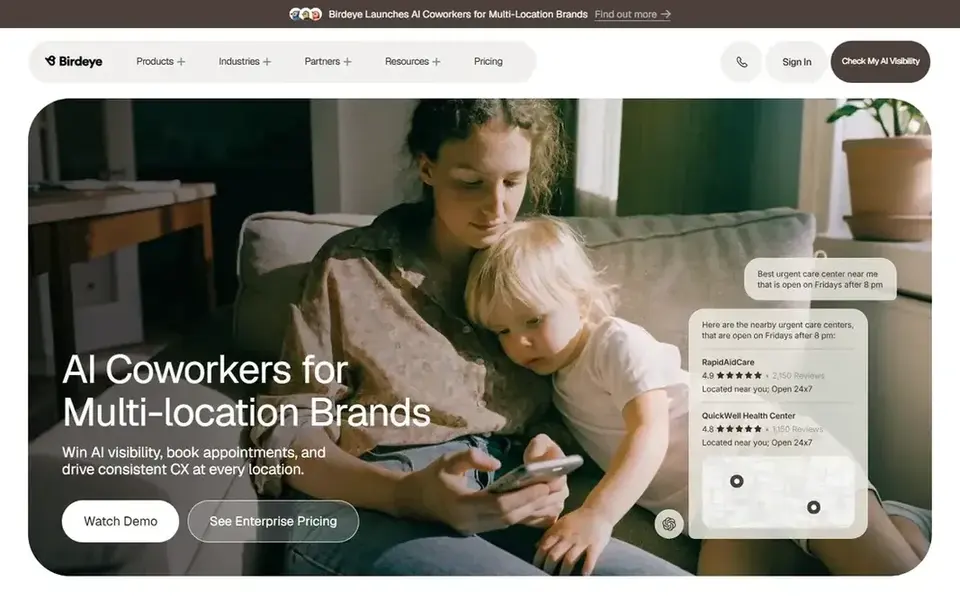
Birdeye is a reputation and customer experience platform. For a pediatric practice, its main value is getting a review request out to parents shortly after a visit, when the experience is still fresh. It also pulls reviews from multiple sites into one place so the office manager can reply without hunting through tabs.
The workflow matters here. A front desk can trigger a request after check-out, and the practice can reply to reviews from a single dashboard. That fits how a clinic actually runs, because nobody has time to chase reviews manually at the end of a busy day.
The downside is scope and cost. A single-doctor practice may find it heavier than needed, and the messaging features go beyond what most small clinics use. Check the plan details before committing.
- Automated review requests by text or email
- review monitoring in one inbox
- messaging tools for patient communication
- Priced for larger operations
- more features than a small practice needs
Local Falcon focuses on one job: showing where a business ranks on Google Maps across a grid of points around a location. For a pediatric office, that is useful because parents search from home, from work and from the car, and the practice may rank well in one direction and poorly in another.
I would use it to check a new office location or to see whether a change to the profile moved rankings in nearby suburbs. The visual map makes it easy to explain to a practice owner why a clinic two miles away outranks them in one part of town.
It is not a replacement for a full local SEO tool. You still need something for listings and reviews, so treat it as a specialist add-on.
- Shows rankings on a map grid around a location
- good for spotting weak neighborhoods
- simple visual reports
- Not a full SEO suite
- limited review and listing features
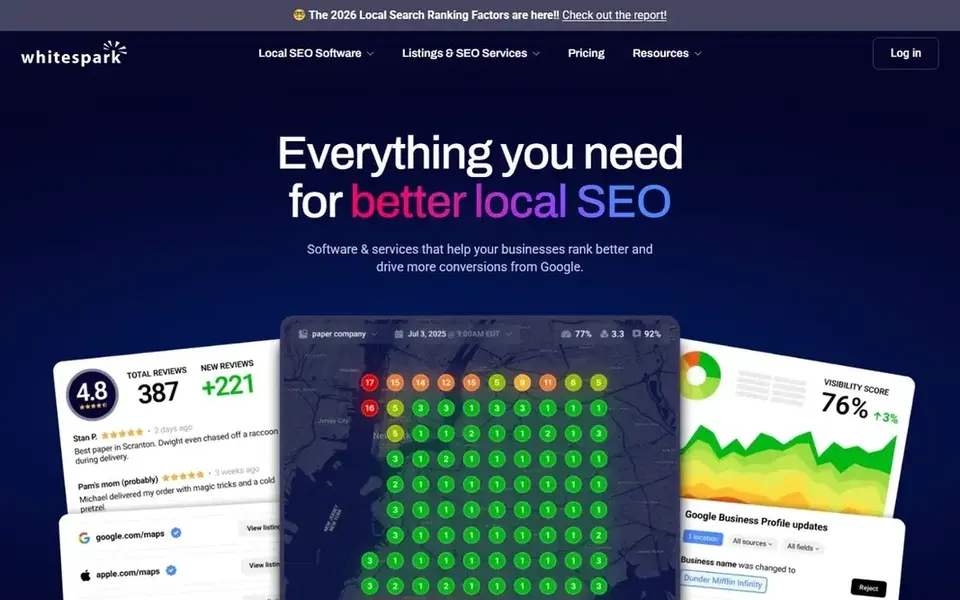
Whitespark is known for citation building, and that matters for a pediatric practice because parents check directories and insurance lists before calling. Consistent name, address, phone and hours across those listings reduce confusion and help the profile.
The citation finder shows where a practice is listed and where it is missing, and the rank tracker gives a local view of visibility. If you would rather not do the work yourself, Whitespark offers citation services, which suits a practice with no marketing staff.
The trade-off is that citations need maintenance. A move, a phone change or new hours can create mismatches, so plan for periodic checks rather than a one-time cleanup.
- Strong citation finding and building tools
- local rank tracker included
- citation services can be done for you
- Citation cleanup is ongoing work
- interface is aimed at SEOs
Yext is a listings management platform that lets a business update information in one place and push it out to many directories and maps. For a pediatric group with several offices, that control is valuable because hours, phone numbers and locations change and each change has to land everywhere.
The workflow is centralized: update the source record, then the listings follow. That reduces the risk of an old phone number or a closed office still showing up in a directory.
For a single clinic, the cost and setup effort usually outweigh the benefit. A smaller citation tool or manual cleanup is often enough.
- One place to update listings across many sites
- good for groups with several offices
- structured data control
- Subscription cost
- overkill for a single location
CallRail is a call tracking platform. For a pediatric practice, it answers a simple question: which calls came from the Google Business Profile, the website or a directory? That helps you see whether profile work is producing appointment calls.
The front desk needs a clear policy on which numbers to use and how to route calls, because tracking numbers can confuse parents if they are not handled well. Once set up, the reports show call volume by source, which is more useful than guessing.
It does not manage listings or reviews, so it is a measurement tool rather than a full local SEO platform. Small practices should weigh whether the call volume justifies it.
- Call tracking with source attribution
- recordings and transcripts
- works with Google Business Profile calls
- Needs a clear number policy
- setup takes care
Semrush is a broad SEO platform with keyword research, competitor analysis and a local SEO toolkit. For a pediatric practice, the useful part is seeing what parents search for, such as "pediatrician accepting new patients" or "child doctor near me", and which nearby practices show up.
I would use it for content planning, like a page about newborn visits or sick-child appointments, and for checking competitor visibility. The local features are helpful but not the core of the platform.
The downside is size. A small clinic may pay for features it never uses, and the interface takes time to learn. It suits a practice with someone who can spend a few hours a month on research.
- Broad keyword and competitor data
- local SEO features included
- useful for content planning
- Large platform with a learning curve
- local features are one part of it
How I chose
I compared these tools by reading vendor documentation and public sources, and by matching each one to how a pediatric practice actually works. I did not run hands-on tests, so I am not claiming benchmark results. I looked at whether a tool covers the jobs a clinic needs: profile accuracy, local rank checks around an office, review requests and listing consistency.
I also weighed limits. A single-office practice does not need an enterprise listing platform, and a multi-site group needs central control that a small tool cannot give. Where a tool is a specialist, like Local Falcon for grid rankings or CallRail for call tracking, I say so rather than presenting it as a full suite.
What to check before you buy
- Confirm the tool can audit your Google Business Profile for hours, categories, photos and appointment links, since parents check those before calling.
- Check whether rank tracking uses a radius or grid around each office, not just a city-level position.
- Ask how review requests are triggered, because a front-desk workflow after check-out is different from a bulk email blast.
- Make sure listing management covers the directories parents actually use, including maps and health-related directories where relevant.
- Check whether the tool supports multiple locations if you have more than one office, and how it handles shared phone numbers.
- Read the vendor's own pricing page and terms, because plans and features change and I do not quote figures here.
Frequently asked questions
What is the most important local SEO task for a pediatric practice?
Keeping the Google Business Profile accurate is the first job. Hours, holiday closures, phone number, appointment link and photos all affect whether a parent calls. After that, review requests and consistent listings across directories do the most work for a small clinic.
Do pediatricians need a review tool?
Not always, but reviews influence whether parents choose a practice. A review tool helps send requests after visits and keeps replies in one place. A small practice can start with manual requests and add a tool when volume grows.
How does local rank tracking differ from normal rank tracking?
Normal rank tracking checks a keyword from one location. Local rank tracking checks positions across a grid or radius around the office, which reflects how parents search from home, work or school. For a clinic, the grid view is more useful.
Can I manage listings without a paid tool?
Yes, for a single office. You can claim the main directories and fix mismatches manually. A paid tool helps when you have several locations or when hours and phone numbers change often.
Does call tracking help a pediatric practice?
It can, if you want to know which calls come from the profile versus the website. The trade-off is setup and number management. A practice with low call volume may not need it.
Sources
See where you really rank - block by block
ProMapRanker scans Google Maps across a grid of your service area. Simple monthly plans from $19, white-label on every plan.
Start freeBrowse all guides
← Best Local SEO Tools for Martial Arts Schools in 2026Best Local SEO Tools for Storage Facilities in 2026 →
 best local seo tools for furniture stores
Best Local SEO Tools for Furniture Stores in 2026
A first-person guide to the best local SEO tools for furniture stores in 2026, covering listings, reviews, rank tracking and GBP management.
Read → best local seo tools for carpet cleaning companies
Best Local SEO Tools for Carpet Cleaning Companies in 2026
A practical guide to the best local SEO tools for carpet cleaning companies in 2026, covering rankings, reviews, listings and call tracking.
Read → best local seo tools for bike shops
Best Local SEO Tools for Bike Shops in 2026
A bike shop owner's guide to the best local SEO tools for 2026, compared from vendor docs and public sources, with fit notes for service and retail.
Read → promapranker vs synup
ProMapRanker vs Synup: Local Rank Tracking Compared
How ProMapRanker compares to Synup for local rank tracking, reporting, and pricing.
Read → how to add photos to google business profile
How To Add Photos To Google Business Profile?
Everything you need to know about how to add photos to google business profile: what it is, why it matters for local SEO, and exactly how to act on it.
Read → local seo for salons
Local SEO for Salons and Barbershops: Booking More Appointments
A salon and barbershop local SEO guide: GBP, photos, reviews, and geo-grid tracking for more bookings.
Read →More in Local SEO & Google Maps · All guides A to Z by date · Latest guides