 ProMapRanker
Best Local SEO Tools for Storage Facilities in 2026

All-in-one local SEO for multi-site storage operators · Pricing starts at: See website
Direct answer
BrightLocal is my top pick for storage facilities because it handles the core work of a multi-location self-storage operator: listing audits, citation building, review monitoring and local rank tracking in one dashboard. It has no free plan stated, so check its pricing page before you commit. If reviews are your main gap, Birdeye fits better, and for call tracking across several facilities CallRail is the safer choice.
I compared these tools using vendor documentation and public sources rather than hands-on testing. I looked at how each one handles the things storage facilities actually need: multiple locations, Google Business Profile accuracy, reviews, map rankings and phone calls. The order reflects fit for a storage operator running one or more facilities, not a general ranking of SEO software.
Key takeaways
- Storage operators usually run several sites in different towns, so a tool that manages many locations from one login saves real time.
- Your Google Business Profile is the main driver of "storage near me" visibility, so profile and listing accuracy matters more than blog content.
- Review volume and recency affect how often your facility shows in the map pack, so review software is worth budgeting for.
- Rank tracking should be set up by town and by keyword type, because "self storage [city]" and "storage units near me" behave differently.
- Call tracking tells you which listings and pages actually produce phone calls, which is how most storage rentals start.
Quick comparison
| Pick | Great for | Pricing starts at | Free tier | |
|---|---|---|---|---|
| BrightLocal | All-in-one local SEO for multi-site storage operators | See website | Not stated | Visit |
 Whitespark | Citation building and local rank tracking | See website | Not stated | Visit |
 Local Falcon | Grid-based map rank tracking | See website | Not stated | Visit |
 Yext | Centralised listing control at scale | See website | Not stated | Visit |
 Birdeye | Review generation and customer messaging | See website | Not stated | Visit |
 CallRail | Call tracking and lead attribution | See website | Not stated | Visit |
 Moz Local | Simple listing management for small portfolios | See website | Not stated | Visit |
The best local SEO tools for storage facilities compared
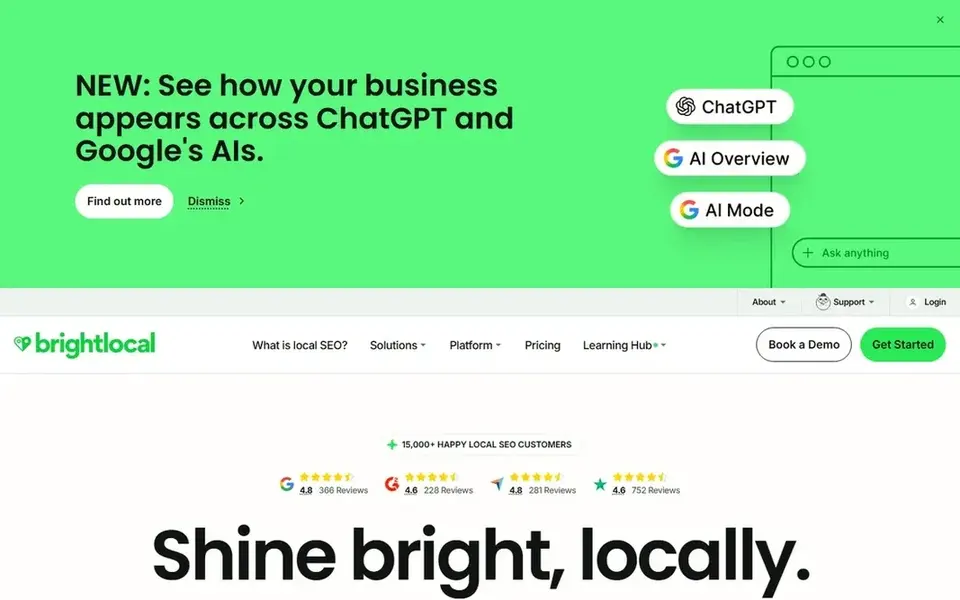
BrightLocal is a local SEO platform built around listings, reviews and rank tracking. For a storage operator with facilities in several towns, it lets you check that each address, phone number and hours match across the web, which is the foundation of showing up for "storage units [city]" searches.
The workflow fits storage well. You audit each location's listings, fix mismatches, then track map rankings by town so you can see which facility is losing ground. Review monitoring pulls new reviews into one inbox so a manager can respond quickly, and the reporting is easy to hand to an owner who does not want to log into five dashboards.
The limits are mostly about depth. If you need very large-scale listing sync across dozens of locations, a dedicated listings platform may suit you better. Small operators with one facility may find it more than they need.
- Listing audits and citation building in one place
- review monitoring and local rank tracking
- multi-location reporting
- No free plan stated
- some niche directories are missing from the citation network
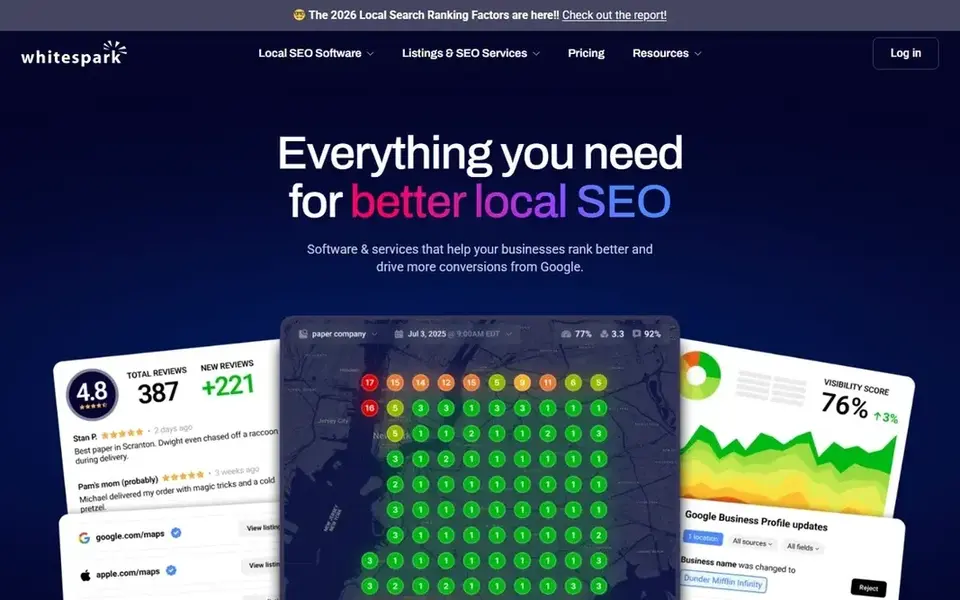
Whitespark is known for citation building and local search data. Storage facilities often sit in suburban areas where the local directory landscape is thin, and Whitespark's research helps you find the directories that actually matter for your town rather than submitting to a long list of irrelevant sites.
Its local rank tracker shows where your facility appears across a grid of points around the address, which is useful for storage because customers often search from a few miles away while driving. You can see whether your map pin is visible from the surrounding neighbourhoods, not just at the centre point.
The trade-off is complexity. It is a tool for someone who will use it regularly, and a single-site owner may not get enough from it to justify the time.
- Strong citation research and submission service
- local rank tracker with grid views
- reputable directory data
- No free plan stated
- interface takes time to learn
Local Falcon specialises in map grid rank tracking. For storage, this is a good fit because a facility's visibility changes block by block. A unit on a highway exit may rank well for drivers passing through but poorly for nearby residential streets, and the grid view shows that pattern clearly.
You set up a scan for each facility and keyword, then compare results over time. If you run several sites, you can line up their grids side by side and see which one is underperforming relative to its catchment area. That helps you decide where to put review efforts or listing fixes.
It is a narrow tool. You still need something else for listings and reviews, so treat it as a supplement rather than a full local SEO stack.
- Clear map grid visualisations
- tracks Google Business Profile rankings by scan point
- useful for comparing facilities
- No free plan stated
- does not manage listings or reviews
Yext lets you manage business information in one place and push it to a large network of publishers. If your storage business has many facilities and staff change phone numbers or hours often, a central record reduces the chance of outdated details appearing on directory sites.
For storage, the main benefit is consistency. Hours, access times and phone numbers are the details customers check before driving over, and Yext keeps them aligned across listings. It also supports location pages that can be reused across the portfolio.
The cost model is the main drawback. It is built for organisations that can justify a subscription per location, and a two-facility owner will likely find it heavy.
- Central source of truth for location data
- wide network of publisher integrations
- good for many locations
- No free plan stated
- ongoing per-location cost
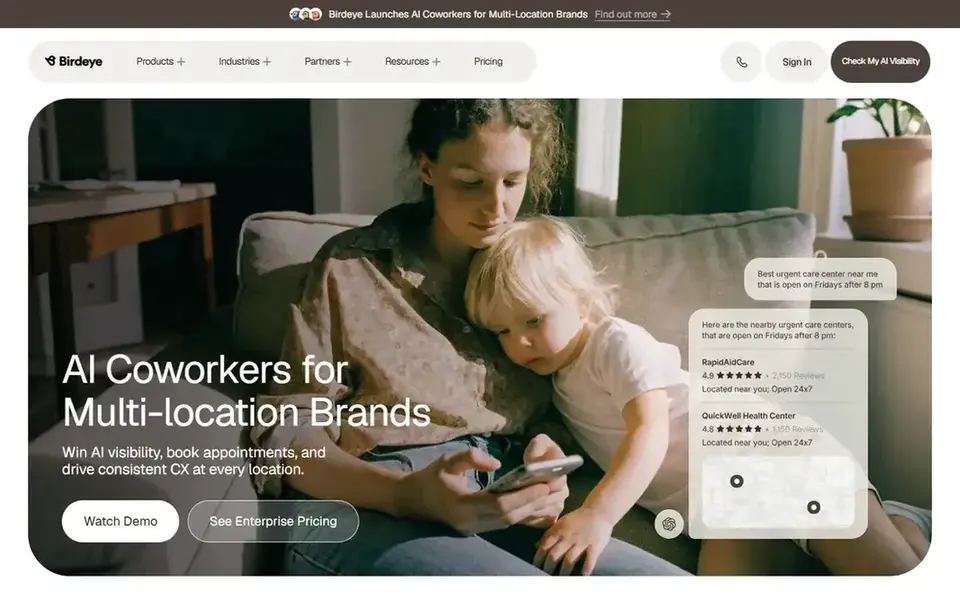
Birdeye focuses on reviews and customer communication. Storage facilities have a natural review trigger: the move-in. A request sent after someone signs a lease or moves in tends to get a response, and more recent reviews help your map pack position in each town.
The platform also brings reviews from multiple sites into one inbox, so a manager can reply without checking Google, Facebook and Yelp separately. For operators with several facilities, the location-level reporting shows which site is collecting reviews and which is falling behind.
It is more than a small operator needs. If you have one facility and a handful of reviews a month, a simpler review tool will do the job for less.
- Automated review requests after a rental
- unified inbox for reviews and messages
- multi-location reporting
- No free plan stated
- priced for larger operations
CallRail is call tracking software. Most storage rentals start with a phone call or a web form, so knowing which channel produced the call matters. CallRail assigns trackable numbers to your listings, Google Business Profile and website pages, then reports which source generated each call.
For a multi-site operator, this answers a question that rankings cannot: whether the facility that ranks third is actually getting more calls than the one ranked first. You can route calls by location and record them for training, which helps front-desk staff handle enquiries consistently.
The setup needs care. If numbers are swapped or pages are missed, the data gets muddy, so plan the implementation before you launch.
- Tracks calls from listings, ads and pages
- records and routes calls
- ties calls to marketing source
- No free plan stated
- needs consistent number setup
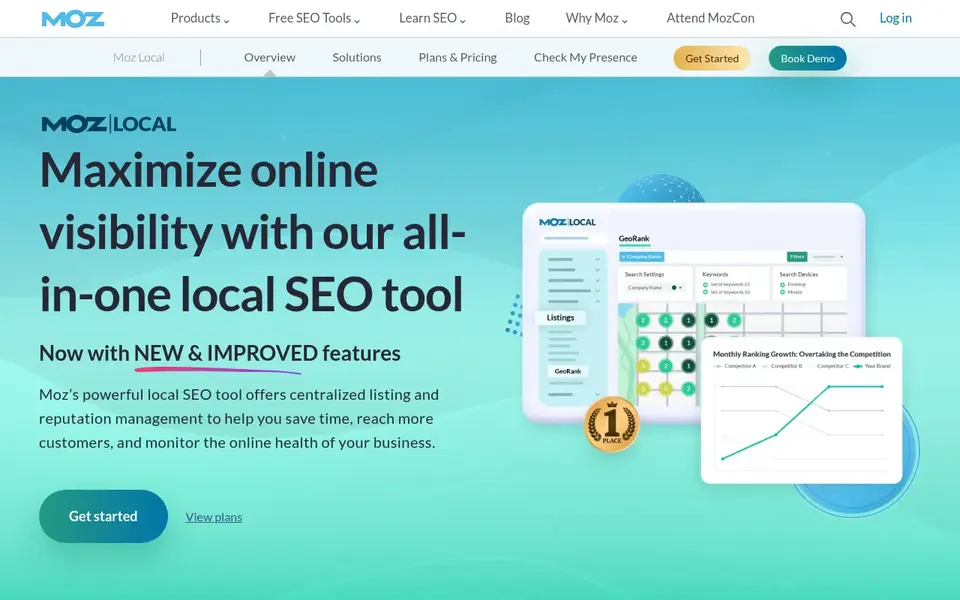
Moz Local handles the basics of listing management without much setup. You enter your facility details, and it distributes and monitors them across major directories, flagging duplicates that can split your citations.
For a storage operator with one to three facilities, that is often enough. The interface is easy to explain to a manager who is not an SEO specialist, and the duplicate detection catches the common problem of old addresses or former business names lingering online.
It does not cover reviews or rank tracking in depth, so it works best as part of a small stack rather than the whole answer.
- Straightforward listing distribution
- duplicate listing detection
- clean interface
- No free plan stated
- fewer features than full suites
How I chose
I built this list from vendor documentation and public sources, not from hands-on testing. I read each product's feature pages, help documentation and published descriptions, then matched them against how storage facilities operate: multiple sites in different towns, a Google Business Profile that carries most of the visibility, phone-led enquiries and a steady flow of move-in reviews.
The main filters were coverage of the tasks that matter for storage local SEO, support for multiple locations, and whether the tool's stated purpose lines up with a real operator need. I left out general SEO suites that do not handle listings, reviews or local rankings well, and I did not include any tool I could not confirm as a real, operating product.
Where a tool is narrow, I say so. A rank tracker is not a listings manager, and a review platform is not a citation service. The goal is a stack that covers the basics without paying twice for the same job.
What to check before you buy
- Confirm the tool supports the number of facilities you run now and the number you expect in a year, since per-location pricing adds up.
- Check whether it can audit and fix Google Business Profile details, including hours, access times and categories, not just directory listings.
- Ask how review requests are sent and whether the process follows Google's review policies, with no incentives or gating.
- Test whether rank tracking can be set up by town and by keyword type, because storage searches vary between "self storage" and "storage units near me".
- Confirm call tracking can assign separate numbers to each facility and each listing source without breaking your main number.
- Read the cancellation and data-export terms so you can move your listing and review data if you switch tools.
Frequently asked questions
Do storage facilities need local SEO tools at all?
Yes, if you want to show up for searches like "storage near me" or "self storage [town]". Most of that visibility comes from your Google Business Profile and the listings that support it. Tools make it easier to keep details accurate across locations, collect reviews and see where you rank in each town.
Which tool should a single-facility owner start with?
Start with a listings and review tool that covers the basics without a large subscription. Moz Local or BrightLocal are reasonable starting points depending on whether you want simple listing management or a broader set of features. Add rank tracking later once the profile and listings are clean.
How do I track rankings for several facilities in different towns?
Set up separate tracking for each facility using its own address and a keyword list built around that town. Grid-based tools like Local Falcon show visibility across the surrounding area, while BrightLocal and Whitespark let you track map rankings by location. Keep the keyword lists consistent so comparisons are fair.
Can review software get my facility in trouble with Google?
Only if it breaks Google's policies. Asking customers for honest reviews is fine. Offering incentives, filtering out unhappy customers before they post, or buying reviews is not. Choose a tool that sends requests to all customers and lets you respond publicly to both positive and negative feedback.
Is call tracking worth it for a storage business?
It usually is when you run paid ads or several listings, because most rentals start with a call. Call tracking shows which facility page, listing or ad produced the call, so you can put budget where it works. For a single facility with steady walk-in traffic, the benefit is smaller.
Sources
See where you really rank - block by block
ProMapRanker scans Google Maps across a grid of your service area. Simple monthly plans from $19, white-label on every plan.
Start freeBrowse all guides
← Best Local SEO Tools for Pediatricians in 2026Best Local SEO Tools for Tree Service Companies in 2026 →
 best local seo tools for martial arts schools
Best Local SEO Tools for Martial Arts Schools in 2026
A practical guide to the best local SEO tools for martial arts schools in 2026, covering listings, reviews, rank tracking, call tracking and GBP management.
Read → best local seo tools for furniture stores
Best Local SEO Tools for Furniture Stores in 2026
A first-person guide to the best local SEO tools for furniture stores in 2026, covering listings, reviews, rank tracking and GBP management.
Read → best local seo tools for carpet cleaning companies
Best Local SEO Tools for Carpet Cleaning Companies in 2026
A practical guide to the best local SEO tools for carpet cleaning companies in 2026, covering rankings, reviews, listings and call tracking.
Read → google my business seo
Google My Business SEO: How to Turn Your Profile Into a Ranking Machine
Google My Business SEO explained: how to optimize your profile to rank in the map pack and drive local leads.
Read → geo grid rank tracking
What Is Geo-Grid Rank Tracking and Why Single-Point Tools Lie to You
Geo-grid rank tracking maps your Google Maps position across dozens of locations. Here's why single-point rank tools give you a dangerously false picture.
Read → local seo for staffing agencies
Local SEO for Staffing Agencies
A local SEO guide for staffing agencies: Google Business Profile setup, reviews, and local-market and industry-niche staffing SEO.
Read →More in Local SEO & Google Maps · All guides A to Z by date · Latest guides