 ProMapRanker
Best Local SEO Software for Towing Companies in 2026

Citation building and local rank tracking · Pricing starts at: See website
Direct answer
Whitespark is my top pick for towing companies because it handles the citation cleanup and local rank tracking that decide whether your truck shows up for "tow truck near me" in the towns you actually serve. Pricing is quote-based, so check its pricing page. For review generation after a roadside job, GatherUp fits well, and for call tracking that proves which searches turned into dispatch calls, CallRail is the other tool I would shortlist.
I put this list together by reading vendor documentation and public sources, and by matching each tool to how towing work actually arrives: a panicked call from a highway shoulder, a police rotation request, or a search from a driveway at 2am. I did not run hands-on tests of these tools, so treat this as a fit-and-features comparison rather than a lab report.
Key takeaways
- Towing searches are urgent and mobile, so your Google Business Profile categories, service areas and phone number matter more than blog content.
- Citation consistency across directories like Yelp, Yellow Pages and local chamber listings is the foundation most towing companies are missing.
- Review requests sent right after the job, by text, collect far more feedback than asking days later.
- Call tracking shows which keywords and towns produce real dispatch calls, which matters when you run trucks across several counties.
- No single tool does everything well, so most towing operators end up pairing a listings tool with a review tool and a call tracker.
Quick comparison
| Pick | Great for | Pricing starts at | Free tier | |
|---|---|---|---|---|
| Whitespark | Citation building and local rank tracking | See website | Not stated | Visit |
 GatherUp | Review collection after completed jobs | See website | Not stated | Visit |
 CallRail | Proving which searches produce dispatch calls | See website | Not stated | Visit |
 BrightLocal | All-in-one local audit and listings | See website | Not stated | Visit |
 Semrush Local | Listings inside a wider SEO suite | See website | Not stated | Visit |
 Local Viking | Google Business Profile management at scale | See website | Not stated | Visit |
 Synup | Multi-location listings for fleet operators | See website | Not stated | Visit |
The best local SEO software for towing companies compared
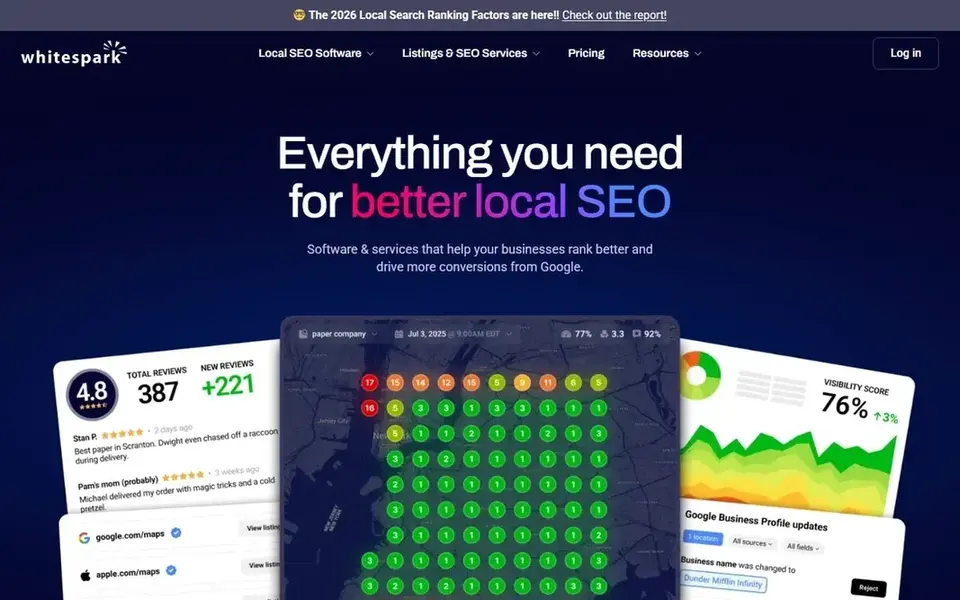
Whitespark is a local search tool built around citations and rank tracking. For a towing company, that combination fits the way customers search: they are in a specific town or on a specific stretch of highway, and they search from a phone. Seeing where you rank across a grid of points around your yard tells you whether you are visible in the suburbs you actually cover.
The citation side matters because towing businesses often have inconsistent listings. An old number on a directory, a former address, or a missing category like "Towing service" can quietly cost you calls. Whitespark helps you find those listings, see what is wrong, and work through corrections. Pair it with a review tool and you have the core of a local presence.
The limit is effort. Whitespark does not fix everything for you, and if you want a fully automated listings sync across dozens of directories, a different tool fits better. Skip it if you have no time to work through citation tasks.
- Strong citation research and submission workflow
- local rank tracker that follows grid points around your service area
- clear reporting you can show a client or partner
- Much of the citation work is still manual
- no built-in call tracking
GatherUp is a customer feedback and review platform. Towing is a service people call in a bad moment, and a driver who is calm, quick and fair often earns a five-star review. The problem is that nobody asks. GatherUp lets you send a short review request by text or email after the job closes, which is when the customer is most likely to respond.
For a towing operator, the practical setup is to connect it to whatever you use to close out jobs, or have dispatch send requests manually at the end of the day. You can then watch reviews across Google and other platforms in one place and respond from the same dashboard.
It is not a listings tool, and it will not fix a wrong phone number on a directory. Skip it if your review volume is already healthy and your problem is visibility rather than reputation.
- Simple text and email review request campaigns
- monitoring of reviews across major platforms
- reporting that shows review trends over time
- Depends on your dispatch or drivers triggering requests
- not a listings management tool
CallRail is call tracking and analytics software. A towing company's most valuable conversion is a phone call, not a form fill, so knowing which search terms and which towns produce calls is more useful than pageview charts. CallRail assigns tracking numbers to your listings and pages so you can see the source of each call.
In practice, you would put a tracking number on your Google Business Profile, your website and any ads, then route calls to dispatch. Over a month you can see whether "tow truck [town name]" or "24 hour towing" brings the calls, and whether your Maps listing or your website is doing the work. That informs where to spend effort.
The trade-off is setup discipline. If the tracking number appears in some places and your main number in others, the data gets muddy. Skip it if you already know your call sources and do not need attribution.
- Tracks calls from Google Business Profile, ads and website
- records and routes calls to the right dispatcher
- shows which keywords and towns generate calls
- Adds a tracking number that must be placed consistently
- call recording rules vary by location
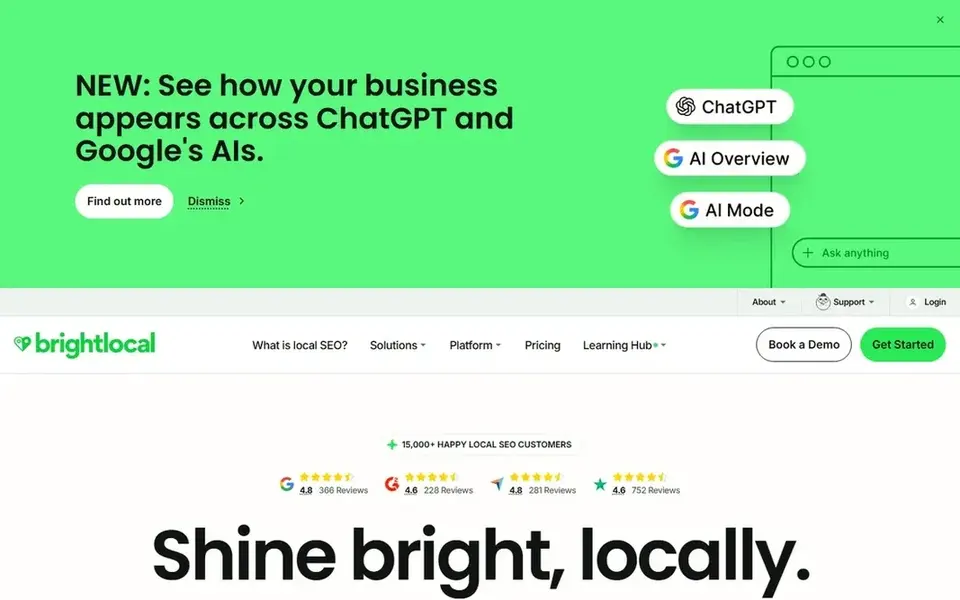
BrightLocal is a long-standing local SEO platform that covers audits, citations, reviews and rank tracking. For a towing company that wants one dashboard rather than three subscriptions, it is a sensible starting point. The audit alone is useful: it shows inconsistent names, addresses and phone numbers across directories, which is a common problem for businesses that have moved yards or changed numbers.
The citation and review tools are solid, and the rank tracker covers local grid visibility. If you run a small fleet and want to hand one report to a partner or investor, BrightLocal produces presentable output.
One limitation is depth. Specialist tools go further on citations or call tracking, and if you only need one function you may be paying for features you ignore. Skip it if you already have a stack you like.
- Local audit that flags listing problems
- citation building and monitoring
- review and rank tracking in one dashboard
- Breadth means some features are shallower than specialist tools
- pricing scales with locations
Semrush Local brings listings management into the wider Semrush platform. If your towing business also runs a website with service pages for each town, the keyword and competitor tools help you see what people search before they call, and the local listings feature keeps your business data consistent.
For a towing company that wants to grow beyond Maps, this is a reasonable fit. You can research terms like "flatbed tow" or "heavy duty towing" and check how competitors in nearby cities present themselves.
The limit is cost and complexity. It is a broad platform, and a one-truck operation will not use most of it. Skip it if you only need citations and reviews.
- Listings management alongside keyword and competitor data
- useful for tracking non-local search too
- single login for several SEO jobs
- Local features are one part of a larger paid suite
- overkill for a single-truck operator
Local Viking is built around managing Google Business Profiles, with geo-grid rank tracking and scheduled posts. For a towing company with several yards or service areas, it lets you keep each profile active without logging in and out of Google all day.
The geo-grid view is the practical part. You can see how visibility changes across the map around each yard, which helps when you are deciding whether to add a second location or adjust service areas. Scheduled posts keep profiles from going stale.
It does not manage citations on other directories, and a single-location operator will get limited value. Skip it if Google Business Profile is not your main channel.
- Manages Google Business Profile posts, photos and info
- geo-grid rank tracking
- useful for multi-location operators
- Google-focused, so other directories are out of scope
- less useful for a single listing
Synup is a listings and reputation platform aimed at businesses with several locations. A towing company that runs multiple yards, or a regional operator with branded trucks across counties, fits the profile: each location needs consistent data and its own reviews.
The main benefit is consistency at scale. You update a phone number or hours once and the change flows to the directories Synup supports. Review monitoring then shows which yard is earning praise and which is not.
For a single-truck operator, it is more platform than you need. Skip it unless you are managing several locations or plan to.
- Listings sync across many directories
- review monitoring
- location-level reporting
- Built for multi-location brands, so pricing reflects that
- setup takes time
How I chose
I started from vendor documentation and public sources for each tool, then asked a simple question: does this match how a towing customer actually finds and calls a company? That means mobile search, Maps visibility, a phone number that is correct everywhere, and reviews that reflect a stressful job done well. Tools that only make sense for e-commerce or content-heavy sites did not make the list.
I also weighed limits honestly. Some tools are specialists and some are suites, and a towing operator with one truck has different needs from a regional fleet with five yards. I did not run hands-on tests, so I have not scored ease of use or support quality from personal experience. Where a tool is narrow, I say so, and where it overlaps with another, I point that out rather than pretending each one is unique.
What to check before you buy
- Confirm the tool can manage your Google Business Profile categories, especially "Towing service" and related categories, since wrong categories hurt visibility.
- Check whether citation cleanup covers the directories your customers actually use, including Yelp, Yellow Pages and local chamber or city listings.
- Ask how review requests are triggered, because a request sent after the job closes converts better than a manual email days later.
- Make sure call tracking numbers can be placed on your Google Business Profile, website and ads without conflicting with your main dispatch number.
- Check whether pricing is per location, since a second yard changes the math quickly.
- Confirm the tool follows Google's review policies and does not offer review gating or incentives, which can get your profile penalized.
Frequently asked questions
Do towing companies need local SEO software at all?
Not strictly, but most towing calls start with a local search on a phone, and software makes it easier to keep your listings correct, collect reviews and see which towns produce calls. A single-truck operator can start with a free Google Business Profile and add tools as call volume grows.
What is the most important listing for a towing company?
Google Business Profile is usually the most important because it feeds Maps and the local pack. After that, Yelp, Yellow Pages and any local directory your county or city uses matter. Consistency of name, address and phone number across all of them is what protects your visibility.
How do I get more reviews for my towing business?
Ask right after the job, by text if the customer agrees, and keep the request short. Do not offer discounts for reviews or filter out unhappy customers, since both break Google's policies. A simple request from the driver or dispatch usually works better than a formal campaign.
Can call tracking hurt my Google Business Profile?
It can if the tracking number replaces your main number inconsistently or changes often. Keep your primary number as the main listing number where possible, and use tracking numbers on your website and ads. Check that any number you use is answered by a real person or a working dispatch line.
Is a broad SEO suite better than separate local tools?
It depends on how much you will use. A suite is convenient if you also want keyword research and competitor data, but separate tools often go deeper on citations, reviews or call tracking. For most towing companies, a listings tool plus a review tool covers the essentials.
Sources
See where you really rank - block by block
ProMapRanker scans Google Maps across a grid of your service area. Simple monthly plans from $19, white-label on every plan.
Start freeBrowse all guides
← Best Local SEO Software for Self Storage Facilities in 2026Best Local SEO Tools for Jewelry Stores in 2026 →
 best local seo software for painters
Best Local SEO Software for Painters in 2026
A practical guide to the best local SEO software for painters in 2026, covering Google Business Profile, reviews, citations and call tracking tools.
Read → best local seo software for hardware stores
Best Local SEO Software for Hardware Stores in 2026
A practical guide to the best local SEO software for hardware stores in 2026, covering listings, reviews, rank tracking and calls, based on vendor docs.
Read → best local seo software for concrete contractors
Best Local SEO Software for Concrete Contractors in 2026
A practical guide to the best local SEO software for concrete contractors in 2026, covering listings, reviews, rank tracking and call tracking tools.
Read → local rank tracking software
Local Rank Tracking Software: What to Look For Before You Buy
The features that actually matter in local rank tracking software, plus a buyer's checklist for 2026.
Read → track local keyword rankings by location
Track Local Keyword Rankings by Location: The Geo-Grid Method
How to track local keyword rankings by exact location using geo-grid scans for street-level accuracy.
Read → track maps and ai rankings
Track Google Maps and AI Rankings From One Geo-Grid
Track Google Maps and ChatGPT, Gemini, and Perplexity rankings from a single geo-grid scan.
Read →More in Local SEO & Google Maps · All guides A to Z by date · Latest guides