 ProMapRanker
Best Local SEO Software for Hardware Stores in 2026

Citations and local rank tracking · Pricing starts at: See website
Direct answer
Whitespark is my top pick for hardware stores because it handles citation building, local rank tracking and review requests in one place, which matches how a store with one or a few branches actually works. It has no free plan stated, so check its pricing page. If you mainly need review generation, look at GatherUp, and if you run several branches and need listings control at scale, look at Uberall.
I compared these tools from vendor documentation and public sources, not from hands-on tests. I looked at what each one does for a store that sells tools, paint, plumbing parts and rental equipment, and where each tool stops being useful.
Key takeaways
- Hardware stores live on "near me" searches for parts, tools and rental items, so accurate categories and hours matter more than clever keywords.
- Citation cleanup comes first, because inconsistent name, address and phone data on directory sites undermines every other local effort.
- Review requests should go out after a sale or a rental return, when the customer still has the store fresh in mind.
- Call tracking helps you see which listings and pages actually send people to the counter or the phone.
- Multi-branch stores need a tool that pushes hours and holiday closures to every listing at once, not one that treats each shop as a separate project.
Quick comparison
| Pick | Great for | Pricing starts at | Free tier | |
|---|---|---|---|---|
| Whitespark | Citations and local rank tracking | See website | Not stated | Visit |
 GatherUp | Review requests after a sale | See website | Not stated | Visit |
 Uberall | Multi-branch listings control | See website | Not stated | Visit |
 Semrush Local | Listings plus keyword research | See website | Not stated | Visit |
 Moz Local | Straightforward listings distribution | See website | Not stated | Visit |
 CallRail | Tracking calls from listings | See website | Not stated | Visit |
 Local Viking | Google Business Profile geo-grid tracking | See website | Not stated | Visit |
The best local SEO software for hardware stores compared
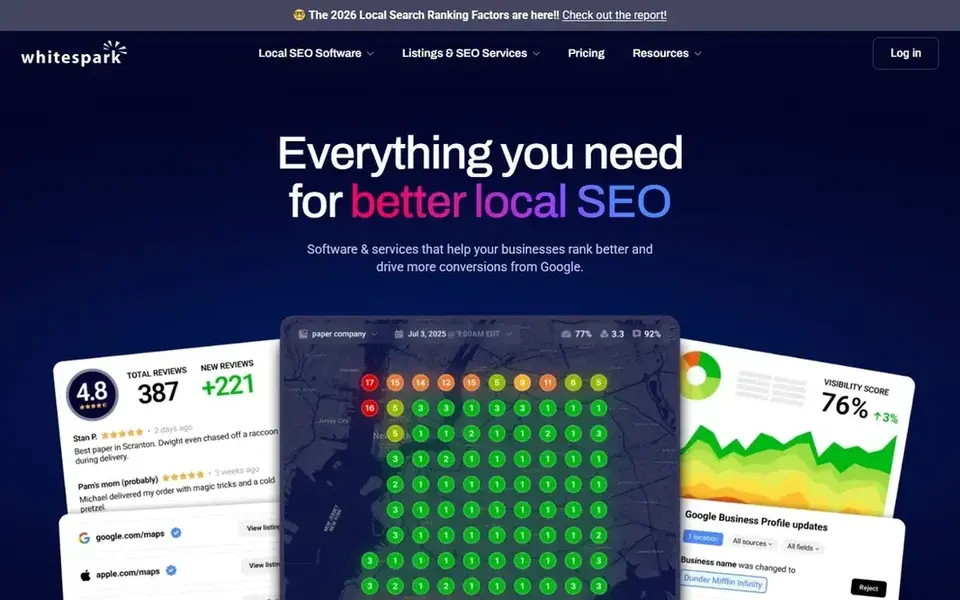
Whitespark is a local SEO toolkit built around citations and local search visibility. For a hardware store, the citation finder is the useful part: it looks for directory sites, trade associations and local chambers where a store should be listed, then helps you build and fix those listings. That matters because a store's address and phone number often drift across old directories after a move or a phone change.
The rank tracking shows where the store appears for searches like "hardware store near me" or "paint mixing near me" across a map area, not just one point. Review requests can be sent by email or text after a purchase or rental return. The workflow is manual in places, so someone has to approve the citation list and send the review requests.
Skip it if you want a single dashboard that also runs your website content and paid ads. It is a local SEO tool, not a full marketing suite.
- Strong citation-finding workflow
- local rank tracking by grid
- review request tools included
- Interface assumes some SEO knowledge
- no free plan stated
GatherUp focuses on getting reviews and handling customer feedback. For a hardware store, that fits the counter experience: a customer buys a drill or returns a rented tiller, and the store sends a short request asking for a review. Customers who had a problem can be routed to private feedback first, which is a legitimate practice as long as you never filter or gate who gets asked.
The tool tracks which review sites the requests point to and reports on response rates. It does not fix your Google Business Profile categories or your citations, so it works best alongside a listings tool.
If your main problem is that the store does not show up for "hardware store near me", reviews alone will not fix it. Start with listings and profile accuracy.
- Simple review request flows
- feedback capture before a public review
- reporting on review sources
- Not a listings manager
- no free plan stated
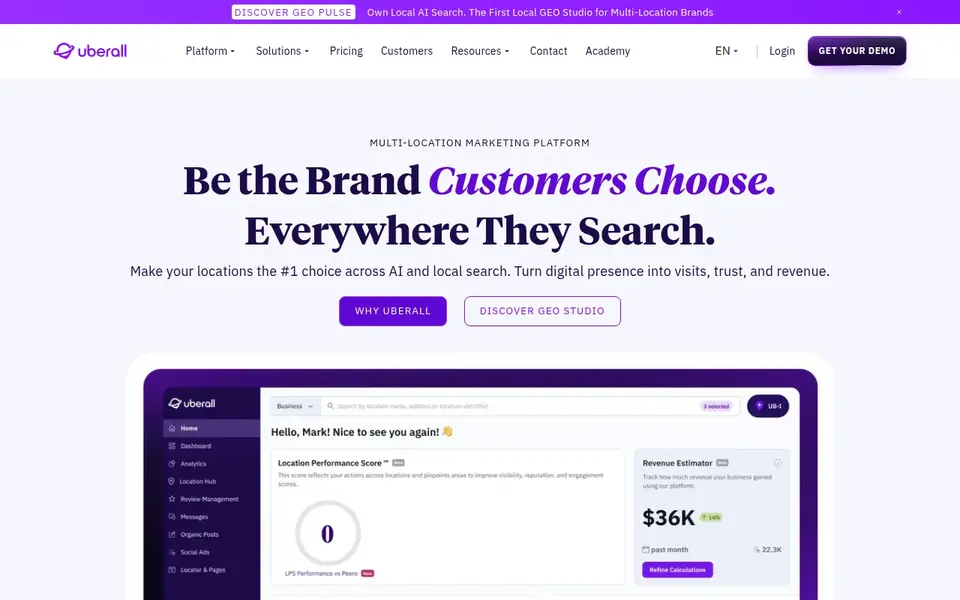
Uberall manages business listings and location data across directories and maps from one place. A hardware store with two or three branches, or a store that also runs a separate rental yard, benefits from pushing the same hours, holiday closures and categories to every listing at once. Changing winter hours by hand on a dozen sites is where mistakes happen.
It also supports location pages and review management per branch, so a complaint about one shop does not get lost. Setup requires clean source data, so gather your store details before you start.
A single-shop owner will likely find it heavier than needed. It is built for businesses that treat locations as a managed set.
- Central control of listings across many sites
- location pages
- review management per branch
- Aimed at larger operations
- setup takes effort

Semrush Local adds listings management and review monitoring to Semrush's keyword and competitor research. For a hardware store, the useful combination is seeing what people search for around your product lines, such as "deck screws near me" or "propane refill", and then making sure the profile and listings support those searches.
The listings side keeps name, address, phone and hours consistent across directories. Review monitoring pulls new reviews into the same dashboard. The trade-off is that you are paying for a broad SEO platform, and the local features are one part of it.
If you already use Semrush for site work, this keeps everything in one login. If you only want listings, a narrower tool is simpler.
- Listings management inside a known SEO suite
- keyword and competitor data
- review monitoring
- Local features are part of a bigger subscription
- no free plan stated
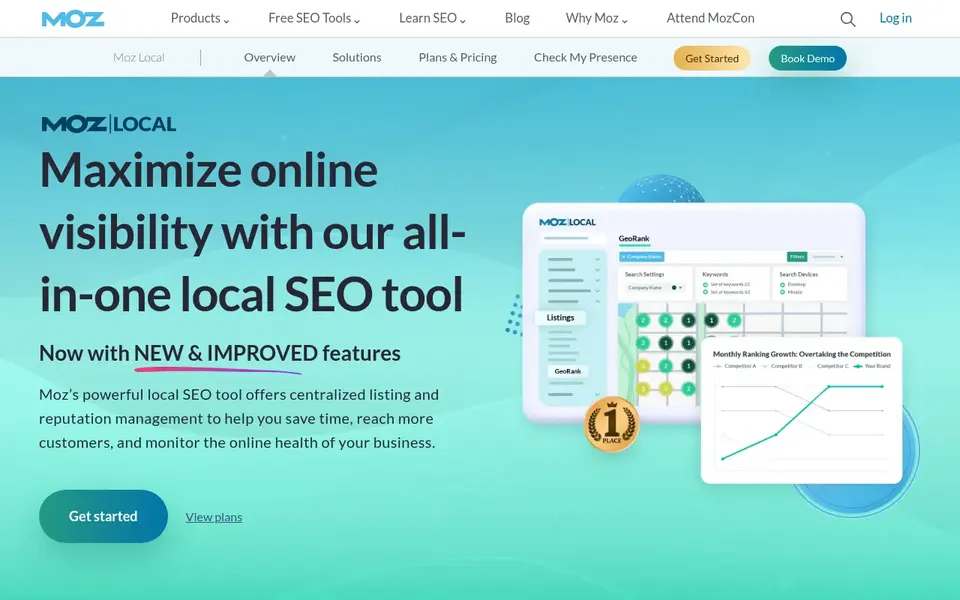
Moz Local distributes business data to major directories and data aggregators, then shows where listings disagree. For a hardware store, that is a practical first step: fix the store name, address, phone and hours everywhere before spending time on content or reviews.
The interface is plain and the reporting is easy to read, which suits an owner who does not want to learn a complex platform. Review handling is limited compared with dedicated review tools, so pair it with something like GatherUp if reviews are a priority.
It is a good fit for a single-location store that wants listings done properly. Stores that need per-branch review workflows will want more.
- Clear listings workflow
- data aggregation from major sources
- simple reporting
- Review features are basic
- no free plan stated
CallRail tracks phone calls and forms and shows which source produced them. Hardware stores get a lot of calls: "do you have this in stock", "are you open Sunday", "can I reserve a rental". Tracking those calls tells you which listings, pages and ads actually drive contact, which is more useful than raw traffic numbers.
You assign tracking numbers to listings and pages, then review calls by source. Recordings and transcripts help you spot questions that should be answered on the site or in the profile.
It does not manage listings or reviews, so it is a measurement layer. If you do not answer the phone much, fix that before buying tracking.
- Call tracking with source attribution
- recordings and transcripts
- form tracking
- No listings or review management
- needs number setup
Local Viking tracks where a Google Business Profile ranks across a grid of points around the store. For a hardware store, that shows whether you appear for "hardware store near me" in the neighborhoods you actually serve, not just at your own address.
It also monitors reviews and sends alerts, and the reports are easy to share with an owner or manager. The scope is narrow: it does not build citations or manage listings across directories.
Use it when the profile is already accurate and you want to watch visibility over time. It will not fix a wrong address or a missing category.
- Grid-based rank tracking for the profile
- review monitoring
- simple reports
- Narrow scope
- no citation building
How I chose
I built this list from vendor documentation and public sources, reading what each tool says it does and where it says it stops. I did not run hands-on tests, so I am not claiming measured results. Instead I matched each tool to the way a hardware store works: a physical counter, phone calls about stock, rental items, seasonal hours and often more than one branch.
The main filters were listings accuracy, review workflow, call or contact tracking and local rank visibility. I also weighed limits, because a tool that does everything badly is worse than a narrow tool that does one job well. Where a tool is aimed at larger operations, I say so rather than pretending it fits a single shop.
What to check before you buy
- Confirm the tool can push holiday and seasonal hours to every listing, since hardware stores change hours around holidays and weather.
- Check whether it supports multiple locations if you have a branch or a separate rental yard.
- Ask how it handles categories, because hardware, paint, tool rental and propane are different profile categories.
- Confirm review requests go to all customers, with no filtering or gating, which keeps you inside Google's review policies.
- Check whether call tracking can use your existing main number or needs new numbers on listings.
- Ask what happens to your listings data if you cancel, and whether you keep access to the profile.
Frequently asked questions
Do hardware stores need local SEO software at all?
Not always. If you have one shop and your Google Business Profile is accurate, you can do a lot by hand. Software helps when listings are inconsistent across directories, when you have several branches, or when you want review requests and call tracking in a repeatable workflow instead of ad hoc effort.
What should I fix first for a hardware store?
Start with the Google Business Profile: correct name, address, phone, hours, categories and photos. Then clean up citations on major directories so the same details appear everywhere. Reviews and rank tracking come after that, because they build on accurate underlying data.
Can I ask customers for reviews?
Yes, you can ask all customers for reviews and make it easy to leave one. You should not offer incentives for positive reviews, filter who gets asked, or ask staff to write reviews. Keep requests neutral and send them to everyone.
How do I handle seasonal hours?
Update the profile and every listing at the same time, and post the change on the profile. A tool that pushes hours to all listings at once saves errors. Check the main directories after the change, because some update slower than others.
Is call tracking worth it for a store?
It can be, because a lot of hardware store contact happens by phone. Tracking shows which listings and pages produce calls, so you can put effort where it works. If you rarely answer the phone or do not log calls, fix that first.
Sources
See where you really rank - block by block
ProMapRanker scans Google Maps across a grid of your service area. Simple monthly plans from $19, white-label on every plan.
Start freeBrowse all guides
← Best Local SEO Software for Concrete Contractors in 2026Best Local SEO Software for Painters in 2026 →
 best local rank tracking tools for self storage facilities
Best Local Rank Tracking Tools for Self Storage (2026)
A guide to the best local rank tracking tools for self storage facilities in 2026, compared from vendor docs for multi-facility map and grid tracking.
Read → best local rank tracking tools for painters
Best Local Rank Tracking Tools for Painters in 2026
A painter-friendly guide to local rank tracking tools for Google Maps and nearby searches, with features, limits and what to check before you buy.
Read → best local rank tracking tools for optometrists
Best Local Rank Tracking Tools for Optometrists in 2026
A practical guide to the best local rank tracking tools for optometrists, compared from vendor documentation and public sources for 2026.
Read → how to audit local citations
How to Audit Local Citations and Find Errors Fast
How to audit your local citations, spot NAP errors, and prioritize fixes for the biggest ranking impact.
Read →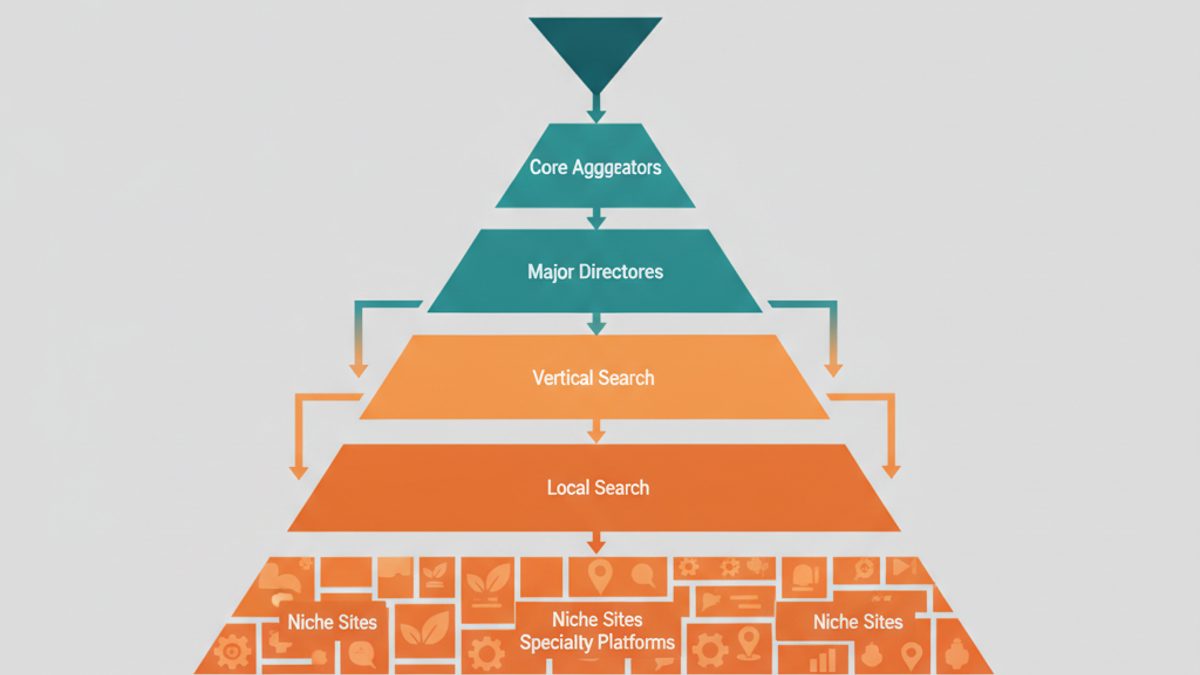 top local citation sites
Top Local Citation Sites Every Business Should Be On
The top local citation sites and data aggregators that feed the local ecosystem, with priorities.
Read → google maps rank tracker
Google Maps Rank Tracker: Track Your Map Pack Position Over Time
Track your Google Maps rankings over time with geo-grid scans and trend history. Here is how to do it right.
Read →More in Local SEO & Google Maps · All guides A to Z by date · Latest guides