 ProMapRanker
Best Local Rank Tracking Tools for Self Storage (2026)

Multi-facility Google Maps grid tracking · Pricing starts at: See website
Direct answer
Local Viking is my top pick for self storage facilities because it tracks Google Maps grid rankings per location and ties them to Google Business Profile data, which suits operators running several facilities in one metro. It has a free trial, so check its pricing page for current terms. Whitespark fits teams that want deeper citation and rank reporting, and Semrush Local suits operators who already pay for Semrush and want rank tracking inside that suite.
I compared these tools from vendor documentation and public sources, not from hands-on tests. I looked at how each one handles multiple locations, Google Maps grid data, Google Business Profile connections and review signals, because those are the parts that matter for a storage operator with more than one facility.
Key takeaways
- Self storage rank tracking is mostly about map grid position, because most renters search "storage near me" on a phone and pick from the map pack.
- A facility in a dense metro competes with dozens of nearby competitors, so a single rank number hides the real picture; grid tracking shows where you win and lose across a service area.
- Tracking needs to cover several locations, each with its own Google Business Profile, or you cannot compare facilities fairly.
- Review volume and recency affect map visibility for storage, so rank tools that pull review data save a second login.
- No tool fixes a weak profile; rank tracking only shows you where to act.
Quick comparison
| Pick | Great for | Pricing starts at | Free tier | |
|---|---|---|---|---|
| Local Viking | Multi-facility Google Maps grid tracking | See website | Free trial | Visit |
 Whitespark | Citations plus local rank reporting | See website | Not stated | Visit |
 Semrush Local | Rank tracking inside an existing Semrush plan | See website | Not stated | Visit |
 Moz Local | Listing management with local visibility checks | See website | Not stated | Visit |
 Yext | Large multi-location storage operators | See website | Not stated | Visit |
 Uberall | Operators selling across several countries | See website | Not stated | Visit |
 GatherUp | Reviews and local visibility together | See website | Free trial | Visit |
The best local rank tracking tools for self storage facilities compared
Local Viking is built around Google Business Profile and Google Maps visibility, which lines up with how self storage gets found. A renter searching "self storage near me" usually sees a map pack first, and the facility that appears depends on where the searcher stands. Local Viking shows that as a grid rather than one number.
For a storage operator, the useful workflow is per facility. You add each location, connect its Google Business Profile, and set a grid across the area you actually serve, such as a radius around the facility covering nearby suburbs. The heatmap then shows where you rank well and where a competitor down the road outranks you. That tells you whether to work on reviews, categories or posts for a specific facility instead of guessing.
The limit is that it is a Google-first tool. If you also care about Bing or Apple Maps placement, you will need another source. A single-facility owner with a small service area may find a simpler tracker enough.
- Grid-based map rank tracking per location
- Google Business Profile data in the same dashboard
- geo-grid heatmaps that show weak spots
- Focused on Google, so other search engines get less attention
- grid scans can take time to refresh
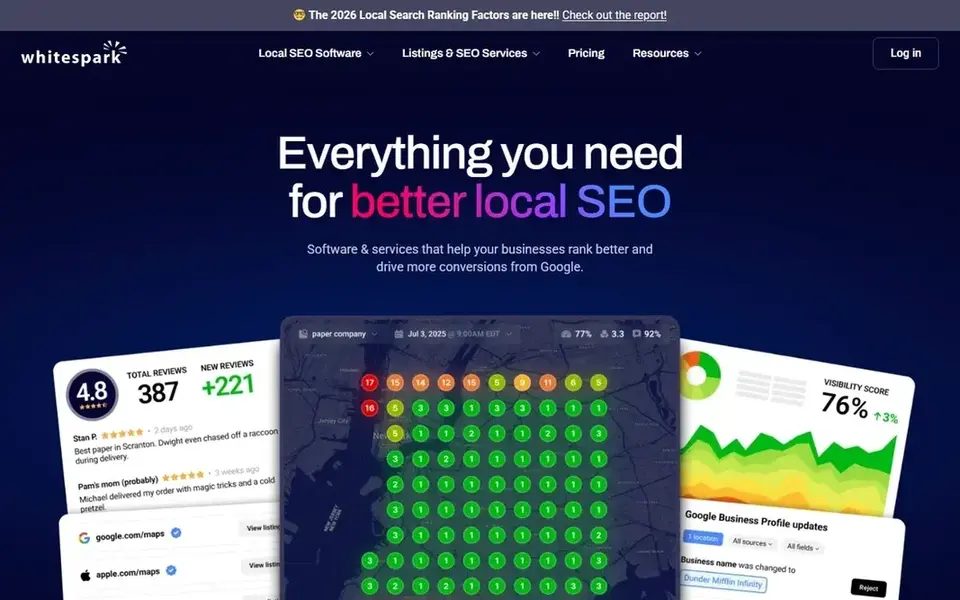
Whitespark is a local search toolset with rank tracking and citation building in the same place. For self storage, that pairing matters because map visibility depends partly on consistent name, address and phone data across directories, and a new facility often starts with thin listings.
The rank tracking side lets you follow a facility's position for terms like "storage units [city]" and "climate controlled storage near me" and compare against named competitors. Because citation work lives in the same account, you can act on a weak ranking by cleaning up listings rather than switching tools. That is a practical loop for an operator opening a second or third facility.
The trade-off is depth over speed. If you only want a daily map position and nothing else, Whitespark gives you more surface area than you need. Teams that want citations and rank data together get the most from it.
- Local rank tracking tied to citation work
- strong local search focus
- useful competitor tracking
- More setup than a basic tracker
- not a full all-in-one marketing suite

Semrush Local adds location-level rank tracking and listing management to the wider Semrush platform. It fits a storage operator or agency that already uses Semrush for the facility website and wants local positions in the same place as organic keyword data.
For self storage, the value is context. You can see how a facility page ranks organically for "storage units near me" and how the Google Business Profile performs in local results, then compare the two. If the website ranks but the map listing does not, the problem is usually profile signals like reviews or categories. If neither ranks, the page content is the place to start.
The limit is cost and complexity. A small operator with two facilities may not need the full platform. It makes most sense when someone already pays for Semrush and wants to avoid another login.
- Local rank tracking alongside broader SEO data
- listing management tools
- familiar interface for existing users
- Local features are part of a larger paid platform
- overkill if you only track maps
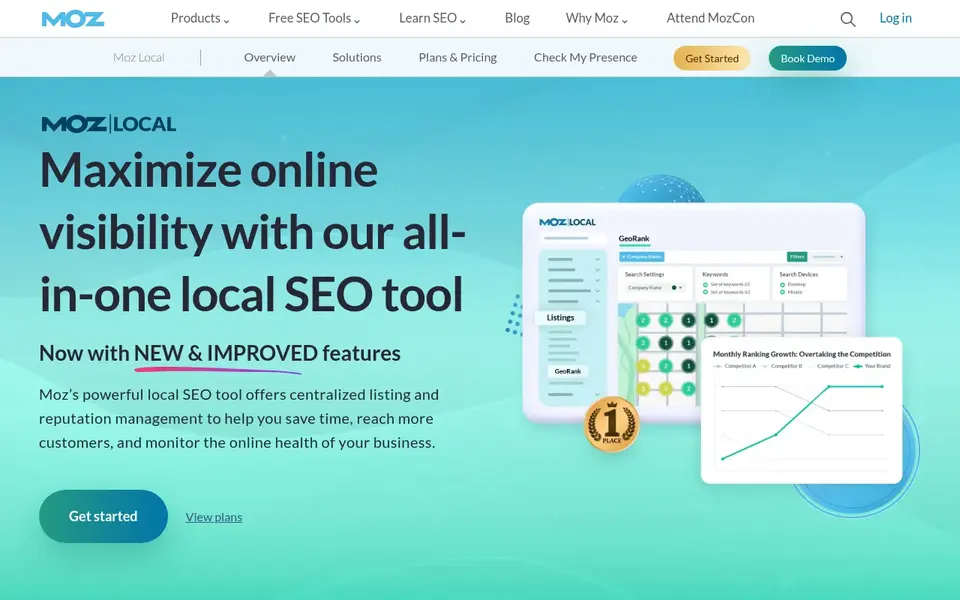
Moz Local centers on getting business listings accurate and distributed across data providers, with reporting on local visibility. For a self storage facility, accurate listings are a foundation item, because renters check multiple directories before they call or book online.
The tool helps by showing whether a facility's name, address and phone match across the places that feed Google and other engines. When a facility moves or changes its phone number, that cleanup matters for map visibility. The reporting gives a local visibility view rather than a street-by-street grid.
If your main question is "where exactly do I rank on the map across this town," Moz Local is not the sharpest tool for that. It suits operators who want listings handled first and rank insight as a secondary benefit.
- Listing distribution and cleanup
- local visibility reporting
- established local search brand
- Rank tracking is secondary to listings
- not a dedicated grid tracker
Yext is a listings and location data platform built for organizations with many locations. A self storage group with facilities across several states fits that profile, because updating hours, phone numbers or unit-type descriptions one by one gets slow.
The platform lets a central team push changes to listings and profiles and review performance across the portfolio. For rank tracking, the value is consistency: when every facility's data is managed the same way, differences in map visibility are easier to read. You can spot which facilities lag and check whether their listings are complete.
The limits are cost and scale. Pricing is quote-based, and a single-facility owner will pay for capacity they do not use. It is a fit for groups, not for one site.
- Central management for many locations
- listing and profile updates from one place
- reporting across the portfolio
- Quote-based pricing
- a bigger platform than small operators need
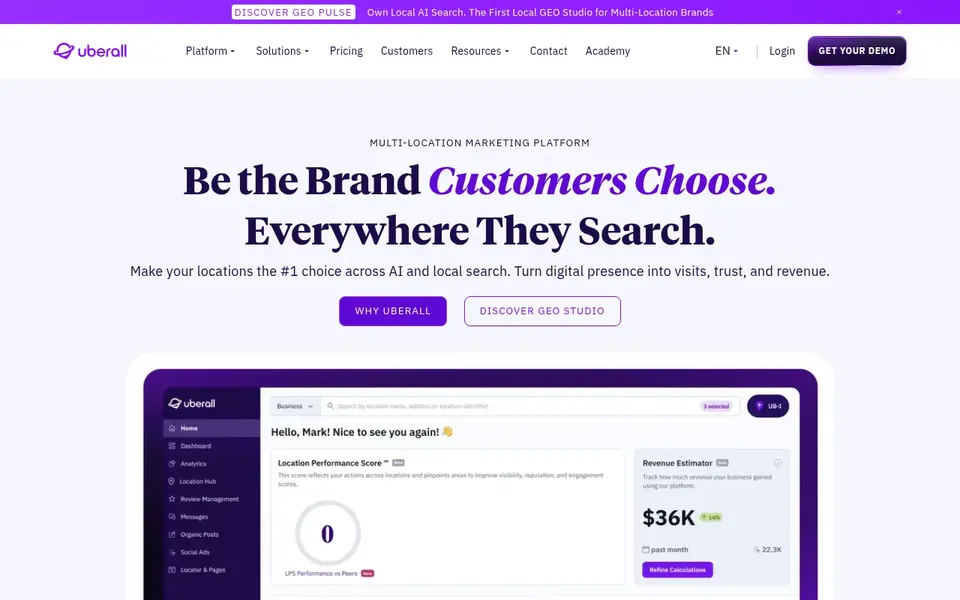
Uberall manages location data and local visibility for businesses with many sites, including across countries. A self storage brand expanding into new markets can use it to keep facility details consistent while watching local performance.
For rank tracking, the useful part is portfolio reporting. You can compare facilities in different cities and see which ones show up in local results for their core terms. That helps a marketing team decide where to spend effort, such as a facility in a crowded urban market versus one on the edge of town.
Most independent storage owners do not need this level of platform. It fits chains and franchise groups with a central marketing function and a real budget.
- Multi-location and multi-country management
- listing and profile tools
- reporting across markets
- Heavier than a single-market operator needs
- quote-based pricing
GatherUp focuses on customer reviews and local visibility. That combination suits self storage because reviews are one of the signals renters weigh and one of the signals that affect map placement.
The workflow is straightforward. You collect reviews from recent renters, monitor new ones, and check local rank for the facility's main search terms. For a storage operator, a steady flow of recent reviews from move-ins is a realistic goal, and seeing rank move alongside review activity gives a clearer picture than rank alone.
The limit is depth on the rank side. If you want detailed grid heatmaps across a large service area, a dedicated tracker does that better. GatherUp fits operators who want reviews handled well and rank as a supporting view.
- Review collection and monitoring
- local rank tracking in the same tool
- simple dashboard for single operators
- Rank tracking is lighter than dedicated grid tools
- review features are the main draw
How I chose
I built this list from vendor documentation and public sources. I did not run hands-on tests, and I did not use client results or case studies. What I looked at was fit: whether a tool tracks Google Maps positions per location, whether it handles several facilities in one account, whether it connects to Google Business Profile, and whether it shows review signals that affect storage visibility.
I also weighed limits. Some tools are dedicated rank trackers, others are listing platforms with reporting attached, and a few are review tools with a rank view. For a self storage operator, the right pick depends on how many facilities you run and whether listings or reviews are your bigger gap. Where a tool's pricing was not clear from public pages, I marked it as see website rather than guessing.
What to check before you buy
- Confirm the tool tracks Google Maps grid positions per location, not just one rank number, since storage demand varies by neighborhood.
- Check how many locations one plan covers and what happens when you add a facility.
- Make sure it connects to Google Business Profile so rank data ties to the right listing.
- Ask whether it tracks the search terms renters actually use, such as "storage units near me" and "climate controlled storage."
- Look for review monitoring, because review volume and recency affect map placement for storage.
- Confirm the reporting is readable for whoever manages marketing, whether that is you or an agency.
Frequently asked questions
Do self storage facilities need a rank tracking tool?
Yes, if you have more than one facility or compete in a dense market. Renters usually search on a phone and choose from the map pack, so knowing where each facility appears across its service area tells you where to focus. A single facility in a small town can get by with manual checks, but a tracker saves time and shows patterns.
What is grid rank tracking and why does it matter for storage?
Grid tracking checks a facility's map position from many points across an area and shows the results as a heatmap. Storage demand is local, so a facility can rank first in its own neighborhood and poorly two miles away. The grid shows that difference, which a single rank number hides.
Can I track several storage facilities in one account?
Most tools on this list support multiple locations, but plan limits differ. Check how many locations are included and how much you pay per extra one. If you run facilities in different cities, confirm the tool lets you set a separate search area and keyword set for each.
How often should I check local rankings?
Weekly is enough for most storage operators. Map positions move slowly, and checking daily can lead to reacting to noise. Review the grid monthly for trends and after any profile change, such as new photos, updated hours or a review push.
Do reviews affect storage map rankings?
Reviews are one of the signals Google uses for local results, and renters read them before choosing. A steady flow of recent reviews from real customers helps, and tools that show review activity next to rank data make the connection easier to see. Never offer incentives for positive reviews only, and never filter out unhappy customers.
Sources
See where you really rank - block by block
ProMapRanker scans Google Maps across a grid of your service area. Simple monthly plans from $19, white-label on every plan.
Start freeBrowse all guides
← Best Local Rank Tracking Tools for Painters in 2026Best Local SEO Software for Concrete Contractors in 2026 →
 best local rank tracking tools for optometrists
Best Local Rank Tracking Tools for Optometrists in 2026
A practical guide to the best local rank tracking tools for optometrists, compared from vendor documentation and public sources for 2026.
Read → best local rank tracking tools for massage therapists
Best Local Rank Tracking Tools for Massage Therapists in 2026
A first-person guide to the best local rank tracking tools for massage therapists, compared from vendor documentation and public sources for 2026.
Read → best local rank tracking tools for concrete contractors
Best Local Rank Tracking Tools for Concrete Contractors in 2026
A concrete contractor's guide to local rank tracking tools in 2026, comparing grid maps, review signals and citation tracking from vendor documentation.
Read → best ai keyword rank tracker software
7 Strong AI Keyword Rank Tracker Software Options in 2026
Best AI keyword rank tracker software: 7 tools compared on price, free plans and fit. The weak spots sit next to the strengths. Current for November 2026.
Read → local seo for computer repair shops
Local SEO for Computer Repair Shops
A local SEO guide for computer repair shops: Google Business Profile setup, reviews, and walk-in and same-day repair local SEO.
Read → google reviews disappeared
Google Reviews Disappeared: Why and How to Get Them Back
Common reasons Google reviews disappear from a business profile, and what you can actually do about it.
Read →More in Local SEO & Google Maps · All guides A to Z by date · Latest guides