 ProMapRanker
Best Local SEO Software for Concrete Contractors in 2026

Direct answer
Whitespark is my top pick for concrete contractors because it handles the two things that decide whether you show up for "concrete driveway contractor near me": accurate local citations and grid-based rank tracking for your service area. It has no free plan stated, so check its pricing page. If reviews are your weak spot, look at GatherUp, and if you need to prove which ads and listings produce phone calls, CallRail is the other tool worth a look.
I compared these tools from vendor documentation and public sources rather than running hands-on tests. I looked at what each one does for a contractor who pours driveways, stamps patios and repairs slabs across several towns, and where each tool stops being useful.
Key takeaways
- Concrete work is searched by neighborhood and job type, so you need rank tracking that shows position by grid point, not one citywide number.
- Citation cleanup matters more for contractors than for most trades because address and phone details drift as you add crews and yard locations.
- Review software should request feedback from every customer the same way, with no filtering, so you stay inside Google's review policies.
- Call tracking tells you which listings, ads and map pins actually ring the phone, which is how you justify spending on local SEO.
- Google Business Profile is where most concrete leads start, so pick software that audits and updates that profile directly.
Quick comparison
| Pick | Great for | Pricing starts at | Free tier | |
|---|---|---|---|---|
 Whitespark | Citations and grid rank tracking | See website | Not stated | Visit |
 GatherUp | Steady, policy-safe review collection | See website | Not stated | Visit |
 CallRail | Proving which listings produce calls | See website | Not stated | Visit |
 Semrush Local | Listings management inside an SEO suite | See website | Not stated | Visit |
 Moz Local | Distributing data through aggregators | See website | Not stated | Visit |
 NiceJob | Reviews plus a simple website | See website | Not stated | Visit |
 Local Viking | Google Business Profile management at scale | See website | Not stated | Visit |
The best local SEO software for concrete contractors compared
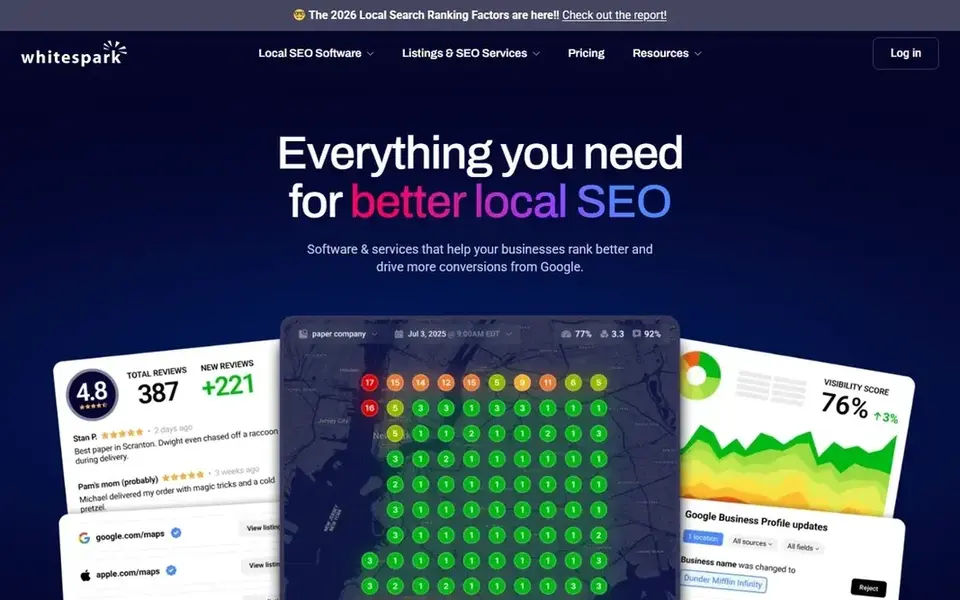
Whitespark is a Canadian company known for local search data. For a concrete contractor, its value is the citation builder and the local rank grid. You enter your business name, address and phone, and it pushes consistent details to directories, then shows you which listings are missing or wrong.
The grid tracker is the part I would use most. Concrete searches happen block by block, so a single "position 6" figure hides the truth. The grid shows where you rank at points across your service area, which tells you whether to target the next town over or fix your profile first. The citation finder also flags directories you never claimed, which is common when a business changes yard addresses.
Skip Whitespark if reviews are your main gap. It does not send review requests, so you would pair it with a review tool or handle requests manually.
- Large citation network
- Grid-based local rank tracker
- Citation finder for missed listings
- No review request automation
- Interface takes a session to learn
GatherUp is a review management platform. It sends a request to every customer after the job, collects private feedback and routes happy customers to a public review page. That last part matters: Google's policies forbid review gating, meaning you cannot screen out unhappy customers before asking for a review. A tool that asks everyone the same way keeps you compliant.
For concrete work, timing is the trick. A driveway pour needs a few days to cure before the customer can judge it, so a request sent the same afternoon often gets ignored. GatherUp lets you set the delay, so you can ask after the forms come off or after the first rain. It also pulls reviews from Google and other sites into one dashboard, which helps when you are running several crews.
The limit is scope. GatherUp does not fix your citations or track map rankings, so it is one piece of the stack, not the whole thing.
- Sends requests by email and text
- Monitors review sites in one inbox
- Simple feedback flow for crews to use
- Not a citation tool
- Reporting is basic
CallRail is call tracking software. You put a tracking number on your website, Google Business Profile and directory listings, and it records which source drove each call. For a concrete contractor, the phone is still the main conversion, so this answers a question most SEO reports cannot: did that new citation or map pin actually ring?
The practical use is routing. You can send calls from one town to the crew that covers it, and record calls to check how estimates are handled. CallRail also ties calls back to the ad or keyword that produced them, which helps you decide where the next marketing dollar goes.
The downside is cost per tracked number and the discipline needed to listen to recordings and label calls. If you only run one phone line and one service area, the value is smaller.
- Dynamic number insertion on your site
- Call recording and routing
- Source tracking down to the keyword
- Per-number costs add up
- Needs someone to review call data

Semrush Local is the local arm of the Semrush marketing platform. It manages business listings, syncs hours and addresses, and adds keyword research and rank tracking. For a concrete business that also wants to see which search terms bring traffic, having listings and keyword data in one login saves switching.
The keyword side is useful for planning pages around job types: stamped concrete, slab repair, driveway replacement, commercial flatwork. You can check demand before writing a page and track where that page lands.
One limitation is weight. Semrush is built for marketers and agencies, and the local features are part of a paid plan. A two-person concrete outfit that only needs citations and reviews will pay for features it never opens.
- Listings sync across many directories
- Keyword data for service terms
- Position tracking alongside local tools
- Full suite is heavy for a small contractor
- Local features sit in a paid tier
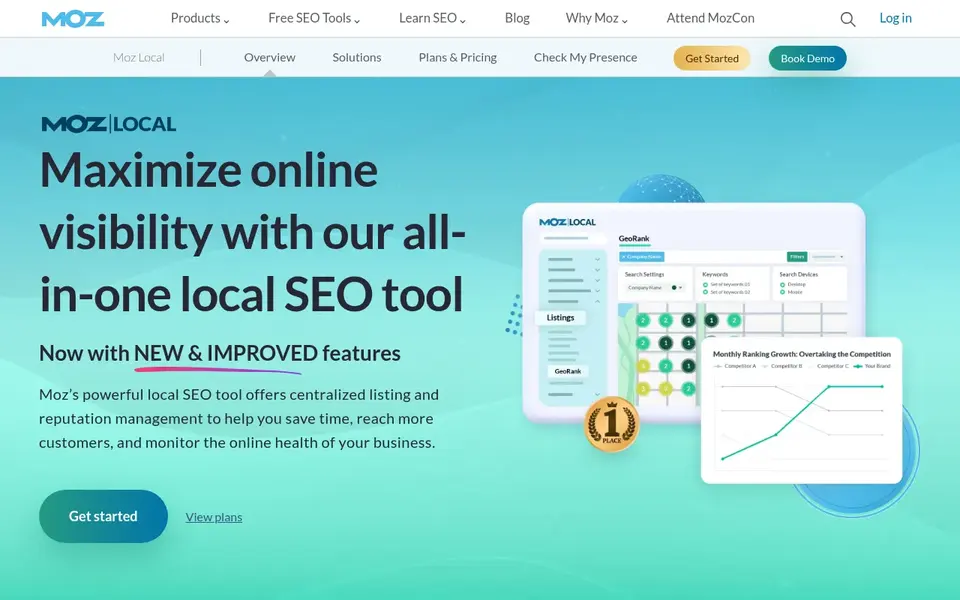
Moz Local focuses on data distribution. Instead of submitting to hundreds of directories one by one, it sends your name, address and phone to the big aggregators that feed many smaller sites. For a contractor with a new yard address or a second phone number, that is a fast way to correct the record everywhere at once.
It also scores your listing accuracy and finds duplicates, which is common when a business has moved or changed names. A duplicate listing with an old address can split your reviews and confuse customers.
Moz Local is not a review request tool and does not track map grids. If you want direct control over each directory rather than aggregator distribution, Whitespark is the better fit.
- Pushes data to major aggregators
- Listing accuracy score
- Duplicate listing detection
- Fewer direct partner sites
- Review tools are limited
NiceJob bundles review collection with a basic website builder. For a concrete contractor who has no site or an old one, that combination gets a credible page and a review engine in one place. It sends requests after a job and can turn positive reviews into social posts.
The review flow is straightforward and asks every customer, which keeps you on the right side of Google's policies. The website templates are plain but serviceable for a contractor who needs a phone number, service list and photos of finished work.
Where it falls short is local search depth. Citation management is limited and there is no grid rank tracking. Treat it as a starter package, not a full local SEO platform.
- Automated review requests
- Simple site builder for small crews
- Social posting from reviews
- Citation coverage is thin
- Design options are limited
Local Viking is built around Google Business Profile. It tracks your map rankings across a grid, schedules Google Posts, monitors reviews and stores profile data for multiple locations. If you run several yards or service areas, it keeps each profile consistent.
For concrete work, the geo-grid view is the useful part. You can see that you rank well near your yard but drop off two towns over, which is exactly the pattern that sends you chasing the wrong keywords. Scheduled posts also keep the profile active without you remembering to log in.
The limit is scope. Local Viking does not touch citations outside Google, so you still need a citation tool. A single-location contractor may find it more than needed.
- Geo-grid rank tracking
- Scheduled Google Posts
- Review monitoring per location
- Google-only, no other directories
- Best value only with multiple locations
How I chose
I built this list from vendor documentation, public product pages and what I know about how concrete contractors get found. I did not run hands-on tests, so I am judging each tool by what it says it does, what category it sits in and where it fits a contractor's workflow. I read the feature pages, checked which directories and review sites each tool covers, and looked at whether the product is aimed at small service businesses or at agencies.
My filter was simple: does this tool solve a problem a concrete contractor actually has? That means citations that stay accurate as addresses change, review requests that follow Google's rules, rank tracking that shows neighborhood-level position, and call tracking that ties leads to sources. Tools that only serve enterprise brands or that duplicate another pick got cut. I also avoided listing anything I could not confirm exists with a live official site.
What to check before you buy
- Confirm the tool syncs your Google Business Profile directly, since that profile drives most map leads for concrete work.
- Check whether citation updates cover the directories customers actually use, and how long corrections take to appear.
- Make sure review requests go to every customer with no filtering, so you stay within Google's review policies.
- Ask whether rank tracking is grid-based or a single citywide number; grid data is what tells you which town to target next.
- Check call tracking costs per number if you run separate lines for different crews or towns.
- Confirm the contract terms, cancellation policy and whether you can export your data if you leave.
Frequently asked questions
Do concrete contractors need local SEO software at all?
Not strictly, but the manual work adds up. A contractor can claim a Google Business Profile and ask for reviews by hand. Software helps when you have several towns, multiple crews or an address change, because citations, reviews and rankings need consistent upkeep. Start with a review tool and a citation check, then add tracking once leads justify it.
What is the most important local SEO task for a concrete business?
Keeping your Google Business Profile accurate and getting steady reviews. Customers search by job type and town, then check photos and reviews before calling. A complete profile with real project photos, correct hours and recent reviews does more than most link building. Citations and rank tracking support that work but do not replace it.
Can I use these tools if I serve several towns from one yard?
Yes, and grid-based rank tracking is the reason to. Tools like Whitespark and Local Viking show position across a map, so you can see where you are visible and where you are not. Pair that with service-area pages on your site for each town, and keep your address consistent everywhere.
Is review gating allowed?
No. Google's policies prohibit screening customers so only happy ones get a review request. Ask every customer the same way, and let the feedback land where it lands. Tools that route unhappy customers to a private form before a public review are a risk. Pick software that sends a request to all customers.
How do I know local SEO is producing calls?
Use call tracking. A tool like CallRail shows which listing, ad or keyword produced each call. Without it, you are guessing. Combine call data with your Google Business Profile insights and rank grid to see which towns and job types bring real inquiries, then put more effort there.
Sources
See where you really rank - block by block
ProMapRanker scans Google Maps across a grid of your service area. Simple monthly plans from $19, white-label on every plan.
Start freeBrowse all guides
← Best Local Rank Tracking Tools for Self Storage (2026)Best Local SEO Software for Hardware Stores in 2026 →
 best local rank tracking tools for painters
Best Local Rank Tracking Tools for Painters in 2026
A painter-friendly guide to local rank tracking tools for Google Maps and nearby searches, with features, limits and what to check before you buy.
Read → best local rank tracking tools for optometrists
Best Local Rank Tracking Tools for Optometrists in 2026
A practical guide to the best local rank tracking tools for optometrists, compared from vendor documentation and public sources for 2026.
Read → best local rank tracking tools for massage therapists
Best Local Rank Tracking Tools for Massage Therapists in 2026
A first-person guide to the best local rank tracking tools for massage therapists, compared from vendor documentation and public sources for 2026.
Read → google business profile posts
Google Business Profile Posts: How to Use Them for Rankings and Clicks
How to use Google Business Profile posts to stay active, attract clicks, and support your local rankings.
Read → why geo grid is mostly red
Why Your Geo-Grid Is Mostly Red (and the Fix Workflow)
Why your geo-grid is mostly red and a prescriptive workflow to turn red zones green.
Read → local pack rankings
Local Pack Rankings: A Complete Guide
Everything you need to know about local pack rankings: what it is, why it matters for local SEO, and exactly how to act on it.
Read →More in Local SEO & Google Maps · All guides A to Z by date · Latest guides