 ProMapRanker
Best Local SEO Software for Escape Rooms in 2026

All-in-one local SEO for small venue groups · Pricing starts at: See website
Direct answer
SE Ranking is my first pick for escape rooms because it combines local rank tracking, a Google Business Profile audit and competitor checks in one place, which fits a venue that sells by city and by room theme. It has no free plan stated, so check its pricing page. Places Scout suits owners who want deeper rank tracking, and Grade.us fits venues that need steady review requests after each booking.
I put this list together from vendor documentation and public sources, including each product's own feature pages and help docs. I did not run hands-on tests, so treat this as a fit-and-features comparison rather than a lab result. My focus was what an escape room actually needs: city-level visibility, accurate listings, reviews after a booking, and a clear view of which enquiries turn into games.
Key takeaways
- Escape rooms compete on "escape room near me" and on room-specific searches, so you need rank tracking that checks grid points around your venue, not just one city name.
- Google Business Profile accuracy matters more than most tactics, because players pick a venue by distance, open hours and recent reviews.
- Review requests work best when they fire right after a completed game, while the group is still together and happy.
- Call tracking helps you see which room pages and which map listings actually produce bookings, especially when one venue runs several themes.
- Most tools here are built for general local businesses, so check that each one supports multi-location setups and custom booking links before you pay.
Quick comparison
| Pick | Great for | Pricing starts at | Free tier | |
|---|---|---|---|---|
| SE Ranking | All-in-one local SEO for small venue groups | See website | Not stated | Visit |
 Places Scout | Deep local rank tracking and reporting | See website | Not stated | Visit |
 Uberall | Consistent listings across maps and directories | See website | Not stated | Visit |
 Grade.us | Review requests after each completed game | See website | Not stated | Visit |
 SOCi | Reputation management for multi-location operators | See website | Not stated | Visit |
 WhatConverts | Tracking calls and leads from map listings | See website | Not stated | Visit |
 BrightLocal | Citation building and local audits | See website | Not stated | Visit |
The best local SEO software for escape rooms compared
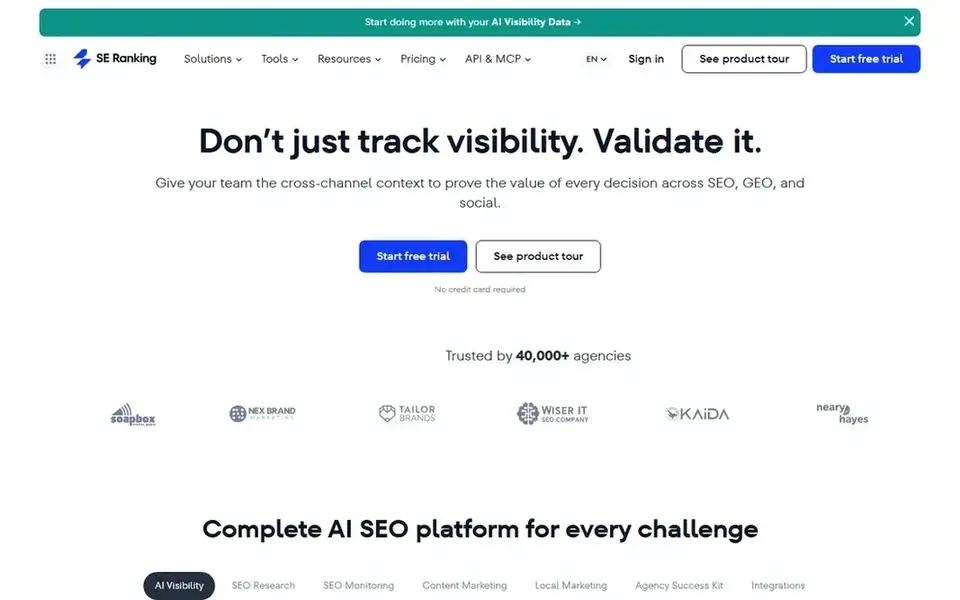
SE Ranking is a general SEO platform with a local module, and that combination suits an escape room owner who also runs a website with room pages, booking pages and blog content. You can track how your venue ranks for "escape room [city]" and for room-specific terms like "horror escape room [city]" in the same project.
The local rank tracker checks positions across a grid of points around your address, which reflects how map results actually shift from one neighbourhood to the next. The Google Business Profile audit flags gaps in categories, hours and attributes, and you can compare your profile against nearby competitors. For a venue with two or three rooms, that gives a clear weekly to-do list.
The limit is scope. If you only want listing cleanup or review requests, a dedicated tool is simpler and cheaper. Skip SE Ranking if you have no website content to manage and just want map rankings watched.
- Local rank tracking with map grid checks
- Google Business Profile audit and competitor view
- rank and audit data in one dashboard
- Local tools are part of a larger SEO platform
- no free plan stated
Places Scout is a local search tracking tool built around map grids and competitor scans. It fits an escape room operator who runs several venues in different cities, or a small agency managing escape room clients, and who wants to see how rankings move block by block.
For an escape room, the useful part is checking how you rank from the streets where your players actually are, such as a downtown cluster or a tourist district. You can watch competitors that rank above you in the map pack and see whether they hold position across the whole grid or only near their own address. Reports can be shared with a partner or landlord.
The downside is that it is a desktop application with a setup process, and it does not handle listings or reviews. A single-room venue with one location will get more value from a simpler dashboard.
- Grid-based local rank tracking
- competitor tracking across many locations
- reporting built for local search
- Desktop software with a learning curve
- more than a single venue usually needs
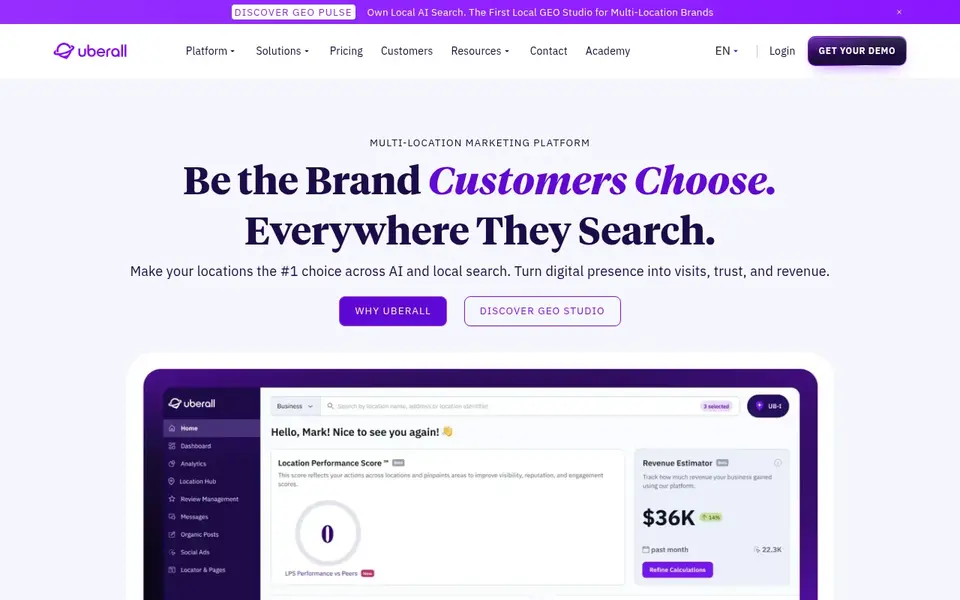
Uberall manages business listing data across maps, directories and review sites from one dashboard. For an escape room, that means your address, phone, hours and booking link stay the same everywhere a player might look, instead of drifting apart after a move or a schedule change.
Escape rooms often have odd hours, seasonal themes and multiple rooms under one address. Keeping those details consistent matters because Google and other platforms compare sources. Uberall also supports location pages and review handling, which helps when a group checks three directories before booking.
It is built for businesses with several locations or a real listing footprint. A single venue with one address can usually manage its profile directly and skip the cost.
- Central control of business data across many directories
- location pages and review tools in one place
- built for multi-location businesses
- Priced for businesses with real listing needs
- overkill for a single venue
Grade.us is a review management tool built around asking customers for reviews and routing them to the right platform. That fits escape rooms well, because the best moment to ask is right after a team escapes or fails, while the experience is fresh and the group is still together.
You set up a campaign, connect it to your booking flow or a staff-triggered send, and the tool follows up by email or SMS. You can point requests at your Google Business Profile, which is where most local players look first. Responses and reporting sit in the same dashboard.
The tool does not fix listings or track rankings, so it is a companion rather than a full local SEO stack. It also depends on a reliable trigger, so make sure your booking system or front desk can send requests consistently.
- Automated review request campaigns
- multiple review site destinations
- simple campaign setup for small teams
- Review-focused, so pair it with a listings tool
- needs a clean booking workflow to trigger sends
SOCi is a multi-location marketing platform with strong reputation and listings features. It fits an escape room brand with several venues, or a franchise group, where head office needs one view of reviews and listings across every city.
For escape rooms, the review side is the draw. You can see new reviews across locations, route responses to the right manager, and keep tone consistent. Listings data stays synced so each venue's address, hours and booking link match everywhere.
The platform is sized for organisations with a marketing team or a franchise structure. A single independent venue will find it heavy and should look at a simpler review tool instead.
- Review monitoring and response across locations
- listings and social publishing in one platform
- built for franchise-style operations
- Aimed at larger operators
- more platform than a single venue needs
WhatConverts tracks leads, including phone calls and form submissions, and shows which source produced them. For an escape room, that answers a practical question: did this booking enquiry come from the map listing, the website, or a directory?
You can assign tracking numbers to your Google Business Profile and to specific room pages, then see which channel generates calls. That helps you decide whether to put more effort into the map pack or into a particular room page. Lead reports are clear enough to share with a co-owner.
It does not manage listings, reviews or rankings, so it sits alongside those tools. Setup takes care, especially if you already use a main business number on printed material.
- Call and form lead tracking with source attribution
- works with Google Business Profile calls
- lead reports you can share
- Not a ranking or listings tool
- needs tracking numbers set up correctly
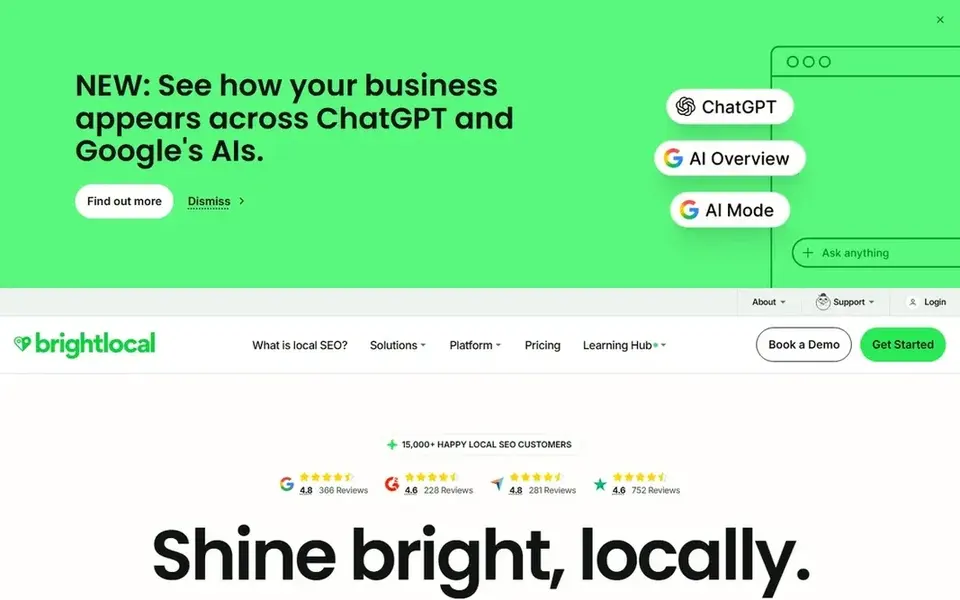
BrightLocal is a local SEO toolkit with citation building, audit and rank tracking features. It fits an escape room that has moved, changed its name, or picked up inconsistent listings across directories over the years.
The citation tools help you find and fix mismatched name, address and phone data, which matters when players search by area and compare sources. Audits give you a list of issues to work through, and rank checks show whether the cleanup is helping. If you work with a small agency, the reporting is easy to hand over.
Some citation work is manual, so expect to spend time confirming submissions. It does not send review requests or track calls, so pair it with a review tool if those matter to you.
- Citation building and cleanup tools
- local audit and rank checks
- reporting for clients or partners
- Citation submissions are partly manual
- not a booking or review-request system
How I chose
I started from what an escape room sells: a time-based experience in a specific city, often booked by a group that searches on a phone. That pushed me toward tools with map grid rank tracking, Google Business Profile checks, listing consistency and review requests tied to a completed booking. I read vendor documentation, feature pages and help articles, and compared what each product says it does. I did not run hands-on tests, so I am judging fit from public information.
I also weighed limits. A single venue does not need a franchise platform, and a venue with no website content does not need a full SEO suite. Where a tool only covers one job, such as reviews or call tracking, I noted that it should be paired with something else. I left out tools where the public documentation was too thin to judge, and I did not include any product I could not confirm is currently operating.
What to check before you buy
- Confirm the tool tracks map rankings across a grid around your address, not just one city-level position.
- Check that it supports your Google Business Profile setup, including multiple rooms or themes under one location.
- Ask whether review requests can be triggered after a booking or by front-desk staff, not only by manual sends.
- Make sure listing management covers the directories your players actually use in your area.
- Check call tracking works with your existing phone number and booking line without breaking printed signage.
- Confirm reporting is simple enough for whoever runs marketing, whether that is you or a small agency.
Frequently asked questions
Do escape rooms need local SEO software at all?
Not strictly, but it helps. An escape room depends on people nearby finding it on maps and trusting recent reviews. Software makes it easier to watch rankings by neighbourhood, keep listings accurate and ask for reviews after each game. A single venue can start with a rank tracker and a review tool and add more later.
Which tool is best for tracking "escape room near me" rankings?
SE Ranking and Places Scout both check rankings across a grid of points around your address, which is closer to how map results work than a single city query. SE Ranking pairs that with a Google Business Profile audit, while Places Scout goes deeper on competitor grids. Pick based on how many locations you manage.
How should an escape room ask for reviews?
Ask right after the game, while the group is together. Use a review tool to send a short email or text with a direct link to your Google Business Profile. Do not offer rewards for reviews, do not filter out unhappy customers, and never write reviews yourself. Google's guidelines are clear on all three points.
Can one tool handle listings, reviews and rankings?
Only the larger platforms cover all three well. SE Ranking covers rankings and profile checks, Uberall covers listings and reviews, and SOCi covers reputation and listings for multi-location brands. Most independent venues combine two tools rather than paying for a full platform.
Is call tracking worth it for a small venue?
It can be, if you cannot tell which channel produces bookings. A tool like WhatConverts shows whether calls come from the map listing, a room page or a directory. If you already ask every caller how they found you and track it reliably, you can delay the cost.
Sources
See where you really rank - block by block
ProMapRanker scans Google Maps across a grid of your service area. Simple monthly plans from $19, white-label on every plan.
Start freeBrowse all guides
← Best Local SEO Software for Engineering Firms in 2026Best Local SEO Software for Laundromats in 2026 →
 best local seo software for dietitians
Best Local SEO Software for Dietitians in 2026
A practical guide to the best local SEO software for dietitians in 2026, covering listing management, reviews, rank tracking and call tracking tools.
Read → best local seo software for auto glass shops
Best Local SEO Software for Auto Glass Shops in 2026
A practical guide to the best local SEO software for auto glass shops in 2026, covering map rankings, reviews, listings and call tracking.
Read → best local seo software for art studios
Best Local SEO Software for Art Studios in 2026
A practical guide to the best local SEO software for art studios in 2026, covering listings, reviews, rank tracking and profile tools for studios.
Read → awr alternatives
AWR Alternatives in 2026
Compare the best AWR alternatives for rank tracking, local SEO, and agency reporting in 2026, with pricing, update speed, and honest limits for teams.
Read → local seo for fence companies
Local SEO for Fence Companies
A local SEO guide for fence companies: Google Business Profile setup, reviews, and service-area targeting for fencing contractors.
Read → local seo for garage door companies
Local SEO for Garage Door Companies
A local SEO guide for garage door repair and installation companies competing for near me searches.
Read →More in Local SEO & Google Maps · All guides A to Z by date · Latest guides