 ProMapRanker
Best Local SEO Software for Auto Glass Shops in 2026
Direct answer
Moz Local is my top pick for auto glass shops because it keeps your name, address and phone number consistent across the directories that feed Google Maps, which matters when customers search by city and need a mobile fitting fast. It has no free plan stated, so check its pricing page. For map grid tracking I would look at Local Viking, and for review requests GatherUp is a strong fit.
I put this comparison together from vendor documentation and public sources rather than hands-on testing. I looked at what each tool actually does for a business that sells windscreen replacement, chip repair and mobile fitting, and where the limits sit for a small shop.
Key takeaways
- Auto glass buyers usually search "near me" plus a city or postcode, so map pack visibility and accurate location data matter more than blog content.
- Consistent business listings across data aggregators help Google match your shop to the right service area, especially when you run a mobile fitting van.
- Review requests sent right after a windscreen replacement tend to arrive when the customer is still thinking about the job.
- Call tracking shows which map listings and service pages actually generate phone enquiries for chip repairs and full replacements.
- No single tool covers listings, reviews, rankings and calls well, so most small glass shops end up with two tools.
Quick comparison
| Pick | Great for | Pricing starts at | Free tier | |
|---|---|---|---|---|
 Moz Local | Keeping shop listings consistent | See website | Not stated | Visit |
 Local Viking | Map grid rank tracking | See website | Not stated | Visit |
 GatherUp | Review requests after a fitting | See website | Not stated | Visit |
 Yext | Multi-location listing control | See website | Not stated | Visit |
 BrightLocal | Citation building and local audits | See website | Not stated | Visit |
 CallTrackingMetrics | Tracking calls from map listings | See website | Not stated | Visit |
 Whitespark | Citation research and building | See website | Not stated | Visit |
The best local SEO software for auto glass shops compared
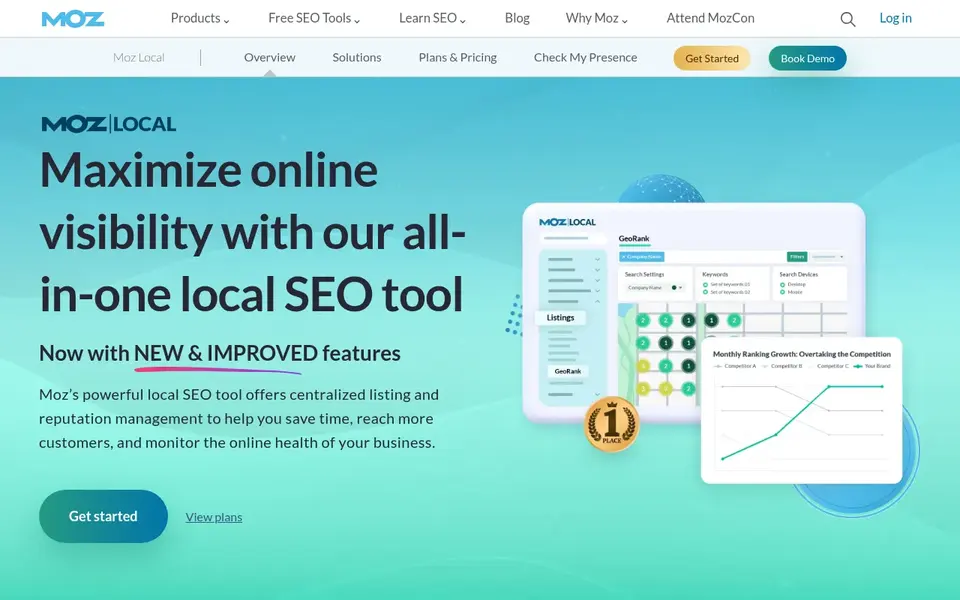
Moz Local is a listing management tool. You enter your shop name, address, phone number, opening hours and categories once, and it distributes that data to the directories that matter for local search. For an auto glass shop that serves a town plus surrounding villages, this keeps your details from drifting apart across directories.
The workflow is straightforward. You claim your Google Business Profile, add your location, then let Moz Local sync the rest. It flags duplicates, which is common when a shop has moved premises or changed its trading name after a rebrand. Clean data helps Google match searches like "windscreen replacement near me" to your actual shop rather than an old listing.
The limit is depth. Moz Local will not track where you rank on a map grid or send review requests automatically, so a shop that wants those needs a second tool. Skip it if you already run a full listing platform across many branches.
- Pushes business data to major directories
- shows duplicate listing problems
- simple dashboard for a single location
- Review request features are basic
- not built for map grid tracking
Local Viking tracks where your shop appears on a grid of points across a map, not just one central point. That suits auto glass because your customers come from a wide area, and a shop on the edge of town may rank well in nearby suburbs but poorly in the centre.
You set a grid around your postcode, then see which points your Google Business Profile appears in for terms like "auto glass" or "windscreen repair". Geo-tagged photo uploads let you add job photos tied to a location, which is a legitimate way to show activity. Competitor tracking on the same grid shows whether a rival fitting chain is outranking you in specific suburbs.
The limitation is interpretation. A grid is a snapshot, and rankings move with proximity and search intent. Skip it if you only want listing cleanup.
- Grid-based map ranking views
- geo-tagged photo posting
- competitor tracking on the same grid
- Ranking data is only as useful as the location you set
- needs regular checking
GatherUp handles review requests and customer feedback. For an auto glass shop, the natural moment is right after the technician finishes a replacement or chip repair, when the customer is relieved and still holding the invoice.
You import customer names, emails and phone numbers, then set a request to go out a few hours later. The tool can ask for private feedback first, so an unhappy customer about a leak or a delay reaches you before posting publicly. That is a normal, allowed practice as long as you never filter who gets asked based on expected sentiment.
The limit is data quality. If your front desk does not capture emails or mobile numbers reliably, requests will not go out. Skip it if you already have review requests built into your job management software.
- Automated review request sequences
- feedback routed before it goes public
- simple customer import
- Needs clean customer contact data
- results depend on staff collecting details at handover
Yext is a listings platform built around a central record of your business facts. A glass shop with several fitting centres, or one that runs mobile vans from a depot, can keep opening hours, services and phone numbers aligned everywhere.
The value shows up when you add a second location or change a phone number. Instead of editing ten directories by hand, you update the record and the changes publish. For auto glass, listing the specific services you offer, such as chip repair, ADAS recalibration or mobile fitting, helps searchers and Google understand what you do.
The limit is scale. A single independent shop may find the setup effort larger than the benefit. Skip it if you only trade from one address and rarely change details.
- Central control of listings across many sites
- structured data for services
- works well for branches
- Can be more than a single shop needs
- setup takes planning
BrightLocal is a local SEO toolkit with citation audit and building at its centre. If your shop is not showing in the map pack for nearby towns, missing or inconsistent directory listings are a common reason, and this tool finds them.
You run an audit, see which directories hold wrong or missing data, and either fix them yourself or use the citation building service. It also checks local rankings and produces reports. For an auto glass shop that wants a clear picture of its local footprint before spending on anything else, that audit is a sensible first step.
The limit is that citations are groundwork, not a quick win. Skip it if you already have a listing platform syncing your data and just want rank tracking.
- Citation audit and building tools
- local rank checks
- report generation for clients or owners
- Citation building can take time to show results
- some overlap with listing tools
CallTrackingMetrics assigns tracking numbers to your web pages, ads and listings so you can see which source produced each call. Auto glass enquiries often start with a phone call, especially for chip repairs where the customer wants a quick answer on whether it can be fixed today.
You place a tracking number on your Google Business Profile and service pages, then route calls to your front desk. Reports show whether calls came from the map pack, organic search or a paid ad. That tells you where to put effort next, and it settles arguments about whether the map listing is worth maintaining.
The limit is administration. Numbers need a clear naming plan, and staff should know which line rang. Skip it if your call volume is low and you already ask customers how they found you.
- Dynamic number insertion on web pages
- call source attribution
- call recording options
- Requires number planning
- staff need to know which line is which
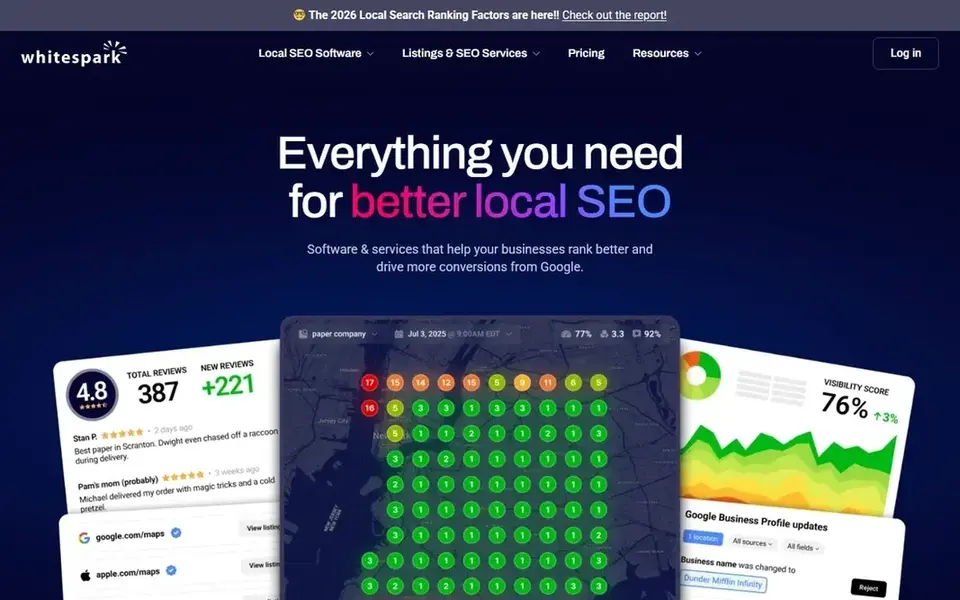
Whitespark focuses on citations and local search research. Its citation finder shows which directories list businesses in your category and area, so you can decide where an auto glass shop should appear.
For a shop in a competitive town, this helps you find local directories, motoring organisations and trade listings that a generic tool might miss. You can build citations yourself from the list or use the service. The data is specific to local search rather than a broad SEO suite.
The limit is scope. It will not manage reviews or track map grids. Skip it if you want one dashboard for everything and do not care about citation depth.
- Large citation source database
- local citation finder
- citation building service
- Specialist tool rather than an all-in-one
- manual work if you build yourself
How I chose
I compared these tools from vendor documentation and public sources, not from hands-on testing. I started with the jobs an auto glass shop actually needs done: accurate listings, map visibility across a service area, review requests after a fitting, and call attribution. Then I checked which tools cover each job and where the documentation is clear about limits.
I also weighed fit for a small business. A single shop with a mobile van has different needs from a chain with several fitting centres, so I noted where a tool is heavier than necessary. I did not include prices, ratings or review scores because those change and depend on your situation. The order reflects how well each tool matches the day-to-day work of an auto glass business, not a ranking of overall quality.
What to check before you buy
- Confirm the tool can handle a service-area business as well as a shopfront address, since mobile fitting changes how Google reads your location.
- Check whether it syncs with Google Business Profile directly, and how often.
- Ask how review requests handle unhappy customers, and make sure nothing filters or gates reviews.
- Confirm call tracking numbers can be placed on your Google Business Profile without breaking call routing.
- Check whether the tool supports the specific services you list, such as chip repair, replacement and ADAS recalibration.
- Look at how easy it is to add a second location or change a phone number later.
Frequently asked questions
Do auto glass shops need local SEO software?
Not strictly, but it helps. Most glass shop enquiries start with a local search, and software keeps your listings accurate, tracks where you appear on the map and makes review requests routine. A small shop can start with one listing tool and add tracking later.
What is the most important local SEO task for an auto glass shop?
Getting your Google Business Profile and directory listings accurate is the foundation. Customers search by town and need to trust that your address, hours and phone number are right. Reviews and map tracking build on that base.
Can I ask customers for reviews after a windscreen replacement?
Yes, as long as you ask everyone the same way and do not offer incentives or filter out unhappy customers. Asking shortly after the job, by email or text, is normal practice and follows Google's guidelines.
How do I track rankings across several towns?
Use a grid-based rank tracker that checks points across your service area rather than a single location. That shows which suburbs you appear in and where a competitor is stronger, which is useful when you run mobile fitting.
Is call tracking worth it for a glass shop?
It can be, because many chip repair enquiries arrive by phone. Tracking numbers show whether calls come from the map listing, organic search or ads, so you know which channel deserves more attention.
Sources
See where you really rank - block by block
ProMapRanker scans Google Maps across a grid of your service area. Simple monthly plans from $19, white-label on every plan.
Start freeBrowse all guides
← Best Local SEO Software for Art Studios in 2026Best Local SEO Software for Dietitians in 2026 →
 best local seo software for acupuncturists
Best Local SEO Software for Acupuncturists in 2026
A practical guide to the best local SEO software for acupuncturists in 2026, compared from vendor documentation and public sources.
Read → best local rank tracking tools for tailors
Best Local Rank Tracking Tools for Tailors (2026)
A tailor's guide to local rank tracking tools for 2026. Compare grid trackers, review platforms and listing managers on fit, features and limits.
Read → best local rank tracking tools for summer camps
Best Local Rank Tracking Tools for Summer Camps in 2026
Compare local rank tracking tools for summer camps. See how each one handles grid scans, service-area keywords and multi-location reporting in 2026.
Read → local seo for fence companies
Local SEO for Fence Companies
A local SEO guide for fence companies: Google Business Profile setup, reviews, and service-area targeting for fencing contractors.
Read → local seo for garage door companies
Local SEO for Garage Door Companies
A local SEO guide for garage door repair and installation companies competing for near me searches.
Read → data aggregators local seo
Data Aggregators in Local SEO: How They Power Your Listings
How data aggregators distribute your business info across the local web and why accuracy matters.
Read →More in Local SEO & Google Maps · All guides A to Z by date · Latest guides