 ProMapRanker
Best Local SEO Software for Acupuncturists in 2026

All-in-one local SEO for one clinic · Pricing starts at: See website
Direct answer
SE Ranking is my top pick for acupuncturists because it combines local rank tracking, a Google Business Profile audit and competitor checks in one place, which suits a single-location clinic that wants to see where it shows up in the map pack. It has no free plan stated, so check its pricing page. Places Scout fits deeper rank tracking, and Grade.us fits review requests after treatment.
I compared these tools from vendor documentation and public sources, not from hands-on tests. I looked at what each one does for a small clinic: map pack visibility, Google Business Profile work, reviews, citations and call tracking. Where a tool is built for agencies or chains, I say so, because an acupuncturist running one room does not need the same setup.
Key takeaways
- Acupuncture clinics usually compete in a small map pack radius, so grid-based rank tracking matters more than national keyword volume.
- Your Google Business Profile categories, services and treatment photos do much of the ranking work, so pick software that audits that profile.
- Review requests sent after a visit are the main reputation lever for a clinic, and a dedicated review tool handles them better than a general SEO suite.
- Citation consistency across health and local directories still matters, but a citation service is a separate purchase from a rank tracker.
- Call tracking helps you see which map listings and landing pages actually produce booked appointments.
Quick comparison
| Pick | Great for | Pricing starts at | Free tier | |
|---|---|---|---|---|
| SE Ranking | All-in-one local SEO for one clinic | See website | Not stated | Visit |
 Places Scout | Grid rank tracking across a city | See website | Not stated | Visit |
 Grade.us | Review requests after appointments | See website | Free trial | Visit |
 BrightLocal | Citations and local audit reports | See website | Free trial | Visit |
 Whitespark | Citation building and local citations | See website | Not stated | Visit |
 Uberall | Listing management across many directories | See website | No free plan | Visit |
 WhatConverts | Call and form tracking from map listings | See website | Free trial | Visit |
The best local SEO software for acupuncturists compared
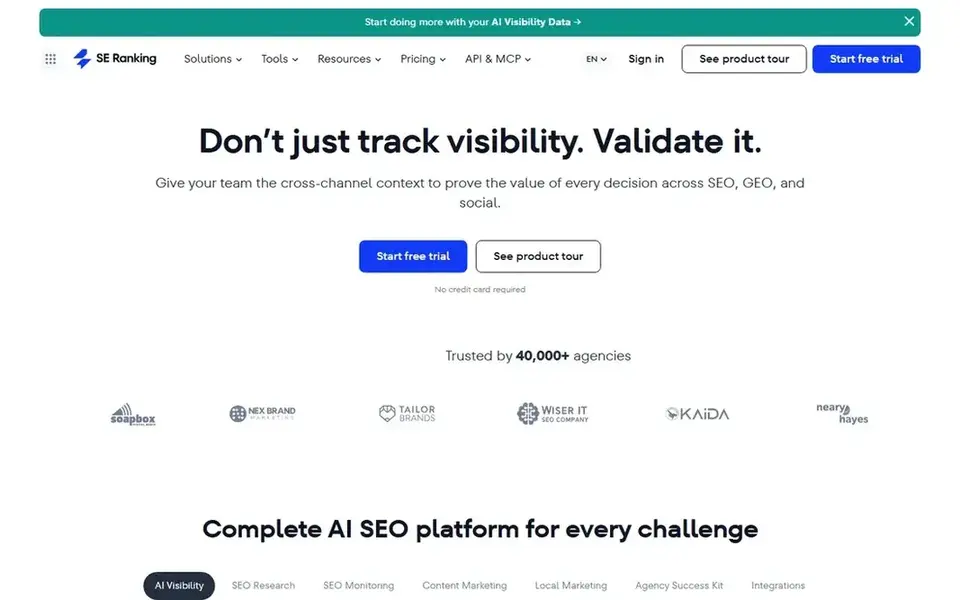
SE Ranking is a general SEO platform with a local module. For an acupuncturist, the useful part is the local rank tracking: you set your clinic address and the keywords people actually type, like "acupuncture near me" or "acupuncture for back pain [suburb]", and see where you appear in the map results around your location. The Google Business Profile audit checks profile completeness, which matters because a thin profile with no services listed rarely ranks.
The workflow fits a clinic owner who does their own marketing. You check rankings weekly, fix profile gaps the audit flags, and use the competitor view to see which nearby clinics hold the top map spots and what categories they use. Site audit catches broken pages on your booking page before they cost you appointments. Keyword research helps you build service pages for specific conditions rather than one generic page.
The limits are practical. If you only want review requests or citation submissions, SE Ranking is more than you need, and the local features are not in the entry plan. A solo practitioner who wants one dashboard for everything should still check which tier includes local rank tracking before paying.
- Local rank tracking with map pack positions
- Google Business Profile audit and competitor view
- keyword and site audit in the same account
- Local features sit in higher plans
- more modules than a small clinic will use
Places Scout is local search software aimed at agencies and consultants, and it runs as a desktop application. Its strength is grid rank tracking: instead of one ranking number, you see where your clinic ranks across a set of points around your suburb or city. For an acupuncturist, that shows whether you appear for people two suburbs away, which is often where new patients come from.
The workflow is heavier than a browser dashboard. You set up a scan for your business and keywords, run it, and read the grid. It also audits citations and competitor profiles, which helps if you want to see why a nearby clinic outranks you. That depth suits someone who enjoys the data side or works with a consultant.
Most solo acupuncturists will find it too much. If you want a simple weekly check and a profile audit, a browser-based tool is easier. Choose Places Scout when grid visibility across a wide area is the question you need answered.
- Grid-based local rank tracking
- competitor and citation auditing
- built for local search work
- Desktop software with a learning curve
- more than a single clinic needs
Grade.us is review management software. You connect your review profiles, set up a campaign, and it sends review requests to patients by email or text after their visit. For an acupuncturist, reviews are often the deciding factor for a new patient choosing between two clinics in the same street, so a steady flow of honest reviews does more for map rankings than most on-page changes.
The clinic-specific detail is timing. Acupuncture patients often come for a course of sessions, so a request after the first visit can feel early. Most tools let you delay the send or trigger it after a set number of appointments. Grade.us also puts reviews from different sites into one stream so you can reply without logging into each platform.
It does not track rankings or fix your Google Business Profile, so it is a companion purchase rather than a replacement for an SEO tool. Skip it if you get reviews naturally and only want rank data.
- Automated review request campaigns
- review monitoring in one inbox
- supports multiple review sites
- Not an SEO or rank tracking tool
- request timing needs care for a clinic
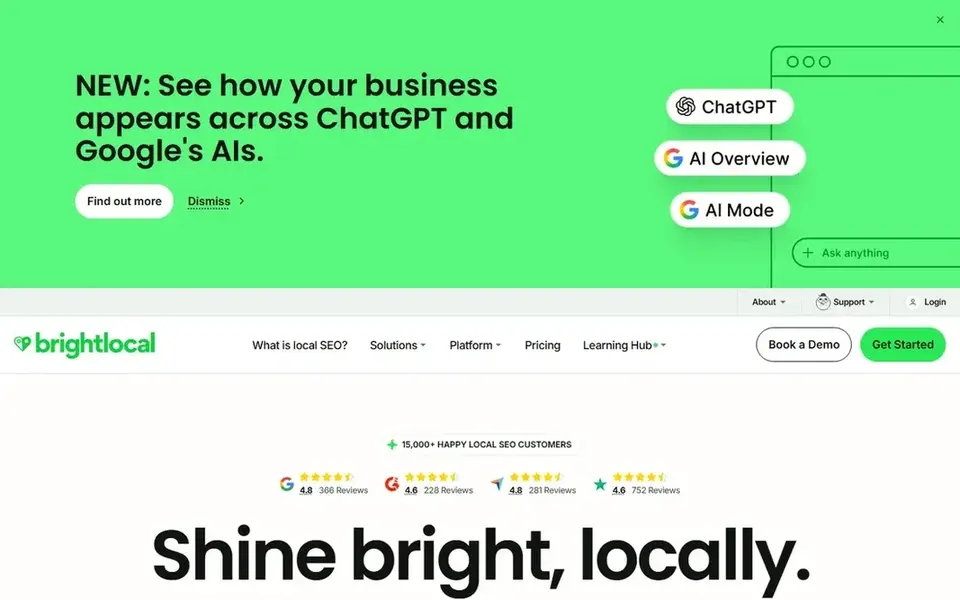
BrightLocal is a local SEO platform built around citations, local audits and reputation. For an acupuncturist, the citation audit is the practical piece: it checks whether your clinic name, address and phone number match across directories, and flags listings that are missing or wrong. A wrong phone number on a health directory sends patients to a dead line.
The workflow is report-driven. You run an audit, work through the list of inconsistent listings, and repeat after a few months. The local competition report shows which nearby clinics appear for your main terms, and the reputation tools pull review data into one view. It suits a clinic that wants a structured quarterly clean-up rather than daily monitoring.
Watch the add-on costs, since citation submissions and some reports sit outside the base plan. If you mainly want rank tracking, a rank tracker is a better fit. BrightLocal makes sense when listing accuracy is your weak point.
- Citation building and auditing in one place
- local competitor and reputation reports
- straightforward for single locations
- Some features cost extra
- reports can overwhelm a solo owner
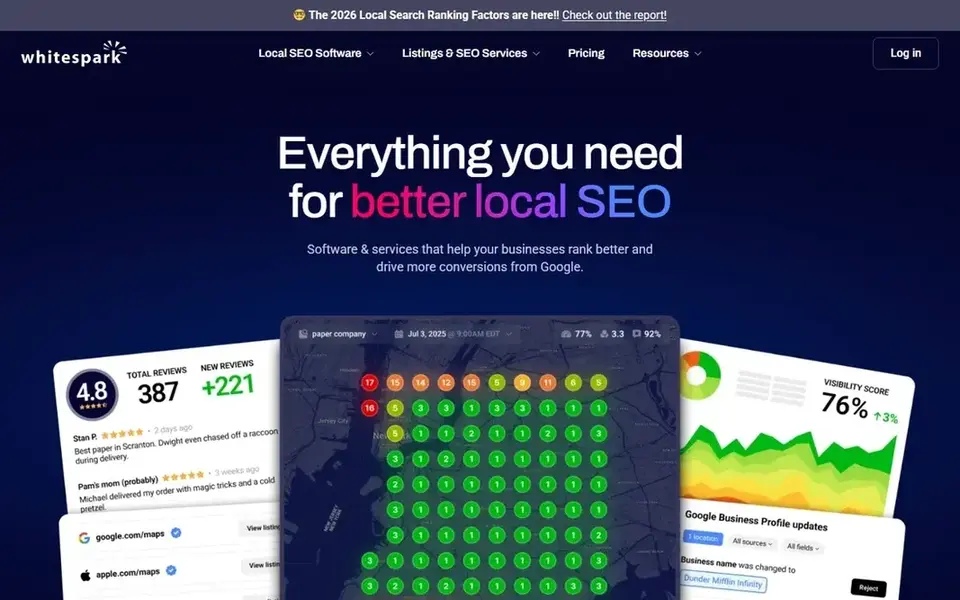
Whitespark is known for citation building. You give them your clinic details and they submit to a list of directories, which for a health business includes general local directories plus the ones that matter for a clinic address. They also run a local rank tracker that shows map positions, so you can see whether the citation work moves anything.
For an acupuncturist, the value is time. Citation submission is repetitive, and doing it by hand across dozens of sites takes evenings you could spend with patients. Whitespark handles the submissions and sends a report. The rank tracker then gives you a before-and-after view.
The limits are cost and speed. Citation building is a paid service on top of any software, and results take weeks to appear. If your listings are already clean, spend the money elsewhere. Choose Whitespark when you have never claimed your clinic listings properly.
- Large citation database
- citation building handled by a team
- local rank tracker included
- Citation work is a paid service
- slower than a self-serve audit
Uberall is a listing management platform for businesses with several locations. You enter your clinic data once and it pushes consistent name, address, hours and services to directories and maps. For an acupuncturist with one clinic, that is more infrastructure than you need, but it becomes relevant if you open a second location or run a small group of clinics.
The clinic-specific benefit is hours and service accuracy. Acupuncture clinics often have unusual hours, closed days and practitioner-specific availability, and wrong hours on a directory lose patients. Uberall keeps those details in sync. Review management and location pages sit alongside the listings.
The trade-off is fit. A single-room practice will pay for capacity it never uses, and there is no free plan to test with. Check whether a demo is available before committing. Choose Uberall when listing consistency across many sites is a real operational problem.
- Central listing management at scale
- review and location data in one place
- strong directory coverage
- Built for multi-location businesses
- no free plan, so it is a commitment
WhatConverts is lead tracking software. It records which calls, form fills and chats came from which source, including Google Business Profile and map listings. For an acupuncturist, that answers a question rank trackers cannot: did the person who found you in the map pack actually book, or did they call and hang up?
The setup involves adding tracking to your site and routing your clinic phone number through the tool. Once live, you see a lead report by source. If your booking page gets traffic but few appointments, the data shows whether calls are being answered and which pages produce enquiries. That is useful when you are deciding whether to spend on local SEO at all.
It does not track rankings, manage reviews or fix citations, so it is a measurement layer. Skip it if you already know where your patients come from. Choose WhatConverts when you want proof that map visibility turns into bookings.
- Tracks calls, forms and chats as leads
- shows which source produced each enquiry
- call recording and reporting
- Needs setup on your site and phone line
- not a ranking tool
How I chose
I built this list from vendor documentation and public sources: each tool's own feature pages, help docs and published descriptions of what the product does. I did not run hands-on tests, and I have not used every tool in a clinic. So treat the notes as a starting point for your own trial, not a lab result.
My filter was fit for a small acupuncture practice. I asked whether a tool helps with the things that actually move a clinic's map visibility: a complete Google Business Profile, consistent listings, a steady flow of honest reviews, and a clear view of local rankings. Tools built for agencies or multi-location chains stayed in the list only where a single clinic could still get value. I also noted limits, because paying for capacity you never use is the most common mistake I see in this category.
What to check before you buy
- Confirm the tool tracks map pack rankings around a location, not just national keyword positions.
- Check whether the plan you can afford includes the local features, since many suites put them in higher tiers.
- Make sure review requests can be delayed or triggered after a set number of visits, which suits course-based treatment.
- Ask whether citation work is self-serve or a paid service, and how long submissions take.
- Check that the tool follows Google's review policies and does not offer review gating or incentives.
- Confirm call tracking can route through your existing clinic number without disrupting appointment calls.
Frequently asked questions
Do acupuncturists need local SEO software at all?
Not strictly. A complete Google Business Profile, accurate listings and a habit of asking patients for honest reviews cover most of the basics. Software helps when you want to track map rankings over time, audit your profile, or automate review requests. A single clinic can start with the free tools inside Google and add paid software when it has a specific question to answer.
Which tool is best for tracking map pack rankings?
SE Ranking and Places Scout both track map positions. SE Ranking shows rankings around a set location in a browser dashboard, which suits a clinic owner. Places Scout shows a grid across a wider area, which suits someone who wants to see visibility several suburbs away. Pick based on how much detail you will actually review each week.
How should an acupuncture clinic ask for reviews?
Ask after a visit, in person, and follow up with a plain request by email or text. Do not offer discounts for reviews, do not filter out unhappy patients before asking, and do not write reviews yourself. A review tool like Grade.us automates the send and collects replies in one inbox, but the policy rules are the same with or without software.
Are citation services worth it for a clinic?
They are worth it when your listings are wrong or missing. A citation audit from BrightLocal shows the gaps, and a service like Whitespark handles the submissions. Once listings are clean, the ongoing value drops, so treat it as a one-off clean-up rather than a permanent subscription unless you open new locations.
Can I track which map listings bring in booked appointments?
Yes, with call and form tracking. WhatConverts records calls and form fills by source, so you can see whether enquiries came from Google Business Profile, the map pack or organic search. That closes the gap between ranking data and actual bookings, which is the number that matters for a clinic.
Sources
See where you really rank - block by block
ProMapRanker scans Google Maps across a grid of your service area. Simple monthly plans from $19, white-label on every plan.
Start freeBrowse all guides
← Best Local Rank Tracking Tools for Tailors (2026)Best Local SEO Software for Art Studios in 2026 →
 best local rank tracking tools for summer camps
Best Local Rank Tracking Tools for Summer Camps in 2026
Compare local rank tracking tools for summer camps. See how each one handles grid scans, service-area keywords and multi-location reporting in 2026.
Read → best local rank tracking tools for personal trainers
Best Local Rank Tracking Tools for Personal Trainers in 2026
A practical guide to the best local rank tracking tools for personal trainers, compared from vendor documentation and public sources.
Read → best local rank tracking tools for it support companies
Best Local Rank Tracking Tools for IT Support Companies in 2026
A guide to the best local rank tracking tools for IT support companies, compared from vendor documentation and public sources, with grid and keyword tracking notes.
Read → what is the google map pack
What Is the Google Map Pack? How the Local 3-Pack Really Works
What the Google Map Pack is, why only 3 businesses show, and how Google picks them.
Read → local seo for home inspectors
Local SEO for Home Inspectors
A local SEO guide for home inspectors: Google Business Profile setup, reviews, and realtor-referral-driven local SEO.
Read → local seo for notary services
Local SEO for Notary Services
A local SEO guide for notary services: Google Business Profile setup, reviews, and mobile-notary and same-day local SEO.
Read →More in Local SEO & Google Maps · All guides A to Z by date · Latest guides