 ProMapRanker
Best Local Rank Tracking Tools for Garden Centers in 2026

Grid-based local rank tracking · Pricing starts at: See website
Direct answer
My top pick for garden centers is Places Scout, because it tracks grid-based local rankings across many map points and reports on Google Business Profile details that matter for a store with a service area. Pricing is quote-based, so check its pricing page. If you mainly want review and reputation tracking alongside rankings, look at GatherUp. If you want a lower-cost rank tracker with a familiar keyword workflow, consider SE Ranking.
I compared these tools from vendor documentation and public sources, and I did not run hands-on tests. My focus was how each one fits the way a garden center actually gets found: a customer standing a few miles away searches "plant nursery near me" or "hanging baskets" on a phone, then checks the map. Tools that show rankings across a grid of points, keep history across seasons, and report on Google Business Profile details are more useful to a garden center than a single national keyword position.
Key takeaways
- Garden centers compete in a small radius, so grid-based rank tracking shows where you rank street by street, not just in one spot.
- Seasonal demand (spring bedding plants, autumn bulbs, Christmas trees) means you need ranking history by date, not a single snapshot.
- Review signals and Google Business Profile details influence map rankings, so pick a tool that tracks those alongside positions.
- Multi-location garden centers with several stores need per-location reporting and separate grids for each branch.
- Always check that a tool follows Google's guidelines and does not rely on review gating or keyword-stuffed business names.
Quick comparison
| Pick | Great for | Pricing starts at | Free tier | |
|---|---|---|---|---|
| Places Scout | Grid-based local rank tracking | See website | Not stated | Visit |
 SE Ranking | Affordable keyword and local rank tracking | See website | Free trial | Visit |
 GatherUp | Reviews plus local visibility | See website | Free trial | Visit |
 Localo | Simple GBP and local rank checks | See website | Free trial | Visit |
 Uberall | Multi-location GBP management | See website | No free plan | Visit |
 Synup | Listings plus local rank monitoring | See website | Not stated | Visit |
 Moz Local | Listings and local visibility basics | See website | No free plan | Visit |
The best local rank tracking tools for garden centers compared
Places Scout is a local SEO desktop tool built around rank tracking on a map grid. For a garden center, that matters because your customers are usually within a short drive. A grid shows whether you appear in the map pack for searchers in the next town, near the retail park, or on the far side of your catchment, which a single-point check hides.
The workflow suits a store that wants to see how its Google Business Profile performs across an area. You set up a grid around the store, track keywords like "garden centre near me" or "compost supplier", and review the map over time. It also audits profile details, which helps you spot gaps such as missing hours during seasonal opening changes.
The limits are practical: it is desktop software, and pricing is quote-based, so smaller garden centers should confirm cost and system requirements before committing. Skip it if you only want a quick weekly position check and do not need grid maps.
- Grid-based local rank maps
- Google Business Profile auditing
- desktop reporting for multiple locations
- Desktop software rather than a browser app
- pricing is quote-based
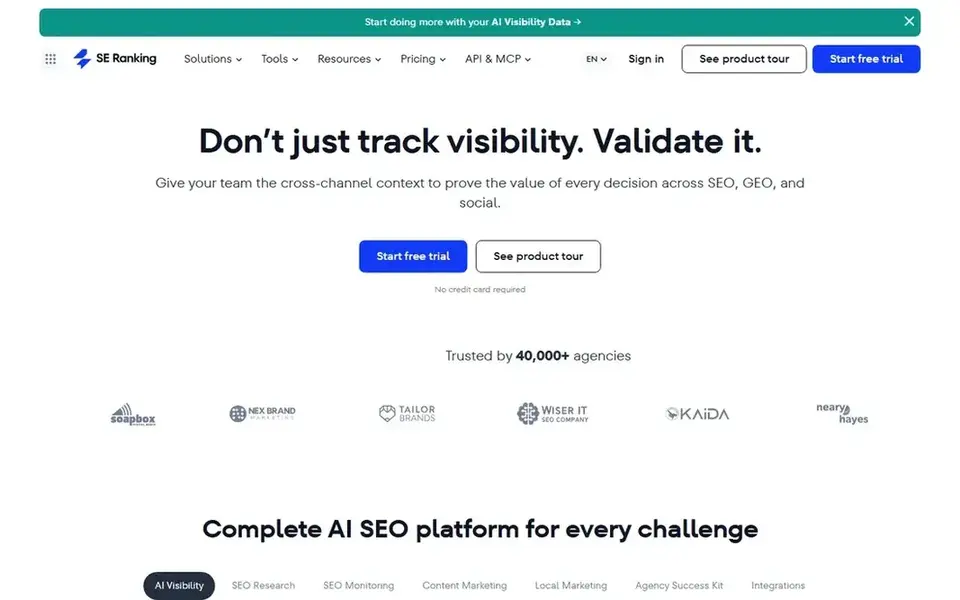
SE Ranking is a general SEO platform with keyword rank tracking, competitor tracking and reporting. It fits a garden center that wants one dashboard for its website pages and its local search terms, and it is often used by small agencies managing several local clients.
For local work, you can track terms like "perennial plants [town]" and watch how positions move through the year. The history charts are useful when you want to see whether a spring push on bedding plant pages actually moved rankings, or whether a drop in autumn was seasonal rather than a problem.
The limit is that deeper local grid tracking sits in higher plans, and it is not a Google Business Profile manager. Skip it if map-grid visibility is your main need and you want it in the base plan.
- Broad keyword tracking with local options
- clear rank history charts
- agency-friendly reporting
- Local grid features sit in higher tiers
- not a dedicated GBP tool
GatherUp is a review and reputation tool with local visibility reporting. It fits a garden center that knows reviews drive map rankings, especially when customers mention staff advice, plant quality or delivery.
The workflow is straightforward: you collect reviews from happy customers after a purchase, monitor new reviews across sites, and see local search visibility alongside them. For a garden center, that could mean asking for a review at the till during the spring rush and watching how that affects your map presence over the following weeks. It follows Google's guidelines by asking all customers, not just the happy ones.
The limit is that rank tracking is a supporting feature, not the core. Skip it if you want detailed grid maps and nothing else.
- Review requests and monitoring
- local search visibility reporting
- simple customer feedback flow
- Rank tracking is secondary to reviews
- not a deep grid tool
Localo is a local SEO tool centred on Google Business Profile management and local rank tracking. It suits a single-site garden center or a small group that wants a clear view of map positions without a heavy platform.
You can track local keywords, check how your profile appears, and follow simple tasks that improve visibility. For a garden center, that means keeping seasonal hours, photos of new stock and posts up to date, then watching whether local rankings respond. The interface is aimed at people who are not full-time SEOs, which fits many independent garden centers.
The limit is depth: larger chains with many stores and complex reporting needs may outgrow it. Skip it if you need advanced grid analysis or enterprise listings management.
- Google Business Profile-focused workflow
- local rank tracking
- straightforward interface for small teams
- Smaller feature set than enterprise platforms
- less depth for large multi-store groups
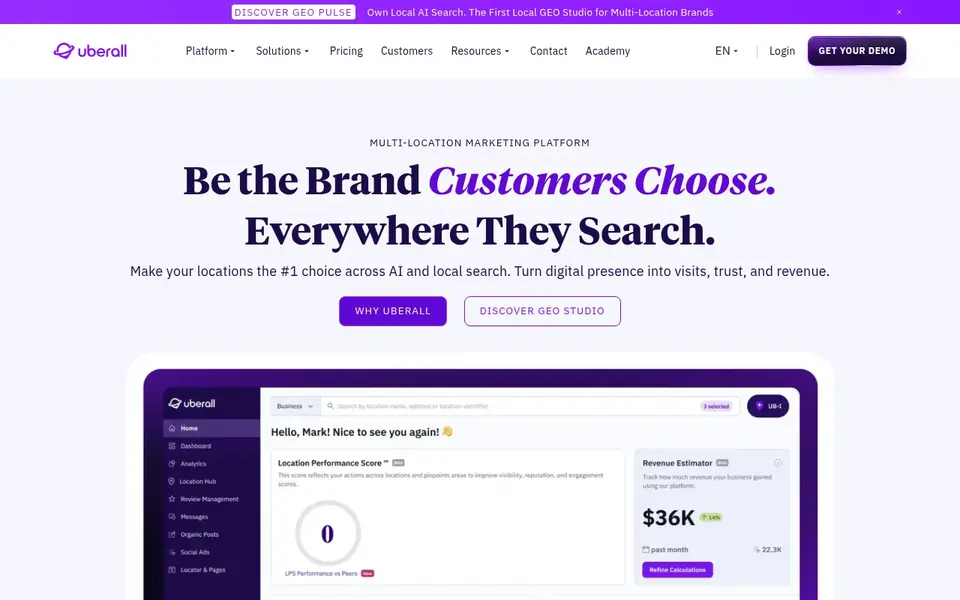
Uberall is a location marketing platform for businesses with multiple stores. It fits a garden center group with several branches, where each store needs consistent name, address and phone details plus its own local visibility reporting.
For a group, the value is consistency: one place to update opening hours across all branches when seasons change, and reporting that shows how each store performs locally. That matters when one branch is near a competitor and another is not, because the rankings will differ and you need to see each one separately.
The limit is that it is built for larger operations, and setup takes effort. Skip it if you run a single garden center and want a light tool.
- Manages listings for many locations
- local presence reporting
- built for chains
- Heavier setup
- aimed at larger businesses
Synup combines listings management with local rank monitoring and location reporting. It fits a garden center that wants its address, hours and categories correct across directories while also watching local search positions.
For a store, correct listings reduce confusion when customers search for opening times in winter or directions to a seasonal site. Synup keeps those details aligned and reports on local visibility, so you can see whether fixing a listing or adding a category changed your map presence.
The limit is that pricing is not published and the platform is broader than a small store needs. Skip it if you only want rank tracking.
- Listings management across directories
- local rank monitoring
- location-level reporting
- Pricing needs a sales conversation
- more than a small store needs
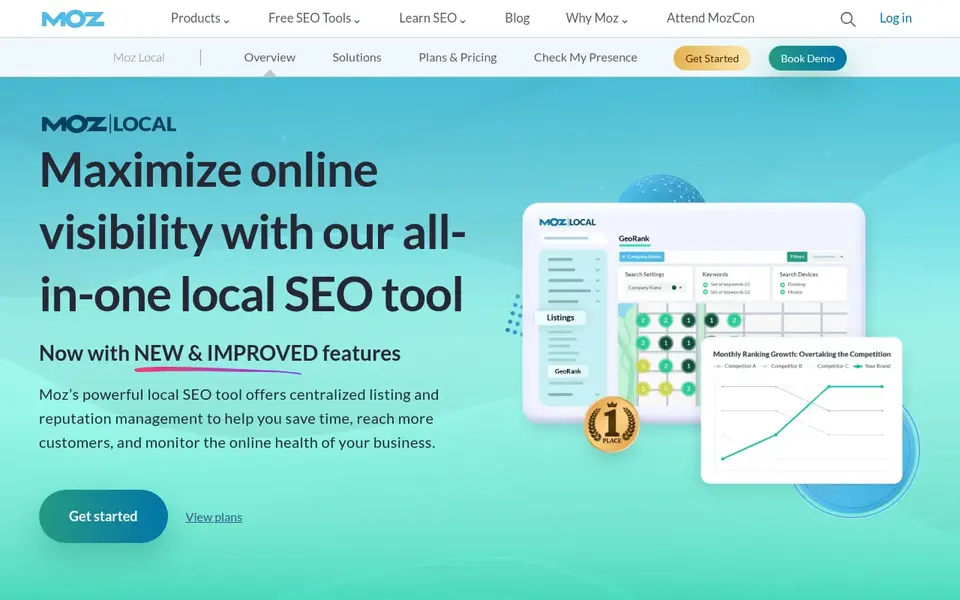
Moz Local handles business listings and gives a local visibility score. It fits a garden center that wants its core details correct across directories and a simple read on local presence.
For a store, the useful part is keeping name, address, phone and categories consistent, which supports map rankings. The visibility score gives a rough sense of how you compare locally, and you can pair it with a dedicated rank tracker for grid detail.
The limit is that rank tracking is limited compared with specialists. Skip it if grid maps are your priority and you already have listings under control.
- Listings distribution and correction
- local visibility scoring
- trusted brand in SEO
- Rank tracking is limited
- not a dedicated grid tracker
How I chose
I chose these tools by reading vendor documentation and public sources, and by matching features to how garden centers get found. I did not run hands-on tests, so my notes come from what each vendor publishes about rank tracking, local grids, Google Business Profile reporting and listings. I looked for tools that show rankings across an area rather than a single point, keep history so seasonal swings are visible, and report on the profile details that affect map rankings.
I also weighed limits honestly. Some tools are built for chains and are heavier than an independent store needs; others treat rank tracking as a side feature. I left out anything that encourages review gating, buying reviews or keyword-stuffed business names, because those break Google's guidelines and put your profile at risk. Where pricing is not published, I say so rather than guess, and you should confirm current terms on each vendor's site.
What to check before you buy
- Confirm the tool tracks rankings on a map grid around your store, not just one central point.
- Check that it keeps ranking history by date so you can compare spring, summer and winter demand.
- Make sure it reports on Google Business Profile details such as hours, categories and photos.
- For multiple branches, confirm per-location grids and separate reporting for each store.
- Ask whether review monitoring is included, since reviews influence map rankings.
- Check the vendor follows Google's guidelines and does not support review gating or fake reviews.
Frequently asked questions
Do garden centers need a special rank tracking tool?
Not a special one, but a local one helps. Garden centers compete in a small radius, and customers often search on a phone nearby. A tool that shows map-grid rankings and keeps history across seasons gives a clearer picture than a general keyword tracker built for national terms.
How often should I check local rankings?
Weekly is usually enough for a garden center, with more frequent checks during peak seasons like spring. Daily checks can be noisy because rankings shift with location and device. What matters more is consistent tracking over months so you can separate seasonal change from a real drop.
Can I track rankings for several store locations?
Yes. Tools like Uberall and Synup are built for multi-location reporting, and Places Scout supports multiple locations with separate grids. Set up a grid around each branch, because a store near a competitor will rank differently from one in a quieter area.
Do reviews affect my map rankings?
Reviews are one of many signals that influence local rankings, and they also affect whether customers choose you. Ask every customer for feedback rather than only happy ones, and never offer incentives for positive reviews only. Tools like GatherUp help you collect and monitor reviews within Google's guidelines.
Is a free plan enough to start?
Some tools offer a free trial, which lets you check whether the workflow fits before paying. A trial is useful for testing grid tracking and reporting on your own store. Long term, most garden centers need a paid plan for history and multiple keyword tracking, so confirm what the trial includes.
Sources
See where you really rank - block by block
ProMapRanker scans Google Maps across a grid of your service area. Simple monthly plans from $19, white-label on every plan.
Start freeBrowse all guides
← Best Local Rank Tracking Tools for Assisted Living (2026)Best Local Rank Tracking Tools for Marinas in 2026 →
 best listing management software for welding shops
Best Listing Management Software for Welding Shops in 2026
A practical guide to the best listing management software for welding shops in 2026, covering GBP tools, directory sync, reviews and local rank tracking.
Read → best listing management software for party rental companies
Best Listing Management Software for Party Rental Companies (2026)
A practical guide to listing management software for party rental companies, comparing tools for Google Business Profile, citations and reviews in 2026.
Read → best listing management software for mattress stores
Best Listing Management Software for Mattress Stores in 2026
A practical guide to the best listing management software for mattress stores in 2026, covering GBP tools, review platforms and citation services.
Read → scaling local seo for agencies
How to Scale Rank Tracking Across Dozens of Local Clients
Practical systems for scaling geo-grid rank tracking across dozens of clients without ballooning costs.
Read → local rank tracker for agencies
Local Rank Tracker for Agencies: Scaling Across Many Clients
What agencies need from a local rank tracker: white-label reports, multi-client scaling, and predictable costs.
Read → moz pro alternatives
Moz Pro Alternatives in 2026
Searching for Moz Pro alternatives? We compare 8 SEO tools on keyword research, backlinks, rank tracking, and local SEO, with current prices inside now.
Read →More in Local SEO & Google Maps · All guides A to Z by date · Latest guides