 ProMapRanker
Best Listing Management Software for Party Rental Companies (2026)
Direct answer
Moz Local is my first pick for most party rental companies because it keeps your name, address, phone and category details consistent across the main directories customers check before they call about tents, tables and chairs. Pricing is quote-based, so check its pricing page. If reviews after an event matter more, look at GatherUp; if you run several rental branches, look at Uberall.
I put this comparison together from vendor documentation and public sources rather than hands-on testing. I looked at what each tool says it does for business details, reviews and local visibility, then matched that to how party rental companies actually get found: map searches, directory lookups and phone calls from people planning birthdays, weddings and corporate events.
Key takeaways
- Party rental buyers often find you through map results and directory listings, so consistent business details matter more than a fancy website.
- Listing management software keeps your name, address, phone, hours and categories the same everywhere, which reduces confusion for customers planning an event.
- Review request tools fit rental businesses well because the job ends with a delivery or pickup, which is a natural moment to ask for feedback.
- Multi-location tools make sense when you have separate warehouses or showrooms, each with its own address and phone number.
- No tool fixes wrong information unless you feed it accurate data, so decide your real business name, hours and service area first.
Quick comparison
| Pick | Great for | Pricing starts at | Free tier | |
|---|---|---|---|---|
 Moz Local | Core directory consistency | See website | Not stated | Visit |
 GatherUp | Review requests after events | See website | Not stated | Visit |
 Uberall | Multi-branch rental businesses | See website | Not stated | Visit |
 Yext | Central control of listings | See website | Not stated | Visit |
 Synup | Agencies managing rental clients | See website | Not stated | Visit |
 Localo | Small rental firms starting out | See website | Free trial | Visit |
 SE Ranking | Local rank tracking plus audits | See website | Free trial | Visit |
The best listing management software for party rental companies compared
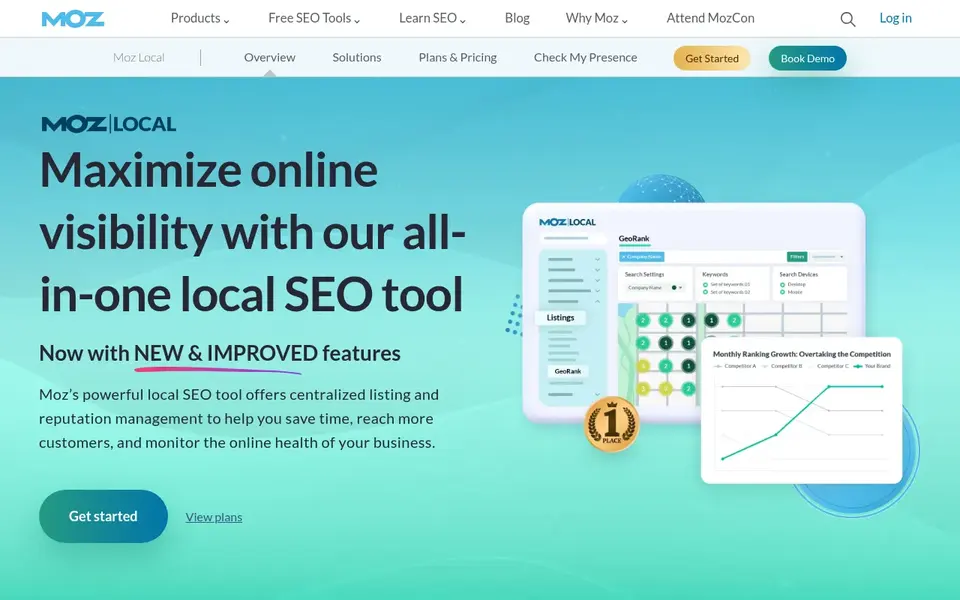
Moz Local is a listing management tool built around keeping your business details correct in the places that feed other directories. For a party rental company, that means your business name, address, phone, hours and category stay consistent when someone searches for "tent rental near me" or checks whether you deliver to their area.
The workflow is straightforward. You enter your business details once, the tool distributes and monitors them, and you review any inconsistencies it flags. That suits a rental business that has one showroom and a yard, because the main risk is old phone numbers or outdated hours showing up on directories during busy season.
The limits show up if you want heavy review automation or manage several warehouses under different addresses. In those cases, a multi-location tool fits better. For a single-location rental company that wants clean core listings, it is a sensible starting point.
- Focused on listing accuracy
- checks major data aggregators
- simple dashboard for one location
- Review requests are basic
- not built for multi-branch operations
GatherUp focuses on getting customers to leave reviews and on managing the feedback that comes back. Party rental work has a natural trigger point: the delivery, setup or pickup. That is when a customer has a clear opinion about whether the chairs arrived on time and the tent went up correctly.
You can set up requests to go out after a rental closes, route happy customers toward public review sites and catch unhappy ones privately first. That last part matters in rentals because a damaged item or a late delivery is often fixable before it becomes a public complaint.
Skip it if your main problem is wrong addresses and phone numbers across directories. GatherUp handles reviews, not citation cleanup, so pair it with a listing tool if both issues apply to you.
- Sends review requests by email and text
- collects feedback in one place
- supports multiple review sites
- Not a citation distribution tool
- needs clean listings elsewhere
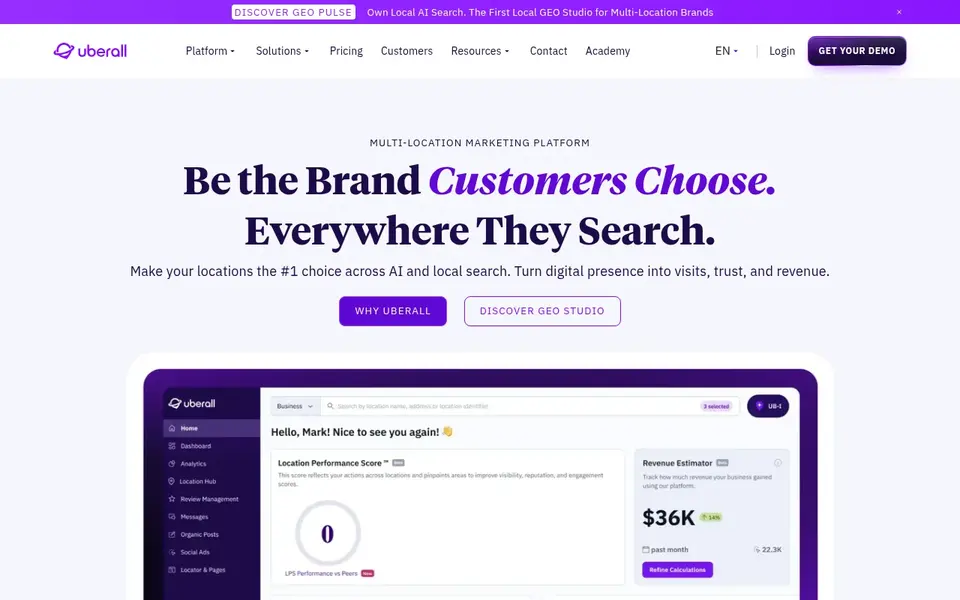
Uberall is built for businesses with several physical locations, which fits rental companies that run separate showrooms or warehouses in different towns. Each branch can carry its own address, phone, hours and delivery notes while you manage everything from one place.
For party rental work, that structure helps when customers search by town and expect the nearest branch. You can keep hours accurate per location, which matters when one showroom opens on Saturdays and another does not, and keep review responses tied to the right branch.
The trade-off is setup time and cost. A one-location rental company with a single phone number will find it heavier than needed. It earns its place when location count grows.
- Manages many locations from one account
- covers listings and reviews
- supports local pages
- Setup takes effort
- more than a single-location renter needs
Yext takes a central-control approach: you update your details in its dashboard and it pushes them to a network of directories and maps services. For a party rental company that changes seasonal hours or adds a new delivery area, that single update point saves repetitive editing.
The fit is strongest for businesses that want tight control over what appears in search results and directory pages, including descriptions of services like tent setup, table and chair rental, and inflatable rentals. You write it once and it flows outward.
The limit is dependence. Because listings are tied to the subscription, you should understand what happens to your data if you stop paying. Read the contract terms before committing, especially if you run a seasonal rental operation.
- One place to update business details
- wide network of directories
- structured data control
- Ongoing subscription required
- changes can revert if you leave
Synup is aimed at agencies and multi-location brands, so it fits an SEO consultant or marketing firm handling several party rental clients at once. Each client gets its own location profile, and you can track listings and reviews across accounts.
For rental businesses, the useful part is keeping seasonal hours and service categories correct across many directories without logging into each one. If a rental company adds a new showroom, you add a location and push the details out from one dashboard.
A single rental company managing its own listings will find it more than needed and should compare simpler tools first. It makes most sense when someone is managing several rental brands.
- Built for managing multiple client locations
- listing and review tools together
- reporting for clients
- Interface takes learning
- plans differ in what is included
Localo is a simpler local marketing tool that helps small businesses get the basics right, including Google Business Profile setup and local visibility checks. For a party rental company run by an owner who handles bookings, deliveries and marketing, that simplicity is the point.
You can use it to check how your business appears in local search, keep core details accurate and see where competitors show up for rental-related searches. It suits the early stage when the priority is getting found at all rather than managing a large directory footprint.
It will not replace a full citation network tool for a large operation. If you have one location and want a gentle start, it is a reasonable option to evaluate.
- Simple setup for one location
- helps with Google Business Profile basics
- approachable for non-technical owners
- Lighter than enterprise tools
- fewer advanced listing features
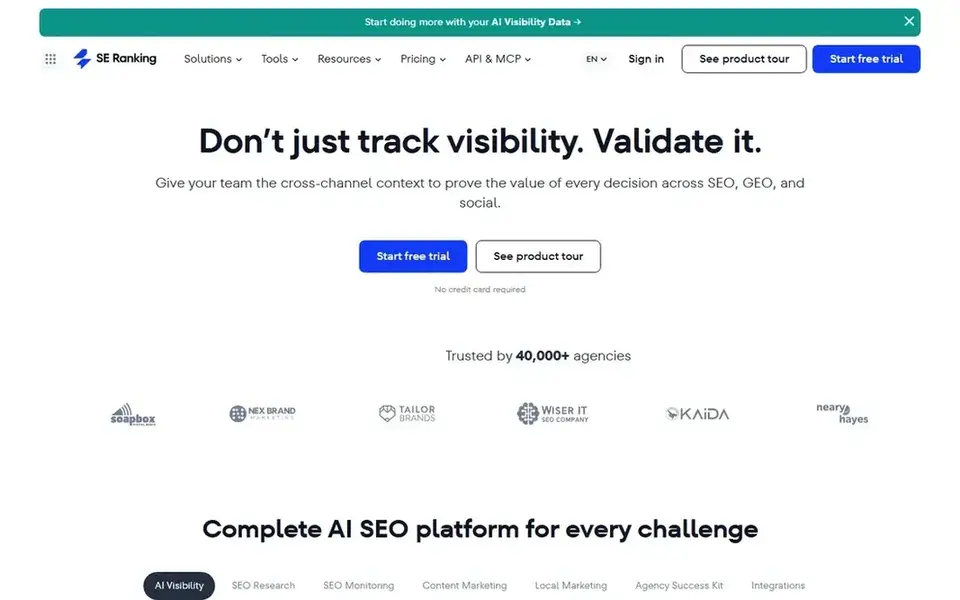
SE Ranking is a broader SEO platform with local rank tracking and listing management features. For a party rental company, the rank tracking side is useful because you can see where you appear for searches like "party rental [town]" and "chair rental near me" across different areas.
The listing component keeps business details consistent, but it is one part of a larger toolkit rather than the core product. That suits a rental business that also wants keyword tracking, site audits and competitor checks in the same account.
If you only need citation cleanup, a dedicated listing tool is more direct. If you want one dashboard for rankings and listings, it is worth a look.
- Tracks local rankings by location
- site audit tools included
- listing management as part of a wider suite
- Listing sync is secondary to rank tracking
- more features than a small renter needs
How I chose
I compared these tools using vendor documentation and public sources, not hands-on testing. I read what each vendor says about listing distribution, review handling, multi-location support and Google Business Profile integration, then matched those claims to the way party rental companies get customers: local map searches, directory lookups and phone calls from people planning events.
I also weighed limits. A single-location rental company with a yard and a showroom has different needs from a regional operator with several branches. Tools that assume agencies or large brands are noted as such, and tools that focus on reviews are separated from those that focus on citation accuracy. Where pricing is not published clearly, I say to check the vendor's site rather than guess.
What to check before you buy
- Confirm the tool syncs with Google Business Profile, since most rental customers start with a map search.
- Check whether it supports seasonal hours, because party rental demand and opening times change through the year.
- Ask how it handles multiple locations if you have separate showrooms or warehouses with different phone numbers.
- See whether review requests can be triggered after a delivery or pickup, which is the natural moment for rental feedback.
- Confirm what happens to your listing data if you cancel, especially with subscription-based control tools.
- Check that the tool follows Google's guidelines and does not suggest keyword-stuffed business names or fake reviews.
Frequently asked questions
What is listing management software?
It is software that keeps your business name, address, phone, hours and categories consistent across directories, maps services and review sites. For a party rental company, it reduces the chance that a customer calls an old number or drives to a showroom that has moved.
Do party rental companies need listing management software?
If you rely on local searches for tents, tables, chairs and inflatables, consistent listings help you appear correctly in map results. A single-location business can often start with Google Business Profile alone, then add software when details drift across directories.
Can I just use Google Business Profile instead?
Google Business Profile is essential, but it does not control every directory. Listing software helps keep the other places customers check in line with your Google profile, which matters when people compare several rental companies before calling.
How does review software fit a rental business?
Rental work ends with a delivery, setup or pickup, which is a clear moment to ask for feedback. Review tools send requests after the job closes and collect responses in one place, so you can respond to problems before they spread.
Are these tools suitable for a one-person rental operation?
Some are. Simpler tools with free trials suit small operators, while multi-location and agency tools are more than a one-person business needs. Start with the basics and add complexity only when location count or review volume grows.
Sources
See where you really rank - block by block
ProMapRanker scans Google Maps across a grid of your service area. Simple monthly plans from $19, white-label on every plan.
Start freeBrowse all guides
← Best Listing Management Software for Mattress Stores in 2026Best Listing Management Software for Welding Shops in 2026 →
 best listing management software for lawn care companies
Best Listing Management Software for Lawn Care Companies in 2026
A practical guide to the best listing management software for lawn care companies in 2026, covering GBP tools, citation builders and review platforms.
Read → best listing management software for land surveyors
Best Listing Management Software for Land Surveyors in 2026
A practical guide to the best listing management software for land surveyors in 2026, covering listings, reviews, GBP work and local rank tracking.
Read → best listing management software for hardwood floor refinishers
Best Listing Management Software for Hardwood Floor Refinishers (2026)
A practical guide to listing management software for hardwood floor refinishers, covering GBP sync, service areas, review requests and local rank checks.
Read → nap consistency local seo
NAP Consistency for Local SEO: The Cleanup Checklist
A practical NAP consistency checklist to audit and clean up your local listings for better rankings.
Read → how to track local rankings
How to Track Local Rankings: A Practical Guide for SMBs
A plain-English guide for small businesses on how to track local rankings without the agency jargon.
Read → local seo for lawyers
Local SEO for Lawyers: Ranking a Law Firm in the Map Pack
How law firms win local search: GBP tactics, reviews, and geo-grid tracking tuned for legal competition.
Read →More in Local SEO & Google Maps · All guides A to Z by date · Latest guides