 ProMapRanker
Best Listing Management Software for Mattress Stores in 2026
Direct answer
Moz Local is my top pick for most mattress stores because it fixes and syncs the core business data that decides whether your showroom appears in map results, and it has no free plan stated, so check its pricing page. If review volume matters more to you, look at GatherUp; if you run several showrooms or wholesale pickup points, look at Uberall.
I put this comparison together from vendor documentation and public sources rather than hands-on testing. Mattress retail has a specific shape: a showroom on a retail park, sometimes an outlet unit, often a warehouse where customers collect, and a sales cycle that runs from a quick map search to a delivery weeks later. I looked at which tools handle that shape without extra work.
Key takeaways
- Mattress buyers usually search by city plus "mattress store near me", so clean name, address and phone data across directories matters more than most other local work.
- A showroom, an outlet store and a warehouse pickup point should be treated as separate listings with separate addresses, not one listing with three locations crammed into the name.
- Review requests sent after delivery and after the first night's sleep tend to land better than a request at the till.
- Software only helps if the underlying data is correct, so decide on one canonical address format and one phone number before you sync anything.
- Google's guidelines do not allow keyword-stuffed business names, so keep the listing name as your real-world signage shows it.
Quick comparison
| Pick | Great for | Pricing starts at | Free tier | |
|---|---|---|---|---|
 Moz Local | Core citation cleanup for one showroom | See website | Not stated | Visit |
 Synup | Multi-store mattress chains and franchise groups | See website | Not stated | Visit |
 Localo | Small independent stores on a tight budget | See website | Not stated | Visit |
 GatherUp | Collecting reviews after delivery and setup | See website | Not stated | Visit |
 Uberall | Showrooms plus outlet and warehouse locations | See website | Not stated | Visit |
 Yext | Tight control over listing fields | See website | Not stated | Visit |
 CallRail | Tracking calls from map and directory listings | See website | Not stated | Visit |
The best listing management software for mattress stores compared
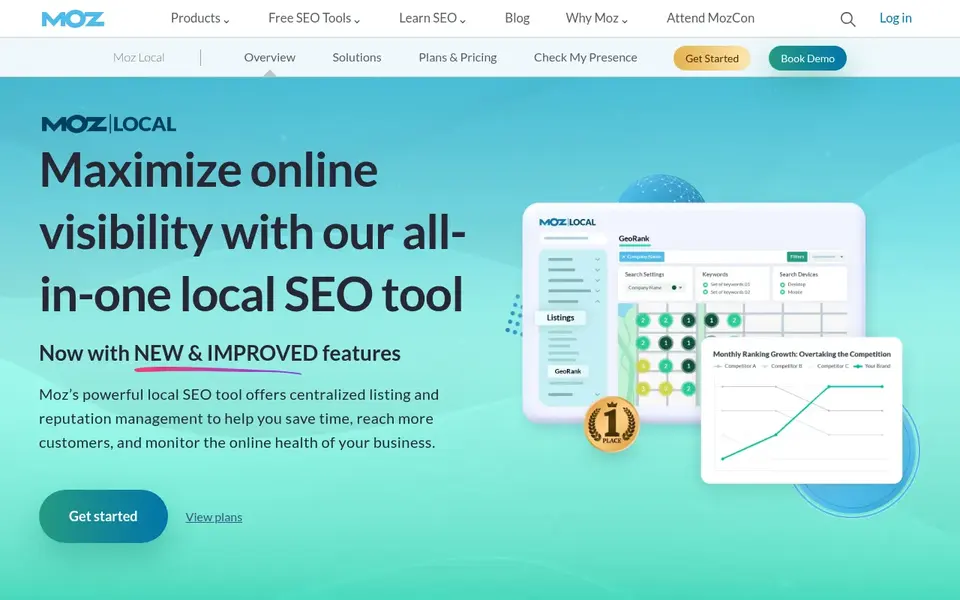
Moz Local is built around the data that decides whether a mattress showroom shows up when someone searches "mattress store" plus a suburb. It pushes your name, address, phone, hours and category to the major data aggregators and checks for inconsistent duplicates. For a single-store independent that has never done citation work, it is the least complicated place to start.
In a mattress store, the practical win is consistency around opening hours and holiday times. Shoppers often check whether you are open before driving to a retail park, and a stale listing that says you close at 5pm when you trade until 7pm costs walk-ins. Moz Local keeps those fields aligned across directories, and it flags duplicate listings that split your ranking signals.
The limit is scale. If you run four showrooms and an outlet, the workflow becomes manual and you will want a multi-location tool. Skip it if you need review generation built in.
- Strong focus on core business data accuracy
- clear duplicate detection
- simple dashboard for non-specialists
- Limited multi-location workflow depth
- fewer social and directory extras than enterprise suites
Synup fits mattress retailers that have grown past one showroom, including franchise groups where each store is owned separately but shares a brand. It centralises location data, monitors where listings drift, and lets a head office push updates to every store at once.
For mattress retail, that matters when you change a delivery radius, add a clearance outlet, or switch a store phone number to a central call centre. Instead of emailing five managers, you update once and the listings follow. The review module also helps because mattress purchases generate strong feelings about comfort, and those reviews sit next to your map result.
Small independents should skip it. The setup effort only pays off when you have several locations or a franchise network to keep aligned.
- Handles many locations from one dashboard
- listing accuracy monitoring
- review and social posting in the same place
- Setup requires a clear data owner
- more features than a single store needs
Localo is aimed at owners who handle their own local marketing between customers. It combines listing checks with local rank tracking and gives you a task list rather than a wall of data. For a mattress store with one or two locations, that is usually enough.
The useful part for mattress retail is seeing how you rank for searches like "king size mattress [city]" versus "mattress store near me". Those are different intents: one is research, one is a drive-to-store decision. Localo lets you watch both without hiring an agency, and it prompts you to fix gaps in your Google Business Profile as they appear.
It is not a deep citation engine. If your main problem is dozens of wrong phone numbers across directories, a dedicated listing tool will do more.
- Simple local ranking checks
- guided listing tasks
- plain interface for store owners
- Shallower directory coverage than larger suites
- less suited to franchise reporting
GatherUp handles the review side of local visibility. Mattress stores have a natural advantage here: the customer contact happens at purchase, then again at delivery, then again after a few weeks of sleeping on the product. That gives you several honest moments to ask for feedback.
The tool sends requests by email or text on a schedule you set, and it can route unhappy customers to private feedback first. That is not review gating as long as you never filter who is allowed to leave a public review; the compliant approach is to invite all customers and simply handle complaints internally. GatherUp supports that pattern.
Skip it if your listings themselves are a mess. Reviews help once people find you, but they do not fix a wrong address.
- Automated review request sequences
- feedback capture before reviews go public
- review monitoring in one inbox
- Not a full listing sync tool
- needs clean customer contact data
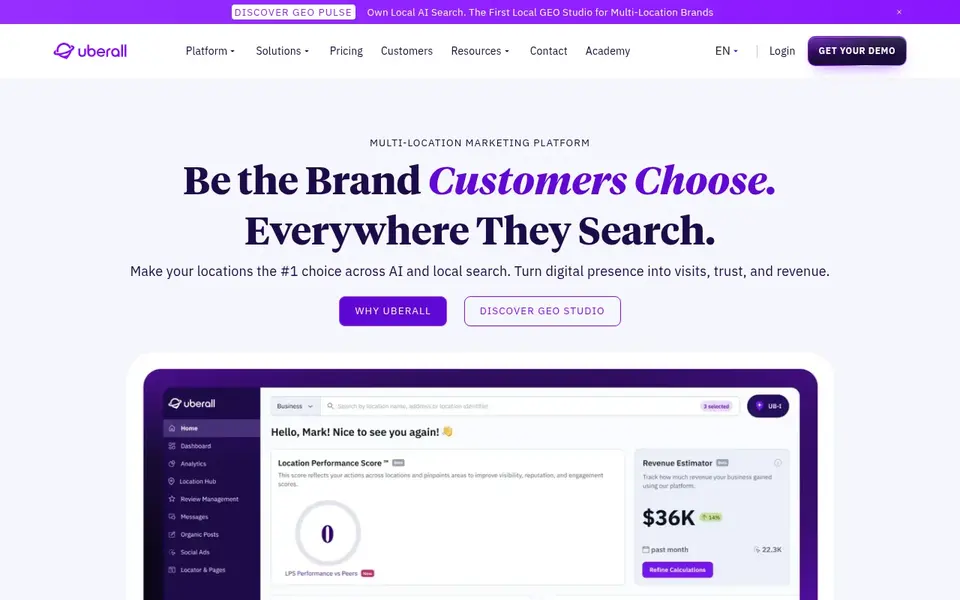
Uberall is an enterprise-style presence management platform. It suits mattress businesses that operate a main showroom, an outlet for ex-display stock, and a warehouse where customers collect online orders. Each of those needs its own listing with its own hours, and mixing them into one profile confuses both shoppers and Google.
The platform keeps those locations separate but managed together, and it gives each one a local landing page. For mattress retail, that means a page for the outlet with clearance stock language, and a separate page for the showroom with directions and parking notes.
A single independent store should not buy this. The value appears when location count and brand consistency become a real problem.
- Strong multi-location listing control
- local pages per store
- review and messaging features
- Priced and built for larger operations
- overkill for a single showroom

Yext takes a different approach: you store your business facts in one place and push them out through its network of publishers. For mattress stores, that structure helps with the details that vary by location, such as delivery zones, financing options, and whether a store carries a particular brand.
The trade-off is commitment. Because it is a subscription, you need someone responsible for keeping the data current, especially when a store changes its opening hours for a sale weekend or a holiday. If nobody owns it, the listings drift anyway.
Independent stores with one location and a small budget should look elsewhere first.
- Structured field control across many directories
- publisher network reach
- consistent data model
- Subscription model requires ongoing budget
- needs someone to own the data
CallRail is not a listing manager, but it answers a question mattress stores ask constantly: did that map listing actually produce a phone call? A shopper comparing mattresses often calls to check stock, delivery times or finance options before visiting.
By placing a tracking number on directory listings and local pages, you can see which sources generate calls and route them to the right salesperson. The caution is consistency: keep your main number as the primary one on Google Business Profile and use tracking numbers where the platform allows, so you do not create conflicting data.
If your problem is wrong addresses across directories, this is the wrong tool.
- Call tracking numbers per source
- call recording and routing
- ties calls to marketing channels
- Not a listing management tool
- adds a tracking number that must be handled carefully
How I chose
I compared these tools by reading vendor documentation, help centres and public product pages, and by checking what each one actually claims to do. I did not run hands-on tests, and I have not measured results for any mattress store. Where a vendor does not publish clear information about pricing or a free plan, I have said so rather than guessing.
The filter was fit for mattress retail specifically. That means handling multiple location types (showroom, outlet, warehouse), supporting review requests that match a long purchase cycle, and keeping core data accurate across directories. I also weighed limits honestly: a tool that is excellent for a five-store chain can be wasted money for a single showroom, and a review platform will not fix a duplicate listing. I left out tools I could not confirm are currently operating, and I did not include any vendor I could not verify an official site for.
What to check before you buy
- Confirm the tool can treat your showroom, outlet and warehouse pickup point as separate listings with separate hours.
- Check whether it syncs to the directories your customers actually use in your country, not just US-centric aggregators.
- Ask how it handles duplicate listings, since mattress stores that have moved premises often leave old addresses behind.
- Make sure the review request workflow can be triggered after delivery, not only at the point of sale.
- Check that listing names stay as your signage reads them, because keyword-stuffed names breach Google's guidelines.
- Confirm who on your team will own data updates, especially for holiday hours and seasonal sale events.
Frequently asked questions
Do mattress stores need listing management software at all?
If you have one showroom and your Google Business Profile is accurate, you can manage manually for a while. Software earns its place when you have multiple locations, duplicates across directories, or no one keeping hours and phone numbers current. The bigger your footprint, the faster manual checks break down.
How do I handle a showroom and a warehouse at the same address?
If customers can visit both and they serve different purposes, consider separate listings only when they have distinct signage, hours and customer-facing functions. Otherwise keep one listing and explain collection in the description. Never add keywords like "cheap mattresses" to the business name.
Can I ask customers for reviews after delivery?
Yes. Asking every customer for honest feedback is fine. What is not allowed is filtering out unhappy customers so only positive reviews appear, or offering incentives for positive reviews only. Send the request to everyone and handle complaints privately.
Does call tracking hurt my local rankings?
It can cause problems if it creates inconsistent phone numbers across the web. Keep your main number as the primary one on your Google Business Profile and use tracking numbers where the platform permits, so directory data stays consistent.
How often should I check my listings?
Monthly is a reasonable baseline for a single store, and weekly for multi-location groups during busy periods like holiday sales. Check hours, phone numbers, addresses and review responses. Seasonal changes and staff turnover are the usual causes of drift.
Sources
See where you really rank - block by block
ProMapRanker scans Google Maps across a grid of your service area. Simple monthly plans from $19, white-label on every plan.
Start freeBrowse all guides
← Best Listing Management Software for Lawn Care Companies in 2026Best Listing Management Software for Party Rental Companies (2026) →
 best listing management software for land surveyors
Best Listing Management Software for Land Surveyors in 2026
A practical guide to the best listing management software for land surveyors in 2026, covering listings, reviews, GBP work and local rank tracking.
Read → best listing management software for hardwood floor refinishers
Best Listing Management Software for Hardwood Floor Refinishers (2026)
A practical guide to listing management software for hardwood floor refinishers, covering GBP sync, service areas, review requests and local rank checks.
Read → best listing management software for coworking spaces
Best Listing Management Software for Coworking Spaces in 2026
A practical guide to listing management software for coworking spaces, covering location data, Google Business Profile sync, reviews and multi-site control.
Read → local seo for real estate agents
Local SEO for Real Estate Agents: Owning Your Local Market
A local SEO guide for real estate agents to dominate neighborhood searches with GBP and geo-grid tracking.
Read → free google business profile audit
Free GBP and Geo-Grid Audit: Check Your Local Visibility Instantly
Run a truly free GBP and geo-grid audit with no signup wall and see your real local visibility instantly.
Read → google my business optimization checklist
Google Business Profile Optimization Checklist (2026)
The definitive Google Business Profile optimization checklist for 2026 covering every field, signal, and best practice.
Read →More in Local SEO & Google Maps · All guides A to Z by date · Latest guides