 ProMapRanker
2026 Guide to the Best LLM API for Production Apps

Low latency open model inference · Pricing starts at: $0.15 per 1M input tokens and $0.60 per 1M output tokens (GPT-OSS 120B)
Direct answer
Start with Groq if you need low latency open model inference. Listed starting prices: Groq from $0.15 per 1M input tokens and $0.60 per 1M output tokens (GPT-OSS 120B), DeepSeek from $0.30 per 1M input tokens and $1.20 per 1M output tokens (V4.1 Flash, peak) and Cohere from $2.50 per 1M input tokens and $10 per 1M output tokens (Command R+ 08-2024). DeepSeek is the stronger choice for high volume chat at low cost, while Cohere suits retrieval chat over company documents. The remaining 3 options are covered below with prices and limits.
If you are comparing LLM API for production apps, this page covers 6 tools in one place: what each is best for, what it costs to start, whether it has a free plan, and the main limit to know about.
Key takeaways
- Top of the list is Groq, which targets low latency open model inference.
- OpenAI is the one to check for general production apps and agents.
- DeepSeek comes with a trade-off: peak hours bill at double the off peak rate.
- Only 2 of the 6 tools have a free plan (Groq, Cohere), so check the caps.
Quick comparison
| Pick | Great for | Pricing starts at | Free tier | |
|---|---|---|---|---|
| Groq | Low latency open model inference | $0.15 per 1M input tokens and $0.60 per 1M output tokens (GPT-OSS 120B) | Yes | Visit |
 DeepSeek | High volume chat at low cost | $0.30 per 1M input tokens and $1.20 per 1M output tokens (V4.1 Flash, peak) | No | Visit |
 Cohere | Retrieval chat over company documents | $2.50 per 1M input tokens and $10 per 1M output tokens (Command R+ 08-2024) | Yes | Visit |
 Google Gemini | Long documents and Google Cloud apps | $2 per 1M input tokens and $10 per 1M output tokens (Gemini 4 Argon, through 30 Nov 2026) | No | Visit |
 Mistral AI | European hosted models and open weights | $0.50 per 1M input tokens and $1.50 per 1M output tokens (Mistral Large 3) | No | Visit |
 OpenAI | General production apps and agents | $1.25 per 1M input tokens and $10 per 1M output tokens (GPT-5) | No | Visit |
LLM API for Production Apps, one by one
Where Groq fits: low latency open model inference. The Batch API cuts rates by 50 percent, prompt caching cuts cached input by 50 percent.
The two can stack for an effective rate near 25 percent of the on demand rate. Groq pricing: $0.15 per 1M input tokens and $0.60 per 1M output tokens. A free plan is available with Groq.
Watch-outs: no frontier proprietary model in the catalog.
- GPT-OSS 120B at $0.15 per 1M input tokens
- Batch API and prompt caching each cut rates by 50 percent
- Open model range is smaller than Together AI
DeepSeek is designed for high volume chat at low cost. Peak hours are 01:00 to 04:00 and 06:00 to 10:00 UTC on weekdays, and every other hour bills at half the peak rate. Choose DeepSeek when volume is high and cost per answer matters, for chat, extraction, and coding help.
Limits to weigh: Peak hours bill at double the off peak rate.
DeepSeek V4.1 Flash costs $0.30 per 1M input tokens and $1.20 per 1M output tokens at peak, and $0.15 and $0.60 off peak. As for the details, cached input is $0.006 per 1M tokens at peak, 50 times less than a cache miss. DeepSeek pricing: $0.30 per 1M input tokens and $1.20 per 1M output tokens. DeepSeek has no free plan.
- V4.1 Flash at $0.30 per 1M input tokens at peak
- Off peak rates are half the peak rates
- V4 Pro costs $1.32 per 1M input tokens at peak
Cohere is a good fit for retrieval chat over company documents. Choose Cohere when your app answers from your own documents and needs grounded answers with sources.
Honest limits: Command R+ output at $10 per 1M tokens.
Starting cost for Cohere: $2.50 per 1M input tokens and $10 per 1M output tokens. Cohere includes a free tier.
- Command R+ at $2.50 per 1M input tokens
- Embed and Rerank models for retrieval in the same account
- Newer Command A models have no published per token price
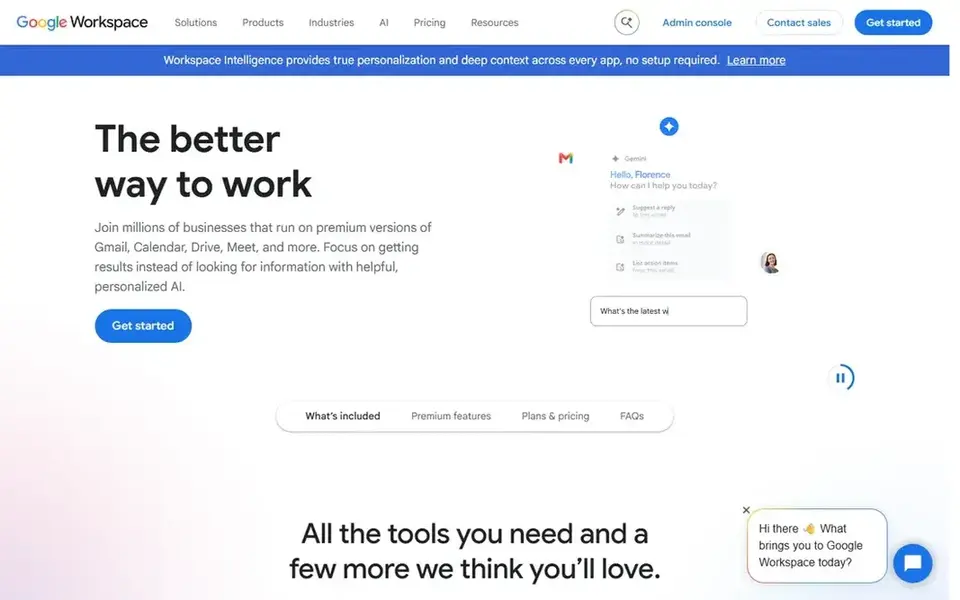
Where Google Gemini fits: long documents and Google Cloud apps. Google Gemini 4 Argon is the current efficient frontier model on the Gemini Developer API, at $2 per 1M input tokens and $10 per 1M output tokens through 30 November 2026. From 1 December 2026 the same model costs $4 and $20, a dated rise printed on the official pricing page.
Points against: thinking tokens bill as output.
More specifically, older Gemini 2.5 Flash costs $0.30 per 1M input tokens and $2.50 per 1M output tokens. Beyond that, choose Gemini when your app runs on Google Cloud, needs long context, or needs native multimodal input in one request. On cost, Google Gemini starts like this: $2 per 1M input tokens and $10 per 1M output tokens. No free plan comes with Google Gemini.
- Batch API at half the standard token rates
- Gemini 4 Argon at $2 per 1M input tokens through 30 Nov 2026
- Price rises to $4 per 1M input tokens and $20 per 1M output tokens from 1 Dec 2026
Mistral AI is aimed squarely at European hosted models and open weights. That is a 75 percent cut from Mistral Large 2, which cost $2 and $6.
Points against: newer Mistral Large 4 costs $0.70 per 1M input tokens.
So teams that priced Mistral per year ago should recheck the current page. The Batch API halves the standard rates, and cached input can cost up to 90 percent less than fresh input. The starting price for Mistral AI: $0.50 per 1M input tokens and $1.50 per 1M output tokens. There is no free plan with Mistral AI.
- Mistral Large 3 at $0.50 per 1M input tokens
- Batch API at half the standard token rates
- No free plan for API use
OpenAI makes the most sense for general production apps and agents. The standard rate is $1.25 per 1M input tokens and $10 per 1M output tokens, and cached input drops to $0.125 per 1M tokens.
On cost, OpenAI starts like this: $1.25 per 1M input tokens and $10 per 1M output tokens. OpenAI does not include a free plan.
Where it falls short: no free plan for API use.
- Batch API at half the standard token rates
- GPT-5 at $1.25 per 1M input tokens
- Output at $10 per 1M tokens is 8 times the input rate
Selection criteria
We compared the tools on published pricing, free plan or trial availability, feature coverage for LLM API for production apps, and the limits each vendor documents. Figures are shown as the vendors publish them. Billing terms, seat minimums and add-ons can change the real cost. The sequence is a judgement call: typical use case first, then pricing transparency, then free access. Use the profiles to check fit.
Questions to settle before buying
- Check the current price for Groq, OpenAI and the rest on each vendor page, since seats and billing terms change the total.
- Look at free plan limits closely: Groq and Cohere have one, and the caps decide whether it is usable for real work.
- Before choosing Groq, weigh its main limit: Llama 3.3 70B moved to enterprise contact sales in Oct 2026.
- Read the plan comparison for Mistral AI carefully; key features often start on a higher tier.
- Price DeepSeek for your actual team size; headline prices rarely include add-ons or overage.
Frequently asked questions
Can I try these options before paying?
Often, yes. Groq and Cohere have a free plan. Use your own data and a real task during the test, and check what the free tier or trial limits before you rely on it.
Why did Groq Llama 3.3 70B change price?
Groq moved Llama 3.3 70B and Llama 3.1 8B to enterprise contact sales in October 2026 at no cost and Developer accounts, after listing Llama 3.3 70B at $0.59 and $0.79 earlier in the year.
How much does Gemini 4 Argon cost from December 2026?
Gemini 4 Argon costs $2 per 1M input tokens and $10 per 1M output tokens through 30 November 2026, then $4 per 1M input tokens and $20 per 1M output tokens from 1 December 2026. The Batch API halves those rates, and cached input rises from $0.10 to $0.20 per 1M tokens on the same date.
Is Groq the right pick for everyone comparing LLM API for production apps?
No single tool suits every team. Groq comes first because it fits low latency open model inference, while DeepSeek suits high volume chat at low cost and Cohere suits retrieval chat over company documents. Match the tool to your own size, budget and workflow before deciding.
Which options for LLM API for production apps have a free plan?
On this list, Groq and Cohere include a free plan. Caps on seats, usage or features are common, so test the free plan against your real workload.
Which LLM API is a good match for long coding agents?
Start with Groq if you need low latency open model inference. DeepSeek is the better match for high volume chat at low cost, and Cohere for retrieval chat over company documents. The best choice depends on budget, team size and workflow.
Sources
See where you really rank - block by block
ProMapRanker scans Google Maps across a grid of your service area. Simple monthly plans from $19, white-label on every plan.
Start freeBrowse all guides
← Feature Stores for Machine Learning in 2026: Top 6 ComparedBest AI Genesys AppFoundry Marketplace Software (2026) →
 best amazon multi channel fulfillment tools
6 Best Amazon Multi Channel Fulfillment Tools for 2026
Weighing the best Amazon multi channel fulfillment tools? We lined up 6 products by cost, free access and fit. Prices and drawbacks included. Decide faster.
Read → best ai document processing tools
AI Document Processing Tools in 2026: Top 6 Compared
Best AI document processing tools in 2026: 6 contenders with entry costs and free tiers. Every pick gets a straight assessment. Quick comparison inside.
Read → best ai product description generators
Best AI Product Description Generators (2026)
Searching for the best AI product description generators? Here are 6 options with prices and free plans. Plus the drawbacks of each tool. Plain facts.
Read → best home inventory app
Best Home Inventory App in 2026
Looking for the best home inventory app? We compare 8 apps for photos, rooms, values and insurance exports, with free plans, pricing notes and backup tips.
Read → shopify plus alternatives
Shopify Plus Alternatives in 2026
Compare the best Shopify Plus alternatives for 2026, with BigCommerce, WooCommerce, Adobe Commerce, and more for growing and enterprise online stores today.
Read → wix alternatives
Wix Alternatives in 2026: 8 Products Compared
Compare the best Wix alternatives in 2026 for portfolios, stores and blogs, with current prices, free plans and the right builder by site type in this guide.
Read →More in Ecommerce & Retail · All guides A to Z by date · Latest guides