 ProMapRanker
Shopify Plus Alternatives in 2026

Key takeaways
- BigCommerce is the closest hosted alternative for mid-market and B2B stores that want strong built-in features.
- WooCommerce and Adobe Commerce suit teams that want full control and have developer support.
- Wix and Squarespace fit smaller stores that value simple setup and design over enterprise depth.
- Shopify Plus itself is not listed here, since this article covers alternatives only.
Quick comparison
| Pick | Great for | Pricing starts at | Free tier | |
|---|---|---|---|---|
 BigCommerce | Hosted mid-market and B2B | $39 per month | Free trial | Visit |
 WooCommerce | WordPress stores with full control | Free | Yes | Visit |
 Adobe Commerce | Complex enterprise catalogs | See website | No | Visit |
 Wix | Small design-led stores | $29 per month | Free trial | Visit |
 Squarespace | Creator and boutique stores | $29 per month | Free trial | Visit |
 Salesforce Commerce Cloud | Deep Salesforce companies | See website | No | Visit |
 commercetools | Headless enterprise commerce | See website | No | Visit |
 Ecwid | Adding a store to an existing site | See website | Yes | Visit |
The best Shopify Plus alternatives
Shopify Plus works well for many high-volume brands, but it is not the only enterprise route. The best Shopify alternatives below cover hosted platforms, open-source systems, and headless commerce, so you can match the platform to your team, catalog, and growth plan. None of these is Shopify Plus itself, since this list is for teams looking elsewhere.

BigCommerce is the most direct hosted alternative for brands moving up from a basic store. It includes many features other platforms sell as apps, such as B2B pricing, multi-channel selling, and advanced catalog tools. That built-in depth helps mid-market stores keep app costs down as they grow.
The trade-off is ecosystem size. BigCommerce has a solid app store, but it is smaller than Shopify's, so check for the specific integrations you rely on. Enterprise plans are quote-based, so ask for total cost including support and any payment provider fees.
- Strong built-in B2B and multi-channel tools
- No added transaction fees on many plans
- Hosted and managed
- App ecosystem is smaller than Shopify
- Enterprise pricing is quote-based
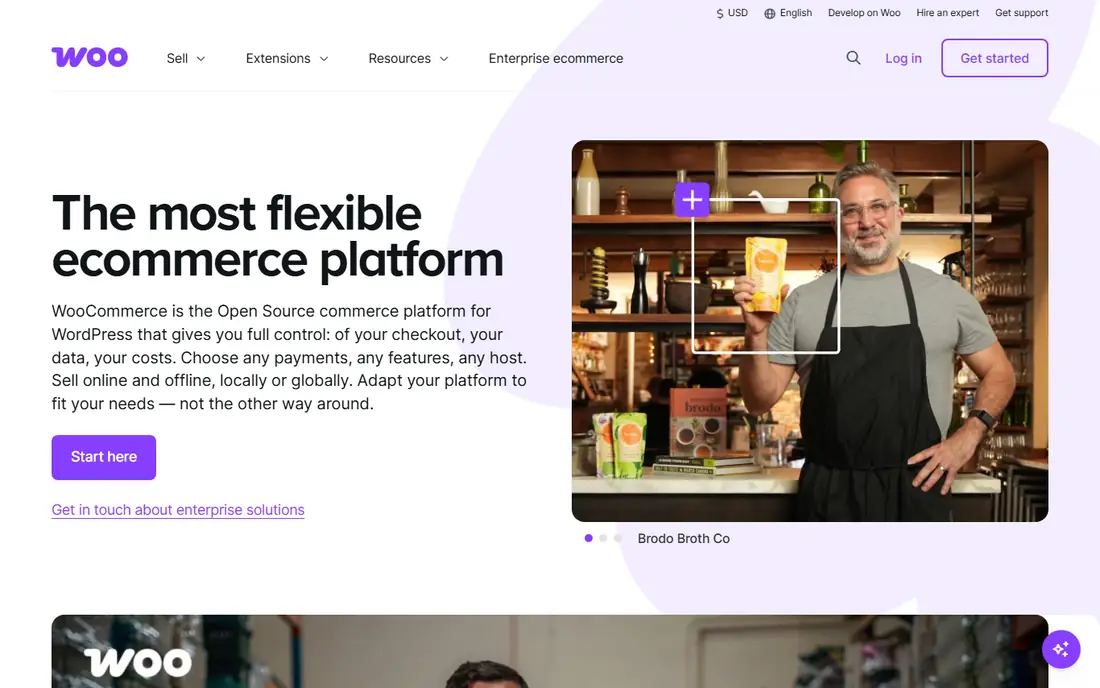
WooCommerce turns a WordPress site into a full store, with no platform lock-in on code or data. Content-driven brands love it because blog, SEO, and store live in one system, and the extension library covers payments, shipping, subscriptions, and more. For teams with developer support, it offers control no hosted platform can match.
That control is also the cost. You pay for hosting, manage updates and security, and budget for premium extensions and maintenance. If your team has no developer time, WooCommerce can become a burden, but for WordPress-native brands it remains a strong, flexible alternative.
- Free core plugin
- Full code and data control
- Huge WordPress extension library
- Hosting, security, and updates are your job
- Costs grow with extensions
Adobe Commerce, formerly Magento, suits large companies with complex catalogs, many storefronts, and heavy B2B needs. It can be customized to fit almost any pricing, catalog, or checkout rule, and its agency ecosystem has deep enterprise experience. Companies that outgrow hosted platforms often land here.
The cost is serious. License fees start in the tens of thousands per year, and implementation can cost far more, so Adobe Commerce only makes sense for large teams with dedicated developers. Smaller brands should not choose it for features they could get from BigCommerce or WooCommerce at a fraction of the price.
- Deep customization
- Multi-store and B2B strength
- Mature agency ecosystem
- High license and implementation costs
- Needs a dedicated team
Wix suits small stores that want a beautiful site fast without developer help. Its editor gives design freedom, its commerce tools cover products, payments, and shipping, and hosting is included. For a boutique or creator store with a modest catalog, Wix can launch in days.
Larger stores will hit limits. Complex B2B pricing, huge catalogs, and deep custom workflows are not Wix's focus, and migration later can be work. If your store is small and design-led, Wix is a practical alternative, but plan for growth before you commit.
- Easy drag-and-drop design
- Hosted and managed
- Good templates
- Less suited to very large catalogs
- Enterprise features are limited
Squarespace fits creators and boutique brands that want a polished store without managing apps or code. Templates look strong out of the box, commerce setup is simple, and content pages sit naturally beside products. That combination suits small brands where design and story matter as much as checkout.
The limits appear at scale. Squarespace has fewer commerce extensions and less B2B depth than BigCommerce or Adobe Commerce, so growing stores should check integration needs early. For a small, design-led store, it is a clean and reliable alternative.
- Polished templates
- Simple commerce setup
- Good for content and store together
- Fewer commerce apps than larger platforms
- Limited enterprise depth
Salesforce Commerce Cloud suits large companies already invested in Salesforce for sales, service, and marketing. Commerce, customer data, and personalization can work together in one system, which helps global brands with complex omnichannel needs. Its B2C and B2B editions cover both direct sales and business buyers.
Pricing is quote-based and often tied to gross merchandise value, so total cost can be high. It also needs enterprise IT support to run well. If your company is not already deep in Salesforce, BigCommerce or Adobe Commerce will usually be a simpler and cheaper enterprise path.
- Tight Salesforce integration
- Personalization and omnichannel tools
- Enterprise scale
- Quote-based pricing tied to sales volume
- Needs enterprise IT support
commercetools is a headless, API-first platform for large companies that want to build a custom storefront and connect best-of-breed tools. It separates the commerce engine from the front end, so teams can design unique shopping experiences across web, mobile, and other channels. That flexibility suits enterprises with dedicated engineering teams.
It is not a plug-and-play store. You need engineers to build, host, and maintain the storefront, and implementation costs are high. If your team cannot staff that work, a hosted platform will serve you better, but for composable enterprise commerce, commercetools is a leading choice.
- API-first and headless flexibility
- Composable architecture
- Global enterprise scale
- Needs a strong engineering team
- You build and maintain your own storefront
Ecwid, from Lightspeed, suits businesses that already have a website and want to add a store without rebuilding it. You can embed products on WordPress, Wix, Squarespace, or a custom site, and sell across social and marketplace channels from one dashboard. A free plan lets small sellers test the idea before paying.
It is less suited to a large standalone store that needs deep catalog, B2B, or custom checkout work. For a blog, creator site, or small business that wants commerce as an add-on, Ecwid offers a low-friction path that other platforms on this list do not.
- Embeds a store in an existing site
- Free plan to start
- Multi-channel selling
- Less depth for large standalone stores
- Higher tiers needed for more products
How we picked these
We compared official pricing pages, feature descriptions, and public reviews, and we favored platforms that are live and supported in October 2026 as real alternatives to Shopify Plus. We looked for catalog depth, B2B tools, hosting model, app ecosystem, and realistic team requirements. We did not claim hands-on testing, and we left Shopify Plus itself off the list, since this article is about alternatives only.
What to check before you buy
Start with your catalog and team. Count products, variants, storefronts, and B2B customers, then check whether each platform handles that scale without custom work. A platform that looks cheap at ten products can become costly at ten thousand, especially if you need custom pricing or complex shipping rules.
Next, compare total cost, not just the monthly plan. Add hosting, apps, extensions, payment fees, implementation, and ongoing developer time. Hosted platforms bundle more of that cost, while open-source and headless platforms shift it to your team. Ask each vendor for a total first year estimate based on your actual sales volume and catalog size.
Finally, test migration. Export a sample of products, customers, and orders, and check how each platform handles redirects, SEO URLs, and order history. A smooth migration protects search rankings and repeat customers, while a rough one can cost more than any platform saving.
Frequently asked questions
What are the best alternatives to Shopify?
BigCommerce, WooCommerce, and Adobe Commerce lead as full alternatives, with Wix and Squarespace for smaller stores and commercetools for headless enterprise builds. The best choice depends on your catalog size, B2B needs, and whether you have developer support.
What is the best Shopify Plus alternative for B2B?
BigCommerce and Adobe Commerce lead for B2B, with built-in B2B pricing, catalog, and account tools. Salesforce Commerce Cloud also suits B2B companies already invested in Salesforce, though its pricing and setup are enterprise-level.
Is WooCommerce a good Shopify Plus alternative?
Yes, for WordPress-native brands with developer support. WooCommerce gives full control over code, data, and SEO, with a free core plugin, but you must manage hosting, security, updates, and extensions yourself.
How much do Shopify Plus alternatives cost?
Entry prices range from free for WooCommerce core and Ecwid free plans to $29 to $39 per month for Wix, Squarespace, and BigCommerce self-serve tiers. Enterprise platforms such as Adobe Commerce, Salesforce Commerce Cloud, and commercetools are quote-based and cost far more.
Should I choose a hosted or open-source alternative?
Choose hosted if you want managed hosting, security, and updates handled for you, as with BigCommerce, Wix, or Squarespace. Choose open-source or headless if you need full control and have developer support, as with WooCommerce, Adobe Commerce, or commercetools.
Sources
See where you really rank - block by block
ProMapRanker scans Google Maps across a grid of your service area. Simple monthly plans from $19, white-label on every plan.
Start freeKeep reading
 zscaler alternatives
Best Zscaler Alternatives in 2026
Looking for zscaler alternatives? We compare 9 SASE and zero trust platforms on architecture, data protection, pricing, and fit for your network and team.
Read → zapier alternatives free
Best Zapier Alternatives Free in 2026
Nine automation tools for zapier alternatives free in 2026, all with genuinely free tiers, plus free plan limits, starting prices and upgrade paths explained.
Read → which platform is best for online reputation
Which Platform Is Best for Online Reputation in 2026
Wondering which platform is best for online reputation? We compare 8 review, listing, and response tools for small and multi-location businesses and agencies.
Read →