 ProMapRanker
Best Listing Management Software for HVAC Companies in 2026

All-in-one listings, citations and reviews · Pricing starts at: See website
Direct answer
My top pick for HVAC companies is BrightLocal because it combines listing distribution, citation audits, review tools and local rank tracking in one dashboard, which matches how HVAC businesses actually get found. It has no free plan stated, so check its pricing page for current terms. If reviews and lead follow-up matter more than citations, look at Podium; if you run many service areas and need location data at scale, look at Uberall.
I compared these tools using vendor documentation and public sources, not hands-on testing. Each one is a real product with an official site, and I focused on how well it fits the way HVAC contractors get discovered: by city, by service, and by review score.
Key takeaways
- HVAC buyers search by city and service, so consistent name, address and phone data across directories matters more than almost any other listing task.
- Service-area businesses need software that handles multiple towns and zip codes, not just one storefront address.
- Review requests and responses belong in the same workflow as listings, because most HVAC leads check reviews before they call.
- Google Business Profile is the most important listing, but secondary directories still feed the map results customers see.
- Pick a tool that fits your office setup: a single-location contractor has different needs than a franchise with several branches.
Quick comparison
| Pick | Great for | Pricing starts at | Free tier | |
|---|---|---|---|---|
| BrightLocal | All-in-one listings, citations and reviews | See website | Not stated | Visit |
 Podium | Review requests and lead messaging | See website | Not stated | Visit |
 Uberall | Multi-location HVAC and franchise listings | See website | Not stated | Visit |
 Yext | Central control of listing data | See website | Not stated | Visit |
 Whitespark | Citation building and local rank tracking | See website | Not stated | Visit |
 Local Falcon | Map grid rank tracking across service areas | See website | Not stated | Visit |
 Moz Local | Simple listings cleanup for small offices | See website | Not stated | Visit |
The best listing management software for HVAC companies compared
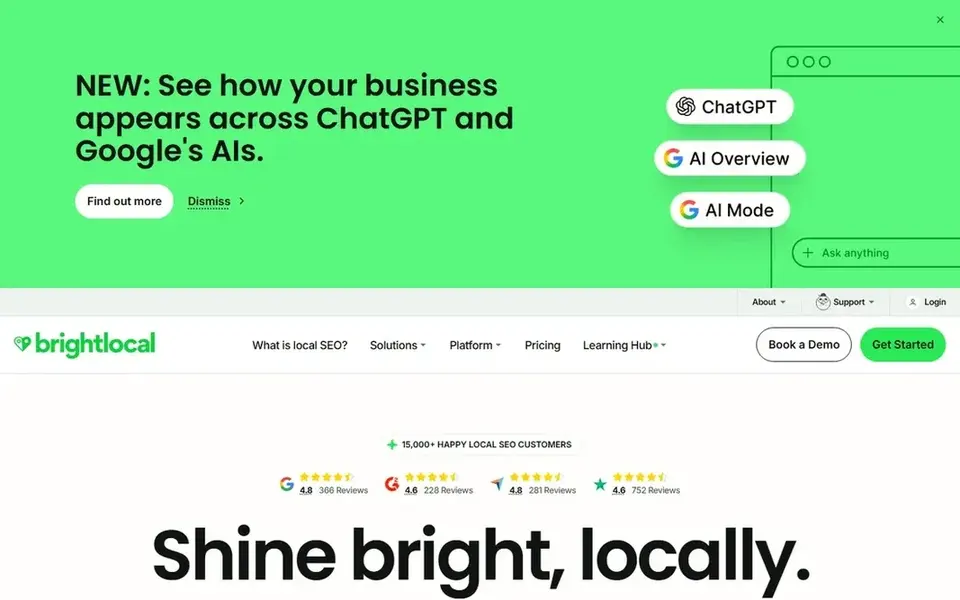
BrightLocal is built for small and mid-sized local businesses, and HVAC contractors fit that profile well. You can audit your existing citations, fix inconsistent names and phone numbers, and push your business data to major directories from one dashboard. For an HVAC company with one office and a wide service radius, that covers the basics without adding another tool.
The workflow that matters most for HVAC is the citation audit. You enter your business details once, and the tool checks where your name, address and phone number differ across directories. It also tracks local rankings for terms like "AC repair" plus your city, so you can see whether listing fixes move the needle. Review monitoring sits alongside, which helps you catch new Google reviews.
The limits show up on the citation side. The directory network is solid but not as broad as enterprise platforms, and some features sit behind higher tiers. Skip it if you run dozens of locations and need bulk location management.
- Citation audit and distribution in one place
- review monitoring and requests
- local rank tracking by keyword and town
- Citation network is smaller than enterprise tools
- some features need a paid tier
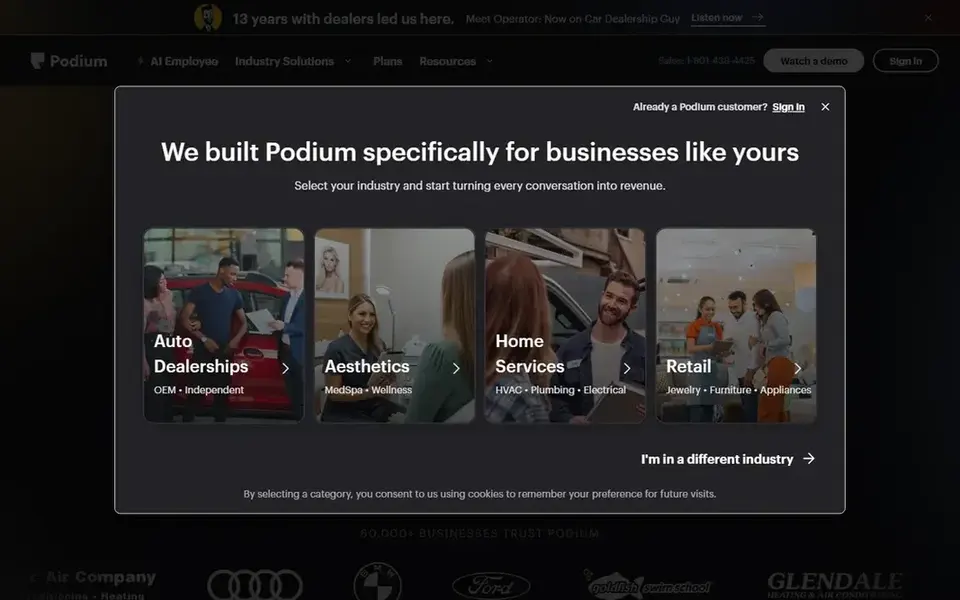
Podium is a messaging and review platform, not a full listing manager. HVAC companies use it to text customers after a service call and ask for a review, then manage replies in a shared inbox. If your main gap is a thin review profile rather than messy citations, this is a strong fit.
For HVAC work, the timing matters. A customer who just had a furnace repaired is more likely to leave a review than one who is browsing. Podium lets your office staff send a request while the job is fresh, and the inbox keeps conversations in one place. That feeds your Google Business Profile review count, which affects how often you show in the map pack.
The limit is listings. Podium does not replace a citation tool, and the pricing model suits businesses with a steady stream of jobs. Skip it if you mainly need directory cleanup.
- Text-based review requests
- inbox for customer conversations
- review monitoring in one place
- Listing distribution is limited
- pricing suits businesses with steady lead flow
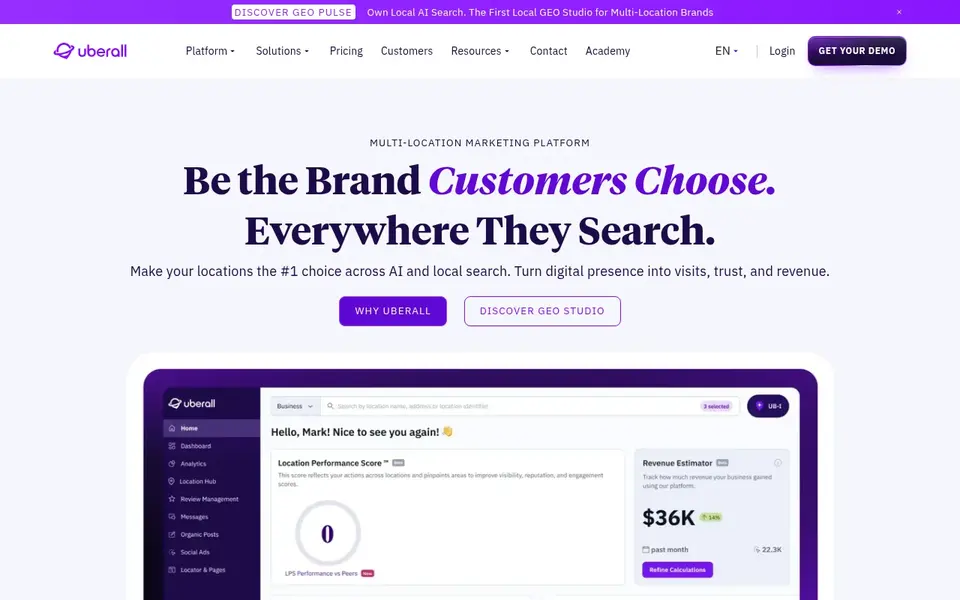
Uberall is a location management platform aimed at businesses with several branches or a franchise network. An HVAC company with offices in multiple cities can keep each location's hours, phone number and service details consistent, which is hard to do by hand.
The service-area angle is where it helps HVAC most. Each branch can carry its own address and contact details while the parent brand keeps a single source of truth. Listings sync to directories, and review data rolls up so you can compare locations. For a regional contractor expanding into new towns, that structure saves a lot of manual work.
The downside is scale. Uberall is designed for bigger operations, and a one-truck shop will find it heavier than needed.
- Handles many locations from one dashboard
- listing sync across directories
- review and location data in one place
- Built for larger operations
- setup takes planning

Yext takes a different approach: you store your business facts in one place and push them out to directories and platforms. For an HVAC company that changes hours seasonally, or adds emergency service details, that central control reduces the chance of outdated info showing up in search results.
The HVAC fit is strongest for businesses that want to manage many data points, like service categories, holiday hours and multiple phone numbers. You update once and the changes flow out. That is useful when you run promotions or switch to 24-hour emergency coverage in summer.
The main limit is the subscription model. If you stop paying, the synced listings can revert, so factor that into your budget. Small one-office contractors may not need this level of control.
- One source of truth for business data
- wide directory reach
- structured data for many platforms
- Listings depend on an active subscription
- can be more than a small shop needs
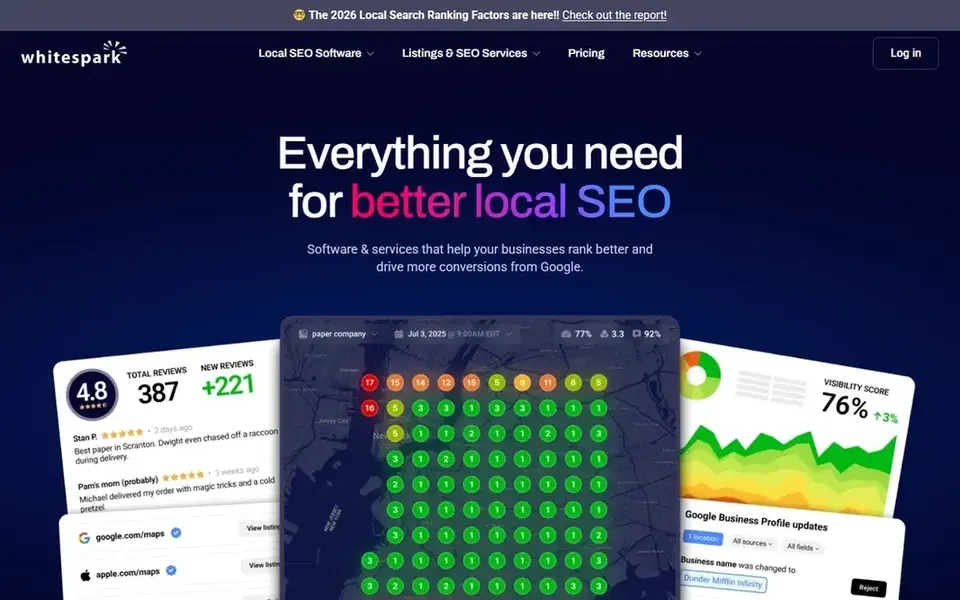
Whitespark is known for citation work and local search research. HVAC contractors in competitive metro areas can use its citation finder to spot directories that matter for their city, then build or fix listings there. It also offers local rank tracking that shows where you appear across a map grid.
That grid view is useful for HVAC because your customers are spread across towns. Seeing that you rank well near your office but poorly in a suburb tells you where to focus listing and review efforts. The citation building service can be handled by the team if you would rather not do it yourself.
The limit is that it is more of a toolkit than a single dashboard. If you want one screen for listings, reviews and rankings, another tool may fit better.
- Strong citation research and building
- local rank tracking by grid
- useful for competitive markets
- Not a single all-in-one dashboard
- some services are done for you
Local Falcon focuses on one job: showing how your business ranks in a grid of points around a location. For HVAC companies, that answers a practical question, which is how far your map visibility reaches into the towns you serve.
You can run scans on a schedule and compare results after listing or review changes. If you serve a wide radius, the grid makes gaps obvious, like a suburb where you never appear. That tells you where to build citations or ask for more reviews.
The limit is clear: it tracks rankings but does not fix listings. Pair it with a citation tool rather than using it alone.
- Grid-based map rank reports
- shows coverage across a service area
- useful for tracking changes over time
- Does not manage listings
- needs another tool for citation fixes
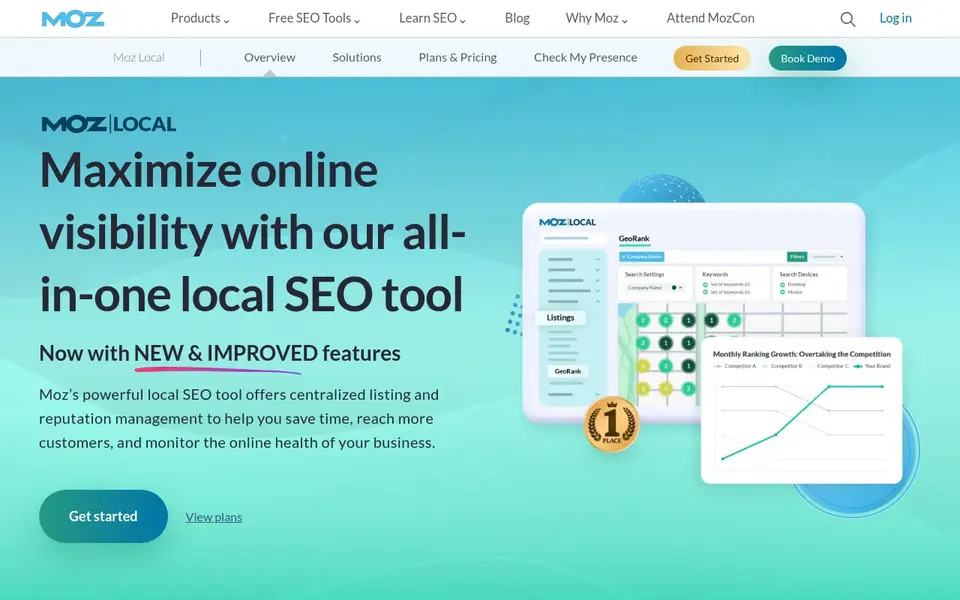
Moz Local is a listings tool from a well-known SEO brand. It suits an HVAC company with one or two offices that wants to clean up directory data and keep it consistent without a complex setup.
You enter your business details, and the tool checks and updates major directories. For a contractor whose phone number changed or whose address was listed differently on several sites, that cleanup is the main win. It pairs well with Moz's broader SEO tools if you already use them.
The limits are on the review and multi-location side. If reviews are your priority or you run many branches, a dedicated tool will do more.
- Straightforward listings management
- distribution to major directories
- fits small teams
- Lighter review features
- less depth for large multi-location setups
How I chose
I built this list from vendor documentation and public sources, not from hands-on testing. I looked at what each product says it does, which features apply to service-area businesses, and where each tool stops. HVAC companies have a specific pattern: customers search by town and service, they check reviews, and they call. Tools that support that pattern ranked higher.
I also weighed limits. A tool that manages listings but ignores reviews leaves a gap, and a tool built for franchises is overkill for a one-office contractor. The goal was a spread of options, from all-in-one platforms to focused tools, so you can match the software to your office setup and budget rather than the other way around.
What to check before you buy
- Confirm the tool supports service-area businesses, not just storefront addresses, so your towns and zip codes are handled.
- Check how many locations and directories are included in the base plan before you commit.
- Ask whether listings stay live if you cancel, since some platforms revert data when the subscription ends.
- Make sure review requests and responses are included or available as an add-on, because reviews drive HVAC calls.
- Test whether local rank tracking covers your actual service towns, not just your office city.
- Verify that the tool follows Google's guidelines for review requests and does not offer review gating or incentives.
Frequently asked questions
What is listing management software for HVAC companies?
It is software that keeps your business name, address, phone number, hours and service details consistent across Google Business Profile and other directories, and often adds review tools and local rank tracking. For HVAC contractors, it helps customers find the right office and phone number when they search by city and service.
Do HVAC companies need more than a Google Business Profile?
Google Business Profile is the most important listing, but secondary directories still appear in search results and map data. Inconsistent details on those sites can send customers to an old phone number. Listing software keeps everything aligned and saves the manual work of updating each directory.
How does service-area setup affect listing software choice?
HVAC companies often serve many towns from one office. Some tools are built around a single storefront, while others handle multiple service areas or branches. Check that the software lets you define the towns you serve and track rankings across them, not just at your office address.
Can listing software help with reviews?
Some platforms include review requests and monitoring, and others focus only on directory data. Since HVAC customers often check reviews before calling, a tool that combines listings and reviews reduces the number of systems your office staff has to learn.
Is it worth paying for listing software as a small HVAC contractor?
If you have one office and your details are already consistent, a lower-cost listings tool may be enough. If you are expanding into new towns or your phone number and hours change often, the time saved on manual updates usually justifies a paid plan. Compare plans against the number of locations you actually run.
Sources
See where you really rank - block by block
ProMapRanker scans Google Maps across a grid of your service area. Simple monthly plans from $19, white-label on every plan.
Start freeBrowse all guides
← Best Listing Management Software for Contractors in 2026Best Listing Management Software for Pool Service Companies (2026) →
 best listing management software for churches
Best Listing Management Software for Churches in 2026
A practical guide to the best listing management software for churches in 2026, covering accuracy, service times, maps, reviews and multi-site needs.
Read → best listing management software for bakeries
Best Listing Management Software for Bakeries in 2026
A practical guide to the best listing management software for bakeries in 2026, comparing real vendors on listings, reviews and local search fit.
Read → best listing management software for agencies
Best Listing Management Software for Agencies in 2026
A practical guide to the best listing management software for agencies in 2026, compared from vendor documentation and public sources, with fit and limits.
Read →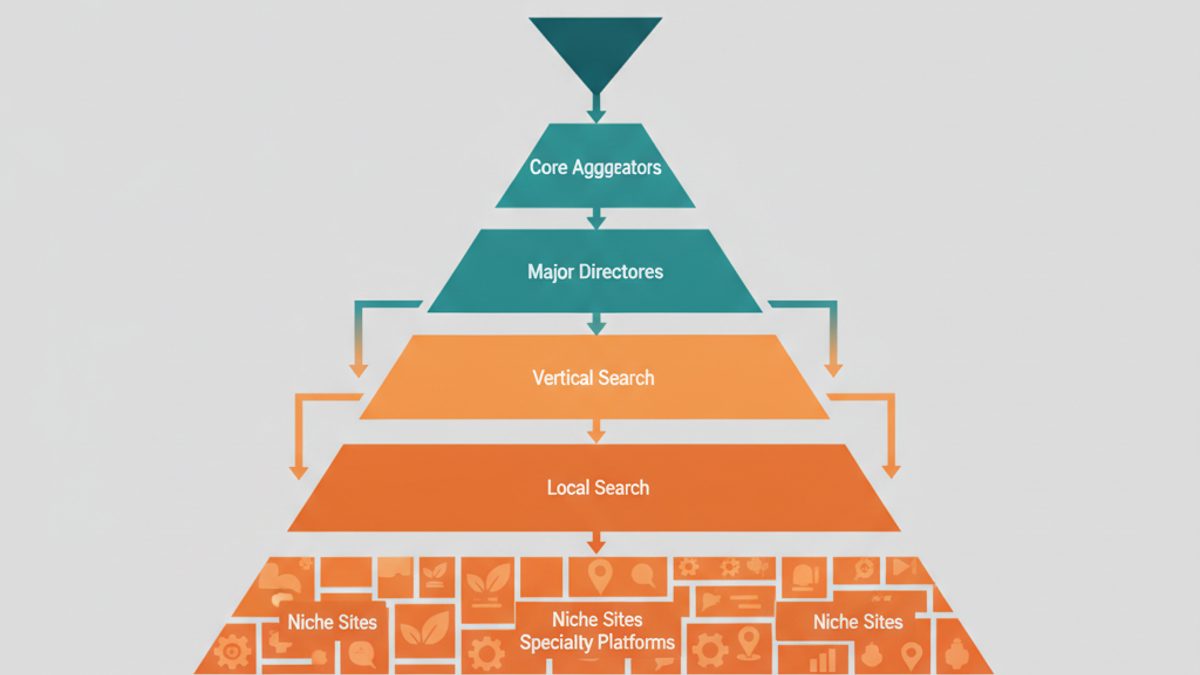 top local citation sites
Top Local Citation Sites Every Business Should Be On
The top local citation sites and data aggregators that feed the local ecosystem, with priorities.
Read → google maps rank tracker
Google Maps Rank Tracker: Track Your Map Pack Position Over Time
Track your Google Maps rankings over time with geo-grid scans and trend history. Here is how to do it right.
Read → best ai rank tracker software
Best AI Rank Tracker Software in 2026
Compare the best AI rank tracker software for tracking brand positions in AI answers daily, with pricing, engines, and reporting compared for teams today.
Read →More in Local SEO & Google Maps · All guides A to Z by date · Latest guides