 ProMapRanker
Best Listing Management Software for Bakeries in 2026
Direct answer
Uberall is my top pick for bakeries because it handles multi-location listings, hours, holiday closures and review replies in one place, which suits shops with several counters or a rotating wholesale schedule. Pricing is quote-based, so check its pricing page. If you mainly want review requests after cake orders, look at Podium, and if you want local rank tracking alongside listings, Local Falcon is the other option worth a look.
I compared these tools using vendor documentation and public sources, not hands-on tests. I looked at how each one handles hours, holiday closures, menus, review replies and multi-location data, because those are the parts that matter to a bakery. Where a tool is built for a different job, I say so.
Key takeaways
- Bakeries live and die on accurate hours and holiday closures, so listings accuracy matters more than extra features.
- A tool that syncs opening times, seasonal menus and pickup details across Google, Apple Maps and Bing saves daily confusion.
- Review replies matter for bakeries because customers often mention custom orders, allergens and pickup waits.
- Multi-location tools cost more, so single-shop bakeries should start with a lighter plan.
- No tool fixes a wrong address on its own; you still need to verify each location in Google Business Profile.
Quick comparison
| Pick | Great for | Pricing starts at | Free tier | |
|---|---|---|---|---|
 Uberall | Multi-location bakery groups | See website | Not stated | Visit |
 Podium | Review requests after orders | See website | Not stated | Visit |
 Local Falcon | Map visibility checks by area | See website | Not stated | Visit |
 BrightLocal | Single-shop bakeries doing local SEO | See website | Not stated | Visit |
 Whitespark | Citation building and local rank tracking | See website | Not stated | Visit |
 Yext | Large bakery groups with many locations | See website | Not stated | Visit |
 Synup | Mid-size bakery groups | See website | Not stated | Visit |
The best listing management software for bakeries compared
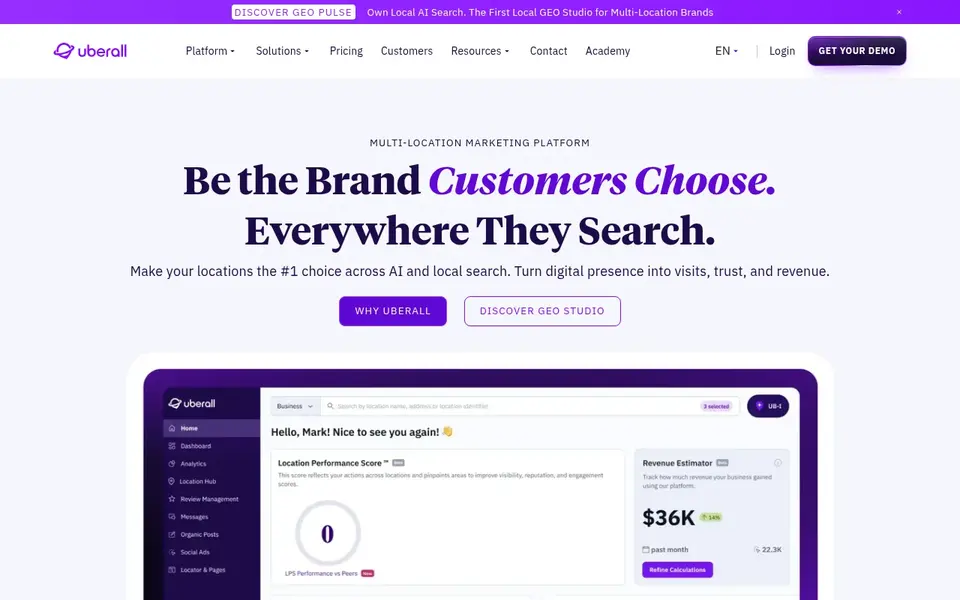
Uberall is a listings and reputation platform built for businesses with several locations. For a bakery with a main shop, a market stall and a wholesale counter, that structure fits. You keep names, addresses, phone numbers and opening hours consistent across directories, and you can push seasonal changes such as early closing on Christmas Eve from one place instead of editing each profile by hand.
For bakeries, the useful part is special hours. Shops close early on holidays, open late on delivery days and change hours for festivals. Uberall lets you manage those variations per location, which reduces the "Google says you're open but the door is locked" problem. Review replies also sit in the same tool, so you can answer comments about custom cakes or sold-out items without switching apps.
The limit is scale. A single corner bakery will pay for features it never uses, and pricing is quote-based, so you need a sales conversation before you know the cost. Skip it if you have one location and just want clean listings.
- Strong multi-location listing sync
- handles hours and special opening times
- review management in the same dashboard
- Quote-based pricing
- more than a single shop needs
Podium is known for review invitations and customer messaging. A bakery can send a text after a cake pickup or a large order and ask for a review, which fits how bakery customers behave: they order, collect, then decide whether to leave feedback. The messaging side also helps with pickup questions and custom order confirmations.
On listings, Podium covers the basics but is not the deepest directory sync tool on this list. If your main problem is a thin review profile and slow replies to customer questions, it fits well. If your main problem is wrong hours across twenty directories, a listings-first tool is a better match.
The limits are cost and focus. Pricing is quote-based, and the platform is built around conversations more than directory accuracy. A bakery that already has clean listings and just wants more reviews should look here first.
- Simple review request flow
- messaging with customers
- good for order pickup updates
- Listings sync is not the core strength
- pricing is quote-based
Local Falcon tracks where a business appears on Google Maps across a grid of points around a location. For a bakery, that answers a practical question: do people two neighborhoods away see the shop when they search for a birthday cake? It is a measurement tool, not a listings manager, so you still need something else to keep hours and addresses correct.
I include it because bakeries often serve a wider area than their street. If you deliver or want customers from nearby suburbs, the grid view shows whether your map presence fades at the edges. That helps you decide whether to work on reviews, photos or citations for a specific area.
The limit is clear: it does not fix listings. Pair it with a listings tool rather than using it alone. Single-shop bakeries with a tight local customer base may not need grid tracking at all.
- Grid-based map rank tracking
- shows where you appear around town
- useful for delivery areas
- Not a listings sync tool
- needs a separate listings workflow
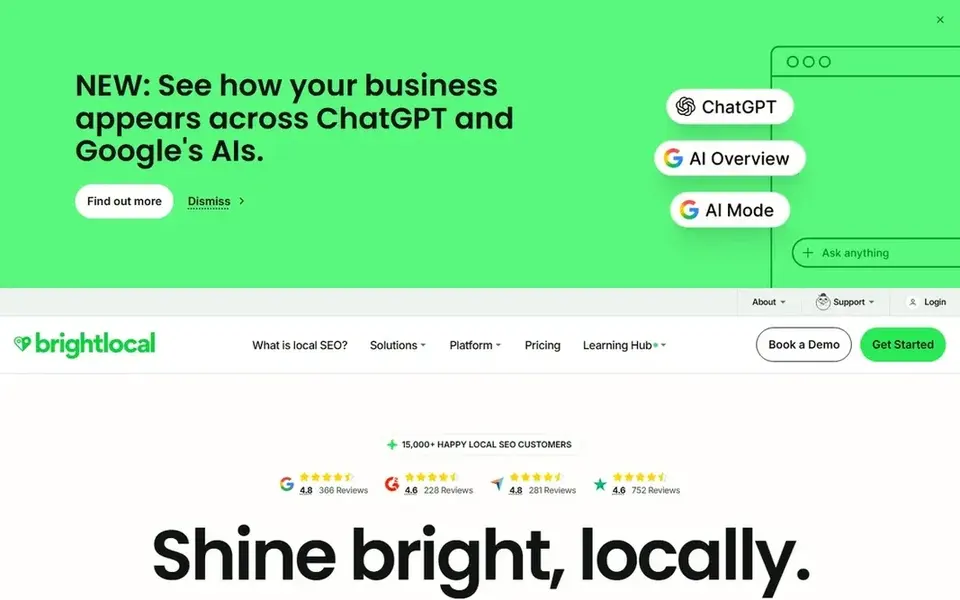
BrightLocal is a local SEO toolkit with citation building, listing audits, review monitoring and rank tracking. For a single bakery that wants to check its name, address and phone across directories and fix the wrong ones, it is a sensible starting point. The audit shows which listings disagree, and the citation tools help you correct them.
The bakery-specific value is in the audit. Bakeries often have an old address from a previous location, a phone number that changed, or a name variant like "Joe's Bakery & Cafe" versus "Joes Bakery." BrightLocal surfaces those mismatches. Review monitoring also helps you catch comments about opening hours or sold-out items before they pile up.
The limit is that it is a broad toolkit, not a dedicated listings sync engine. If you want automatic pushes to dozens of directories every time hours change, a listings-first platform does that better. Small shops that want one dashboard for several local tasks will find it useful.
- Citation building and audit tools
- review monitoring
- local rank checks in one dashboard
- Listing sync is one module among many
- can feel broad for a small shop
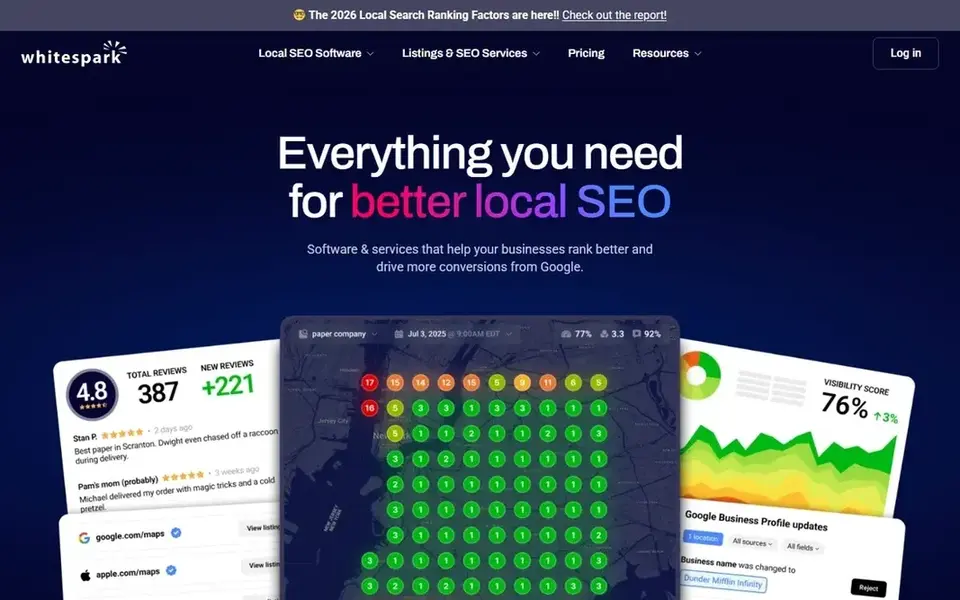
Whitespark is best known for citation building and local rank tracking. For a bakery, the citation finder helps you locate the directories that matter locally, such as chamber of commerce pages, local food guides and neighborhood business lists, rather than only the big national directories.
The rank tracker shows how the shop performs for searches like "bakery near me" or "custom cakes" in a chosen area. That is useful when you want to know whether a citation push or a review push is worth the effort. The citation building service can also handle submissions if you would rather not do them yourself.
The limit is workflow. Whitespark is not built as a daily listings dashboard with review replies and hours management. It suits a bakery that already has accurate core listings and wants to build citations and track rankings.
- Strong citation research
- local rank tracker
- citation opportunities by industry
- Less of a review inbox
- listings sync is not the main product
Yext manages location data across a large network of directories and platforms. A bakery group with several shops, a central brand team and a franchise model can keep every location's details in one structured system. That matters when a new shop opens and needs consistent listings from day one.
For bakeries, the structured data approach helps with things like seasonal hours, pickup information and location pages. If your group has a marketing team that wants one source of truth for every shop, Yext fits that model. It is also useful when a brand changes its name or logo and needs updates everywhere.
The limit is weight. A single bakery will find it expensive and more complex than needed. Pricing is quote-based, and the setup assumes you have clean location data and someone to manage it.
- Wide directory network
- structured location data
- good for franchise-style groups
- Can be costly
- heavy for a single shop
Synup is a listings and local marketing platform for businesses with multiple locations. A bakery with three or four shops can keep hours, addresses and descriptions consistent, and it includes review management and location pages. That combination suits a growing group that wants one dashboard instead of several.
The bakery use case is mostly operational. When one shop changes its weekend hours, you update it once and push it out. When a new location opens, you add it and let the platform handle the directory updates. Review monitoring helps the group see which shop is getting comments about wait times or custom orders.
The limit is setup. Synup works best when your location data is already clean and consistent. If your listings are a mess, fix the basics first or the sync will spread the same errors. Single-shop bakeries should start with a lighter tool.
- Listings management with review tools
- location pages
- works for several shops
- Needs clean data at setup
- pricing is quote-based
How I chose
I built this list from vendor documentation and public sources. I read each vendor's own product pages, help documentation and public descriptions of what the software does, then matched those features to how a bakery actually operates: fixed shop hours, holiday closures, custom orders, pickup queues and review comments about specific items. I did not run hands-on tests, and I did not use client results or case studies to rank anything.
The second filter was fit and limits. A tool that syncs listings across a huge directory network is not automatically right for one shop, and a review request tool is not a listings manager. I kept the list to real, currently operating vendors with an official homepage, and I noted where each one is weaker so you can skip it. Pricing is quote-based or plan-based depending on the vendor, so I point you to their pages rather than quoting figures I cannot confirm.
What to check before you buy
- Confirm the tool can push special hours and holiday closures, not just regular weekly hours.
- Check whether it supports the directories your customers actually use, including Google, Apple Maps and Bing.
- Ask how it handles name variants, such as a bakery that uses "&" on one listing and "and" on another.
- Make sure review replies can be handled per location if you have more than one shop.
- Check whether the tool supports location pages for custom order info, pickup details and allergen notes.
- Confirm the contract length and whether you can export your location data if you leave.
Frequently asked questions
Do bakeries really need listing management software?
Only if you have more than one location or your hours change often. A single shop with stable hours can keep Google Business Profile accurate by hand. Software earns its cost when you have several shops, seasonal hours, holiday closures or a team that edits listings without telling each other.
What is the most important listing detail for a bakery?
Opening hours, including special hours. Customers check Google before they travel, and a wrong closing time means a wasted trip and a bad review. Address and phone come next, then pickup and custom order details. Photos of the counter and cakes help, but accurate hours prevent the most damage.
Can listing software help with reviews about custom orders?
It helps you see and reply to them in one place. A tool like Podium or the review modules in Uberall and Synup let you respond quickly and track patterns. It cannot remove a bad review or filter reviews, and you should never ask only happy customers for reviews, because that breaks Google's guidelines.
Should a bakery use a citation service or a listings platform?
Use a listings platform if you need ongoing sync of hours and details. Use a citation service like Whitespark or BrightLocal if you want to build and correct directory listings once and track local rankings. Many bakeries use both, but start with the problem you have now rather than buying everything.
Is Local Falcon a listings management tool?
No. Local Falcon tracks where you appear on Google Maps across a grid of points around your location. It measures visibility, not directory accuracy. Pair it with a listings tool if you want both, and skip it if your customers all come from the immediate neighborhood.
Sources
See where you really rank - block by block
ProMapRanker scans Google Maps across a grid of your service area. Simple monthly plans from $19, white-label on every plan.
Start freeBrowse all guides
← Best Listing Management Software for Agencies in 2026Best Listing Management Software for Churches in 2026 →
 best google business profile management software for roofers
Best Google Business Profile Software for Roofers in 2026
A roofer's guide to Google Business Profile management software in 2026, compared from vendor docs and public sources, with tools for reviews and local rank.
Read → best google business profile management software for landscapers
Best Google Business Profile Software for Landscapers in 2026
A landscaper-focused comparison of Google Business Profile management software for posts, photos, service areas and review replies, based on vendor docs.
Read → best google business profile management software for dentists
Best Google Business Profile Software for Dentists in 2026
A practical guide to Google Business Profile management software for dentists, compared from vendor docs and public sources, with features, limits and buying tips.
Read → local search industry
Local Search Industry: A Complete Guide
Everything you need to know about local search industry: what it is, why it matters for local SEO, and exactly how to act on it.
Read → local search ranking factors
Local Search Ranking Factors: A Complete Guide
Everything you need to know about local search ranking factors: what it is, why it matters for local SEO, and exactly how to act on it.
Read → brightlocal alternative
BrightLocal Alternative: A Geo-Grid-First Local SEO Tool
A BrightLocal alternative built geo-grid-first. Compare features, reporting, and pricing for local SEO.
Read →More in Local SEO & Google Maps · All guides A to Z by date · Latest guides