 ProMapRanker
Best Listing Management Software for Agencies in 2026
Direct answer
For agencies that run many client locations, Semrush Local is my top pick because it combines listing sync with the keyword and rank tracking an agency already needs in one dashboard. It has no free plan stated, so check its pricing page. If your main job is fixing messy citations, Whitespark is the better fit, and if you manage a large multi-location portfolio with dozens of data partners, Uberall is worth a look.
I compared these tools from vendor documentation and public sources, not from hands-on tests. I looked at how each one handles multiple client accounts, citation distribution, reporting and the limits vendors publish. The order below reflects fit for agency workflows, not a score.
Key takeaways
- Agencies need listing software that supports multiple client accounts, clean reporting and a workflow for client approvals, not just a single-business dashboard.
- Citation cleanup and ongoing listing sync are different jobs, and some tools do one far better than the other.
- Data partner networks vary a lot between vendors, so check which directories and maps actually get updated before you commit.
- Reporting and white-label options matter for agencies because clients expect proof of what changed each month.
- Google Business Profile guidelines apply to every tool, so avoid any vendor that suggests keyword-stuffed names or review gating.
Quick comparison
| Pick | Great for | Pricing starts at | Free tier | |
|---|---|---|---|---|
 Semrush Local | Agencies already using Semrush | See website | Not stated | Visit |
 Whitespark | Citation cleanup and local research | See website | Not stated | Visit |
 Uberall | Large multi-location portfolios | See website | Not stated | Visit |
 BrightLocal | Citation building plus rank and review checks | See website | Free trial | Visit |
 Yext | Brands wanting tight data control | See website | Not stated | Visit |
 Synup | Simple client dashboards | See website | Not stated | Visit |
 Moz Local | Agencies already in the Moz ecosystem | See website | Not stated | Visit |
The best listing management software for agencies compared

Semrush Local is the local arm of the Semrush platform. For an agency that already tracks client rankings and keywords in Semrush, it keeps listing management in the same place as the rest of the SEO work. That reduces the number of logins and makes it easier to show a client how listing changes line up with visibility changes.
For listing management specifically, it handles business data distribution and location-level profiles across a client list. You can group locations by client, keep names, addresses and categories consistent, and pull that data into reports. The workflow suits agencies that want one platform rather than a patchwork of point tools.
The limit is that it is not a citation-only product. If your whole job is cleaning up hundreds of inconsistent listings, a specialist tool may be faster. Skip it if you do not use Semrush elsewhere and only need listing sync.
- Listing sync sits beside keyword and rank data
- multi-client dashboard
- familiar Semrush reporting
- Listing features are part of a larger paid suite
- not a dedicated citation-only tool
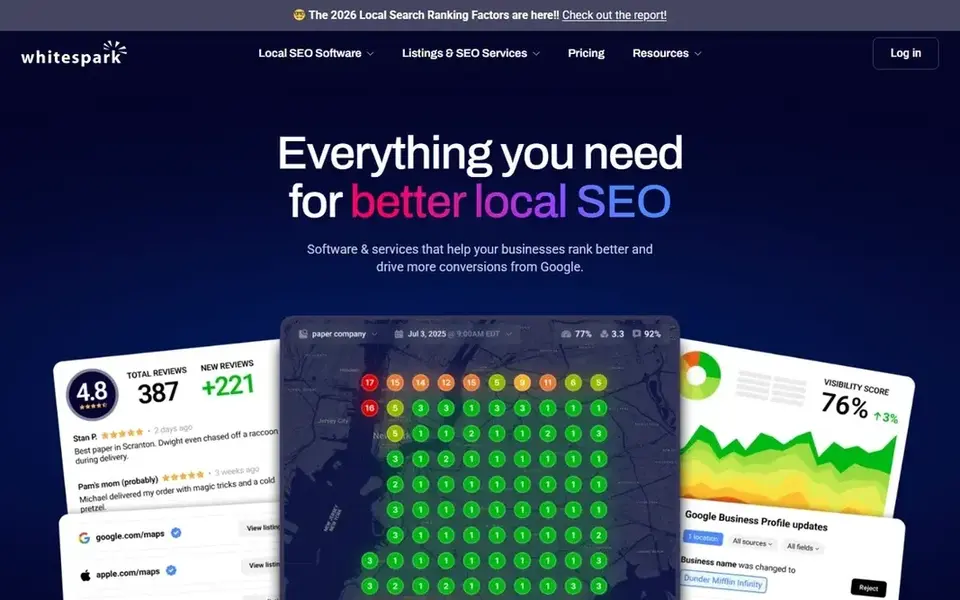
Whitespark is a local SEO toolkit built around citations and local search research. Agencies use it to find where a client's business data is inconsistent, build new citations and track local rankings. It is the tool many local SEO specialists reach for when a client's name, address or phone number is wrong across directories.
For agency listing work, the citation audit and building features are the core value. You can run an audit for a client, see which directories matter, and work through fixes. Local rank tracking helps you show whether citation work had an effect. It fits agencies that sell citation cleanup as a service.
The limit is scope. It is not a broad reputation or review platform, and it does not try to be. Skip it if you need one dashboard for reviews, listings and social in a single client view.
- Strong citation research and audit tools
- local rank tracking
- well regarded by local SEO practitioners
- Not a full reputation management suite
- pricing scales with the work you run
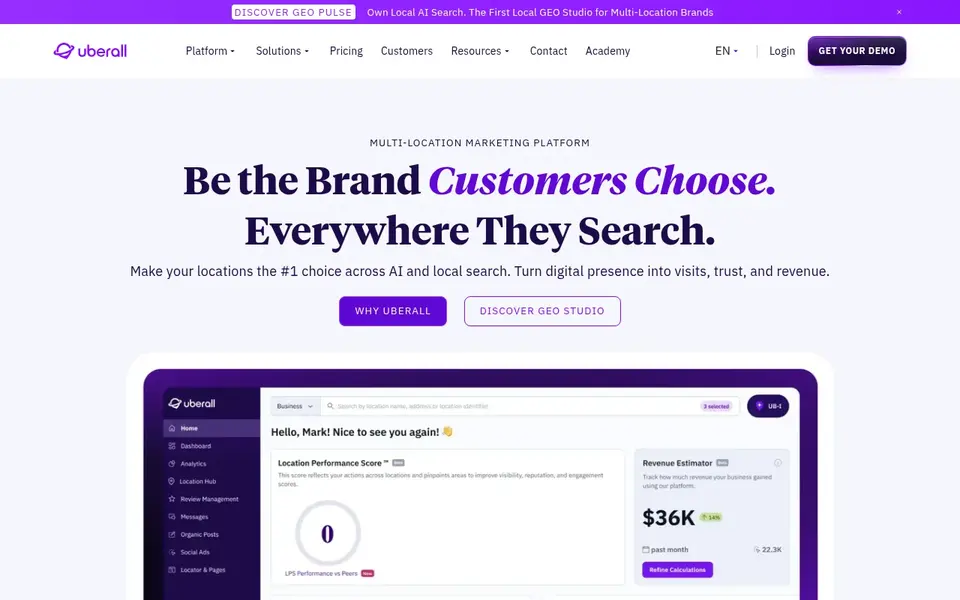
Uberall is a location marketing platform aimed at brands and agencies with many locations. It distributes business data to a large set of directories and maps, and adds features like local pages and review handling. Agencies that manage franchise or retail clients with dozens of sites often land here.
For listing management, the strength is scale and consistency. You can push one set of location data across many publishers and keep it aligned as stores open, close or change hours. That matters when a client has more locations than you can track by hand.
The limit is fit. A small agency with a handful of single-location clients may find the setup and scope heavier than needed. Skip it if your client list is small and simple.
- Wide publisher network
- location marketing features beyond listings
- built for many locations
- Setup is heavier
- better suited to bigger accounts than single-location clients
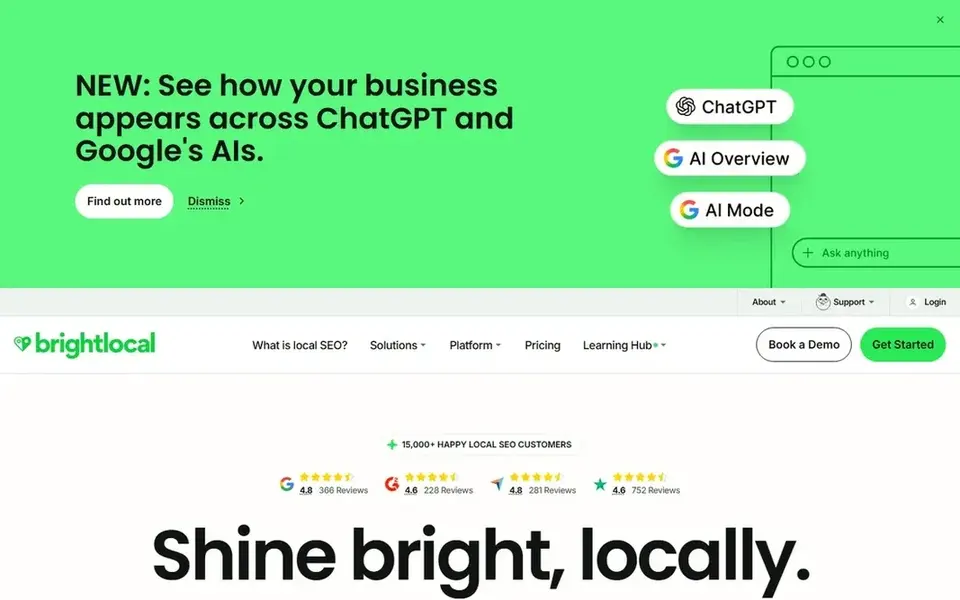
BrightLocal is a long-standing local SEO platform that agencies use for citations, rank tracking and review monitoring. It is built around the tasks an agency repeats for each client, and it offers a free trial so you can see how the workflow fits before committing.
For listing management, it covers citation building and audits, and it ties that work to local rank and review data. That combination helps an agency show a client what changed across directories and whether visibility moved. Reporting is designed with agencies in mind.
The limit is that the platform is broad, and the number of modules can feel like a lot when you only need listings. Skip it if you want a narrow citation-only tool with no extra features.
- Citation building and audit tools
- local rank tracking and review monitoring
- agency-friendly reporting
- Broad interface can feel busy
- some features overlap across modules

Yext is a listings and location data platform that lets a brand control its business information from one place and push it to a network of publishers. Agencies use it when a client wants tight control over how location data appears across the web.
For listing management, the appeal is centralised data and a broad publisher network. You update once and the changes flow out, which suits clients with strict brand standards. It also supports features like local pages and search experiences.
The limit is that the publisher network and contract terms deserve a close read before you commit, and the cost can be high for small agencies. Skip it if your clients are small and price-sensitive.
- Central control of business data
- wide publisher reach
- strong for structured location data
- Publisher network and contract terms need careful review
- can be costly for small agencies
Synup is a listings and local marketing platform with a focus on location data and client reporting. Agencies use it to keep business information consistent and to give clients a clear view of their locations.
For listing management, it handles data sync across directories and maps, plus review monitoring and location pages. The dashboard is one of its selling points, since clients can log in and see their own data without asking the agency for a report.
The limit is depth. It is not a heavy local SEO research tool, and publisher coverage varies by market, so check it against your clients' countries. Skip it if you need deep keyword and competitor research in the same platform.
- Clean client-facing dashboard
- listing sync and review tools
- location management for agencies
- Fewer deep SEO research features
- publisher coverage should be checked per market
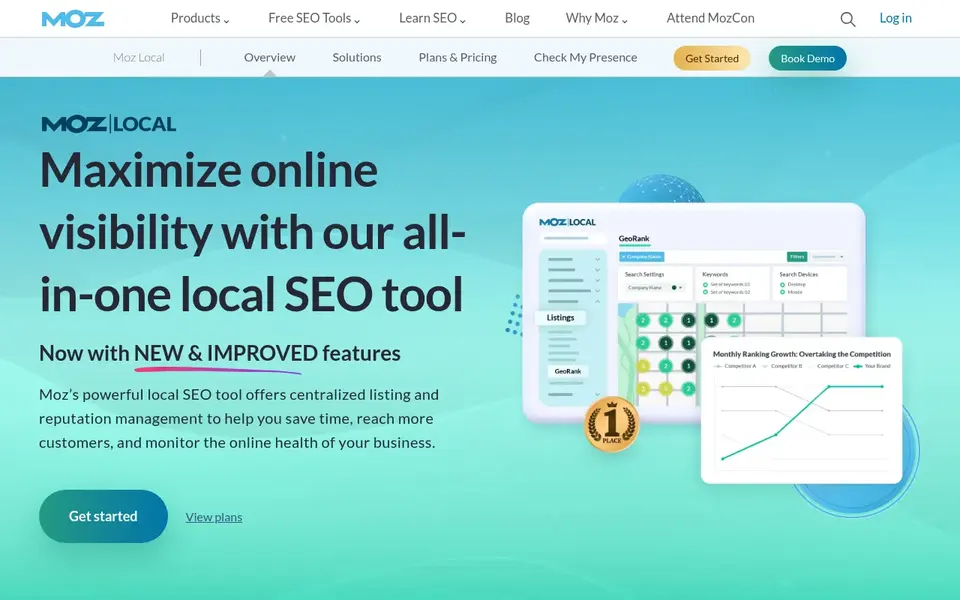
Moz Local is the local listings product from Moz. Agencies that already use Moz Pro for SEO can keep local listing work in the same family of tools, which simplifies billing and reporting.
For listing management, it distributes business data to major directories and maps and works to suppress duplicate listings, which is a common problem for clients with old or inconsistent records. It ties into Moz's broader data set.
The limit is coverage. The publisher network is narrower than some dedicated listing platforms, so check that the directories your clients care about are included. Skip it if you are not otherwise a Moz user.
- Fits with Moz Pro data
- listing distribution and duplicate suppression
- familiar Moz reporting
- Listing coverage is narrower than some rivals
- best value if you already pay for Moz
How I chose
I built this list from vendor documentation and public sources, not from hands-on tests. I read each vendor's product pages, help docs and published feature lists, then compared how they handle multi-client accounts, citation distribution, reporting and the limits the vendors themselves describe. Where a vendor publishes a free trial or free plan, I noted it; where the pricing page does not state one, I said so.
The main filter was agency fit. A tool that works for a single business can fall apart when you manage twenty clients, so I weighted multi-location support, client reporting and the ability to keep business data consistent across accounts. I also looked at what each tool does not do well, because the limits usually decide whether it fits a given agency. I did not run trials or test results myself, so treat this as a starting point for your own evaluation.
What to check before you buy
- Confirm how many client accounts and locations the plan allows, and what happens when you add more.
- Ask which directories and maps are in the publisher network, and check them against your clients' countries.
- Check whether reporting is white-label and whether clients can log in to see their own data.
- Confirm how the tool handles duplicate listings and old addresses, since that is often the real cleanup work.
- Read the contract terms, including cancellation and data ownership, before you move client data in.
- Make sure the tool follows Google Business Profile guidelines and does not push keyword-stuffed names or review gating.
Frequently asked questions
What is the best listing management software for agencies?
There is no single answer, but Semrush Local is my top pick for agencies already using Semrush because listings sit beside keyword and rank data. Whitespark suits citation cleanup, and Uberall fits large multi-location portfolios. Match the tool to your main service line rather than the longest feature list.
How is listing management software different from citation building?
Listing management keeps business data synced across directories and maps on an ongoing basis. Citation building is the one-time or periodic work of creating and fixing listings. Some tools do both, and some specialise in one. Agencies often need both, so check whether a single platform covers your workflow.
Can I manage multiple clients in one listing tool?
Most agency-focused tools support multiple client accounts, but the limits differ. Check how many locations each plan allows, whether you can group locations by client, and whether clients get their own login. Those three details decide whether a tool scales past a handful of accounts.
Do listing tools guarantee higher Google Maps rankings?
No. Listings help with consistency and can support local visibility, but rankings depend on many factors, including reviews, proximity and on-page work. Treat listing software as one part of local SEO. Avoid any vendor that promises specific ranking results.
Is a free plan enough for an agency?
Usually not. Free plans tend to cap locations or features, which gets in the way when you manage several clients. A free trial is more useful because it lets you test the full workflow before you commit. Check the pricing page for what each tier includes.
Sources
See where you really rank - block by block
ProMapRanker scans Google Maps across a grid of your service area. Simple monthly plans from $19, white-label on every plan.
Start freeBrowse all guides
← Best Google Business Profile Software for Roofers in 2026Best Listing Management Software for Bakeries in 2026 →
 best google business profile management software for landscapers
Best Google Business Profile Software for Landscapers in 2026
A landscaper-focused comparison of Google Business Profile management software for posts, photos, service areas and review replies, based on vendor docs.
Read → best google business profile management software for dentists
Best Google Business Profile Software for Dentists in 2026
A practical guide to Google Business Profile management software for dentists, compared from vendor docs and public sources, with features, limits and buying tips.
Read → best text message review request tools
Best Text Message Review Request Tools for 2026
Compare the best text message review request tools for local businesses in 2026, based on vendor documentation and public sources, with pros, cons and buying tips.
Read → local seo for interior designers
Local SEO for Interior Designers
A local SEO guide for interior designers: Google Business Profile setup, reviews, and portfolio-driven local SEO for designers.
Read → google business profile service area
Google Business Profile Service Area Setup: A Complete Guide
How to correctly set up a service-area business on Google Business Profile without a storefront address.
Read → local seo for veterinarians
Local SEO for Veterinarians: Bringing More Pet Owners In
A veterinary clinic local SEO guide: GBP, reviews, and geo-grid tracking to attract more pet owners.
Read →More in Local SEO & Google Maps · All guides A to Z by date · Latest guides