 ProMapRanker
Best Listing Management Software for Handymen in 2026
Direct answer
Whitespark is my top pick for handymen because it focuses on citation finding and building, which is the part of listing management most small service businesses actually need. It has no free plan stated, so check its pricing page. If you want reviews handled alongside listings, look at Grade.us; if you want one dashboard for many directory listings plus a Google Business Profile sync, look at Synup.
I compared these tools using vendor documentation and public sources rather than running hands-on tests. I looked at what each product says it does, how it fits a small service business with one or a few locations, and where the limits are. My aim is to help you shortlist, not to rank them on a score I invented.
Key takeaways
- Handymen usually need clean name, address and phone data across directories more than they need a large enterprise reputation suite.
- A listing tool should let you fix duplicate listings and inconsistent phone numbers, because those errors send calls to the wrong place.
- Review requests belong in the same workflow as listings, since most handyman leads check reviews before they call.
- Call tracking helps you see which directory or profile actually produces phone calls, not just clicks.
- Pick a tool that matches how many locations and staff you have, and skip enterprise features you will not use.
Quick comparison
| Pick | Great for | Pricing starts at | Free tier | |
|---|---|---|---|---|
 Whitespark | Citation finding and building | See website | Not stated | Visit |
 Synup | Multi-directory listing sync | See website | Not stated | Visit |
 Yext | Central control of listings | See website | Not stated | Visit |
 Moz Local | Simple citation cleanup | See website | Not stated | Visit |
 Grade.us | Review requests and monitoring | See website | Not stated | Visit |
 NiceJob | Reviews from finished jobs | See website | Not stated | Visit |
 CallRail | Tracking calls from listings | See website | Free trial | Visit |
The best listing management software for handymen compared
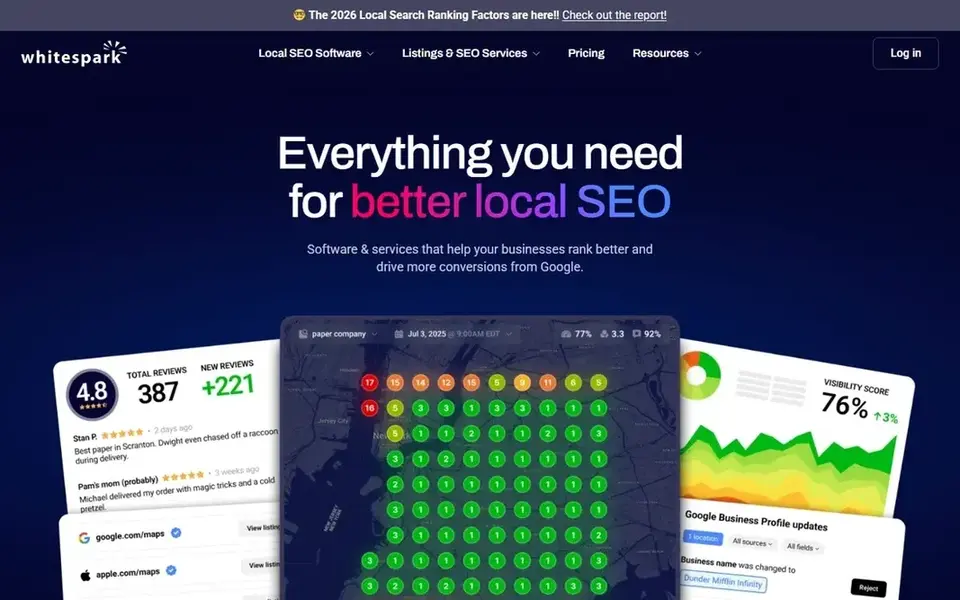
Whitespark is a local search company that builds citation and listing tools. For a handyman, the useful part is finding where your business is already listed, spotting wrong or missing entries, and submitting corrections. It fits owners who want to work through directory data carefully rather than hand everything to a large platform.
In practice, you would use it to check that your business name, address and phone number match everywhere, then build listings on the directories that matter for your service area. That matters when a customer searches "handyman near me" and sees two versions of your business with different phone numbers. Fixing that is basic housekeeping.
The limit is that Whitespark is not a review request system or a call tracker. If you want one tool to chase reviews after every job, you will need a second product.
- Strong citation research tools
- local search focus
- useful duplicate finding
- Review features are limited
- not a full CRM
Synup is a listings and local marketing platform that lets you manage business data across many directories and review sites. It suits a handyman business that has grown to a few locations or has a small team and wants one place to update hours, service areas and phone numbers.
The workflow is built around a central profile: you update your details once and push them out. That saves time when you change your service area or add a second number. It also includes review monitoring, so you can see new reviews next to your listing data.
The downside is complexity. A one-person handyman business may pay for features it never opens, and the initial data cleanup takes effort before the dashboard is useful.
- Manages many directories from one place
- location data dashboard
- review monitoring
- Setup takes time
- more features than a solo handyman needs
Yext is a large listings and digital presence platform. It is built for businesses that want tight control over how their information appears across many sites, including maps and directories. For handymen with several vans, crews or locations, that control can be useful.
If you run a handyman company with multiple service areas, Yext lets you keep each location's details consistent. You can update hours, phone numbers and service descriptions from one place instead of editing each profile by hand.
For a solo handyman, it is usually more than needed. The subscription model and the breadth of the platform can be hard to justify when your main goal is a clean Google Business Profile and a handful of citations.
- Wide network of directory integrations
- structured data control
- enterprise-grade tools
- Subscription model
- can be costly for small shops
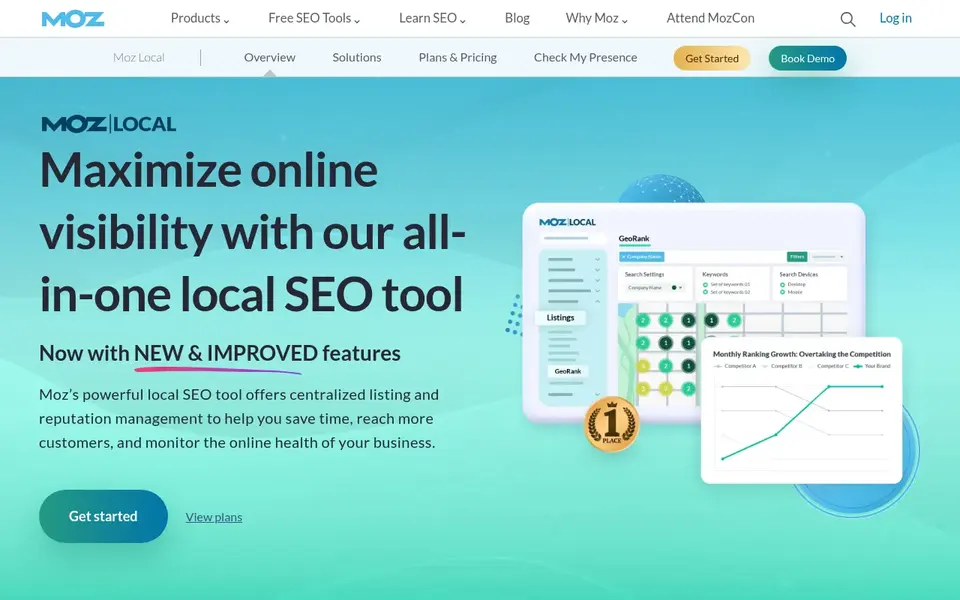
Moz Local is a listings product from Moz, a well-known name in SEO software. It focuses on getting your business data consistent across major directories and data aggregators, and on finding duplicate listings that split your visibility.
For a handyman, the appeal is simplicity. You enter your business details, review the matches it finds, and correct errors. That is often enough to stop a customer from calling an old number they found on a stale directory.
It is not a review generation tool and does not try to be a full marketing suite. If you want automated review requests after each job, you will need another product alongside it.
- Straightforward listing sync
- duplicate detection
- familiar Moz interface
- Limited review request tools
- fewer advanced options
Grade.us is a review management platform built around asking customers for feedback and monitoring what they publish. For handymen, reviews are often the deciding factor, because a homeowner wants proof that someone showed up on time and did clean work.
You can set up a request that goes out after a job, point customers to your Google Business Profile, and watch new reviews come in. That fits the rhythm of handyman work: finish the job, send the request, move to the next call.
The trade-off is that Grade.us is not primarily a citation builder. If your main problem is inconsistent directory data, start with a listings tool and add review software later.
- Review request campaigns
- review monitoring
- simple dashboards
- Listing sync is secondary
- fewer citation tools
NiceJob is built for service businesses that want more reviews and referrals. It fits handymen who finish jobs in customers' homes and can ask for feedback right after the work is done.
The workflow is job-based: you add a customer, send a request, and the customer leaves a review. That is a natural fit for repair and maintenance work, where the customer has just seen the result.
It is not a listing management platform in the citation sense. Use it for reviews and keep a separate tool for directory data if that is a problem for your business.
- Review-focused workflow
- simple customer prompts
- fits service businesses
- Not a full listing manager
- less directory control
CallRail is call tracking software. For a handyman, it answers a practical question: which listing, profile or ad actually made the phone ring? You can use a tracking number on a directory listing or a landing page and see the calls it produces.
That is useful when you are paying for listings or spending time on profiles and want to know what works. Instead of guessing, you can compare calls from your Google Business Profile against calls from a directory.
CallRail does not manage your listings. It is a measurement layer you add when you want proof that your listing work is producing calls, not just impressions.
- Call tracking numbers
- source attribution
- simple reports
- Not a listing manager
- adds a monthly cost
How I chose
I picked these tools by reading vendor documentation and public sources, then judging each one against how a handyman business actually operates: one or a few locations, jobs done in customers' homes, phone calls as the main lead type, and limited time for marketing admin. I did not run hands-on tests, so treat this as a shortlist to research further.
I also weighed limits. A tool that manages hundreds of directories may be overkill for a solo handyman, while a review-only product will not fix duplicate listings. The best choice depends on whether your problem is inconsistent data, too few reviews, or not knowing which listing produces calls. I left out tools I could not confirm are operating, and I did not include any price figures because vendor pricing changes and depends on location count and features.
What to check before you buy
- Confirm the tool can find and fix duplicate listings, since old numbers and addresses are common for handymen who have moved or changed phone providers.
- Check whether it syncs with the directories that matter in your area, not just a long list of sites you have never heard of.
- Ask whether review requests can be sent after a completed job, because that is when a homeowner is most likely to respond.
- Look for call tracking or call reporting if phone calls are your main lead source, so you can see which listing produced the call.
- Confirm how many locations and users the plan covers, and whether adding a second service area costs more.
- Read the cancellation and data-export terms before you commit, so you are not stuck if the tool does not fit your workflow.
Frequently asked questions
Do handymen need listing management software?
Not always. If you have one location and your Google Business Profile is accurate, manual checks may be enough. Software helps when your name, address or phone number appears differently across directories, or when you want review requests and call tracking in one workflow.
What is the most important listing to fix first?
Start with your Google Business Profile, then the major directories that show up when someone searches your business name. Correct hours, phone number and service area first. Duplicate listings with old phone numbers are worth fixing early because they send calls to the wrong place.
Can listing software get me more reviews?
Some tools include review requests, but they cannot make customers leave reviews. What they do is make asking easier and more consistent. Follow Google's review policies: ask all customers, do not offer incentives for positive reviews, and never filter out unhappy customers.
Should I use a big platform or a small focused tool?
A small handyman business usually does better with a focused tool that solves one problem well, such as citations or reviews. Larger platforms make sense when you have several locations, a team, or a need to control data across many sites from one dashboard.
How do I know if my listings are working?
Use call tracking or ask new customers how they found you. If calls are coming from a directory listing, that listing is doing its job. If you see profile views but no calls, check that your phone number and hours are correct and that your reviews are current.
Sources
See where you really rank - block by block
ProMapRanker scans Google Maps across a grid of your service area. Simple monthly plans from $19, white-label on every plan.
Start freeBrowse all guides
← Best Listing Management Software for Dance Studios in 2026Best Listing Management Software for Law Firms in 2026 →
 best listing management software for carpet cleaners
Best Listing Management Software for Carpet Cleaners in 2026
A practical guide to the best listing management software for carpet cleaners in 2026, covering Google Business Profile, citations and review tools.
Read → best listing management software for bike shops
Best Listing Management Software for Bike Shops in 2026
A bike shop owner's guide to listing management software in 2026. Compare tools for Google Business Profile, citations, reviews and local rankings.
Read → best listing management software for appliance repair companies
Best Listing Management Software for Appliance Repair Companies (2026)
A practical guide to the best listing management software for appliance repair companies in 2026, covering Google Business Profile, citations and reviews.
Read → why is my business not showing up on google
Why Is My Business Not Showing Up on Google? Full Troubleshooting Guide
A complete troubleshooting guide for when your business won't appear on Google Search or Maps, with fixes for each cause.
Read → local falcon alternative
Local Falcon Alternative: Why Agencies Are Switching to ProMapRanker
A Local Falcon alternative that unifies geo-grid and AI search tracking with transparent pricing.
Read → best local advertising platform
Comparing 6 Local Advertising Platforms in 2026
Shortlisting the best local advertising platform? 6 products compared on cost, free access and ideal buyer. Honest caveats for every entry. Decide faster.
Read →More in Local SEO & Google Maps · All guides A to Z by date · Latest guides