 ProMapRanker
Best Listing Management Software for Bike Shops in 2026

Citation building and Google Business Profile · Pricing starts at: See website
Direct answer
Whitespark is my top pick for bike shops because it focuses on accurate local citations and Google Business Profile work, which is what decides whether your shop shows up when someone searches "bike repair near me." It has no free plan stated, so check its pricing page. If you also want review requests and a customer database, look at NiceJob, and if you sell online alongside the workshop, Semrush Local gives you listing tools next to broader SEO data.
I compared these tools from vendor documentation and public sources rather than running hands-on tests. My focus was on what a bike shop actually needs: correct store data everywhere, a Google Business Profile that reflects seasonal hours, and a way to collect reviews after a repair or a new bike sale.
Key takeaways
- Bike shops live on "near me" searches for repairs, tune-ups and parts, so clean name, address and phone data across directories matters more than social posting.
- A listing tool should handle your Google Business Profile, Apple Maps, Bing Places and the main data aggregators from one dashboard.
- Seasonal hours are a real problem for bike shops, so pick software that lets you update hours quickly and keep them consistent everywhere.
- Review requests tied to a repair ticket or a bike sale work better than generic email blasts, so look for tools that send requests after a transaction.
- None of these tools fix a wrong address on a directory if you never claim the listing, so plan time for claiming and correcting by hand.
Quick comparison
| Pick | Great for | Pricing starts at | Free tier | |
|---|---|---|---|---|
| Whitespark | Citation building and Google Business Profile | See website | Not stated | Visit |
 Semrush Local | Shops that also publish content | See website | Not stated | Visit |
 Moz Local | Straightforward data distribution | See website | Not stated | Visit |
 Yext | Multi-location shops and franchises | See website | Not stated | Visit |
 Uberall | Several branches with local pages | See website | Not stated | Visit |
 NiceJob | Review requests after repairs | See website | Not stated | Visit |
 Synup | Listings plus local pages | See website | Not stated | Visit |
The best listing management software for bike shops compared
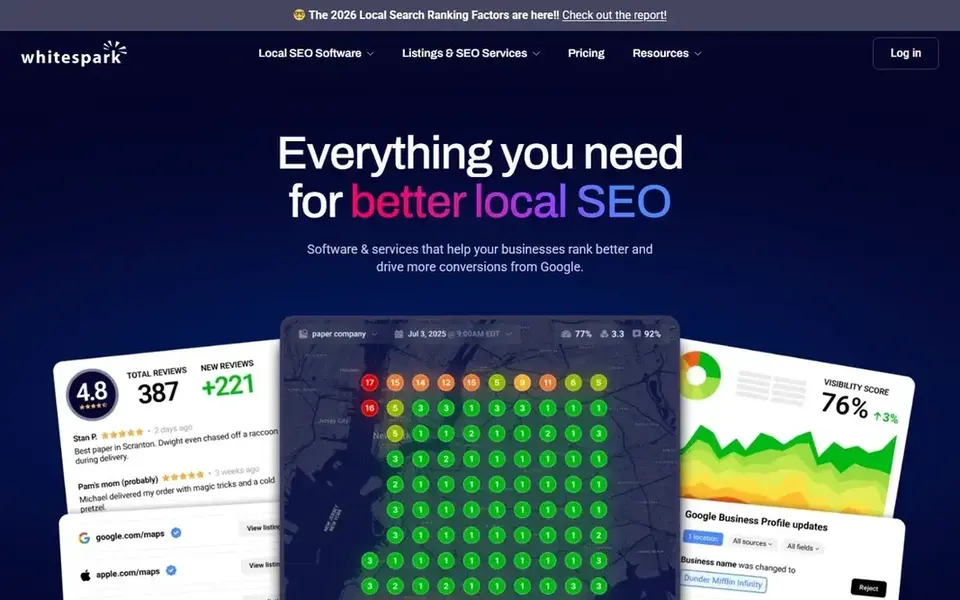
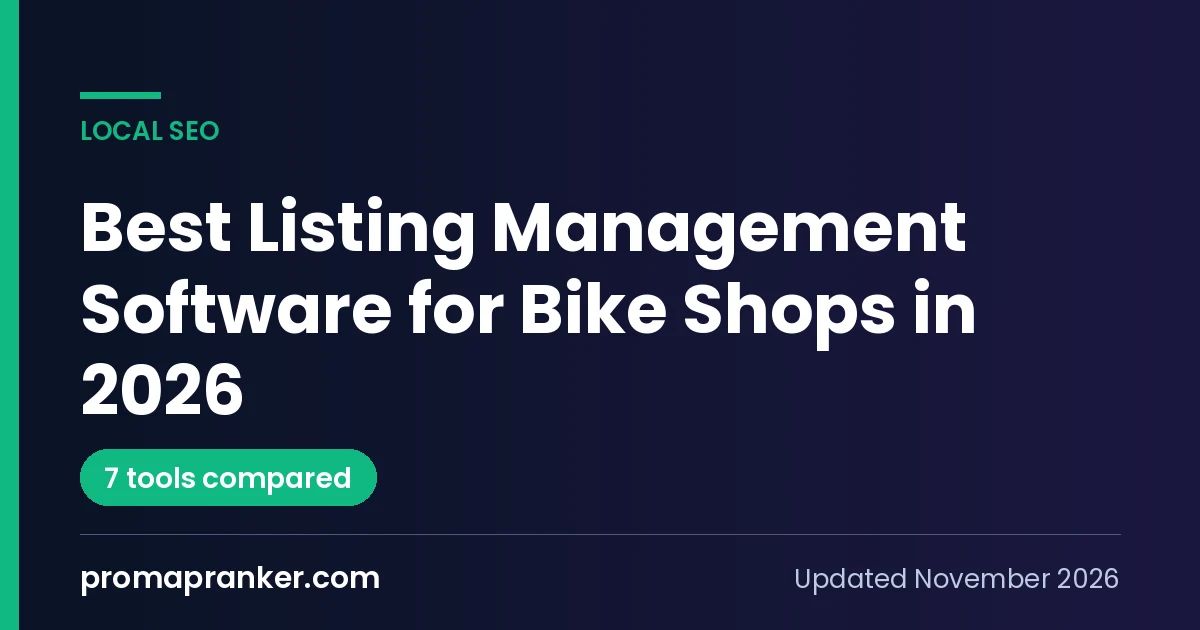
Whitespark is a local search company that built its name on citation work. For a bike shop, that means finding the directories where your shop should be listed, spotting duplicates, and fixing inconsistent addresses. It suits an owner who wants to do the work properly rather than blast data everywhere and hope it sticks.
The citation finder is the part I would use first. You enter your shop's details, and it shows which directories already list you and which have wrong hours or an old phone number. Bike shops often move units or change workshop hours, and stale listings cause real problems when a customer rides across town for a repair and finds the door locked. Whitespark also has Google Business Profile tools for auditing categories, attributes and photos, which matters because "bicycle repair" and "bicycle store" are different categories and Google treats them differently.
The limit is scope. Whitespark is not a review-request engine or a social scheduler, so if you want one login for everything, you will be pairing it with something else. Skip it if you have no interest in doing citation work yourself.
- Strong citation research and building tools
- Google Business Profile audit and management features
- Canadian and US directory coverage is deep
- Not a full marketing suite
- Review features are lighter than dedicated review tools

Semrush Local brings listing distribution and review management into the wider Semrush platform. A bike shop that writes seasonal content, like winter commuter tyre guides or a comparison of gravel bikes, gets more from it because the listing tools sit beside the research tools. It fits a shop with someone who enjoys the marketing side.
In practice, you would use it to push your shop details to the major directories and to keep an eye on how your Google Business Profile performs against nearby shops. The review tools let you request feedback after a service. The keyword data helps you decide whether to write about "tubeless setup" or "bike fitting," which are the kinds of searches that bring in people who then walk through the door.
The downside is weight. If all you want is a clean listing everywhere, you are paying for a large platform. Skip it if nobody in the shop will use the research side.
- Listing management sits next to keyword and competitor data
- Good for shops writing buying guides and repair content
- Review management is included
- Larger product than a single shop usually needs
- Learning curve is steeper than a pure listing tool
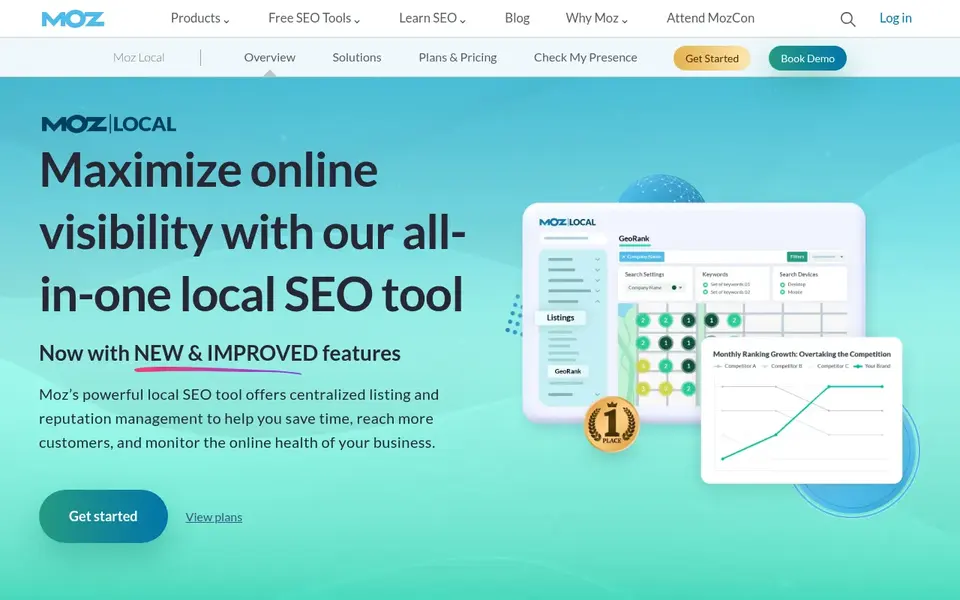
Moz Local is one of the older names in local listing management. You give it your shop details, it pushes them to the main data aggregators and directories, and it reports back on where things match or diverge. For a single bike shop with one address, that is often enough.
The workflow is simple: claim your listing, confirm the details, and let Moz Local distribute them. It is a reasonable fit for a shop that has just moved premises or changed its phone number and wants the correction to reach many places at once. The dashboard shows which listings are accurate, so you can spot the directories still showing an old address.
The review side is thin, and you get less granular control than with a citation-focused tool. Skip it if you want to build citations one by one or need a strong review-request workflow.
- Simple listing distribution to major data providers
- Clear visibility into listing accuracy
- Pairs with Moz's broader SEO tools
- Review features are basic
- Less control over individual directory edits
Yext is an enterprise-leaning listing platform. It manages your business data and pushes it to a large network of publishers, and it gives you detailed control over fields like services, hours and holiday schedules. It fits a bike shop with several branches, or a shop that also runs a rental or fitting studio under the same brand.
For bike shops, the structured data control is the useful part. You can define services like "bike fitting," "wheel building" or "e-bike diagnostics" and keep them consistent. Seasonal hour changes, which matter a lot when winter hours differ from summer hours, can be managed centrally.
One limitation is commitment. Yext is quote-based, so you need to talk to sales, and the platform is more than a single shop needs. Skip it unless you have multiple locations or a franchise structure.
- Wide network of listing destinations
- Strong control over structured data like hours and services
- Handles many locations from one account
- Pricing is quote-based and needs a sales conversation
- Heavier than a single shop needs
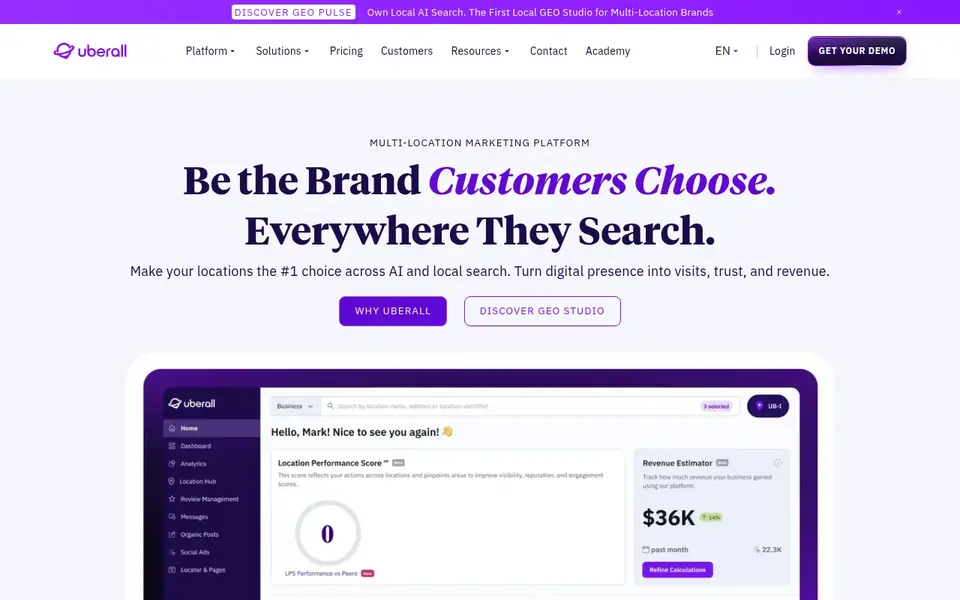
Uberall is a location marketing platform built around multi-location businesses. It syncs listings, creates local pages and includes review and messaging features. For a bike shop with two or three branches across a city, it gives each branch its own presence while keeping the brand consistent.
The local pages are the part that helps with search. Each branch gets a page with its own address, hours and directions, which is useful when customers search for the branch closest to them. The review tools let you respond from one place, and the messaging feature can handle common questions like "do you fix punctures on a Sunday?"
Setup is not instant. You need to supply accurate data for each location and check the results. Skip it if you have one shop and no plans to expand.
- Listing sync across many directories
- Local landing pages per branch
- Review and messaging tools included
- Setup takes time and input
- Pricing is quote-based
NiceJob is built around getting reviews and turning them into marketing. For a bike shop, the natural workflow is to log a repair ticket, then send a review request once the bike is collected. That timing matters because the customer has just had a good experience and is more likely to respond.
The tool also helps you show reviews on your website and in social posts, which supports the trust side of local search. It is not a citation manager, so you would pair it with something like Whitespark or Moz Local for listing accuracy.
The limit is that it depends on clean customer data. If your workshop does not record contact details, the review requests will not go anywhere. Skip it if reviews are not your priority.
- Review requests tied to customer records
- Simple to run from a phone
- Social proof tools for the website
- Listing management is not the core strength
- Less useful if you do not collect customer contact details
Synup is a listings and local marketing platform that covers directory sync, local pages, reviews and reporting. It sits between the simple citation tools and the enterprise platforms, which makes it a fit for a bike shop that wants more than a basic listing check but does not need a full enterprise contract.
For a shop, the useful parts are the listing sync and the review monitoring. You can see where your shop details are wrong and fix them from one place, and you can keep an eye on new reviews across sites without checking each one by hand.
The interface is not the friendliest I have seen in documentation, and pricing needs a conversation. Skip it if you want something you can set up in an afternoon.
- Listing management across many directories
- Local pages and review monitoring
- Reporting for multi-location accounts
- Interface takes some learning
- Pricing is quote-based
How I chose
I picked these tools by reading vendor documentation and public sources, not by running hands-on tests. I looked for software that covers the basics a bike shop needs: accurate listings across the main directories, Google Business Profile support, and a way to handle reviews after a repair or a sale. I also weighed how much setup each tool demands, because a shop owner has a workshop to run.
I left out tools that only make sense for large chains, and I avoided anything that encourages review gating or buying reviews, since those break Google's guidelines. Where a tool's pricing is quote-based, I say so rather than guessing. The result is a shortlist you can check against your own situation, whether you have one shop or several.
What to check before you buy
- Confirm the tool covers Google Business Profile, Apple Maps and Bing Places, since those are where most "bike shop near me" searches land.
- Check whether you can update seasonal hours quickly, because winter and summer hours differ and wrong hours cost you walk-in repairs.
- Ask whether the tool handles service categories like bike fitting, wheel building and e-bike repair, not just "bicycle store."
- Make sure review requests can be triggered after a repair ticket or a sale, not only on a fixed schedule.
- Check how the tool handles duplicate listings, since old addresses and former shop names are common in this trade.
- Confirm the contract length and whether you can export your data if you leave.
Frequently asked questions
Do bike shops really need listing management software?
If you have one shop in one place, a free Google Business Profile and a manual check of the main directories may be enough. Software helps when you move premises, change hours often, run several branches or keep finding wrong phone numbers online. It saves time and catches errors you would not spot by searching yourself.
What is the most important listing for a bike shop?
Your Google Business Profile is the one most customers see first, because map results appear for searches like "bike repair near me." Apple Maps matters for iPhone users, and Bing Places feeds other services. Get those three right before worrying about smaller directories.
Can listing software help with reviews?
Some tools include review requests, and some focus on them. The practice that follows Google's guidelines is to ask every customer for honest feedback without filtering who gets asked. Avoid tools that only invite happy customers or that offer incentives for positive reviews.
How do I fix a wrong address on a directory?
Claim the listing if you can, then correct it at the source. Listing software can push the right data to many directories at once, but some sites still need a manual claim. Keep a record of what you fixed so you can check it again later.
Is a free plan enough for a small bike shop?
Free plans usually cover a basic Google Business Profile check but not full directory sync or review workflows. For a single shop, a free plan plus manual checks can work. If you have staff turnover or multiple locations, a paid tool pays for itself by keeping the data consistent.
Sources
See where you really rank - block by block
ProMapRanker scans Google Maps across a grid of your service area. Simple monthly plans from $19, white-label on every plan.
Start freeBrowse all guides
← Best Listing Management Software for Appliance Repair Companies (2026)Best Listing Management Software for Carpet Cleaners in 2026 →
 best google business profile management software for painters
Best Google Business Profile Software for Painters in 2026
A painter's guide to Google Business Profile management software for 2026: profiles, reviews, photos and calls, compared from vendor docs and public sources.
Read → best google business profile management software for bakeries
Best Google Business Profile Software for Bakeries in 2026
A practical guide to the best Google Business Profile management software for bakeries in 2026, compared from vendor documentation and public sources.
Read → best call tracking software for solar installers
Best Call Tracking Software for Solar Installers in 2026
A practical guide to call tracking software for solar installers, comparing call attribution, recording, routing and reporting tools from vendor documentation.
Read → local seo for handyman services
Local SEO for Handyman Services
A local SEO guide for handyman services: Google Business Profile setup, reviews, and broad-service-list local SEO for handymen.
Read → local seo for tutoring centers
Local SEO for Tutoring Centers
A local SEO guide for tutoring and learning centers to rank for parent searches in their area.
Read → whitespark alternative
Whitespark Alternative for Geo-Grid Rank Tracking
A Whitespark alternative that adds geo-grid rank tracking and AI visibility in one tool.
Read →More in Local SEO & Google Maps · All guides A to Z by date · Latest guides