 ProMapRanker
Best Google Business Profile Tools for Multi-Location Brands (2026)

Location reporting and listings · Pricing starts at: See website
Direct answer
My top pick for multi-location brands is BrightLocal, because it is built around location-level reporting and listing work rather than a single profile. Pricing is quote-based on its sales page, so check its site for current plans. For brands that need bulk profile management, Uberall and Yext are the other two I would look at first, with Semrush and Local Falcon covering different parts of the job.
I compared these tools from vendor documentation and public sources rather than running hands-on tests. That means I looked at what each vendor says it does, how it describes multi-location workflows, and where its stated limits are. The shortlist below is ordered by how well each one fits a brand with several branches, not by which one is biggest.
Key takeaways
- Multi-location work is mostly about keeping many profiles consistent, so bulk editing and location-level reporting matter more than single-profile features.
- A tool that manages listings across directories often covers more of the job than one that only edits Google profiles.
- Review management needs to be part of the shortlist, because review replies and review requests happen at every location.
- Local rank tracking by grid or by location helps you see which branches are actually visible on Maps.
- No single tool does everything well, so most brands end up with a listing manager plus a rank tracker.
Quick comparison
| Pick | Great for | Pricing starts at | Free tier | |
|---|---|---|---|---|
| BrightLocal | Location reporting and listings | See website | Free trial | Visit |
 Uberall | Bulk profile and listing management | See website | Not stated | Visit |
 Yext | Central control of brand data | See website | Not stated | Visit |
 Semrush | SEO plus local visibility data | See website | No free plan | Visit |
 Local Falcon | Grid-based Maps rank tracking | See website | Free trial | Visit |
 Birdeye | Reviews and customer messaging | See website | Not stated | Visit |
 Whitespark | Citation building and local audits | See website | Not stated | Visit |
The best Google Business Profile tools for multi-location brands compared
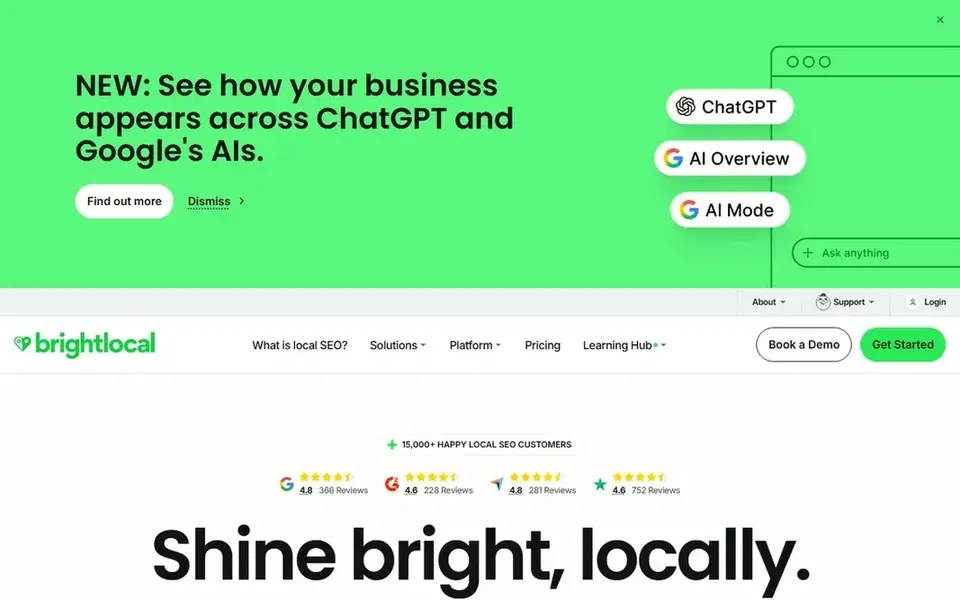
BrightLocal is a local SEO platform that agencies and multi-location brands use for listings, reviews, citations and local rank checks. For a brand with many branches, the useful part is that work is organised by location, so you can see how each branch is doing rather than one blended number for the whole company.
In a multi-location workflow, BrightLocal fits the reporting and listing side. You can keep business details consistent across directories, watch reviews per location, and pull reports that a regional manager can read. It does not replace a bulk profile publisher, so most brands pair it with a listing management tool.
The limit is that pricing is quote-based and the platform leans toward agencies and marketing teams. A brand with one or two locations will find it heavier than needed, and a brand that mainly wants to push profile edits at scale should look at Uberall or Yext first.
- Location-level reporting
- Citation and listing tools
- Review management features
- Quote-based pricing
- Not a full profile publisher
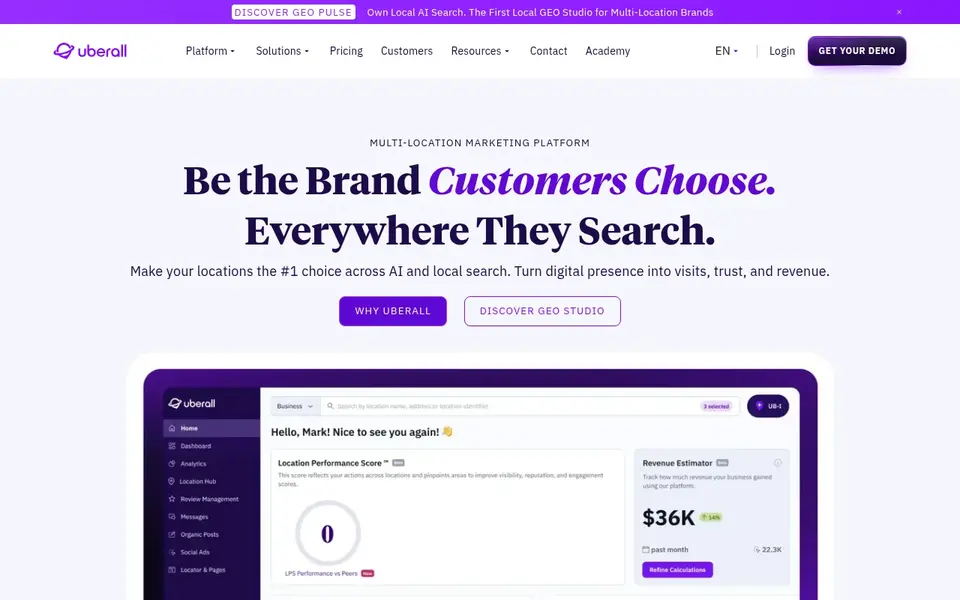
Uberall is a location marketing platform built around managing many business locations from one place. It is the kind of tool a multi-location brand uses when the same core data, such as name, address, hours and categories, has to stay correct across Google and other directories.
For Google Business Profile work, Uberall's value is bulk control. You update a location once and the change flows to connected directories, which cuts the manual editing that causes inconsistencies. It also handles reviews and customer messages per location, so branch teams can respond without logging into each profile.
The limit is that Uberall is aimed at brands with a real location footprint, and setup takes planning across data sources. A small brand with a handful of branches may find the process heavier than the benefit, and pricing is not published as a simple figure.
- Built for many locations
- Listing sync across directories
- Review and messaging features
- Setup takes planning
- Aimed at larger brands
Yext is a listings and brand data platform that lets a company hold its location facts in one place and publish them outward. For multi-location brands, that central record is the appeal: one correct set of hours, addresses and categories that feeds every connected profile and directory.
In practice, Yext suits brands that want tight control over what appears on Google and other listings. When a branch changes hours or moves, the update is made once and pushed out. That reduces the mismatch between a Google profile and the brand's own site, which is a common problem across many locations.
The limit is cost and discipline. Yext is not a light tool for a small brand, and it only works well if the underlying location data is clean. Brands that mainly want rank tracking or review replies should look at the more focused tools below.
- Single source of truth for location data
- Wide directory network
- Structured data control
- Can be costly for small brands
- Requires data discipline
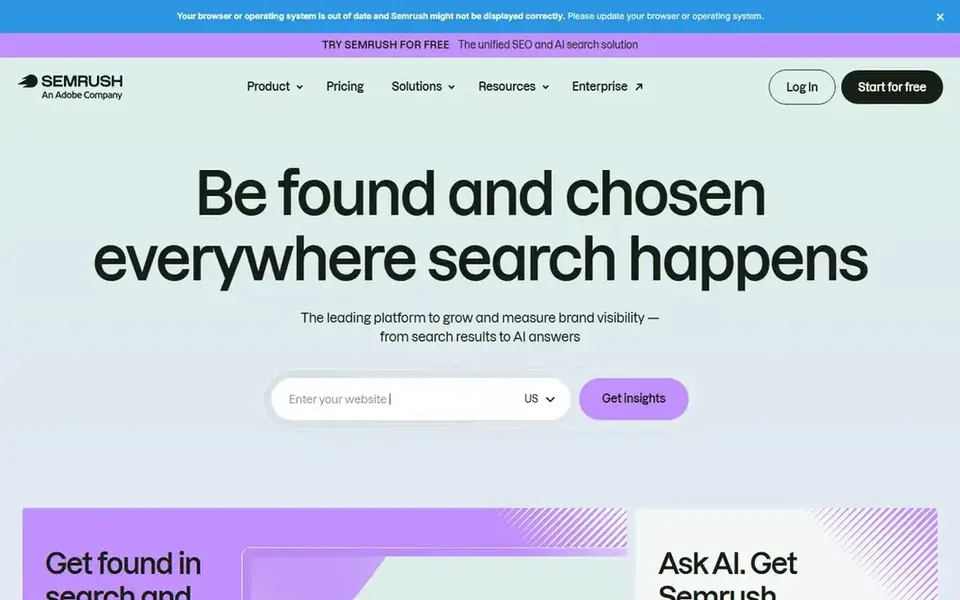
Semrush is an SEO platform with a local marketing section that includes listing management and local visibility checks. For a multi-location brand, it is useful when local work sits alongside wider SEO, such as the brand site and the pages for each branch.
The local side helps you audit how locations appear across directories, spot inconsistent details, and compare visibility against competitors in the same areas. Because it is a broad suite, a marketing team can keep local checks next to keyword and site work instead of buying a separate tool for each job.
The limit is that local profile management is not the core of Semrush. A brand that needs to push edits to many Google profiles at once will still want a dedicated listing tool, and there is no free plan, so the cost has to be justified by wider SEO use.
- Broad SEO data
- Local listing audit tools
- Useful for competitor checks
- Local features are one part of a suite
- No free plan
Local Falcon is a local rank tracking tool that scans Google Maps rankings across a grid of points around a location. For a multi-location brand, that grid view shows how far a branch's visibility reaches, not just whether it appears at one central point.
This matters when branches sit close together or serve overlapping areas. You can scan each location, compare results over time, and see whether a profile change or a review push moved the needle. It gives regional managers a clearer picture than a single rank number.
The limit is scope. Local Falcon reports rank data and does not manage listings or reviews, so it is a measurement tool that sits alongside a profile manager. Brands that only want to fix inconsistent business details will not need it.
- Grid view of Maps rankings
- Scan history over time
- Useful per location
- Rank data only
- No listing management
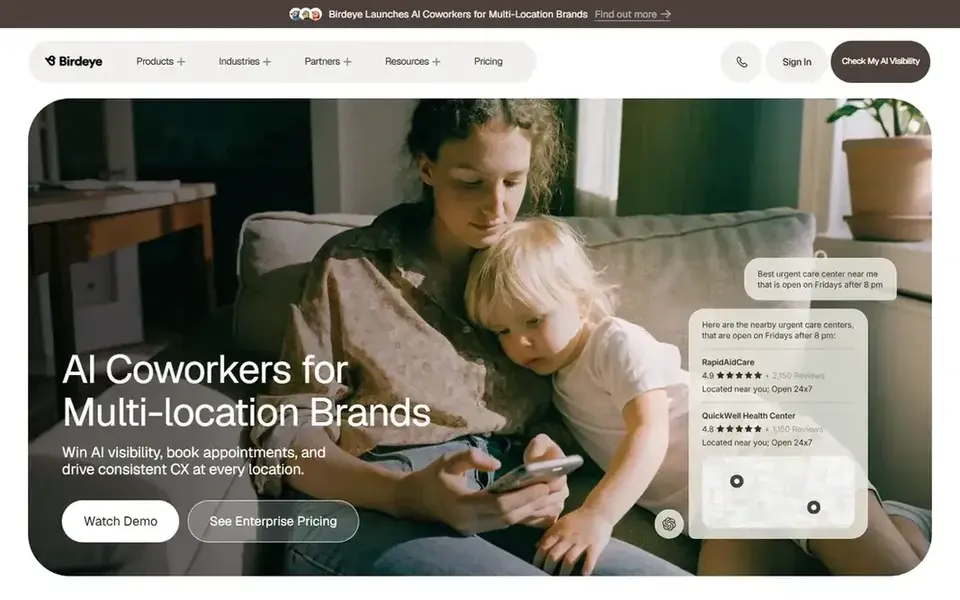
Birdeye is a reputation and customer experience platform used by multi-location businesses to collect reviews and manage messages. For a brand with many branches, the value is that review requests and replies can be handled per location while head office keeps an overview.
Google Business Profile work leans heavily on reviews, and Birdeye fits that part of the job. Branch teams can ask customers for reviews through the platform, reply from a shared inbox, and head office can see which locations are keeping up. That is often the weakest link in a multi-location setup.
The limit is that Birdeye is built around reviews and messaging, not bulk listing edits. A brand that needs to correct addresses and hours across directories should pair it with a listing manager, and pricing is not published as a simple figure.
- Review requests per location
- Inbox for messages and reviews
- Location-level reporting
- Review-focused rather than listings
- Pricing not public
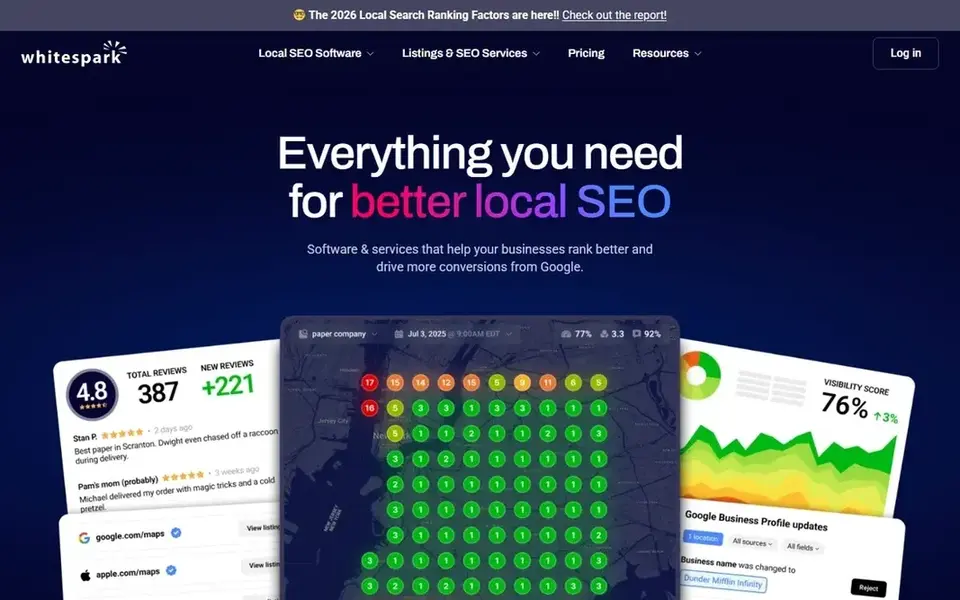
Whitespark is a local search toolset known for citation building and local audits. For a multi-location brand, it is most useful when a new branch opens or when an existing one has thin or inconsistent listings across directories.
The citation tools help you find where a business should be listed and build or fix those listings. The audit side shows where local visibility is weak. In a multi-location workflow, that means you can treat each new location as a checklist rather than a one-off scramble.
The limit is that Whitespark does not publish Google profiles in bulk. It is a citation and audit tool, so brands that want day-to-day profile management need another platform, and pricing is not a simple public figure.
- Citation finding and building
- Local search audit tools
- Useful for new branches
- Not a profile publisher
- Citation work is its main focus
How I chose
I chose these tools by reading vendor documentation and public sources, then matching each one to the way a multi-location brand actually works. The main question was whether a tool helps when there are many branches: bulk edits, location-level reporting, review replies per site, and Maps visibility across areas. I did not run hands-on tests, so the notes here reflect what each vendor documents and how its product is positioned.
I also looked at limits. A tool that only tracks ranks is useful, but it does not fix inconsistent hours. A listing manager does not replace a review platform. I left out tools that are mainly built for single-location businesses or that overlap so much with another pick that the choice would confuse rather than help. Pricing and plan details change, so I point you to each vendor's own site instead of quoting figures.
What to check before you buy
- Confirm the tool can handle your number of locations without manual work per branch, and ask how bulk edits are applied.
- Check whether it connects to Google Business Profile directly or only syncs to directories, because that changes the workflow.
- Ask how review replies are handled per location, and whether branch staff can log in without seeing other locations.
- Look at reporting by location, since a single brand-level score hides which branches are falling behind.
- Check how the tool handles a new location opening and a closed location, because both are common in multi-location brands.
- Read the vendor's own documentation on data sync and permissions before you commit, and confirm current pricing on its site.
Frequently asked questions
What is the best Google Business Profile tool for a brand with many locations?
There is no single best tool, because the job splits into listing management, reviews and rank tracking. BrightLocal is a strong starting point for location reporting and listings, Uberall and Yext handle bulk profile control, and Local Falcon covers Maps rank tracking. Most brands combine two of these rather than relying on one.
Can one tool manage all my Google Business Profiles?
Some listing platforms can push location data to many profiles from one account, but review replies and rank tracking usually sit in separate tools. Check whether the vendor supports bulk edits and per-location permissions, because that is what makes multi-location management practical.
Do I need a separate tool for reviews?
If review volume is high across branches, a dedicated review platform helps because it gives branch staff a shared inbox and head office a per-location view. A listing manager may include basic review features, but brands with many sites often add a review tool on top.
How do I track Maps rankings for many locations?
Use a grid-based rank tracker that scans around each location rather than one central point. That shows how far each branch's visibility reaches and lets you compare branches over time. Pair it with profile and review work so the data reflects changes you actually made.
Are free plans enough for a multi-location brand?
Free plans and trials are useful for checking whether a tool fits your workflow, but they usually limit locations or features. For a brand with several branches, expect to move to a paid plan once you need bulk edits, per-location reporting or review management.
Sources
See where you really rank - block by block
ProMapRanker scans Google Maps across a grid of your service area. Simple monthly plans from $19, white-label on every plan.
Start freeBrowse all guides
← Best Google Business Profile Tools for Movers in 2026Best Google Business Profile Tools for Senior Living in 2026 →
 best google business profile post scheduling tools
Best Google Business Profile Post Scheduling Tools in 2026
A practical guide to the best Google Business Profile post scheduling tools for local businesses, compared from vendor documentation and public sources.
Read → best google business profile management software for restaurants
Best Google Business Profile Software for Restaurants in 2026
A restaurant owner's guide to Google Business Profile management software in 2026. Compare listing tools, review replies, menus, hours and multi-location features.
Read → best google business profile management software for plumbers
Best Google Business Profile Software for Plumbers in 2026
A plumber's guide to Google Business Profile management software in 2026. Compare tools for review replies, service areas, photos, posts and local rankings.
Read → local seo for boutique retail
Local SEO for Boutique Retail Stores
How independent boutiques and retail shops compete with big-box stores in local search results.
Read → google maps reviews ranking
How Google Maps Reviews Influence Your Ranking
How Google Maps reviews affect ranking, from volume and velocity to keywords and responses.
Read → localo alternative
Localo Alternative: Geo-Grid Tracking Plus AI Visibility in One Tool
A Localo alternative that combines geo-grid rank tracking and AI search visibility in a single heatmap.
Read →More in Local SEO & Google Maps · All guides A to Z by date · Latest guides