 ProMapRanker
Best Google Business Profile Tools for Movers in 2026

All-in-one local SEO for small movers · Pricing starts at: See website
Direct answer
My top pick for most moving companies is BrightLocal, because it puts profile audits, review requests and local rank tracking in one dashboard built for multi-location local businesses. It has no free plan stated, so check its pricing page before you commit. If you mainly need review generation, go with Birdeye; if you want a single source of truth for listings across many directories, Yext is the stronger fit.
I compared these tools using vendor documentation and public sources, not hands-on testing. My focus was on what a moving company actually does day to day: answering calls, quoting jobs, finishing moves and asking for reviews. I looked at how each tool handles profile data, review requests and suburb-level reporting, and where each one falls short for a business that serves several towns.
Key takeaways
- Moving companies live and die on phone calls and quote requests, so pick tools that push review requests and profile updates, not just rank charts.
- Google Business Profile has no built-in scheduling for review asks, so a review tool that sends requests after a completed move saves manual work.
- Listings accuracy matters more for movers than most trades because customers search by city and suburb, and wrong service areas send calls to the wrong branch.
- Rank tracking is only useful if it separates map pack positions by suburb, since a mover in one metro may serve dozens of towns.
- No single tool covers audits, reviews, listings and reporting well, so most moving companies end up with two tools that overlap slightly.
Quick comparison
| Pick | Great for | Pricing starts at | Free tier | |
|---|---|---|---|---|
| BrightLocal | All-in-one local SEO for small movers | See website | Not stated | Visit |
 Semrush | Keyword and competitor research for moving searches | See website | Not stated | Visit |
 Yext | Centralised listings for multi-branch movers | See website | Not stated | Visit |
 Birdeye | Review requests after completed moves | See website | Not stated | Visit |
 Whitespark | Citation building and local rank tracking | See website | Not stated | Visit |
 Moz Local | Simple listings and local audits | See website | Not stated | Visit |
 GatherUp | Collecting reviews from moving customers | See website | Not stated | Visit |
The best Google Business Profile tools for movers compared
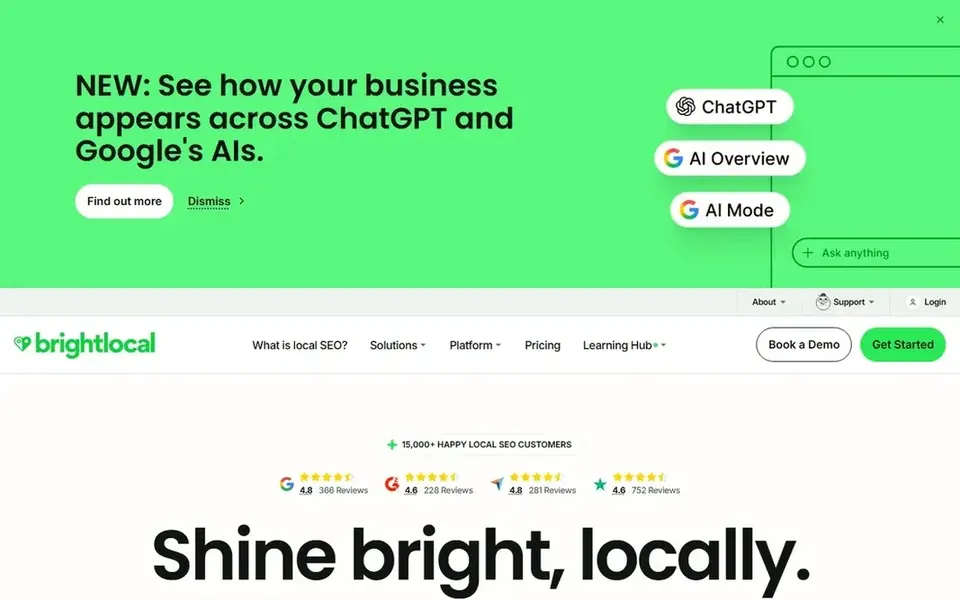
BrightLocal is a local SEO platform aimed at agencies and small local businesses. For a moving company, it works best as the daily dashboard: you check the Google Business Profile audit, see which citations are inconsistent, and send review requests to customers after a move is complete. It suits owner-operators and small fleets that want one login rather than four separate tools.
The workflow that matters for movers is the review request. You can import a list of completed jobs, send requests by email or SMS, and watch reviews come in against each branch or service area. The citation checker also flags duplicate listings, which is common when a mover has changed address or added a second depot. Rank tracking lets you see map positions by suburb rather than one city-wide number.
The limits are mostly about scale and depth. If you run a large multi-state operation with dozens of branches, the reporting may feel basic compared with enterprise tools. Small movers who only want review requests may find it broader than they need.
- Profile audit and citation checks in one place
- review request campaigns you can run after each move
- local rank tracking by location
- Some features sit behind higher tiers
- interface takes a session or two to learn
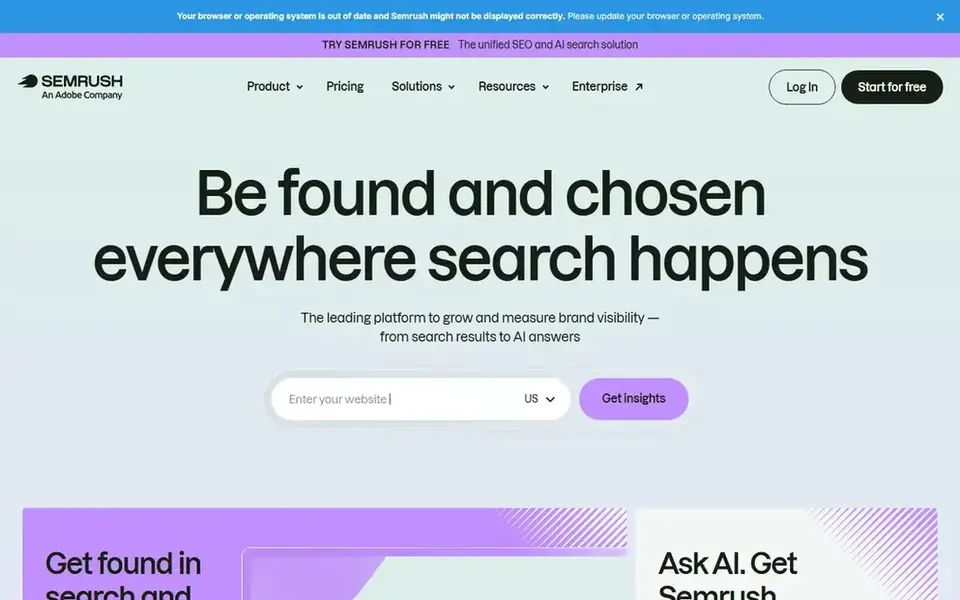
Semrush is a broad SEO platform with a local toolkit attached. For movers, its value is research: which suburbs have high search volume for moving services, which competitors rank in the map pack, and what people search before they call. It fits marketing-minded owners who want to plan content and ads around real search data.
In practice, you would use it to find suburb-level keywords, check which rival moving companies appear for those terms, and track whether your own profile shows up. The listing management add-on can push business data to directories, but the core product is research, not review requests or profile posting. That means it pairs well with a review tool rather than replacing one.
Skip it if you only want to manage your Google Business Profile and collect reviews. It is a heavier subscription and the local features are a smaller part of the package.
- Strong keyword data for "movers near me" style searches
- competitor tracking by city
- listing management add-on available
- Local profile management is not the main focus
- can be more than a small mover needs
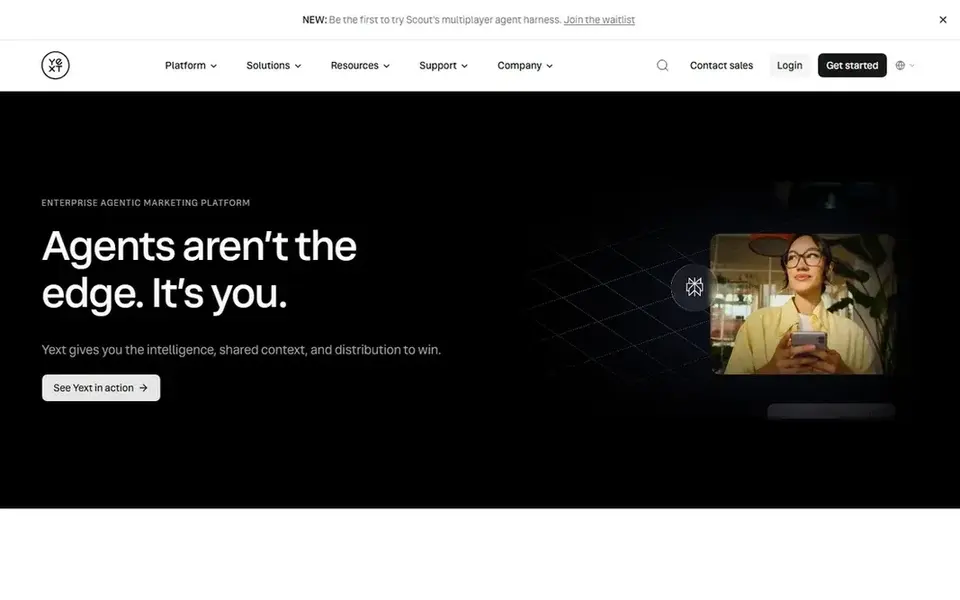
Yext is a listings and digital presence platform. It is built for businesses that need the same address, phone, hours and service areas correct across many sites. For a moving company with several depots or a franchise network, that consistency is the main draw, because a wrong phone number on a directory sends a quote request to a competitor.
The tool lets you update your core business data once and push it out. It also supports profile-style content and review monitoring in some plans. For movers, the useful part is keeping service-area pages and branch details aligned, especially when you add a new depot or change coverage.
The main limit is cost and complexity. Pricing is quote-based, and a single-truck mover will likely get more value from a simpler tool. It also does not replace a review-request workflow on its own.
- One place to manage business data across many directories
- good for multiple branches and service areas
- structured data control
- Quote-based pricing
- can be costly for a single-location mover
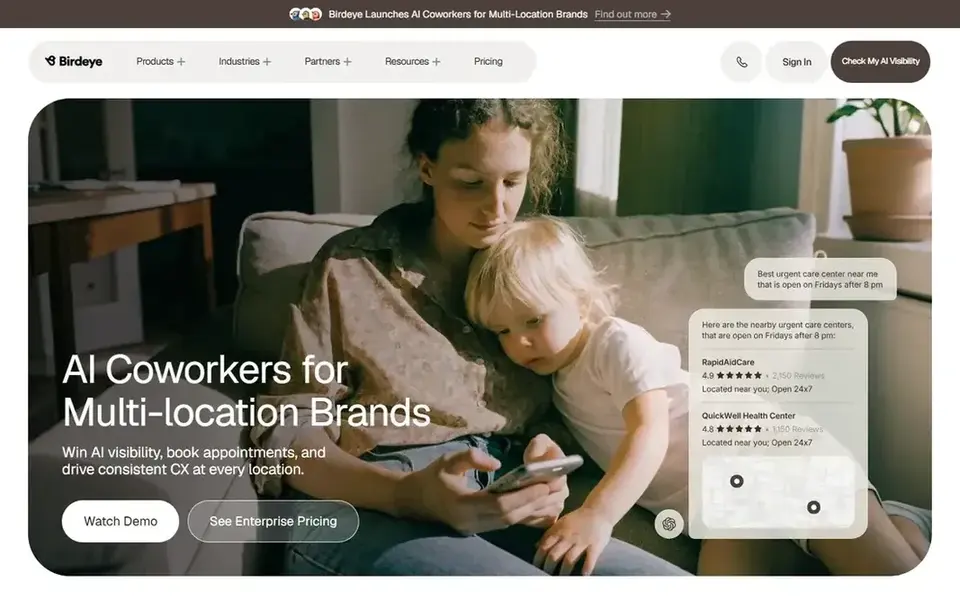
Birdeye is a reputation and customer messaging platform. For movers, the strongest use is the review request: after a job is marked complete, the system asks the customer for a review and routes them to your Google Business Profile. It also handles messages from leads, which matters when someone asks for a quote and expects a fast reply.
The workflow fits moving companies because jobs are finite and easy to trigger. You can send a request the day after the move, follow up once, and watch reviews land. Review monitoring shows what people say across Google and other sites, so you can respond quickly to complaints about damage or delays.
The limit is that it is a general platform. You will spend time configuring templates and triggers for moving jobs. A very small mover may find it more than needed.
- Automated review requests by text and email
- messaging inbox for leads
- review monitoring across sites
- Built for many industries so setup needs tuning
- pricing is quote-based
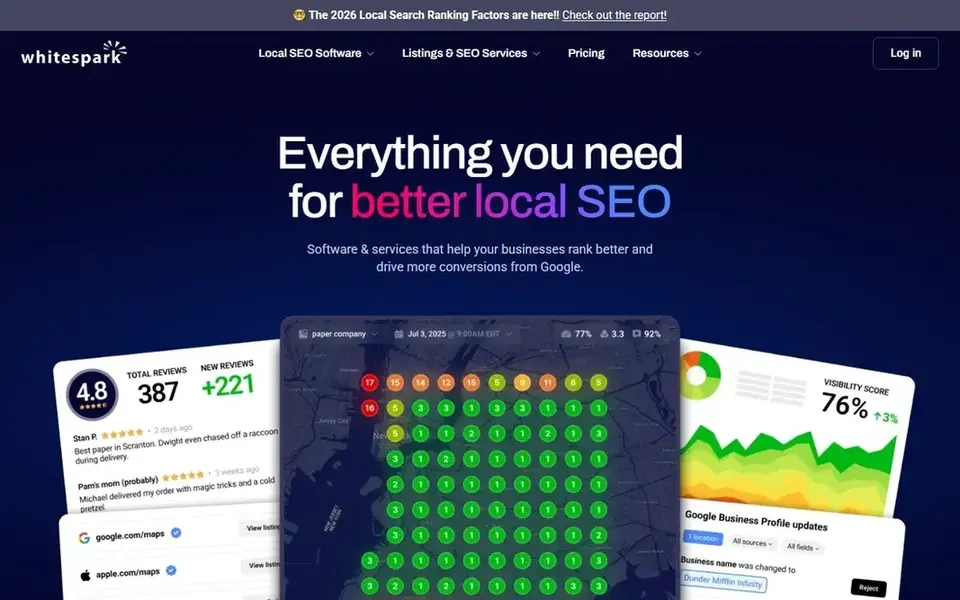
Whitespark is a local search tool and service provider known for citation building and local rank tracking. For movers, it helps you get listed consistently in directories that customers and Google use to verify a business. The rank grid shows where you appear across a map, which is useful when your service area covers many suburbs.
The citation side is practical: you find where your business is listed, fix inconsistencies and add missing listings. That reduces the chance of a customer calling an old number. Rank tracking by grid helps you see whether a new suburb page or profile change moved the needle.
The limit is scope. It is not a review-request engine, and citation work can take time. Movers who want automated review asks should pair it with another tool.
- Citation finder and building service
- local rank grid tracking
- focused on local search rather than broad SEO
- Less review-request automation
- citation work can be manual
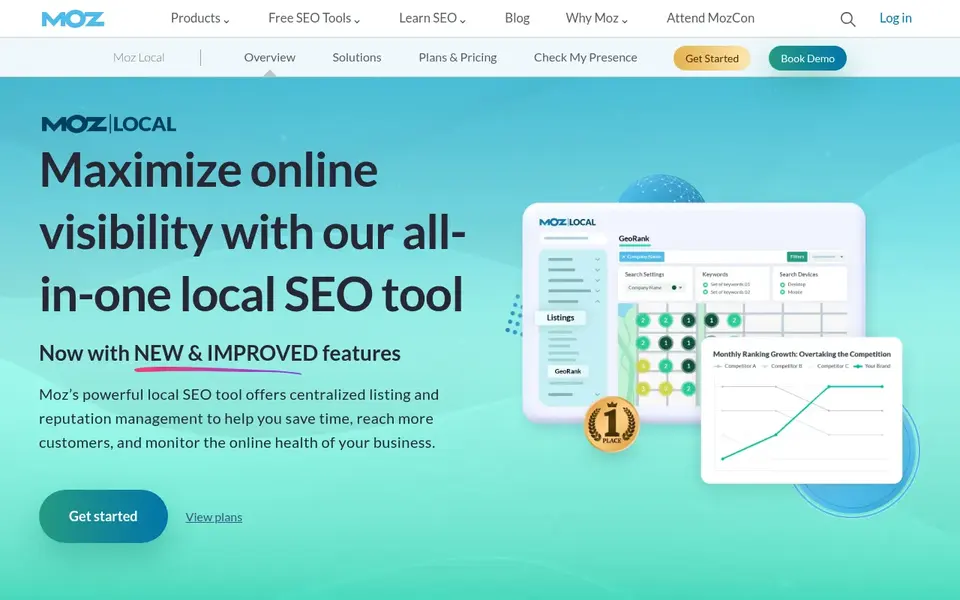
Moz Local is a listings management and local audit tool from Moz. For a moving company, it is a simple way to check that your name, address and phone number match across directories and to spot duplicate listings. The audit gives you a clear list of what to fix, which suits owners who want a checklist rather than a complex dashboard.
It fits small and mid-size movers who mainly need listings accuracy and a basic profile check. The interface is easy to hand to a office manager who is not an SEO specialist. It does not do heavy review-request automation, so you would still need a separate process for asking customers for reviews.
Skip it if you need suburb-level rank grids or automated review campaigns. It is a solid baseline tool, not a full local marketing suite.
- Listings distribution to major directories
- local audit of profile and citations
- straightforward interface
- Fewer review automation features
- less depth for large multi-branch networks
GatherUp is a review management tool focused on collecting and responding to customer feedback. For movers, it is a direct fit: you upload completed jobs, send review requests, and monitor what comes back. The response tools help you reply to reviews about timing, pricing or damage in a calm, consistent way.
The workflow is simple enough for a small office team. You can set up templates for moving jobs, send requests after delivery, and track which customers opened or clicked. It also shows reviews from multiple sites in one inbox, so you are not logging into each platform separately.
The limit is that it does not manage listings or track map rankings. If your main problem is inconsistent directory data, this is not the tool for that. It is best as a focused review layer alongside a listings tool.
- Review request campaigns by email and SMS
- review monitoring and response tools
- simple setup for service businesses
- Narrower than a full local SEO suite
- less useful for listings management
How I chose
I chose these tools by reading vendor documentation and public sources, then matching features to how moving companies actually operate. I did not run hands-on tests, so I am not claiming benchmark results or personal trial experience. I looked for tools that handle the jobs movers care about: profile accuracy, review requests after a completed move, suburb-level visibility and listings consistency across directories.
I also weighed limits. A tool that is excellent for a franchise network may be overkill for a two-truck operation, and a review tool does not fix wrong address data. I excluded tools that are mainly general SEO suites without a clear local profile workflow, and I avoided any vendor I could not confirm is currently operating. Where pricing is quote-based or unclear, I say so rather than guessing.
What to check before you buy
- Confirm the tool can send review requests after a job is marked complete, not just on a fixed schedule.
- Check whether rank tracking reports by suburb or only by city, since movers serve many towns.
- Ask how the tool handles multiple branches or service areas if you have more than one depot.
- Verify that listings updates cover the directories your customers actually use, not just a long list.
- Check whether review responses can be assigned to a staff member and tracked.
- Confirm the contract length and whether you can export your data if you leave.
Frequently asked questions
Do movers need a Google Business Profile tool at all?
Not strictly, but a tool saves time. The profile itself is free, and you can update hours and respond to reviews manually. Tools help with review requests, listings consistency and suburb-level tracking. For a mover with steady job volume, automated review requests are usually the first feature worth paying for.
Which tool is best for getting more Google reviews for a moving company?
Birdeye and GatherUp are the most direct fits because both focus on review requests and monitoring. BrightLocal also includes review campaigns alongside its other local SEO features. The key is to send requests after the move is complete, when the customer is most likely to respond, and to follow Google's review policies.
Can these tools fix a wrong address on directory sites?
Some can. Yext, Moz Local and BrightLocal all include listings or citation management that helps you correct business data across directories. The exact coverage depends on the plan. Always check that the tool updates the directories that matter in your area, and keep a manual list of any it does not cover.
Is rank tracking useful for a moving company that serves many suburbs?
Yes, if it reports by location rather than one city-wide average. A mover may rank well in one suburb and poorly in the next. Grid-based tracking from Whitespark or location tracking in BrightLocal shows that difference. Use it to decide which suburb pages or profile changes to prioritise.
Do I need a separate tool for listings and reviews?
Often yes. Listings tools keep your name, address and phone number consistent, while review tools collect and manage feedback. Some platforms bundle both, but the depth varies. A small mover can start with one review tool and add listings management later if duplicate or wrong listings become a problem.
Sources
See where you really rank - block by block
ProMapRanker scans Google Maps across a grid of your service area. Simple monthly plans from $19, white-label on every plan.
Start freeBrowse all guides
← Best Google Business Profile Post Scheduling Tools in 2026Best Google Business Profile Tools for Multi-Location Brands (2026) →
 best google business profile management software for restaurants
Best Google Business Profile Software for Restaurants in 2026
A restaurant owner's guide to Google Business Profile management software in 2026. Compare listing tools, review replies, menus, hours and multi-location features.
Read → best google business profile management software for plumbers
Best Google Business Profile Software for Plumbers in 2026
A plumber's guide to Google Business Profile management software in 2026. Compare tools for review replies, service areas, photos, posts and local rankings.
Read → best google business profile management software for gyms
Best Google Business Profile Software for Gyms in 2026
A practical guide to the best Google Business Profile management software for gyms in 2026, compared from vendor documentation and public sources.
Read → best ai overviews rank tracker software
Best AI Overviews Rank Tracker Software in 2026
Compare the best ai overviews rank tracker software for Google AI Overviews, AI Mode, and chat answers, with prompt tracking, citations, and pricing in 2026.
Read → local seo for pet groomers
Local SEO for Pet Groomers
A local SEO guide for pet groomers: Google Business Profile setup, reviews, and appointment booking and before/after photos.
Read → local seo for funeral homes
Local SEO for Funeral Homes: What Actually Works
A sensitive, practical local SEO guide for funeral homes: Google Business Profile, reviews, and search visibility done right.
Read →More in Local SEO & Google Maps · All guides A to Z by date · Latest guides