 ProMapRanker
Best Call Tracking Software for Restaurants in 2026

Restaurant call attribution and routing · Pricing starts at: See website
Direct answer
CallRail is my #1 pick for restaurants because it ties phone orders and reservations back to the marketing source that drove them, using dynamic number insertion on your site and separate tracking numbers for menus, ads and listings. It has no free plan stated, so check its pricing page. CallTrackingMetrics suits multi-location groups that need routing rules, and WhatConverts fits owners who want call and form leads scored in one place.
I compared these tools from vendor documentation and public sources, not from hands-on testing. I looked at how each one handles the way restaurants actually get calls: takeaway orders, table bookings, catering enquiries and questions about hours or parking. The order below reflects fit for restaurant workflows, not a lab test.
Key takeaways
- Restaurants live on phone orders and reservations, so call tracking tells you which menu page, ad or listing actually produced the call.
- Dynamic number insertion swaps the number shown to each visitor so online and offline sources stay separated without printing dozens of numbers.
- Call routing and whisper messages matter for busy dinner service, because a missed ring is a lost table or order.
- Call recordings and transcripts help you check how staff handle takeaway orders and booking requests.
- Match the tool to your setup: a single location needs simple attribution, while a multi-location group needs routing, IVR and location-level reporting.
Quick comparison
| Pick | Great for | Pricing starts at | Free tier | |
|---|---|---|---|---|
| CallRail | Restaurant call attribution and routing | See website | Not stated | Visit |
 CallTrackingMetrics | Multi-location routing and IVR | See website | Not stated | Visit |
 WhatConverts | Scoring calls and form leads together | See website | Not stated | Visit |
 Invoca | Larger groups with paid media | See website | Not stated | Visit |
 DialogTech (now Invoca) | Legacy search call attribution | See website | Not stated | Visit |
 Marchex | Enterprise call analytics | See website | Not stated | Visit |
 Ringba | Pay-per-call operations | See website | Not stated | Visit |
The best call tracking software for restaurants compared
CallRail is a call tracking platform that assigns tracking numbers to marketing sources and shows which one produced each call. For a restaurant, that means a number on the online menu, another in a Google Business Profile, and another in a paid ad can each be measured separately. It fits independent restaurants and small groups that want to know whether the menu page, the reservation link or a local ad is driving the phone.
In daily use, CallRail's dynamic number insertion swaps the displayed number based on how a visitor arrived, so you do not need to print a different number on every page. Call routing can send takeaway calls to the counter line and booking calls to the host stand, and whisper messages tell staff which source is calling before they answer. Recordings and transcripts let you review how orders and reservations were handled during a rush.
The limits are practical: each tracking source usually needs its own number, and a restaurant with many campaigns can accumulate numbers and cost. Very small single-location restaurants that only want a call log may find it more than they need.
- Dynamic number insertion for web visitors
- call routing and whisper messages
- recordings and transcripts for order quality
- Per-number pricing can grow with many sources
- advanced features sit on higher tiers
CallTrackingMetrics is a call tracking and contact center platform with routing, IVR and reporting. It suits restaurant groups with several locations that need calls sent to the right branch based on area code, menu selection or business hours. A group with a central booking line and separate takeaway lines can build rules that send each caller to the right place.
For restaurants, the IVR is the useful part: a caller can press a key for reservations, takeaway or catering, and the system routes and reports on each type. Location-level dashboards show which branch gets the most calls and from which source. That helps a group decide where to spend local ads and which listing needs attention.
The trade-off is setup time. Building call flows and number pools takes planning, and a single restaurant with one phone line will not use most of it. Groups with a marketing manager or an agency handling the account get more from it.
- Flexible call routing and IVR
- location-level reporting
- integrations with ad and CRM tools
- More setup work than simple tools
- interface can feel heavy for a single site
WhatConverts is a lead tracking platform that captures calls, form submissions and chats and ties each one to its marketing source. For a restaurant, it is a good fit when you want to see catering enquiries, large party bookings and online form requests next to phone calls in one list. Each lead can be marked as qualified or not, which helps separate real bookings from spam or wrong numbers.
The workflow suits restaurants that take both calls and web enquiries. A catering form and a phone call about a private event can be compared by source, so you see whether the events page or a local ad is producing serious enquiries. Call recording and lead scoring help managers review how staff handled a booking request.
Its limits show on complex phone routing. A restaurant group that needs multi-level IVR and number pools will find CallTrackingMetrics or Invoca stronger. WhatConverts fits owners who care most about lead quality and source clarity.
- Combines calls, forms and chats in one lead view
- lead scoring and qualification
- clear source reporting
- Less deep on phone-tree routing
- better for lead tracking than call center work
Invoca is a call intelligence platform focused on tying phone calls to digital marketing, especially paid search and social campaigns. It fits restaurant groups and franchises that spend on ads and need to know which campaigns produce reservations and orders. Conversation analytics can scan calls for booking intent and order details.
For a restaurant group running local ads across several cities, Invoca can show which campaign and keyword led to a call and whether that call became a reservation. That is more than simple number tracking, and it suits teams with a marketing budget and analyst time. The platform also connects to common ad and CRM systems.
The limits are scale. Invoca is built for larger advertisers, and a single independent restaurant will pay for capability it does not use. Smaller operators should look at CallRail or WhatConverts first.
- Strong call attribution for paid search and social
- conversation analytics
- enterprise integrations
- Aimed at larger advertisers
- overkill for a single restaurant
DialogTech was a call tracking company known for search marketing attribution, and its brand and technology now sit under Invoca. If you find older references to DialogTech while researching restaurant call tracking, treat the current product as Invoca and check the Invoca site for current details. There is no separate DialogTech product to compare today.
For restaurants, the practical point is that any guide listing DialogTech as a standalone option is out of date. The call attribution and conversation analytics it was known for are now part of Invoca's platform, which is aimed at larger advertisers. A single restaurant should not chase the old brand.
Skip it as a separate choice. If you want what DialogTech offered, evaluate Invoca directly and confirm current features and fit with the vendor.
- Long history in search call tracking
- conversation analytics through Invoca
- enterprise reporting
- Brand now folded into Invoca
- not a separate product to evaluate
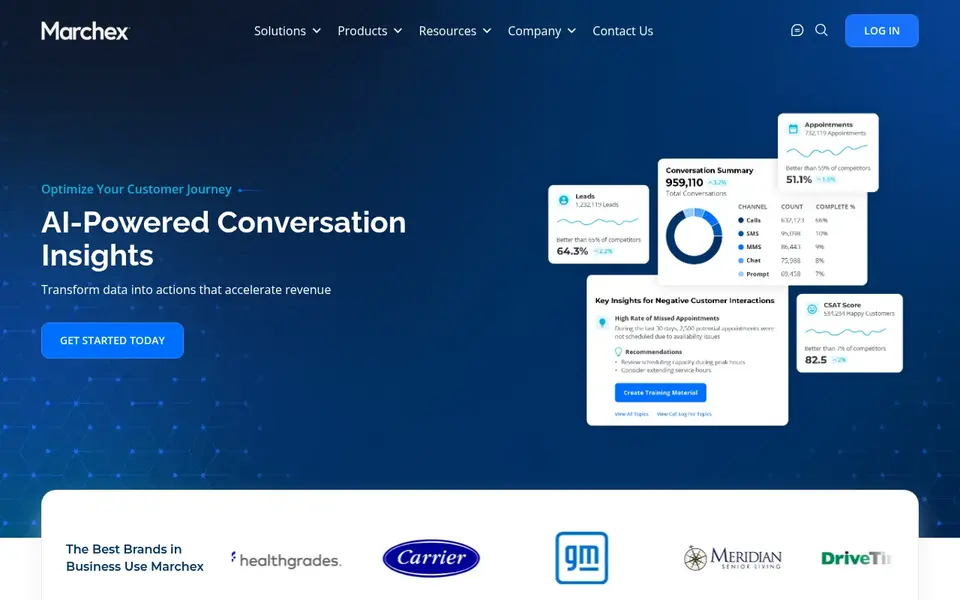
Marchex is a call analytics company that works with larger advertisers and marketing teams. It focuses on extracting insight from phone conversations and tying calls to marketing spend. For a restaurant chain with a central marketing team, it can support reporting on which campaigns drive calls across many locations.
The restaurant use case is mostly at group level: measuring call outcomes across regions and feeding that into media decisions. It is not a tool a single owner would set up to track takeaway orders. The value appears when there is enough call volume and a team to act on the analysis.
Most independent restaurants and small groups should skip it. The setup and focus suit enterprise advertisers, and smaller operators get better value from CallRail, CallTrackingMetrics or WhatConverts.
- Call analytics for large advertisers
- conversation data
- works with big marketing teams
- Enterprise focus
- not built for small restaurant budgets
Ringba is a pay-per-call platform used by call centers, lead generators and affiliate marketers to route and monetize calls. It is included here because it appears in call tracking searches, but it is not a natural fit for a restaurant. Its strengths are in buying and selling calls, not in attributing takeaway orders to a menu page.
A restaurant group would only consider it in an unusual setup, such as running a pay-per-call campaign through partners. For normal reservation and order tracking, the routing and reporting model is more complex than needed. The learning curve is steep for a team without call-center experience.
Most restaurants should skip Ringba. It suits performance marketers and call centers, and the restaurant-focused tools above cover attribution and routing with far less setup.
- Built for pay-per-call and affiliate routing
- real-time call handling
- detailed call flow control
- Not designed for restaurant marketing
- needs technical setup
How I chose
I built this list from vendor documentation and public sources, and I did not run hands-on tests of these platforms. I started with the jobs a restaurant needs a call tracking tool to do: show which source produced a call, route calls to the right line or location, and give managers a way to review how orders and bookings were handled. Then I checked which vendors document those features clearly.
I also weighed limits. A single restaurant does not need enterprise conversation analytics, and a multi-location group needs routing and location reporting that a simple tool may lack. I left out tools that are mainly pay-per-call or affiliate platforms except where readers are likely to encounter them in searches, and I flagged those as poor fits. Where a brand has been folded into another, I said so rather than listing it as a separate product.
What to check before you buy
- Confirm the tool supports dynamic number insertion so web visitors see the right tracking number without you printing several numbers.
- Check how tracking numbers are billed, since a restaurant with many sources can accumulate numbers quickly.
- Ask whether call routing and whisper messages can send takeaway, reservation and catering calls to different staff.
- Confirm call recordings and transcripts are available if you want to review order handling during busy service.
- Check reporting by location if you run more than one branch, so each site sees its own calls and sources.
- Make sure the tool connects to the ad platforms and listings you use, and read how it handles Google Business Profile calls.
Frequently asked questions
Do restaurants really need call tracking software?
Yes, if the phone matters to your business. Many restaurants still take takeaway orders and reservations by phone, and call tracking shows which menu page, ad or listing produced those calls. Without it, you know calls happen but not where they come from, so you cannot tell which marketing is working.
Can call tracking handle both reservations and takeaway orders?
Most tools on this list can route calls to different lines based on the number dialed or an IVR menu. A caller can choose reservations or takeaway, and the system reports on each type separately. That separation helps you staff the right line and see which service generates more calls.
Will a tracking number hurt my Google Business Profile calls?
A tracking number in your Google Business Profile can work, but you should follow Google's guidelines and keep your main business number consistent where required. Many restaurants use tracking numbers on ads and landing pages and keep the primary number on the profile. Check the current guidelines and your tool's documentation before changing the profile number.
How many tracking numbers does a restaurant need?
It depends on how many sources you want to measure. A single location might start with a few numbers for the website, a main ad campaign and a listing. A group with several branches and campaigns will need more. Ask the vendor how numbers are billed before you commit to a large set.
Is call tracking worth it for a small independent restaurant?
It can be, if you spend on local ads or want to know whether your website or listings drive calls. A simple plan from a tool like CallRail or WhatConverts is enough for most small restaurants. If you take very few calls and do no local marketing, the value is lower.
Sources
See where you really rank - block by block
ProMapRanker scans Google Maps across a grid of your service area. Simple monthly plans from $19, white-label on every plan.
Start freeBrowse all guides
← Best Call Tracking Software for Pool Service Companies in 2026Best Call Tracking Software for Roofers in 2026 →
 best call tracking software for pest control companies
Best Call Tracking Software for Pest Control Companies in 2026
A guide to the best call tracking software for pest control companies in 2026, compared from vendor documentation, with fit, limits and what to check.
Read → best call tracking software for med spas
Best Call Tracking Software for Med Spas in 2026
Compare the best call tracking software for med spas in 2026. I look at CallRail, CallTrackingMetrics, WhatConverts, Invoca and more from vendor docs.
Read → best call tracking software for home services
Best Call Tracking Software for Home Services in 2026
A practical guide to the best call tracking software for home services in 2026, compared from vendor documentation and public sources.
Read → best android apps
Best Android Apps in 2026: 8 Apps Compared
Best Android apps for 2026 compared: Google Maps, WhatsApp, Spotify, ChatGPT and more for news, music, photos, notes and everyday phone use Check terms.
Read → local seo for bathroom remodelers
Local SEO for Bathroom Remodelers
A local SEO guide for bathroom remodelers: Google Business Profile setup, reviews, and before/after photo local SEO for remodelers.
Read → what is geogrid
What Is Geogrid Rank Tracking? A Beginner's Explanation
A beginner-friendly explanation of geogrid rank tracking, how it works, and why it matters for local SEO.
Read →More in Local SEO & Google Maps · All guides A to Z by date · Latest guides