 ProMapRanker
Best Call Tracking Software for Pool Service Companies in 2026

Everyday call attribution for pool service · Pricing starts at: See website
Direct answer
CallRail is my top pick for pool service companies because it ties every inbound call to the ad, keyword or Google Business Profile listing that produced it, and it handles multiple tracking numbers and call routing well. It offers a free trial, so you can test it before paying. CallTrackingMetrics suits companies that want deeper routing and IVR control, and WhatConverts fits owners who want calls and form leads scored in one place.
I compared these tools using vendor documentation and public sources rather than hands-on tests. My focus was how each one handles the way pool service companies actually get calls: seasonal spikes, repair estimates, recurring maintenance inquiries and Google Ads campaigns aimed at homeowners in specific suburbs.
Key takeaways
- Pool service companies live on phone calls, so the software has to attribute calls to Google Ads, Google Business Profile and organic search, not just count them.
- Dynamic number insertion swaps the tracking number on your website by traffic source, which keeps attribution clean without changing your printed number.
- Seasonal demand spikes in spring and summer make call volume reporting and routing rules more useful than a flat monthly call log.
- Call recordings and transcripts help you review how staff handle repair estimates, chemical service questions and recurring maintenance sign-ups.
- Check number availability in your area code, because a tracking number outside your service area confuses callers.
Quick comparison
| Pick | Great for | Pricing starts at | Free tier | |
|---|---|---|---|---|
| CallRail | Everyday call attribution for pool service | See website | Free trial | Visit |
 CallTrackingMetrics | Routing rules and IVR control | See website | Free trial | Visit |
 WhatConverts | Calls and form leads together | See website | Free trial | Visit |
 Invoca | Larger multi-branch pool operations | See website | Not stated | Visit |
 DialogTech (now Invoca) | Existing DialogTech accounts | See website | Not stated | Visit |
 Ringba | Pay-per-call and lead resale setups | See website | Free plan | Visit |
 Marchex | Enterprise call analytics | See website | Not stated | Visit |
The best call tracking software for pool service companies compared
CallRail is the tool I recommend first to pool service owners because it covers the basics well without demanding a marketing team to run it. You get tracking numbers, call routing, recordings and reports that show which campaigns produced calls about pump repairs, green pool cleanups or weekly service.
For a pool company, the useful part is dynamic number insertion. Your website shows a tracking number to visitors from Google Ads and a different one to organic visitors, so you can see which channel brings the repair calls. You can also set up a tracking number for your Google Business Profile listing and separate numbers for each service area, which helps when you run ads in several towns.
The limits show up if you need deep IVR trees or pay-per-call billing. Small and mid-size pool companies rarely need that, but very large operations with dispatch teams may outgrow the simpler setup.
- Clear call attribution to ads and listings
- dynamic number insertion on your site
- call recordings and transcripts
- Minute overages can add up
- advanced features cost more
CallTrackingMetrics is a stronger fit for pool companies with several technicians and a dispatcher who needs calls routed by service area or service type. You can build an IVR menu that sends repair calls to one queue and maintenance sign-ups to another.
The reporting goes deeper than basic call counts. You can see which campaigns drive calls that last long enough to be a real estimate conversation, and route after-hours calls to an answering service. For a business that gets emergency calls about leaks or equipment failures, that routing matters.
The trade-off is setup time. If you want something you can switch on in an afternoon, this is more tool than you need.
- Flexible call routing and IVR
- detailed reporting
- integrations with CRM and ads
- More setup work
- interface takes time to learn
WhatConverts treats every inquiry as a lead, whether it came by phone, web form or chat. For a pool service company, that means a quote request form and a phone call about a filter replacement land in the same report.
You can mark leads as qualified or junk, which is useful when you get calls from people outside your service area or tire-kickers asking about pricing. Over a season, that record shows which ads produce real jobs rather than just calls.
The main limit is that it is lead-centric rather than routing-centric. If you need complex phone trees, CallTrackingMetrics is the better match.
- Combines call and form lead tracking
- lead scoring and marking
- clean client-style reports
- Pricing scales with lead volume
- fewer pure call-routing features
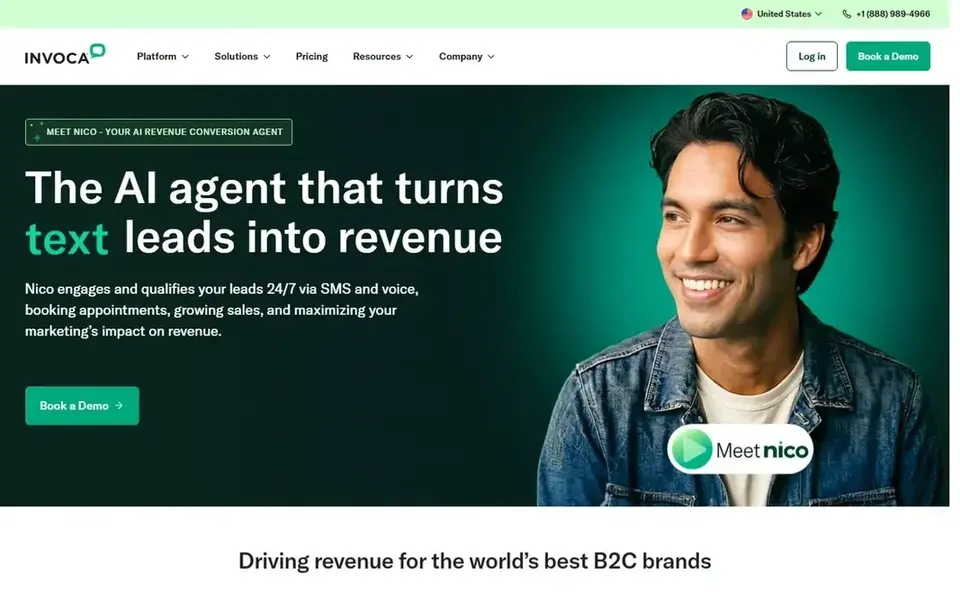
Invoca is built for companies with marketing teams and meaningful ad budgets. A pool service business with several branches across a metro area could use it to see which campaigns drive calls that convert into signed maintenance contracts.
Its conversation analytics can flag calls where the caller mentions a specific service, which helps when you run separate campaigns for repairs and recurring service. That is useful for a company spending across many suburbs.
Most single-location pool companies will find it more than they need, and the sales-led process means you cannot just sign up and start.
- Conversation analytics
- strong ad platform integrations
- enterprise reporting
- Aimed at larger teams
- quote-based sales process
DialogTech was a well-known call analytics platform and is now part of Invoca. I list it because pool companies researching older comparisons will run into the name and wonder whether it still exists as a separate product.
If you already have a DialogTech account, your service now runs through Invoca. If you are buying new, go straight to Invoca and skip the confusion. There is no reason to seek out DialogTech as a fresh purchase in 2026.
- Same call analytics heritage
- now part of Invoca platform
- existing integrations carry over
- No longer sold as a standalone product
- new buyers should look at Invoca
Ringba is a pay-per-call platform, which means it is built for businesses that buy or sell calls rather than a pool company tracking its own marketing. A pool service company that also runs a lead-generation side business might find it useful.
For a standard pool service operation, the features are aimed at the wrong problem. You want to know which ad produced a repair call, not manage bid pricing on inbound calls from publishers.
I include it so you can rule it out quickly if you see it in a list of call tracking tools.
- Built for pay-per-call tracking
- real-time bidding tools
- number management at scale
- Not designed for local service reporting
- steep learning curve for a pool company
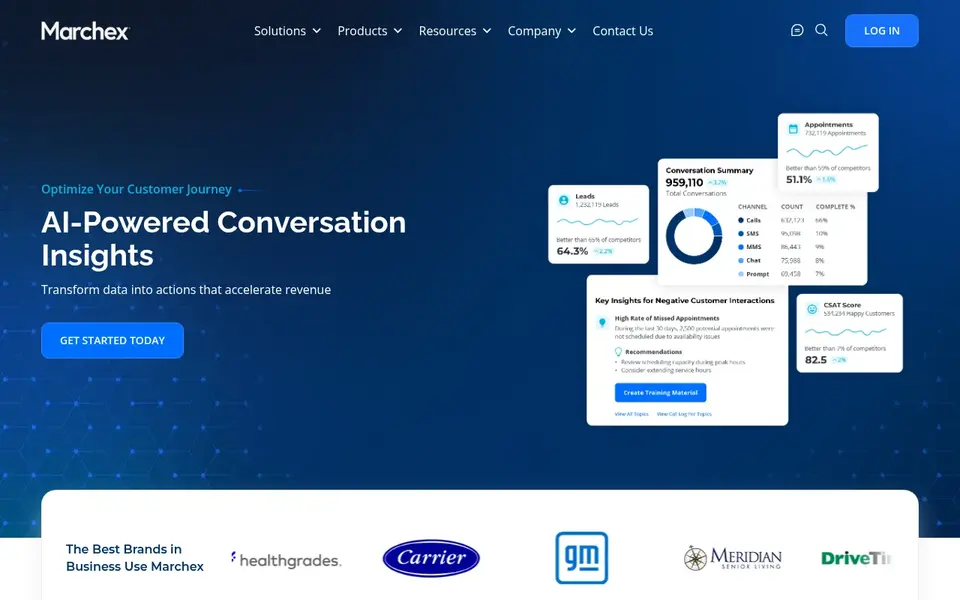
Marchex focuses on call analytics for larger organizations, including conversation intelligence that classifies what callers talk about. A regional pool company with a call center could use it to spot trends in service complaints or common repair questions.
For a small owner-operator with two trucks, it is far more than needed. The sales process alone makes it a poor fit for a company that just wants to know which Google Ads campaign produced last week's calls.
- Conversation intelligence
- large-scale call data
- industry reporting
- Enterprise sales process
- overkill for small pool companies
How I chose
I built this list from vendor documentation and public sources, not from hands-on testing. I read each vendor's feature pages, help documentation and public descriptions of how the products work, then matched those features to the way pool service companies get business: phone-heavy, seasonal, local and dependent on Google Ads and Google Business Profile visibility.
My main filters were call attribution to ads and listings, dynamic number insertion, routing options, recording and reporting, and whether the tool fits a small local team. I also noted where a product is aimed at larger operations or a different use case entirely, like pay-per-call networks.
I did not rank by price or claim performance results. Where a product has changed ownership or been folded into another platform, I said so, because that affects whether you should consider it at all.
What to check before you buy
- Confirm tracking numbers are available in your local area codes, since an out-of-area number can make homeowners hang up.
- Check whether dynamic number insertion works with your website platform, so the tracking number swaps cleanly by traffic source.
- Ask how calls from your Google Business Profile listing are tracked, because that is a major source of pool service inquiries.
- Confirm the tool integrates with the CRM or scheduling software your office already uses for service calls.
- Look at how after-hours and overflow calls are routed, since pool emergencies do not follow business hours.
- Check whether call recordings and transcripts are included, and how long they are retained, so you can review estimate calls.
Frequently asked questions
Do pool service companies really need call tracking software?
Yes, if you spend money on Google Ads or depend on Google Business Profile calls. Most pool service jobs start with a phone call about a repair, a green pool or recurring maintenance. Without tracking, you cannot tell which ads or listings produce those calls, so you end up guessing where to put your budget.
What is dynamic number insertion and why does it matter for a pool company?
Dynamic number insertion shows a different tracking number to website visitors depending on how they arrived, such as from a Google Ad or an organic search. It matters because it keeps attribution accurate without forcing you to print different numbers on your trucks or invoices. Your main business number stays the same for existing customers.
Can call tracking handle seasonal spikes in spring and summer?
It can, if you choose a plan that fits your peak call volume. Pool service demand rises sharply in spring and summer, so check how the vendor handles minute overages and whether you can add tracking numbers for seasonal campaigns. Review your call volume from last season before you pick a tier.
Will call tracking software work with my Google Business Profile?
Most of the tools here let you place a tracking number on your Google Business Profile listing and report calls from it separately. That helps you see how much of your phone traffic comes from Maps and local search versus paid ads. Check the setup steps in the vendor documentation before you switch numbers.
Is a free plan enough for a small pool service business?
Usually not for long. Free plans and trials are useful for testing attribution and routing, but most pool companies need multiple tracking numbers, recordings and ad integrations as they grow. Start with a trial, confirm the workflow fits your office, then move to a paid tier that matches your call volume.
Sources
See where you really rank - block by block
ProMapRanker scans Google Maps across a grid of your service area. Simple monthly plans from $19, white-label on every plan.
Start freeBrowse all guides
← Best Call Tracking Software for Pest Control Companies in 2026Best Call Tracking Software for Restaurants in 2026 →
 best call tracking software for med spas
Best Call Tracking Software for Med Spas in 2026
Compare the best call tracking software for med spas in 2026. I look at CallRail, CallTrackingMetrics, WhatConverts, Invoca and more from vendor docs.
Read → best call tracking software for home services
Best Call Tracking Software for Home Services in 2026
A practical guide to the best call tracking software for home services in 2026, compared from vendor documentation and public sources.
Read → best review request software for window cleaning companies
Best Review Request Software for Window Cleaning Companies in 2026
A practical guide to the best review request software for window cleaning companies in 2026, compared from vendor documentation and public sources.
Read → local citation finder
Local Citation Finder: A Complete Guide
Everything you need to know about local citation finder: what it is, why it matters for local SEO, and exactly how to act on it.
Read → geo grid heatmap seo
How to Read a Local Search Grid: A Beginner's Heatmap Tutorial
New to geo-grid heatmaps? This beginner tutorial walks you through reading every color, number, and pattern.
Read → geo grid heatmap seo
Why Your Geo-Grid Is Mostly Red (And the Fix Workflow)
Heatmap full of red zones? Learn what causes it and a prioritized, prescriptive workflow to turn red into green.
Read →More in Local SEO & Google Maps · All guides A to Z by date · Latest guides