 ProMapRanker
Best AI Security Platforms for Workflows (2026)

Cloud-native threat detection at scale · Pricing starts at: See website
Direct answer
Google SecOps comes first here, mainly for cloud-native threat detection at scale. Listed starting prices: CrowdStrike Falcon from $7.99 per device a month and Microsoft Security Copilot from $4 per provisioned SCU. Alternatives: Palo Alto Networks Cortex XSIAM for SOC automation and centralized data, and CrowdStrike Falcon for unified endpoint and cloud security. Details, prices and limits for the rest of the 6 tools are below.
This ProMapRanker guide covers 6 AI security platforms for workflows. Each profile lists a starting price, free plan details, strengths and drawbacks, so you can drop poor fits quickly.
Key takeaways
- Top of the list is Google SecOps, which targets cloud-native threat detection at scale.
- Google SecOps, Microsoft Security Copilot and the 4 others all need a premium plan or a trial, since no free plan is listed.
- The lowest published monthly entry price here is $7.99 per device per month, from CrowdStrike Falcon.
- Microsoft Security Copilot is the one to check for Microsoft-centric security teams.
Quick comparison
| Pick | Great for | Pricing starts at | Free tier | |
|---|---|---|---|---|
| Google SecOps | Cloud-native threat detection at scale | See website | Not stated | Visit |
 Palo Alto Networks Cortex XSIAM | SOC automation and centralized data | See website | Not stated | Visit |
 CrowdStrike Falcon | Unified endpoint and cloud security | $7.99 per device a month | Free trial | Visit |
 IBM QRadar Suite | Established SIEM with AI enhancements | See website | Not stated | Visit |
 Exabeam | Cloud-native TDIR with log management | See website | Not stated | Visit |
 Microsoft Security Copilot | Microsoft-centric security teams | $4 per provisioned SCU | Free trial | Visit |
6 AI security platforms for workflows in detail
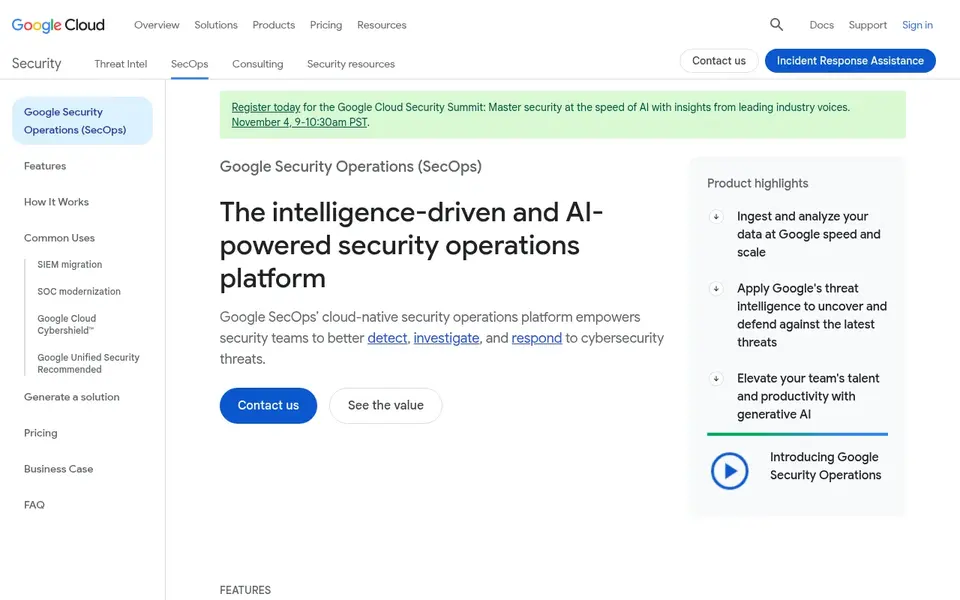
Google SecOps is aimed squarely at cloud-native threat detection at scale. The system's advanced capabilities might be overwhelming for teams without dedicated security operations resources. It uses Google's infrastructure and AI to deal with large volumes of security data, making it right for organizations needing scalable, cloud-native security operations.
Drawbacks to consider: May be complicated for smaller teams.
Worth adding: consider if your strategy aligns with Google Cloud's ecosystem. Whereas it can connect with several tools, organizations heavily invested in other cloud providers may find some features less smooth. Check the vendor site for Google SecOps pricing; none is listed in this comparison. Free access: Not stated.
- Integrated investigation and response
- AI-driven detection
- Tied to Google Cloud ecosystem for full benefits
Palo Alto Networks Cortex XSIAM
Great for: SOC automation and centralized data
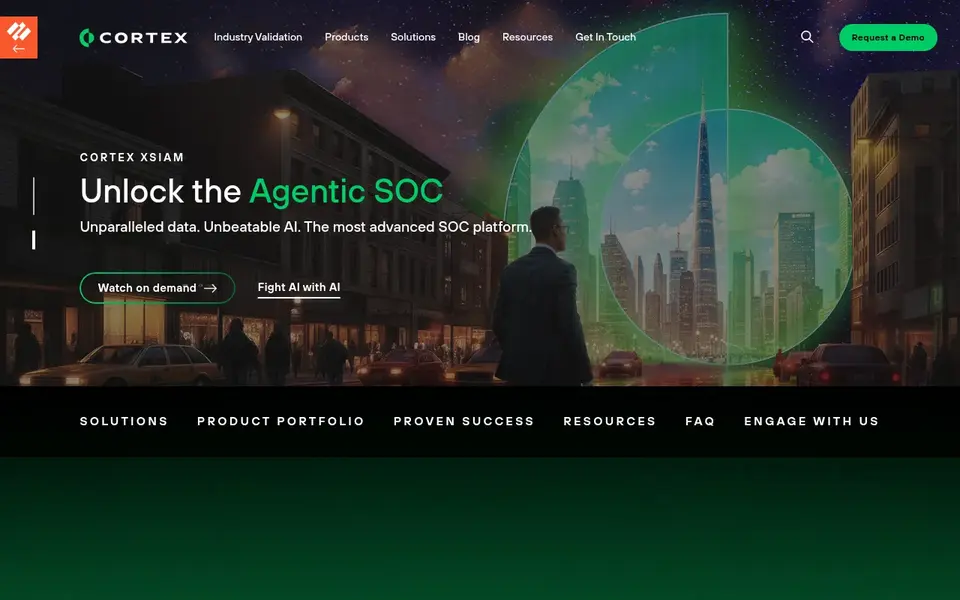
Choose Palo Alto Networks Cortex XSIAM for SOC automation and centralized data. Cortex XSIAM is Palo Alto Networks' AI-powered security operations product that automates and enhances security operations by centralizing data, improving threat detection, and accelerating incident response across the SOC. It is aimed at security teams looking to consolidate tools and use AI for quicker, more accurate threat management.
What to check first: May need significant data integration effort.
More specifically, adoption may involve substantial integration work to link disparate data sources. From a buyer's view, evaluate whether your existing investments align with its architecture. The platform is optimized for SOC workflows, so teams seeking broader IT operations integration might need extra options. This comparison lists no price for Palo Alto Networks Cortex XSIAM; ask the vendor. Free options: Not stated.
- Centralizes security data
- AI-driven threat detection
- Centred on security operations center use cases
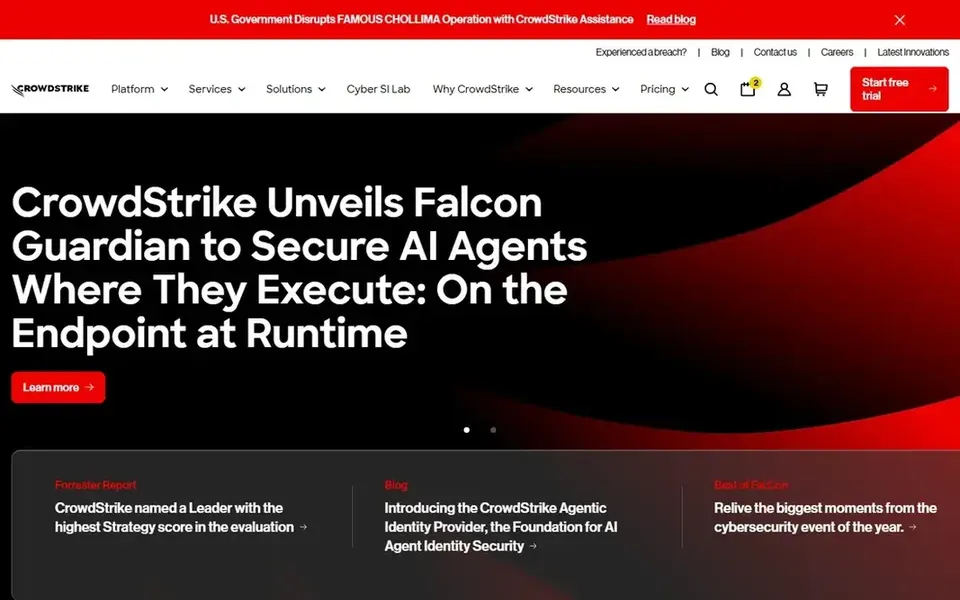
CrowdStrike Falcon is designed for unified endpoint and cloud security. The CrowdStrike Falcon product is an AI-native security option that stops breaches with one unified console and single sensor securing endpoint, identity, cloud, and AI in live.
More specifically, organizations with heavy reliance on non-CrowdStrike tools might face integration challenges. More specifically, whereas capable in endpoint and cloud workload protection, some capabilities may need extra modules. CrowdStrike Falcon cost at the entry level: $7.99 per device per month. Free plan details: Free trial.
Downsides: Endpoint-centric approach.
- AI-native product
- Unified console
- May need module add-ons for full coverage
For established SIEM with AI enhancements, IBM QRadar Suite is a natural candidate. As a more traditional SIEM, it may not offer the same level of automation as newer AI-native products.
IBM QRadar Suite does not show a starting price in this comparison, so check the vendor site for current pricing. As for free access: Not stated.
Limits to weigh: Traditional SIEM architecture.
- Scalable for large environments
- AI-powered analytics
- Complexity may need specialized staff
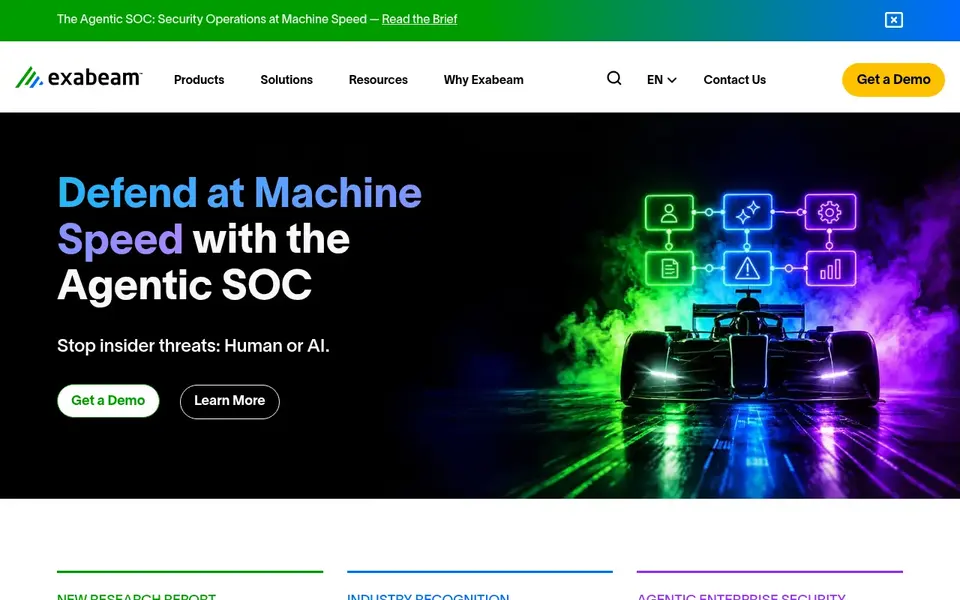
For cloud-native TDIR with log management, Exabeam is a natural candidate. Exabeam's focus on TDIR and log management means it may not cover every security domain, like endpoint protection.
Limits to weigh: May need migration effort for on-premises users.
Worth adding: consider if a specialized TDIR system suits your overall security stack. Pricing for Exabeam is not stated here, so ask the vendor for current figures. On free options: Not stated.
- AI-powered threat detection
- Cloud-native architecture
- Focus on TDIR instead of broader security
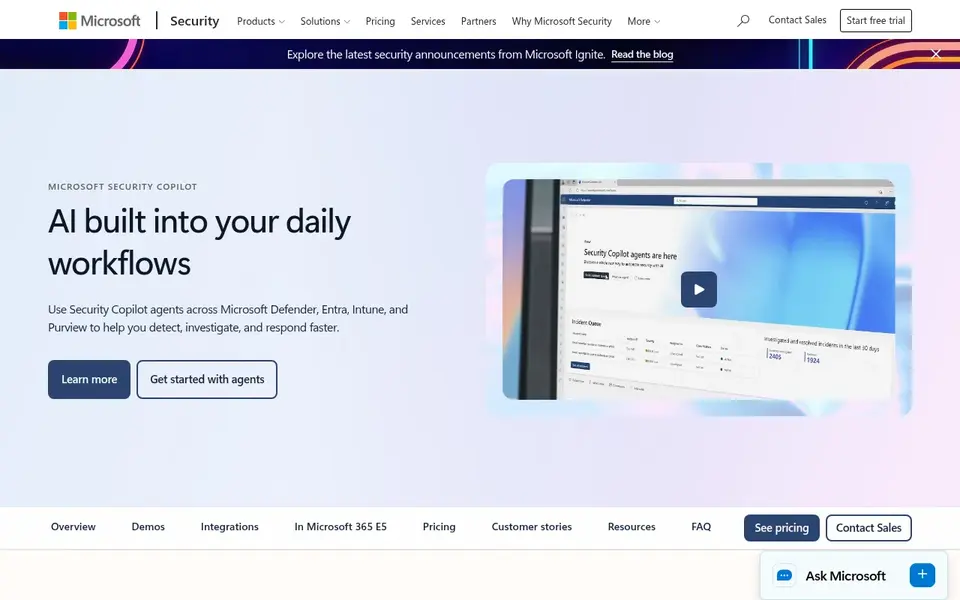
Microsoft Security Copilot is a good fit for Microsoft-centric security teams. Teams looking to augment their existing Microsoft investments with AI-driven assistance will find it especially relevant. Its effectiveness is closely tied to the Microsoft ecosystem, so organizations with heterogeneous environments may find less value.
The main drawbacks: Needs data hygiene for optimal results.
In practice, Microsoft Security Copilot is an AI cybersecurity option that gives you insights and automation to help teams defend at machine speed. It uses AI agents to assist with security workflows, making it a natural fit for organizations already using Microsoft security tools. On cost, Microsoft Security Copilot starts like this: $4 per provisioned SCU. Free plan details: Free trial.
- AI agents for automation
- Natural language interface
- Best value within Microsoft ecosystem
How these tools were picked
ProMapRanker looked at what each vendor publishes: pricing, plan limits, feature coverage for AI security platforms for workflows and stated drawbacks. No hands-on testing is claimed. Prices and plan limits come from vendor pages and can change, so confirm them on the vendor site before you buy. Tools are placed by general fit for AI security platforms for workflows, with price clarity and free access as tie-breakers. A different team can reasonably rank them differently.
A buyer's checklist
- Confirm the entry price on the vendor page. For Google SecOps, Palo Alto Networks Cortex XSIAM, IBM QRadar Suite and Exabeam that means a quote rather than a fixed price.
- Run a trial of CrowdStrike Falcon and Microsoft Security Copilot with real work before paying for a year; your own workflow is the best test.
- Before choosing Google SecOps, weigh its main limit: may be complicated for smaller teams.
- Find out what support Palo Alto Networks Cortex XSIAM includes on your plan, and whether onboarding help costs extra.
- Read the plan comparison for Microsoft Security Copilot carefully; key features often start on a higher tier.
Frequently asked questions
What should I look for in an AI security product for workflows?
Focus on how well the system plugs into your current tools, the degree of automation it supplies for repetitive tasks, and the transparency of its AI decisions. Also consider the vendor's support for your team's skill level and whether the deployment model suits your infrastructure.
Do these tools publish their prices?
Not all of them. Google SecOps, Palo Alto Networks Cortex XSIAM, IBM QRadar Suite and Exabeam publish no starting price, so expect a quote request for those. The rest, CrowdStrike Falcon included, show a starting price, though seats and billing terms still change the final cost.
Is Google SecOps the right pick for everyone comparing AI security platforms for workflows?
No single tool suits every team. Google SecOps comes first because it fits cloud-native threat detection at scale, while Palo Alto Networks Cortex XSIAM suits SOC automation and centralized data and CrowdStrike Falcon suits unified endpoint and cloud security. Match the tool to your own size, budget and workflow before deciding.
How are the tools for AI security platforms for workflows ordered?
Google SecOps sits first and Microsoft Security Copilot last because the order follows typical fit for AI security platforms for workflows, then price clarity and free access. It is a judgement call, so read each profile for fit and limits.
Can these products replace human security analysts?
No, these systems are built to augment, not replace, security teams by automating routine tasks and surfacing critical threats. The goal is to boost efficiency and response times.
How do AI security products differ from traditional SIEM?
AI security systems frequently emphasize automation, live threat interruption, and advanced analytics, whereas traditional SIEM centres on log collection, correlation, and compliance reporting. The right choice relies on whether you need deeper automation or thorough data archiving.
Sources
- Google SecOps: cloud.google.com/security/products/security-operations
- Palo Alto Networks Cortex XSIAM: paloaltonetworks.com/cortex/cortex-xsiam
- CrowdStrike Falcon: crowdstrike.com/platform
- IBM QRadar Suite: ibm.com/products/qradar-siem
- Exabeam: exabeam.com
- Microsoft Security Copilot: microsoft.com/en-us/security/business/ai-machine-learning/microsoft-security-copilot
See where you really rank - block by block
ProMapRanker scans Google Maps across a grid of your service area. Simple monthly plans from $19, white-label on every plan.
Start freeBrowse all guides
← Platform for Automated Meeting Summaries: Best Picks of 2026Best AI Workflow Tools for Healthcare Automation in 2026 →
 best order routing software for fulfillment teams
6 Best Order Routing Software for Fulfillment Teams in 2026
Weighing the best order routing software for fulfillment teams? We lined up 6 products by cost, free access and fit. Each pick lists its main limit. Facts only.
Read → best enterprise agentic workflow platform
2026 Guide to the Best Enterprise Agentic Workflow platform
Compare 5 picks for the best enterprise agentic workflow platform, with prices, free plans and who each fits. The catches are listed up front. Decide faster.
Read → best ai soc agents software for remote teams
6 Best AI Soc Agents Software for Remote Teams in 2026
6 best AI soc agents software for remote teams, with entry costs, free tiers and the buyer each one serves. Pros and cons for every tool. Reviewed this month.
Read → alternatives to google earth
Best Alternatives to Google Earth in 2026
We compared the best alternatives to google earth for maps, satellite views, weather and GIS work, so you can pick a free or paid tool that fits your task.
Read → best pilates app
Best Pilates App in 2026: 8 Apps Compared
Compare the best pilates app options for mat, reformer, and beginner classes at home, with prices, trials, and honest notes on equipment and app quality.
Read → splunk alternatives
Splunk Alternatives in 2026: 8 Tools Compared
Splunk alternatives compared for log search, observability and security analytics, with open source and managed options, free tiers and prices for teams.
Read →More in Project Management & Productivity · All guides A to Z by date · Latest guides