 ProMapRanker
What's the Best Service for SMS Marketing in 2026


Small teams starting SMS campaigns · Pricing starts at: $39 per month
Key takeaways
- SimpleTexting and EZ Texting are the easiest starting points for small teams that want campaigns, two-way replies and clear credit pricing.
- Klaviyo, Attentive and Postscript suit online stores that already track purchases, because SMS can sit beside email and order data.
- The headline monthly price is rarely the full cost, since carrier fees, number fees and MMS credits often sit on top.
- Consent and opt-out handling matter as much as design tools, because a list built without clear permission creates legal and deliverability risk.
- Pay-as-you-go options such as Textmagic suit occasional senders, while a monthly plan suits teams that send every week.
Quick comparison
| Pick | Great for | Pricing starts at | Free tier | |
|---|---|---|---|---|
| SimpleTexting | Small teams starting SMS campaigns | $39 per month | Free trial | Visit |
 EZ Texting | Beginners who want a fast first campaign | $25 per month | Free trial | Visit |
 Klaviyo | Online stores using email and SMS together | Free | Yes | Visit |
 Attentive | Larger retail brands with personalization needs | See website | No | Visit |
 Postscript | Shopify stores focused on SMS revenue | See website | Free trial | Visit |
 Omnisend | Ecommerce teams using email, SMS and push | See website | Yes | Visit |
 SlickText | Teams that want every feature on every plan | $29 per month | Free trial | Visit |
 Textedly | High-volume senders who want simple pricing | $29 per month | Free trial | Visit |
 Textmagic | Occasional senders who prefer prepaid credits | $0.049 per text | Free trial | Visit |
 Constant Contact | Small businesses combining email and SMS | See website | Free trial | Visit |
The best SMS marketing services
These services cover small-business campaigns, online store automation and larger retail programs. We compared official pricing pages, feature lists, app store listings and public reviews, and we focused on consent tools, automation, reporting and total cost.
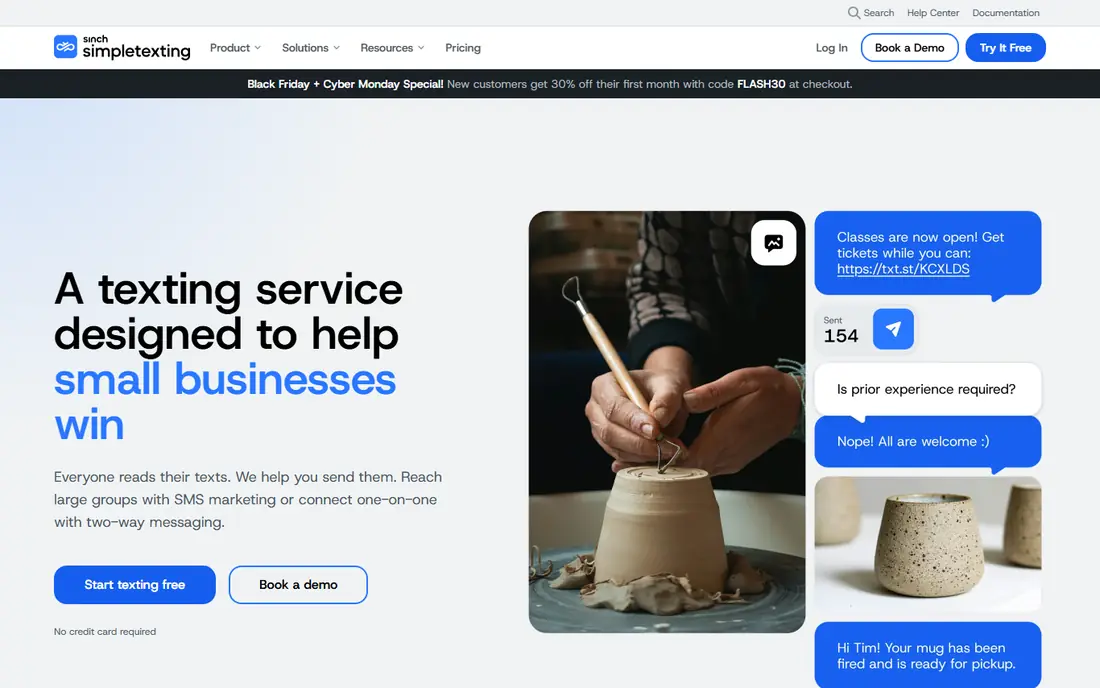
SimpleTexting earns the top spot for most small teams because the workflow stays plain. You can build a list with keywords and sign-up forms, send a mass campaign, set up autoresponders and answer replies from one inbox, without learning a separate tool for each job. The interface suits a team that sends weekly offers, reminders and event updates, and the automation tools cover drip sequences for new subscribers.
The catch is cost structure, not capability. The monthly plan covers a set number of credits, MMS messages use more credits than plain texts, and carrier fees and number charges sit outside the headline price. That still leaves a fair deal for a team with a steady list, but an occasional sender should compare the prepaid route before committing to a monthly plan.
- Mass campaigns and two-way messaging in one inbox
- Unlimited contacts on plans
- Automation, polls and MMS support
- US and Canada only
- Carrier and number fees add to the monthly cost
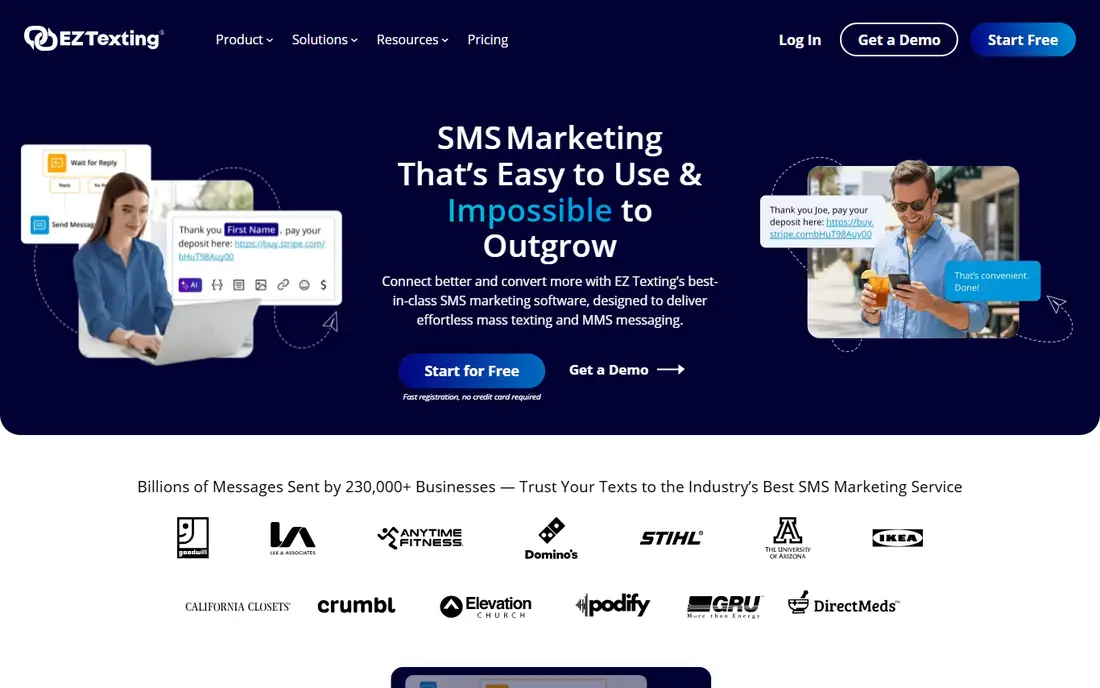
EZ Texting is built for a first campaign, not for a complex automation program. The campaign builder, templates and contact groups make it easy to send an announcement to a local list, and autoresponders handle simple replies such as opening hours or a discount code. A small shop, clinic or nonprofit can get a campaign out in an afternoon, which is the main reason it stays popular.
Growth brings limits. The lowest plan suits a modest list, and larger lists move to higher tiers, so the price rises as the audience grows. Teams that need deep segmentation, multi-step journeys or ecommerce revenue reporting will outgrow it sooner than they expect, and they should look at Klaviyo or Attentive instead.
- Low entry price
- Drag-and-drop campaign builder
- Group texting and autoresponders
- Entry plan limits contacts
- Telecom fee applies on some plans
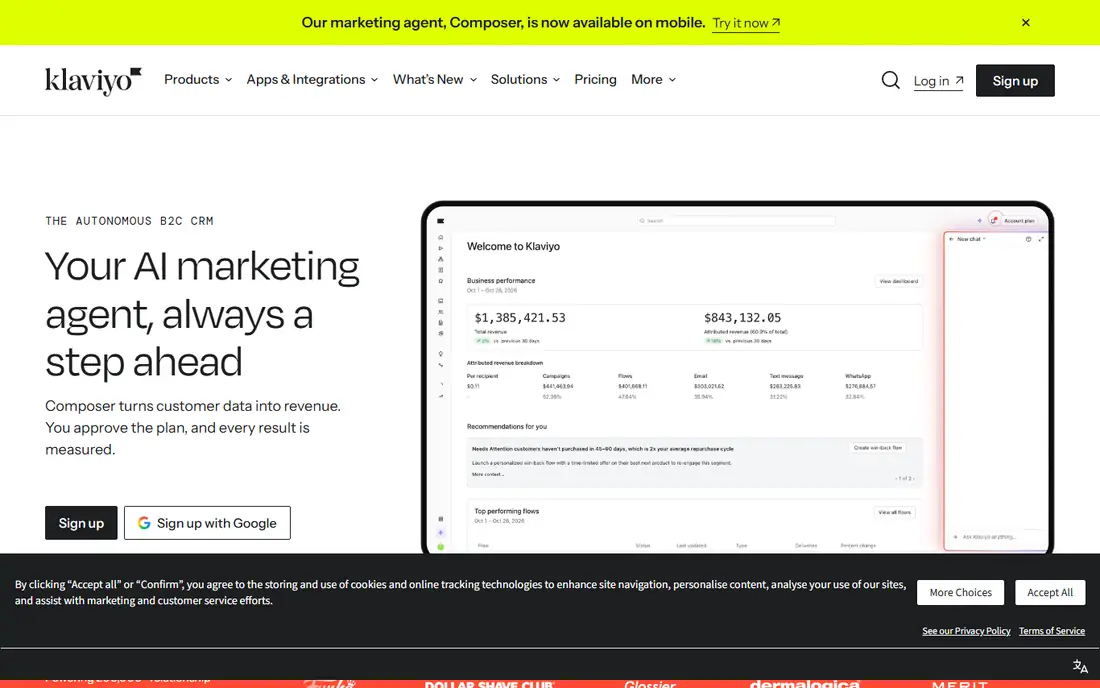
Klaviyo stands apart because email and SMS share one customer profile. A store can segment buyers by past orders, browsing and email engagement, then send a text only to the segment most likely to act, rather than blasting the whole list. Flows for abandoned carts, post-purchase follow-ups and win-back campaigns run across both channels, and reporting ties messages to orders.
That power comes with a learning curve and a bill that needs watching. SMS uses credits in addition to the email plan, and high-volume senders can see costs rise quickly during sale periods. Small stores with a free or low tier can still test SMS carefully, but they should set a monthly credit budget before turning on every flow.
- Shared email and SMS customer profiles
- Strong segmentation and flows
- Purchase and revenue reporting
- SMS credits are bought separately from email plans
- Pricing grows with contacts and message volume
Attentive targets retail and direct-to-consumer brands that treat SMS as a revenue channel, not a side channel. Its strength lies in personalization, with triggers based on browsing, purchases and subscriber behavior, plus growth tools such as sign-up units that collect consent at checkout and on site. Larger teams also get guided onboarding, which helps when a program spans many campaigns and segments.
The obvious barrier is price transparency. Attentive does not publish a standard starting price, so a small business cannot budget from the website alone. It also makes most sense when a brand already has meaningful traffic and a list to grow, because the platform rewards scale and testing rather than a single monthly blast.
- Deep personalization and behavioral triggers
- Subscriber growth tools
- Managed onboarding for larger brands
- Quote-only pricing
- Best suited to larger budgets and teams
Postscript is the clearest pick for a Shopify store that wants SMS to do heavy lifting. Because it sits inside Shopify data, it can trigger messages from cart activity, purchases and browsing, and it reports revenue tied to those messages without manual matching. Campaigns, automation and subscriber growth tools are built around store events, which keeps setup closer to the data a merchant already uses.
The trade-off is focus. A business on another ecommerce platform, or a service business with no online store, will get less value from a tool shaped around Shopify events. Pricing also uses a minimum spend model on some plans, so a very small store should check the current terms before signing up and should compare Klaviyo if email matters as much as SMS.
- Native Shopify integration
- Cart and browse abandonment flows
- Revenue attribution
- Shopify-centered, so other platforms fit less well
- Minimum spend applies on some plans
Omnisend appeals to ecommerce teams that want one workflow for email, SMS and push notices. Prebuilt flows for welcome series, abandoned carts and post-purchase messages save setup time, and sign-up forms collect consent across channels. The reporting view shows how channels work together, which helps a team decide when a text adds value and when an email is enough.
Pricing needs care. SMS is handled through a separate subscription in addition to the main plan, and the total depends on contacts and message volume. That structure suits stores that send SMS selectively, such as cart recovery and VIP offers, rather than sending every promotion by text. Teams that text every offer should model the combined cost first.
- Email, SMS and push in one workflow
- Prebuilt automation
- Popups and sign-up forms
- SMS needs a separate subscription on some plans
- Costs rise with contacts
SlickText takes a different approach to tiers by giving every plan the same feature set. A team on the entry plan still gets drip campaigns, surveys, text-to-win contests and automation, which removes the usual need to upgrade just to open up a tool. Keyword opt-ins and mobile sign-up forms make list growth straightforward, and the dashboard keeps campaign results easy to read.
The limit is geography and extra fees. Carrier charges sit on top of the plan, and the service focuses on the United States and Canada. For a domestic small business that wants predictable features without tier games, that trade is fair, but an international sender should look at Textmagic or a global API provider instead.
- All features included on every plan
- Drip campaigns and surveys
- Text-to-win and keyword tools
- Carrier fees apply on top of plan price
- US and Canada focus
Textedly suits senders who value a plain price and a plain workflow. Keyword campaigns, group messages and autoresponders cover the core jobs for a local business, church, school or event organizer, and the plan structure is easy to explain to a non-technical team. It works well for announcements, reminders and recurring updates where deep personalization is not the goal.
The honest catch is the add-on cost. A telecom surcharge and number registration charges raise the real monthly bill above the headline plan price, and ecommerce automation is thinner than Klaviyo or Postscript. A team that sends high volumes of simple messages will still find value here, while a store that needs purchase-triggered flows should look elsewhere.
- Simple plan structure
- Keyword campaigns and autoresponders
- Group texting
- Telecom surcharge and registration costs add up
- Fewer ecommerce automation tools
Textmagic fits a business that texts rarely but wants a professional number and a simple sending tool. Prepaid credits mean no monthly plan to justify in a quiet month, and the platform covers many countries, which helps teams with customers outside the United States. Templates, scheduling and email-to-SMS cover the basics for alerts, reminders and short campaigns.
Marketing automation is the weak point. Drip journeys, deep segmentation and ecommerce flows are thinner than the dedicated marketing platforms on this list, so a team that plans weekly promotions will likely prefer SimpleTexting or SlickText. For occasional, practical messaging, Textmagic keeps costs tied to actual use.
- Pay-as-you-go pricing with no monthly subscription
- International coverage
- Email-to-SMS and templates
- Limited marketing automation
- Number and registration fees still apply
Constant Contact suits a small business that already sends email newsletters and wants to add SMS without learning a new vendor. Contacts, templates and reporting sit in one account, and the platform is geared toward teams without a dedicated marketer. A shop can send a monthly email, then follow it with a short text reminder, and keep both in the same workflow.
SMS is not the main product here, and that shows in allowances. SMS sits as an add-on to an email plan, and lower tiers include a modest message count. A business that plans to make SMS its main channel should pick a dedicated SMS platform, while a business that texts occasionally alongside email will find this combination convenient.
- Email and SMS in one account
- Templates and contact management
- Support for small teams
- SMS is an add-on to email plans
- Message allowances are limited on lower tiers
How we picked these
We compared official pricing and feature pages, app store listings, privacy and compliance pages, and public reviews for each service. We kept only services that exist and operate in October 2026, that offer marketing campaigns or automation rather than just a developer API, and that handle opt-ins and opt-outs in a visible way. We favored services with clear pricing where possible, and we marked quote-only services as such instead of guessing a price.
We also weighed fit over fame. A large enterprise platform can be a poor pick for a local shop, and a simple local tool can be a poor pick for a large online store. That is why this list mixes low-cost starters, ecommerce specialists and enterprise options, so readers can match the tool to list size, platform and sending frequency.
What to check before you pay
Start with consent, then price, then automation. A good service should make it easy to collect clear permission, record when and how a person opted in, and honor STOP replies automatically. Ask how the service handles carrier registration, what happens to unsubscribed contacts, and whether you can export your list at any time. A service that locks your list behind a hard export limit should raise a warning flag.
Next, model the real monthly cost. Add the plan price, number fees, carrier fees and expected MMS use, then compare that total across two or three services using your actual list size and sending frequency. Finally, test the workflow with a small segment before moving a full list. Send a welcome flow, a campaign and a reply, check delivery reports, and confirm that opt-outs work. That short test reveals more than any feature table.
Please note that marketing texts in the United States are governed by rules such as the Telephone Consumer Protection Act, carrier rules and do-not-call requirements. Only text people who have given clear consent, identify your business in messages, include a simple opt-out in every marketing text, and keep records of consent. This article is general information, not legal advice, and you should check current rules or speak with a qualified adviser for your situation.
Frequently asked questions
What's the best SMS marketing service for a small business?
SimpleTexting and EZ Texting are strong starting points because they combine campaigns, two-way replies and automation at a clear monthly price. A small team should trial one with a small list, check the total cost with fees, and only then move a larger audience across.
What's the best SMS marketing service for a Shopify store?
Postscript is built around Shopify events, while Klaviyo suits stores that want email and SMS in one profile. Postscript fits a store that puts SMS first, and Klaviyo fits a store that wants both channels to share segments and reporting.
How much does SMS marketing cost per month?
Costs vary widely, from prepaid credits at a few cents per text to monthly plans from about $25 to $39 for a few hundred credits, plus number and carrier fees. Enterprise programs cost far more, and the real total depends on list size, message count and MMS use.
Do I need consent before sending marketing texts?
Yes. Only send marketing texts to people who have given clear permission, keep a record of that permission, and honor opt-out requests promptly. Avoid buying lists, avoid texting numbers from unrelated sign-ups, and include your business name and an opt-out option in marketing messages.
Can I send SMS and email from one platform?
Yes. Klaviyo, Omnisend and Constant Contact combine email and SMS, while dedicated SMS tools focus on text alone. A combined platform suits teams that want shared segments, while a dedicated tool suits teams that text far more than they email.
What is the difference between SMS credits and messages?
Many plans sell credits rather than messages, and a picture message can use more credits than a plain text. Check how each service counts SMS and MMS, how overages are charged, and whether unused credits roll over before you compare headline prices.
Sources
See where you really rank - block by block
ProMapRanker scans Google Maps across a grid of your service area. Simple monthly plans from $19, white-label on every plan.
Start freeKeep reading
 wpforms alternatives
Best WPForms Alternatives in 2026
We compare 9 wpforms alternatives for WordPress forms, with free and paid options, current pricing notes, and honest limits for small business sites in 2026.
Read → windows task scheduler alternatives
Best Windows Task Scheduler Alternatives in 2026
Looking for Windows Task Scheduler alternatives? We compare 9 schedulers for Windows and cross-platform work, from free tools to enterprise automation.
Read → which ai video service is best
Which AI Video Service Is Best in 2026
which ai video service is best? We compare 10 legitimate AI video services on price, avatars, editing and output quality to help you pick the right tool.
Read →