 ProMapRanker
What Is the Best Cell Phone Company in 2026

Key takeaways
- Verizon, T-Mobile, and AT&T remain the three national networks, with different strengths on coverage, speed, and perks.
- US Mobile, Mint Mobile, and Visible offer lower prices by using those same networks through prepaid or online-only models.
- Cricket, Metro by T-Mobile, and Google Fi suit buyers who want prepaid simplicity or travel-friendly plans.
- Coverage where you live matters more than national speed claims, so check coverage maps for your home, work, and travel routes.
- Plan prices in this guide are single-line starting points with autopay in many cases, and taxes and fees can add to the total.
Quick comparison
| Pick | Great for | Pricing starts at | Free tier | |
|---|---|---|---|---|
 Verizon | Nationwide coverage and perks | $65 per month | No | Visit |
 T-Mobile | 5G speed and travel perks | $50 per month | No | Visit |
 AT&T | Family plans and senior options | $50 per month | No | Visit |
 US Mobile | Low price on three networks | $25 per month | No | Visit |
 Mint Mobile | Low annual-billed price | $15 per month | No | Visit |
 Visible | Simple unlimited on Verizon network | $25 per month | No | Visit |
 Cricket Wireless | Prepaid on AT&T network | See website | No | Visit |
 Metro by T-Mobile | Prepaid with T-Mobile perks | $60 per month | No | Visit |
 Google Fi Wireless | Travel-friendly flexible plans | $35 per month | No | Visit |
The best cell phone companies
We compared national carriers and prepaid brands on coverage, plan price, data allowances, hotspot, and perks. Prices are starting points for a single line and can change with lines, autopay, and promotions.
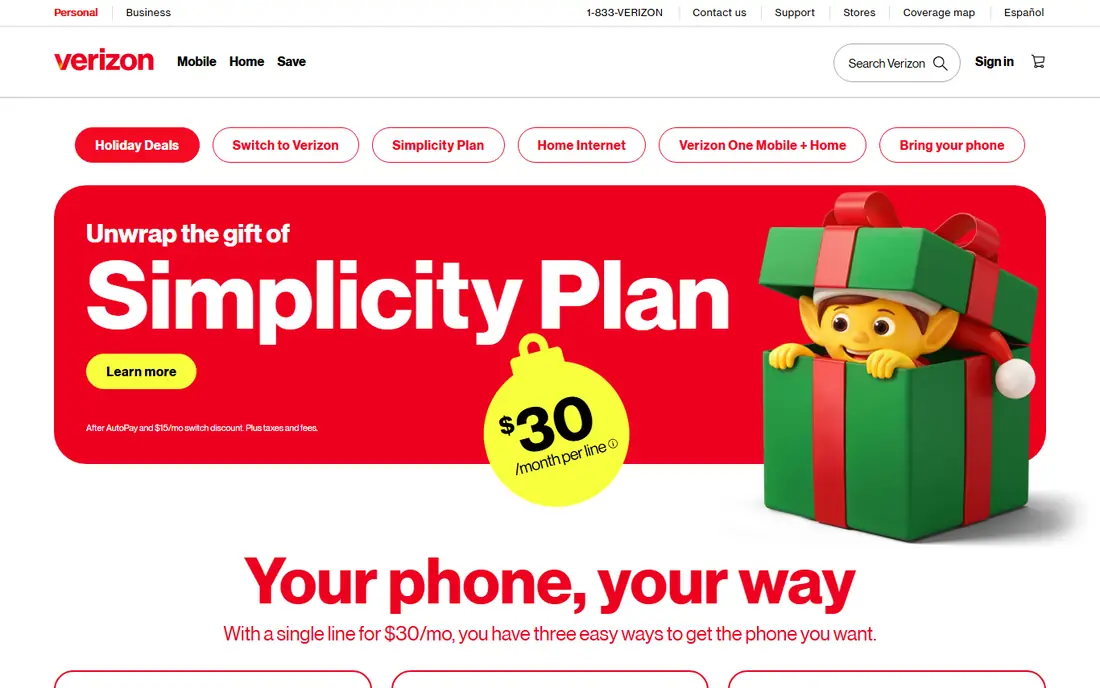
Verizon is often the first choice for buyers who prioritize coverage, especially outside cities. Its network reaches many rural areas where other carriers are weaker, and its premium unlimited plans offer large hotspot allowances and travel perks. Verizon also offers multi-line discounts that bring the per-line price down sharply for families, with recent guides listing four-line plans from about $25 per line on entry tiers. For a household that travels, works remotely, or lives outside a metro area, Verizon coverage can justify the higher price.
The catch is cost. Single-line prices start higher than prepaid brands, and taxes and fees add to the advertised price. Entry plans also carry lower priority data in some cases, so speeds can slow during congestion. Verizon fits best for buyers who need broad coverage, for families who can use multi-line pricing, and for users who want premium perks and large hotspot allowances.
- Broad nationwide coverage
- Strong rural reach in many areas
- Premium plans with large hotspot allowances
- Higher single-line prices than prepaid rivals
- Taxes and fees sit on top of plan price
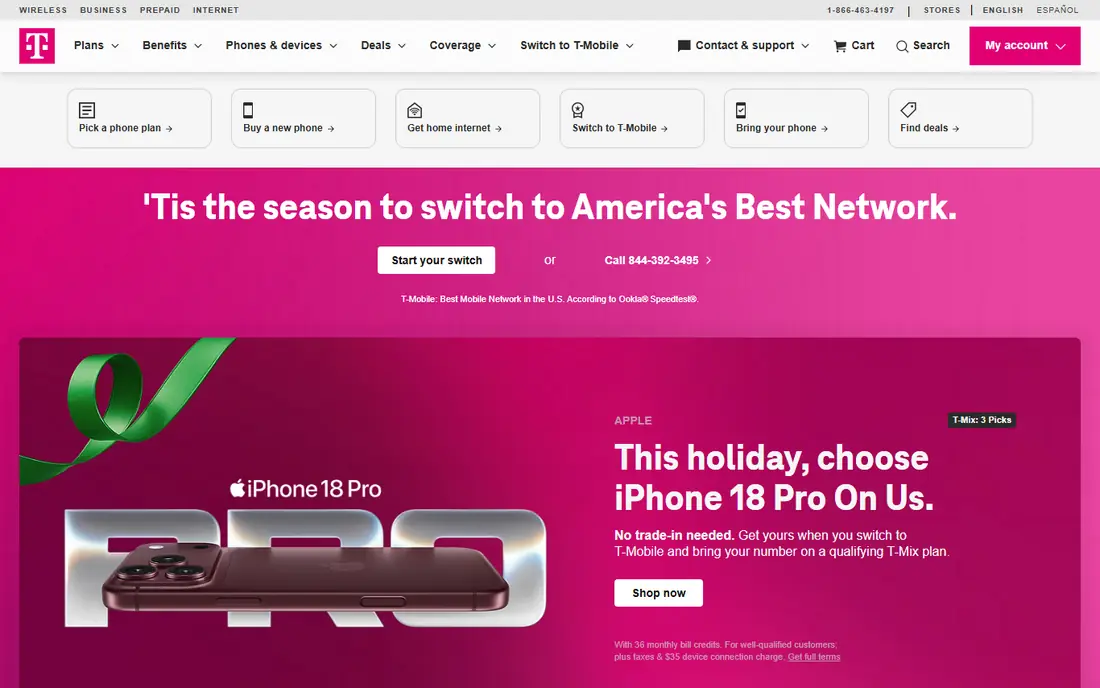
T-Mobile has built a strong 5G network in cities and suburbs, with higher plans offering large hotspot allowances, international data, in-flight Wi-Fi, and streaming perks. Its Essentials Saver plan has been listed from $50 per month for a single line with autopay, while higher Experience plans add more premium data and perks. T-Mobile also offers senior plans and multi-line family pricing that can bring per-line costs down. For a city-based user who streams, travels, and uses hotspot often, T-Mobile offers a strong mix of speed and perks.
The trade-off is rural coverage. In some rural areas, Verizon still leads, so a T-Mobile buyer should check coverage for home and travel routes before switching. Plan tiers also change names and features often, which can confuse comparisons. T-Mobile fits best for urban and suburban users, for travelers who value international perks, and for families who want streaming benefits bundled in.
- Fast 5G in many cities
- Travel perks and streaming benefits on higher plans
- Senior plans
- Rural coverage can lag Verizon in some areas
- Plan names and tiers change often
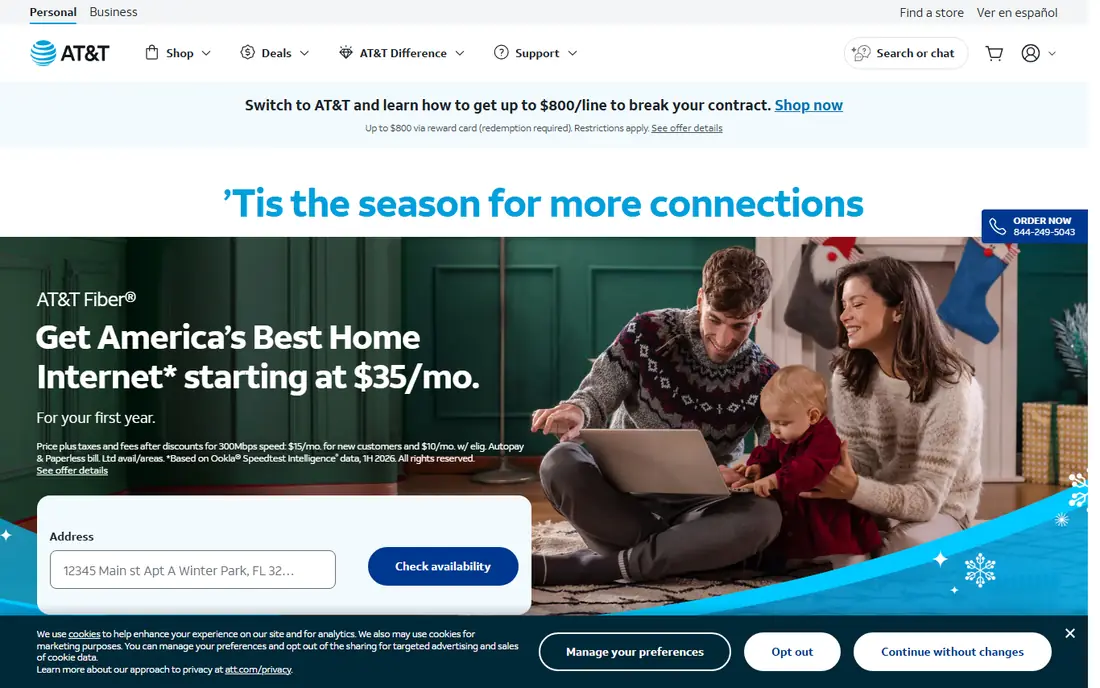
AT&T offers a national network with four main unlimited tiers in its current lineup, starting with a Value plan listed from $50 per month for a single line with autopay. Higher tiers add more premium data, larger hotspot allowances, and international calling benefits. AT&T also offers a senior plan for customers aged 55 and older, which is a useful option that Verizon does not match directly. Family pricing brings per-line costs down as lines are added, which helps households with several lines.
The catch is the entry tier. The Value plan offers only a small amount of premium data before speeds may slow during congestion, so heavy users should look at higher tiers. Taxes and a monthly fee sit on top of the plan price, and activation fees apply per line in many cases. AT&T fits best for families, for seniors who qualify for the senior plan, and for buyers who want a national network with a clear tier ladder.
- Broad national coverage
- Senior plan options
- Family pricing across tiers
- Entry plan has limited premium data
- Taxes and fees add to plan price
US Mobile is a prepaid carrier that lets customers choose between the three national networks, which is a rare advantage. A buyer can pick the network that covers their area best, rather than being tied to one carrier. Its Unlimited Starter plan has been listed from $25 per month for a single line, with taxes included in many prices, which makes the total easier to compare. US Mobile also offers shared data plans for families that use less data, which can save more than unlimited plans for light users.
The trade-off is support and perks. US Mobile is online-only, so there are no retail stores for in-person help, and its perks are lighter than premium Verizon, T-Mobile, or AT&T plans. Higher unlimited tiers add international data and hotspot, but they cost more. US Mobile fits best for price-conscious buyers, for buyers who want network choice, and for families with mixed data needs.
- Choice of three networks
- Taxes included in many prices
- Low unlimited starting price
- Online-only support model
- Perks are lighter than premium carrier plans
Mint Mobile offers low-cost prepaid plans on the T-Mobile network, with prices listed from $15 per month for a small data plan when billed annually, and unlimited plans from about $30 per month on annual billing. That annual model is the key to its low monthly-equivalent price, and it suits buyers who are comfortable paying upfront and staying with one carrier for a year. Mint plans include unlimited talk and text, with data tiers for light, medium, and heavy users.
The catch is the billing model. Annual payment means a lump sum, and introductory monthly prices can change after the first term. Mint also offers fewer perks than premium carriers, and data can slow after the premium allowance on unlimited plans. Mint fits best for single users and couples who use T-Mobile coverage well, who want the lowest possible price, and who can pay annually.
- Very low prices when billed annually
- Runs on T-Mobile network
- Simple plan tiers
- Annual billing means a lump sum upfront
- Introductory prices can rise after the first term
Visible is Verizon's online-only prepaid brand, offering simple unlimited plans from $25 per month for a single line in recent listings. That price includes taxes and fees in many cases, which makes comparison easier than with postpaid plans. Visible runs on the Verizon network, so buyers who want Verizon coverage at a prepaid price can get it without a Verizon postpaid contract. Higher Visible plans add more premium data, larger hotspot allowances, and international options.
The limit is simplicity. Visible focuses on single lines, so family pricing is less developed than Verizon postpaid, and entry plans have hotspot and data priority limits. Support is online-only, with no retail stores. Visible fits best for single users who want Verizon coverage, a simple unlimited price, and no contract, and who do not need premium postpaid perks.
- Simple unlimited plan from $25 per month
- Runs on Verizon network
- Taxes and fees included in many prices
- Single-line focus
- Hotspot and premium data limits on entry plan
Cricket Wireless is AT&T's prepaid brand, offering unlimited and limited-data plans on the AT&T network with no annual contract. It has retail stores, which sets it apart from online-only brands such as Visible and Mint, and it suits buyers who want in-person help. Cricket plans include unlimited talk and text, with data tiers for light and heavy users, and family pricing that lowers per-line costs as lines are added.
The catch is speed caps and priority. Some Cricket plans cap data speeds or offer limited premium data, so heavy streamers should check the tier details. Taxes and fees also vary by plan and location. Cricket fits best for prepaid buyers who want AT&T coverage, who value retail stores, and who want a simple plan without a contract.
- Prepaid simplicity
- Runs on AT&T network
- Retail stores for in-person help
- Data speeds can be capped on some plans
- Premium data limits vary by tier
Metro by T-Mobile is T-Mobile's prepaid brand, offering unlimited plans with retail store support and perks on higher tiers. Recent listings show its Flex Unlimited Plus plan from about $60 per month, with lower tiers available for lighter users. Metro runs on the T-Mobile network, so buyers who get good T-Mobile coverage can use Metro at a prepaid price with store help. Higher plans add hotspot data and perks that online-only brands may not offer.
The trade-off is price. Metro plans can cost more than Mint or Visible for similar data, and entry tiers have premium data limits. Taxes and fees also vary. Metro fits best for prepaid buyers who want T-Mobile coverage, who value retail stores, and who want perks on a prepaid plan without a postpaid contract.
- Prepaid plans on T-Mobile network
- Retail stores
- Perks on higher plans
- Higher prepaid prices than Mint or Visible
- Premium data limits on entry tiers
Google Fi Wireless offers flexible plans that charge for data used, plus unlimited plans from about $35 per month in recent listings. It runs primarily on the T-Mobile network, with international data and calling features that suit travelers. Fi also offers simple family billing, with each line billed clearly, and it works well with Pixel phones and other compatible devices. For a traveler who uses data abroad, Fi's international features can save roaming charges.
The catch is price and device fit. Fi costs more than Mint or Visible for a single unlimited line, and some network features depend on the phone model. Data priority and hotspot limits also vary by plan. Google Fi fits best for travelers, for Pixel users, and for families who want flexible data billing without a traditional carrier contract.
- Flexible and unlimited plans
- International data strengths
- Simple family billing
- Network switching benefits vary by phone
- Prices higher than cheapest prepaid rivals
How we picked these
We compared official carrier pages and recent carrier comparisons from 2026 for coverage, plan price, data, hotspot, and perks. We favored carriers with live US service in 2026, a clear plan lineup, and a verifiable official site. We left out carriers with no US national or prepaid presence, carriers with no published plan details, and resellers we could not verify. Prices are single-line starting points with autopay in many cases; multi-line prices are lower per line, and taxes and fees can add to postpaid totals.
What to check before you switch
Coverage where you live
Check coverage maps for your home, workplace, commute, and frequent travel routes. A carrier with fast city speeds is of little use if it drops signal at home. Ask friends or neighbors on the same network about real coverage.
Data and hotspot use
Estimate your monthly data and hotspot use before you choose a tier. A cheap plan with a small premium data allowance can slow down during congestion, while a premium plan with a large hotspot allowance may be excess for a light user.
Total monthly cost
Add taxes, fees, activation charges, and device payments to the plan price. Prepaid prices often include taxes, while postpaid prices often do not, so compare totals, not only advertised plan prices.
Perks you will actually use
Streaming, international data, and travel perks only save money if you use them. A lower plan without perks can be cheaper than a premium plan whose perks you never open.
Frequently asked questions
What's the best cell phone company?
The answer depends on coverage where you live and how much data you use. Verizon often leads on broad coverage, T-Mobile often leads on city 5G speed and travel perks, and AT&T offers a strong family and senior mix. Prepaid brands such as US Mobile, Mint, and Visible can be better on price.
What is the best cell service provider for families?
Families often save with multi-line plans from Verizon, T-Mobile, or AT&T, where per-line prices fall as lines are added. US Mobile shared data plans and Cricket family pricing can also help, especially for families with light data users. Compare the total for all lines, not only the single-line price.
Which carrier has the best coverage?
Verizon is widely cited for broad nationwide coverage, especially in rural areas, while T-Mobile leads on 5G speed in many cities and AT&T sits between them on coverage and speed. Coverage varies by location, so check maps and local experience for your area before you decide.
Is prepaid better than postpaid?
Prepaid is often cheaper, simpler, and contract-free, with taxes included in many prices. Postpaid offers premium data priority, device financing, and perks, but it costs more and adds taxes and fees. Choose prepaid for price and simplicity, and postpaid for premium priority and perks.
Can I keep my phone number when I switch?
In most cases, yes. US carriers support number porting, and you should not cancel your old plan until the new carrier confirms the number has moved. Keep your account number and PIN from your old carrier ready, since the new carrier will ask for them.
Do I need an unlimited plan?
Not always. Light users who mainly use Wi-Fi may save with a limited-data or shared-data plan. Heavy streamers, hotspot users, and travelers usually need unlimited data with a large premium allowance. Check your last three months of data use before you choose.
Sources
See where you really rank - block by block
ProMapRanker scans Google Maps across a grid of your service area. Simple monthly plans from $19, white-label on every plan.
Start freeKeep reading
 wpforms alternatives
Best WPForms Alternatives in 2026
We compare 9 wpforms alternatives for WordPress forms, with free and paid options, current pricing notes, and honest limits for small business sites in 2026.
Read → windows task scheduler alternatives
Best Windows Task Scheduler Alternatives in 2026
Looking for Windows Task Scheduler alternatives? We compare 9 schedulers for Windows and cross-platform work, from free tools to enterprise automation.
Read → which ai video service is best
Which AI Video Service Is Best in 2026
which ai video service is best? We compare 10 legitimate AI video services on price, avatars, editing and output quality to help you pick the right tool.
Read →