 ProMapRanker
Best Veriff Alternatives in 2026

Key takeaways
- Veriff is known for fast document and biometric checks, so alternatives differ on coverage, pricing transparency and workflow control.
- Persona suits teams that want to build custom onboarding flows from reusable components, while Sumsub suits all-in-one KYC, KYB and AML.
- Jumio and Onfido suit regulated enterprises that need deep compliance history and high-assurance checks.
- Trulioo and Socure suit teams that need data-based verification and fraud signals alongside document checks.
- Pricing is often quote-based at scale, so compare per-check costs, monthly minimums and contract terms together.
Quick comparison
| Pick | Great for | Pricing starts at | Free tier | |
|---|---|---|---|---|
 Persona | Custom onboarding workflows | See website | Free trial | Visit |
 Jumio | Regulated enterprise verification | See website | No | Visit |
 Onfido | Enterprise mobile KYC | See website | No | Visit |
 Sumsub | All-in-one KYC, KYB and AML | See website | Free trial | Visit |
 Trulioo | Global data verification | See website | No | Visit |
 Socure | Fraud and identity risk signals | See website | No | Visit |
 ID.me | Verified consumer identity | Free | Yes | Visit |
 Shufti Pro | Cost-efficient global KYC | See website | Free trial | Visit |
 iDenfy | Small team identity verification | See website | Free trial | Visit |
The best Veriff alternatives
This guide lists alternatives to Veriff, and it never lists Veriff itself as a product. Veriff is known for identity verification that checks government documents and faces, with automated decisions for onboarding in fintech, marketplaces and other regulated services. Teams look for alternatives when they need broader document coverage, clearer pricing at low volume, more workflow control or tools beyond the identity check itself. We compared official feature and pricing pages for platforms live in October 2026. Identity verification involves sensitive personal data, so check data handling, retention and regional compliance before you choose.
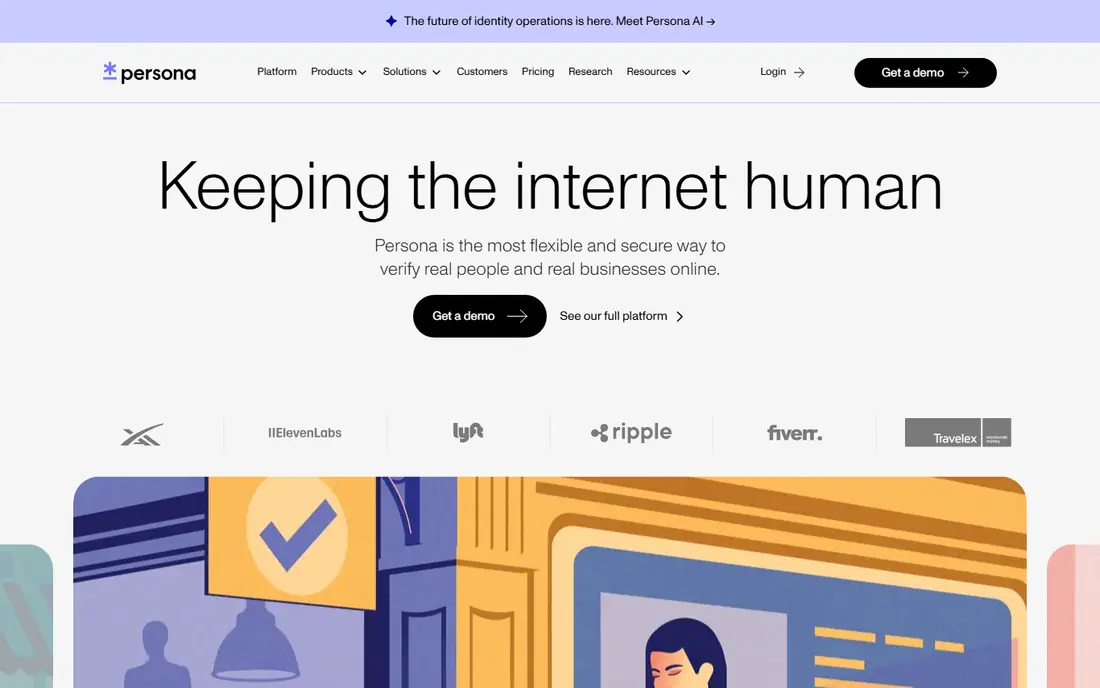
Persona suits platform teams that want to design onboarding step by step. You can combine document checks, database checks, selfie matching and sanctions screening into one flow, then change a step without rebuilding the whole product. That control helps marketplaces and fintech products with different risk levels for different user types.
The trade-off is pricing and setup. Many plans are quote-based, so small teams should request a clear per-check price and minimum. Complex workflows also take time to design and test. For teams that value workflow control over a single fixed flow, Persona is a strong Veriff alternative.
- Modular workflow builder for KYC, KYB and AML
- No-code components for product teams
- Broad verification options
- Pricing is quote-based for many plans
- Setup time grows with workflow complexity
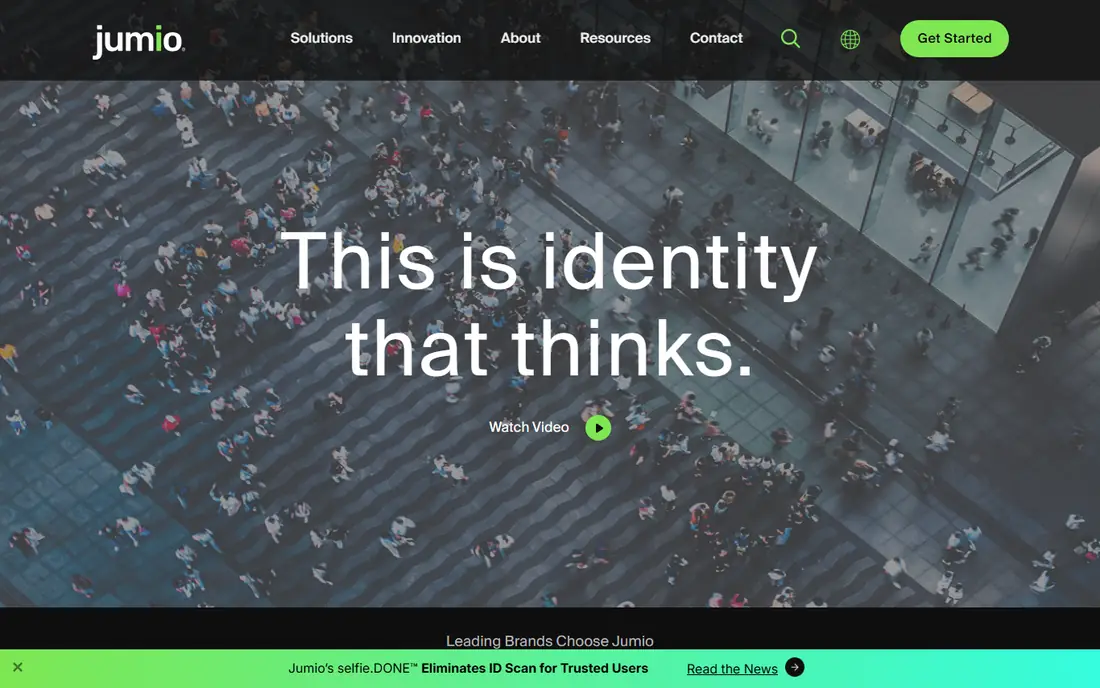
Jumio is a long-standing enterprise identity platform used by banks, fintech firms and other regulated companies. It checks documents and faces, uses liveness detection to spot spoof attempts, and offers fraud signals drawn from a large history of verifications. That depth matters when regulators and risk teams need high assurance.
Jumio is sales-led and enterprise priced, so startups with low volume may find the entry cost high. Implementation also takes more planning than a self-serve tool. For regulated enterprises that need proven compliance tooling, Jumio is one of the safest picks in this list.
- Deep financial services experience
- Document and biometric checks with liveness detection
- Large verification history
- Enterprise pricing and sales process
- Less suited to very small startups
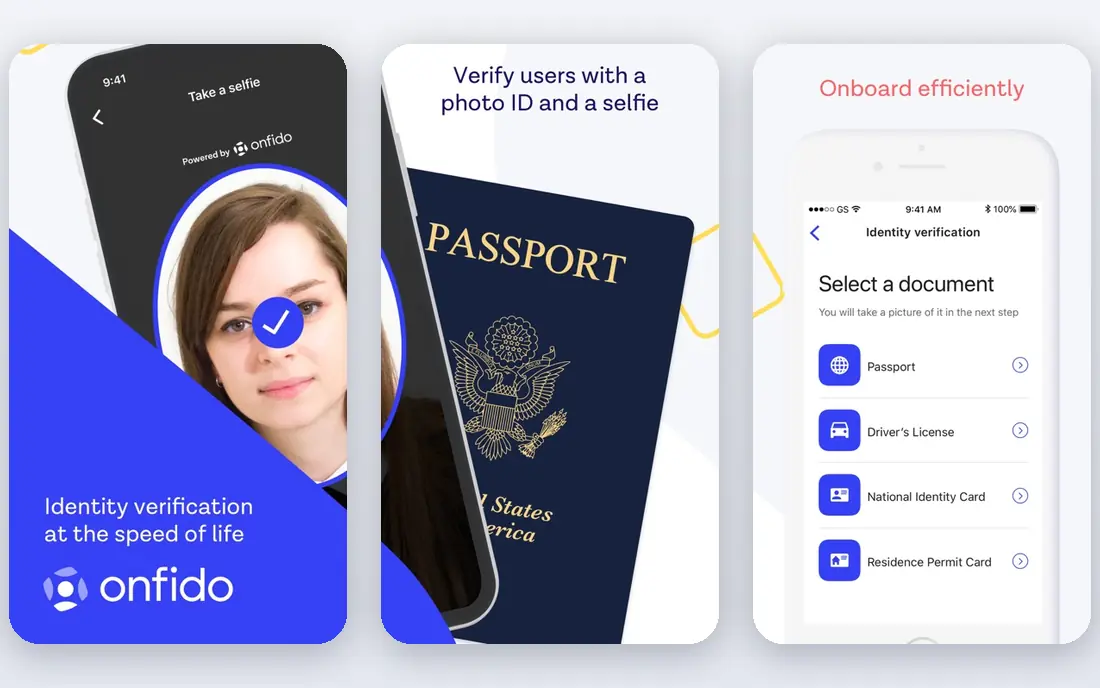
Onfido, now sold as Entrust IDV in many contexts, focuses on mobile-first identity verification for enterprises. Its SDKs guide users through document photos and selfies, while AI checks compare the document and face and flag signs of fraud. Being part of Entrust gives larger customers a broader identity portfolio to draw on.
Pricing is enterprise and quote-based, which makes it harder for small teams to budget without a sales conversation. Contract minimums and implementation timelines also need checking early. For large companies that already use Entrust tools, Onfido is a natural fit.
- Mobile-first SDKs
- AI document and biometric checks
- Now part of the Entrust identity portfolio
- Quote-based enterprise pricing
- Contract terms need careful review
Sumsub suits fintech, crypto and gaming platforms that need more than a single identity check. It covers individual verification, business verification, sanctions and watchlist screening, and transaction monitoring, so compliance work stays in one system. Document coverage is broad, with thousands of document types across many countries.
That breadth can feel complex for a team that only needs a simple onboarding check. Some plans include a monthly minimum, so low-volume teams should confirm the total cost. For teams that want an all-in-one compliance suite, Sumsub is a strong alternative.
- KYC, KYB, AML screening and transaction monitoring in one platform
- Broad document coverage
- Published per-check pricing model
- Platform breadth can feel complex
- Monthly minimums apply on some plans
Trulioo focuses on verifying identity against global data sources, which helps when a user cannot or should not upload a document, or when a business needs to check identity across many countries. Its network covers a large number of identity records, which supports onboarding in regions where document coverage is uneven.
Trulioo is not a direct copy of a document-first flow, so teams should test whether data matching meets their regulatory needs. Pricing is quote-based, and implementation is enterprise oriented. For global data verification at scale, Trulioo fills a gap that document-only tools do not cover.
- Broad global data sources for identity matching
- Useful where document upload is not ideal
- Strong enterprise coverage
- Data-based checks differ from document checks
- Pricing is quote-based
Socure combines document verification with data-based identity and fraud signals, which helps teams spot synthetic identities and risky sign-ups. It is widely used by US financial services, where its risk models draw on a large set of signals. That fraud focus suits platforms with high abuse rates.
Coverage is strongest in the US, so international teams should confirm document and data coverage for their markets. Pricing is quote-based and enterprise oriented. For US teams where fraud prevention matters as much as compliance, Socure is a strong pick.
- Strong fraud and risk signals
- Document verification plus data-based checks
- Useful for high-risk onboarding
- US focused coverage
- Pricing is quote-based
ID.me works differently from most tools in this list, because it focuses on verified consumer identity that users can reuse. Consumers verify once, then use that credential with government agencies, healthcare providers and other partners that accept ID.me. That reusable model reduces repeated document uploads for users.
Businesses still pay for verification services, and pricing depends on use case and volume. ID.me is not a drop-in replacement for every B2B onboarding flow, especially outside the US. For use cases where a reusable, government-accepted credential matters, ID.me offers a distinct advantage.
- Free for consumers
- Verified credentials accepted by many government and commercial partners
- Reusable identity
- Business pricing is separate
- Consumer focus differs from a pure B2B KYC API
Shufti Pro suits teams that want broad global coverage without enterprise pricing. It supports documents from many countries and languages, uses AI checks with human review as a fallback, and prices on a pay-per-verification basis. That model helps startups and mid-sized platforms control costs at moderate volume.
Brand recognition is lower in North America than Jumio or Onfido, which may matter for enterprise buyers. Support and service levels vary by plan, so check response times before launch. For cost-efficient global KYC, Shufti Pro is a practical option.
- Broad country and document coverage
- Pay-per-verification model
- Human review fallback alongside AI checks
- Brand recognition is lower in North America
- Support depth varies by plan
iDenfy suits small and mid-sized teams that want clear pricing and a straightforward onboarding flow. It offers document verification, biometric checks and fraud prevention tools, with public pricing information that makes early budgeting easier than with quote-only vendors. The dashboard is approachable for teams without a large compliance department.
iDenfy is smaller than Jumio or Onfido, so enterprise buyers may want to check scale, support and audit history carefully. Advanced features sit on higher plans. For a growing product that needs credible KYC without an enterprise sales cycle, iDenfy is worth testing.
- Clear per-check pricing on public pages
- Document, biometric and fraud checks
- Fraud prevention tools included
- Smaller vendor than enterprise rivals
- Advanced enterprise features need a higher plan
How we picked these
We compared official feature and pricing pages for identity verification platforms live in October 2026, and we kept only platforms that offer document or data-based identity checks for onboarding. We favoured coverage breadth, workflow control and pricing transparency, and we included both enterprise and self-serve options. Where a vendor does not publish a starting price, we wrote See website rather than treating a third-party estimate as a vendor price.
How to choose an identity verification platform
Identity checks affect conversion, fraud and compliance at the same time, so test on real users before you commit.
Match coverage to your users
List the countries and document types your users actually hold, then test those documents during a trial. A platform that works well for US passports may struggle with documents from other regions. Check language support and liveness detection for the devices your users own.
Compare total cost, not just per-check price
Add monthly minimums, fees for failed checks, AML screening add-ons and implementation costs to the per-check price. A low per-check rate with a high minimum can cost more than a higher rate with no minimum at low volume. Get the full price in writing before signing a contract.
Check data handling and compliance
Confirm where data is stored, how long it is kept, and how users can request deletion. Check certifications and regional compliance that apply to your industry, and confirm whether the vendor acts as a processor under your data agreements. Strong data practice protects both your users and your business.
Frequently asked questions
What is the best alternative to Veriff?
Persona is a strong all-round pick for custom workflows, while Sumsub suits teams that need KYC, KYB and AML in one platform. Jumio and Onfido suit regulated enterprises, and Shufti Pro and iDenfy suit teams that want clearer, lower-cost entry points. The best pick depends on your countries, volumes and compliance needs.
Are Veriff alternatives cheaper than Veriff?
Some are, especially at low volume, but pricing depends on checks, minimums and add-ons. Sumsub, Shufti Pro and iDenfy publish clearer per-check models, while enterprise vendors are quote-based. Compare total monthly cost for your expected volume, not just a headline per-check rate.
Do these tools support KYB as well as KYC?
Yes, several do. Persona and Sumsub both offer business verification alongside individual verification, with ownership and registry checks. Other tools focus mainly on individuals, so confirm KYB coverage if you onboard companies as well as people.
How accurate are automated identity checks?
Accuracy varies by document type, photo quality and liveness method, and no vendor is perfect. Human review fallback, clear rejection reasons and retry flows improve conversion when an automated check fails. Test with real documents from your user base during a trial to see true performance.
Can I try an identity verification tool before buying?
Many vendors offer a trial, demo or self-serve entry point, including Persona, Sumsub, Shufti Pro and iDenfy. Enterprise vendors such as Jumio, Onfido and Trulioo usually require a sales demo and pilot. Use the trial to test your top document types and devices.
What should I check for data privacy?
Check data storage location, retention periods, deletion options and security certifications. Confirm that biometric data is handled under your regional privacy rules, and that the vendor contract covers data processing duties. Limit data collection to what your compliance needs require.
Sources
See where you really rank - block by block
ProMapRanker scans Google Maps across a grid of your service area. Simple monthly plans from $19, white-label on every plan.
Start freeKeep reading
 wpforms alternatives
Best WPForms Alternatives in 2026
We compare 9 wpforms alternatives for WordPress forms, with free and paid options, current pricing notes, and honest limits for small business sites in 2026.
Read → windows task scheduler alternatives
Best Windows Task Scheduler Alternatives in 2026
Looking for Windows Task Scheduler alternatives? We compare 9 schedulers for Windows and cross-platform work, from free tools to enterprise automation.
Read → which ai video service is best
Which AI Video Service Is Best in 2026
which ai video service is best? We compare 10 legitimate AI video services on price, avatars, editing and output quality to help you pick the right tool.
Read →