 ProMapRanker
Twilio Alternatives in 2026


Low-cost high-volume SMS and voice · Pricing starts at: $0.004 per message
Key takeaways
- Telnyx offers the lowest published US SMS base rate here, while Plivo offers the closest API-style migration path for many teams.
- Bandwidth and Sinch suit enterprises that want carrier-level control and global reach, rather than a simple developer API.
- Vonage, Bird, and Infobip suit teams that need voice, SMS, WhatsApp, and other channels from one vendor.
- Compare the full delivered cost, not just the base rate, since carrier surcharges and 10DLC fees apply on top of most US SMS prices.
Quick comparison
| Pick | Great for | Pricing starts at | Free tier | |
|---|---|---|---|---|
| Telnyx | Low-cost high-volume SMS and voice | $0.004 per message | Free trial | Visit |
 Plivo | Near drop-in API migration | $0.0077 per message | Free trial | Visit |
 Vonage | Voice, SMS, and video in one platform | See website | Free trial | Visit |
 Sinch | Global enterprise messaging | $0.0078 per message | Free trial | Visit |
 Bandwidth | Carrier-owned US network | See website | Free trial | Visit |
 Bird | Omnichannel campaigns | See website | Free trial | Visit |
 Infobip | Global compliance and reach | See website | Free trial | Visit |
 ClickSend | Small-team SMS without code | See website | Free trial | Visit |
The best twilio alternatives
These are alternatives to Twilio for SMS, voice, and messaging APIs, and they suit different reasons for switching, from cost to global reach to simpler campaign tools. We compared published US SMS base rates, channel coverage, 10DLC support, and trial availability from vendor pages and recent pricing comparisons. Carrier surcharges are pass-through fees set by mobile operators, so they apply on most US providers and should be added to any base rate when you forecast cost. Prices vary by destination, volume, and number type, so confirm your exact routes before you sign.
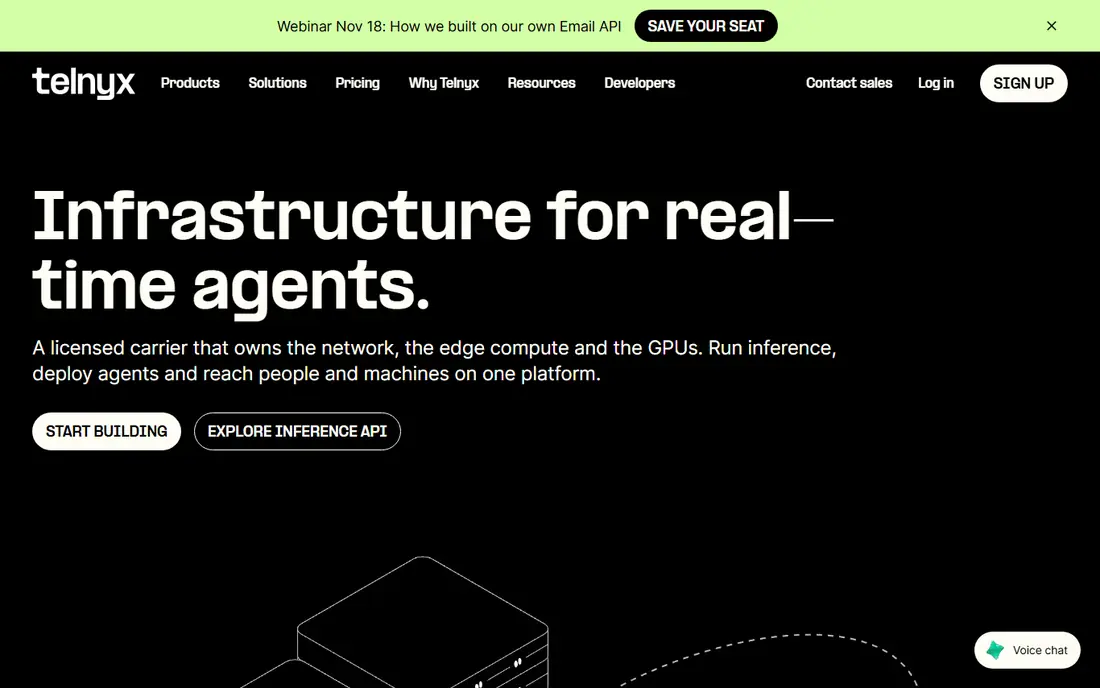
Telnyx is the first alternative to check when cost is the main reason for leaving Twilio. Its published US SMS base rate is $0.004 per message segment, below the rates listed for Plivo, Sinch, and Vonage in recent comparisons, and its voice rates are also low for high-volume teams. Telnyx runs its own private network with direct carrier connections, which helps explain the pricing and gives teams more control over routing and quality. There is no minimum commitment on pay-as-you-go use, and support is available around the clock.
The trade-offs are scope and complexity. Telnyx does not offer an email channel, so teams that want SMS plus email in one console will need another vendor. Its platform also rewards telecom knowledge, and small teams that only send occasional SMS may find it more platform than they need. For high-volume US senders, Telnyx offers the clearest saving in this list.
- Lowest published US SMS base rate here
- Private global network
- No minimum commitment on pay-as-you-go plans
- No email channel
- Advanced voice AI features need telecom knowledge to use well
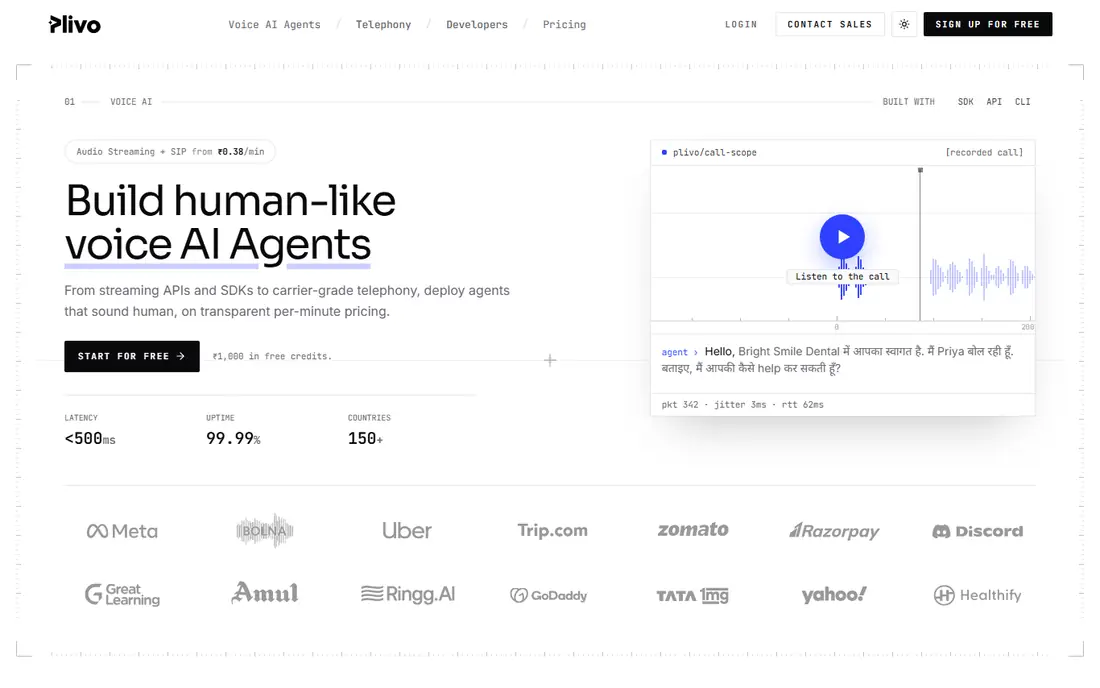
Plivo is popular with teams that want to move away from Twilio without rewriting every integration. Its API design follows familiar patterns, and its published US SMS base rate is $0.0077 per segment, with voice rates also listed below many rivals. Plivo covers SMS, voice, WhatsApp, and verification, so a team can move core messaging and one-time-password flows together. That breadth makes it a practical middle ground between a pure SMS vendor and a full enterprise platform.
Be honest about the saving. Once carrier surcharges are added, the gap between Plivo and Twilio narrows to a small percentage on many US routes, so volume and voice mix matter more than the headline rate. Support quality also varies by tier, so check what your plan includes. If migration ease matters most, Plivo is still the most straightforward switch here.
- Twilio-compatible API approach eases migration
- Published US SMS rate below Twilio
- Voice, SMS, and verification tools
- Real saving is small once carrier surcharges are added
- Support tiers vary by account
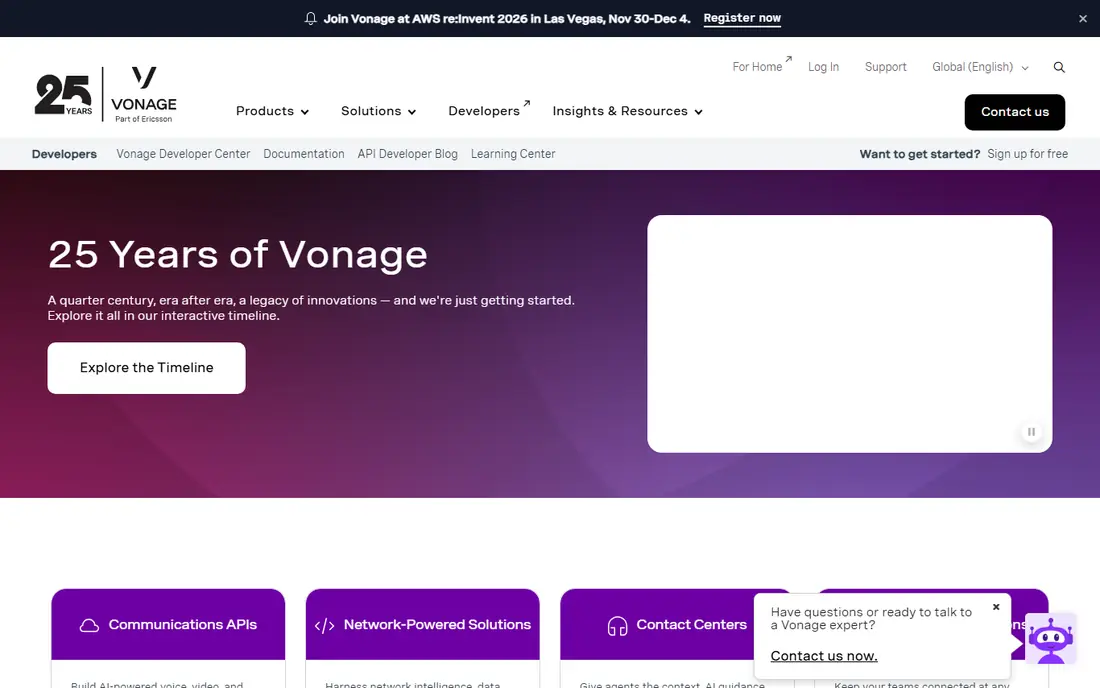
Vonage, part of Ericsson, suits teams that need more than SMS, especially voice and video alongside messaging. Its platform covers SMS, voice, video, verification, and WhatsApp, with AI Studio tools for building conversational agents without heavy code. Recent comparisons list a US SMS base rate around $0.00809 per segment, though Vonage does not publish every rate as openly as Telnyx or Plivo, so teams should request a quote for their routes. Enterprise support and global coverage are strengths for larger buyers.
Small teams may find the sales-led process slower than a self-serve signup, and the total cost depends on channels and volume. Vonage makes most sense when you already use its voice or video products, or when you want one vendor for several communication channels. For pure SMS cost, Telnyx and Plivo will usually look cheaper.
- Voice, SMS, video, and verification from one vendor
- Low-code AI Studio tools
- Strong enterprise support options
- Published SMS pricing is less transparent than rivals
- Enterprise sales process can slow small purchases
Sinch is built for global scale, with direct operator connections across many countries and strong coverage for SMS, voice, WhatsApp, and RCS. Its published US SMS base rate is around $0.0078 per segment, close to Plivo, but its real value shows on international routes, where local delivery and compliance matter more than a US headline rate. Sinch also offers verification, conversational AI tools, and campaign features for marketing and service teams.
Enterprise buyers should check support terms closely, since reviews note variation by contract tier. Pricing for many destinations is quote-based, so a global forecast needs a route-by-route quote rather than a single rate. For companies sending messages across many countries, Sinch is a strong enterprise alternative with reach that smaller vendors cannot match.
- Global reach with hundreds of operator connections
- SMS, voice, WhatsApp, and RCS
- Enterprise-grade delivery tools
- Support quality varies by contract tier
- Pricing varies by destination and needs a quote for many routes
Bandwidth is different from most alternatives here because it is a carrier, not just a reseller of carrier capacity. It runs its own all-IP voice network in the US, which gives enterprise teams direct control over numbers, routing, and compliance. Recent comparisons list a registered 10DLC SMS base rate around $0.0035 to $0.006 per message depending on plan and source, but Bandwidth pricing is often custom, so confirm your rate for your volume and use case. For US voice quality and telephony control, Bandwidth is a top-tier choice.
The setup is heavier than a simple SMS API, and non-technical teams may need help with number porting, 10DLC registration, and voice configuration. Bandwidth also suits US-focused work better than global campaigns. If you want to own the carrier relationship rather than rent it through an aggregator, Bandwidth deserves a serious look.
- Owns its US voice network
- Direct carrier control for quality and compliance
- Strong for US voice and messaging at scale
- Setup is steeper for non-technical teams
- Pricing is custom for many enterprise plans
Bird, formerly MessageBird, suits marketing and service teams that want campaigns, not just an API. It covers SMS, WhatsApp, email, voice, and other channels in one platform, with a campaign interface that non-developers can use. That makes it useful for promotions, reminders, and customer service flows where a team needs to build journeys without writing code for every step. Bird is also strong in Europe, with local compliance and routing options.
Billing is the main watch-out. Bird combines platform fees with per-message rates, so the total monthly cost is harder to forecast than a simple per-message price. Teams should model platform fees, message volume, and destination mix before comparing Bird with a pure API vendor. For omnichannel campaigns run by a marketing team, Bird is one of the most complete alternatives here.
- SMS, WhatsApp, email, and voice from one platform
- Campaign UI for marketing teams
- Strong in Europe
- Two-layer billing with platform fees plus per-message rates
- Pricing needs a quote for accurate forecasting
Infobip is an enterprise messaging platform with global reach, local data residency options, and compliance tools for regulated industries. It covers SMS, WhatsApp, voice, email, and RCS, with fraud and traffic monitoring tools that help block artificially inflated traffic. That depth suits banks, health services, retailers, and global brands that send messages across many regions and need local delivery partners. Infobip also offers customer engagement and chatbot tools beyond raw messaging APIs.
The sales cycle is enterprise-grade, which can slow small teams, and pricing is quoted by destination rather than published as a single rate. That makes a quick price comparison hard, but it also means large senders can negotiate route-level rates. For global, regulated, or high-volume work, Infobip is a credible enterprise alternative.
- Coverage in more than 190 countries
- SMS, WhatsApp, voice, email, and RCS
- Strong compliance and fraud tools
- Enterprise sales cycle
- Pricing is quoted by destination, so forecasting needs a detailed quote
ClickSend suits small teams that want to send SMS without building an API integration. Its dashboard covers bulk SMS, contacts, templates, and scheduling, plus email and voice options for simple campaigns. Pricing is tiered by prepaid top-up in many regions, which keeps costs predictable for low-volume senders who do not want a monthly contract. For a local shop, clinic, school, or charity sending reminders and updates, that simplicity matters more than a developer API.
ClickSend is less suited to complex, high-volume API work, where Telnyx, Plivo, or Bandwidth offer more control and lower unit rates at scale. Unit prices can also be hard to compare before you top up or request a quote. For small-team SMS with minimal setup, ClickSend is the most approachable alternative in this list.
- Simple dashboard and no-code tools
- SMS, email, and voice options
- Good for low-volume teams and local campaigns
- Unit price is only clear after top-up or quote in some regions
- Less suited to complex API builds than Plivo or Telnyx
How we picked these
We compared vendor pages and recent SMS pricing comparisons for US base rates, channel coverage, 10DLC support, global reach, and trial availability. We favored vendors that still operate in October 2026, publish or quote clear route pricing, and cover SMS plus at least one other channel or a distinct migration advantage. We left out niche verification-only tools and vendors without a clear public product, since this list focuses on full messaging alternatives.
How to migrate without breaking delivery
Start by auditing what you actually use, including SMS, voice, verification, WhatsApp, and any Twilio-specific products that have no direct match. Port numbers early, since porting and 10DLC registration can take weeks, and run the new vendor in parallel on a small traffic share before a full cutover. Test webhooks, delivery receipts, opt-out handling, and failover paths with real numbers, not just test numbers.
Also re-check compliance on the new platform. US 10DLC campaigns, consent records, and opt-out keywords must be set up correctly on the new vendor, even if they worked on Twilio. Keep Twilio running until delivery, voice quality, and support response all meet your bar on the new platform, then move traffic in stages rather than all at once.
Cost forecasting that avoids surprises
Build a forecast from your real mix, not a headline rate. Add the base rate, the carrier surcharge for each operator, number rental, 10DLC campaign fees, and any platform fee. Run the same month through two vendors side by side, since a lower base rate can still lose to a higher base rate once fees and volume tiers are included. Review the forecast quarterly, since carrier fees and route prices change.
Frequently asked questions
What are the best twilio alternatives for SMS?
For SMS cost, Telnyx and Plivo lead on published US base rates, while Sinch and Bandwidth suit enterprise and US carrier-grade work. Bird, Vonage, and Infobip suit teams that need SMS plus WhatsApp, voice, or email from one platform, and ClickSend suits small teams that prefer a dashboard.
Is Plivo a drop-in replacement for Twilio?
Plivo is close for many SMS and voice use cases, with a familiar API approach that eases migration, but it is not a perfect copy. You will still need to update endpoints, test webhooks, re-register 10DLC campaigns, and check any Twilio-specific features your app relies on.
Which Twilio alternative is cheapest?
Telnyx lists the lowest US SMS base rate in this list, at $0.004 per message segment, before carrier surcharges. The cheapest total bill still depends on your volume, destinations, voice mix, and platform fees, so run your real traffic through two vendors before deciding.
What are twillio alternatives for WhatsApp?
The spelling varies in search, but the same vendors apply. Vonage, Sinch, Bird, Infobip, and Plivo all offer WhatsApp Business messaging alongside SMS, with pricing and approval steps that vary by vendor and use case.
How long does it take to switch from Twilio?
Allow four to eight weeks for a safe migration, including number porting, 10DLC registration, webhook testing, and a parallel run. Simple SMS-only moves can be faster, while voice, verification, and multi-channel moves take longer.
Sources
See where you really rank - block by block
ProMapRanker scans Google Maps across a grid of your service area. Simple monthly plans from $19, white-label on every plan.
Start freeKeep reading
 best resource management software
Best Resource Management Software in 2026
We compared the best resource management software for scheduling, capacity and utilization, with current pricing and free trials, to help teams choose well.
Read → best reporting tools
Best Reporting Tools in 2026
Compare the best reporting tools for dashboards, scheduled reports, and business insights, from Power BI and Tableau to Looker Studio for every team size.
Read → best remote support software
Best Remote Support Software in 2026
Looking for the best remote support software? We compare 9 tools on price, security, session controls, and fit for helpdesks, MSPs, and small teams in 2026.
Read →