 ProMapRanker
Top Software Localization Platform in 2026

Key takeaways
- Lokalise, Phrase and Crowdin lead for app localization, thanks to developer tools, integrations and continuous workflows.
- Smartling and Transifex suit larger programs with complex workflows, vendor management and quality controls.
- Free plans exist at Crowdin, Weblate and POEditor, but string limits and seats decide whether a free tier lasts past a pilot.
- Pricing is often per seat, per word or per active user, so model your real string count and team size before choosing.
Quick comparison
| Pick | Great for | Pricing starts at | Free tier | |
|---|---|---|---|---|
 Lokalise | Product teams shipping apps fast | See website | Free trial | Visit |
 Phrase | Teams managing software and content together | See website | Free trial | Visit |
 Crowdin | Community and continuous localization | See website | Yes | Visit |
 Smartling | Enterprises with large content volume | See website | Free trial | Visit |
 Transifex | SaaS teams using continuous localization | See website | Free trial | Visit |
 Weblate | Open-source teams wanting self-hosting | Free | Yes | Visit |
 POEditor | Small teams wanting simple string management | See website | Yes | Visit |
 Localazy | Small app teams wanting a simple start | See website | Yes | Visit |
The best software localization platforms
We compared software localization platforms on string management, file format support, machine translation, reviewer workflows, integrations and pricing. The list covers app and software localization first, with tools that also handle websites and documents where noted.
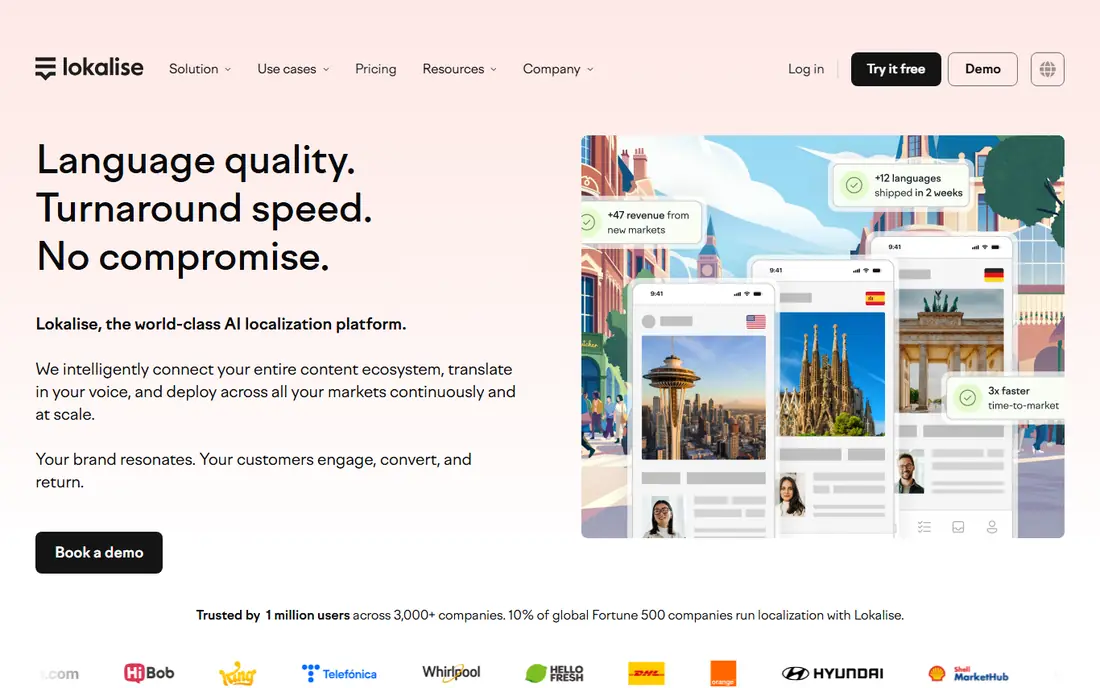
Lokalise is our pick for product teams that ship mobile and web apps on a fast cycle. Developers can push strings through the API or command-line tool, translators work with context from design files, and updated strings flow back into the build without manual file handling. That automation is what makes continuous localization practical rather than theoretical.
The cost is the caution. Published entry tiers exist, but seats, projects and usage can push the bill higher than the headline price suggests. Small teams should model their real string count and seat needs before committing. For teams releasing often, Lokalise speed is worth paying for.
- Strong API and CLI automation
- Design tool integrations
- In-context editing options
- Entry pricing can rise with seats and usage
- Smaller teams may find it pricey
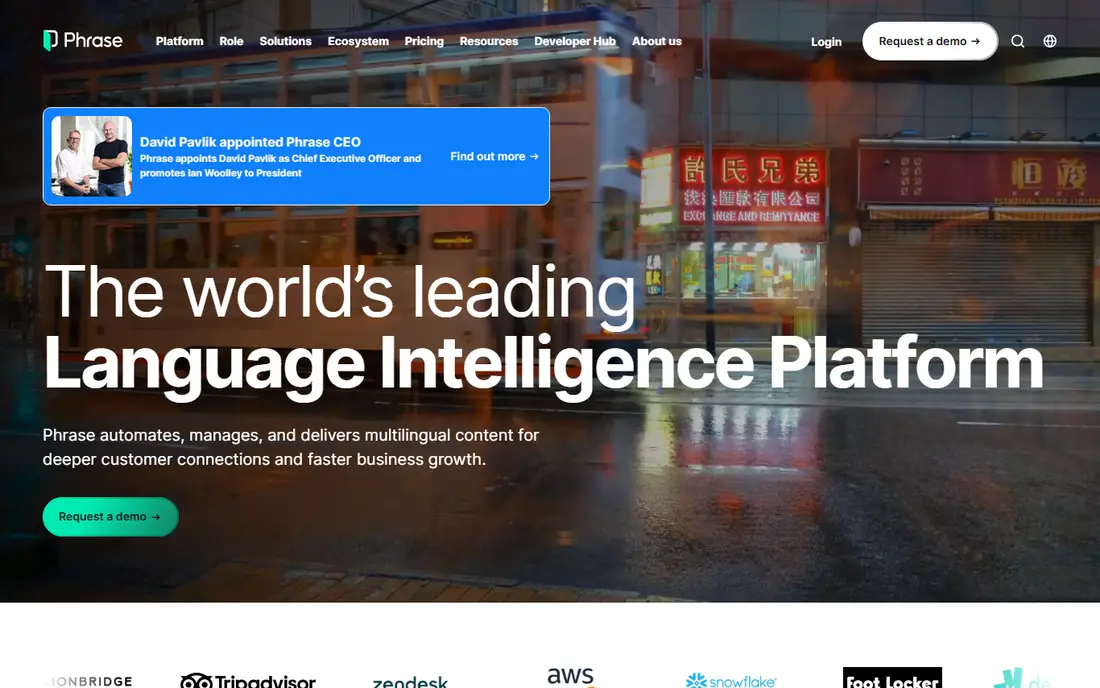
Phrase suits organizations that localize both app strings and longer content such as help articles and marketing pages. Its platform combines string management with translation management, and it routes work across machine translation engines with quality checks. That breadth helps teams avoid running one tool for apps and another for content.
Suite pricing can be hard to compare, since software, content and vendor features sit in different packages. Confirm which tier includes the workflow, review and vendor tools your team actually needs. For teams with mixed content, Phrase breadth is a genuine advantage over string-only tools.
- Covers software strings and longer content
- Many integrations
- Machine translation routing
- Suite pricing can be complex
- Entry tiers may lack advanced workflow features
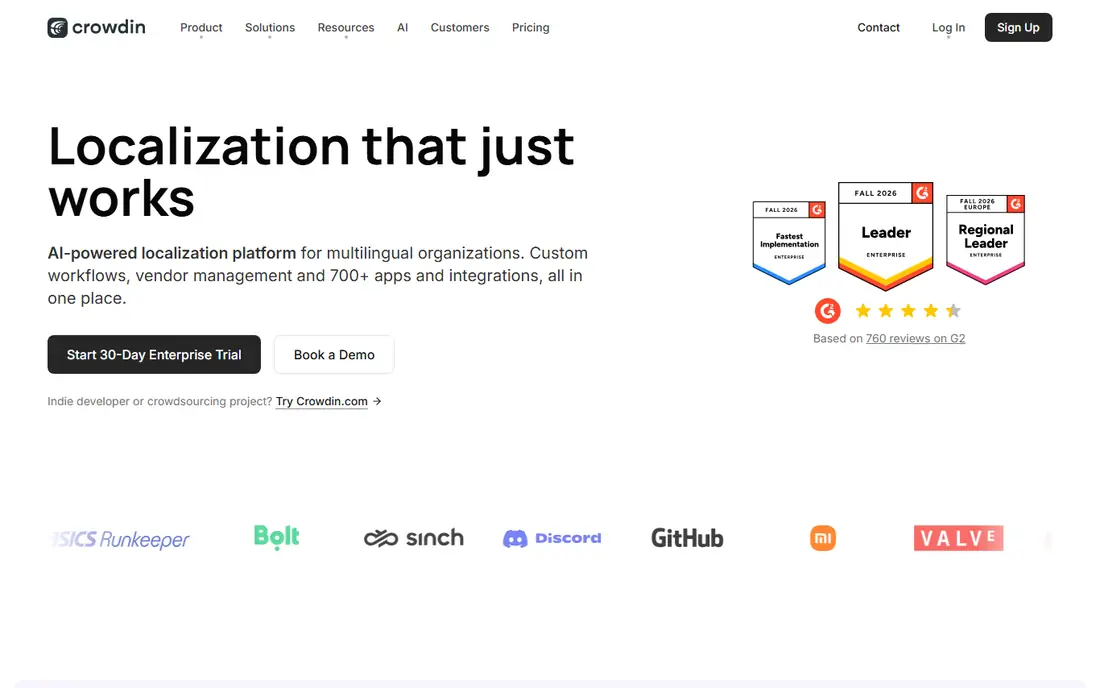
Crowdin is the best choice for teams that want community help or a huge integration library. Open-source projects can use it free, and private teams get workflows for translators, reviewers and proofreaders, plus integrations with code hosting, design and content tools. Its community features let volunteers translate and vote on strings, which suits games and open products.
Private projects need a paid plan once they outgrow the free limits, and pricing depends on hosted words and seats. Setup also needs attention for repositories with many branches or file formats. For teams that value community translation and integrations, Crowdin is hard to beat.
- Free tier for open-source projects
- Large integration library
- Community translation workflows
- Paid tiers are needed for larger private projects
- Setup takes care for complex repos
Smartling fits enterprises with large volumes and strict quality needs. Translators see visual context for strings, so they can judge length and tone in the real interface rather than guessing from isolated text. Workflow, vendor management and reporting tools help large programs coordinate many languages, vendors and reviewers without losing control.
That power comes with an enterprise sales process and quote-based pricing, which puts it out of reach for many small teams. Implementation also takes planning. For a large organization where translation quality and governance matter more than a low entry price, Smartling is a leading shortlist candidate.
- Visual context for translators
- Strong workflow and vendor management
- Enterprise controls
- Enterprise pricing is quote-based
- Smaller teams may find it heavy
Transifex suits SaaS teams that want strings to flow from code to translators and back without manual exports. Its integrations support continuous localization, while translation memory and glossaries keep wording consistent across releases. Reviewer workflows let in-house reviewers approve strings before they ship.
Pricing at higher tiers often needs a conversation, and entry limits on hosted words can bind a growing project. Check the word and seat limits against your current string count plus growth. For SaaS teams with a steady release cycle, Transifex offers a mature, reliable workflow.
- Continuous localization through integrations
- Translation memory and glossaries
- Reviewer workflows
- Pricing is quote-influenced at higher tiers
- Entry limits need checking for large projects
Weblate is the pick for teams that want control over their own infrastructure. The code is open-source, so a team can self-host it for free and keep all data inside its own systems. Hosted plans exist for teams that prefer not to run servers, and libre projects can qualify for free hosted use.
Self-hosting is not free of effort: updates, backups and security become your job. The interface also feels more functional than the polished commercial tools. For open-source projects and privacy-minded teams with technical staff, Weblate control and cost are compelling.
- Open-source code
- Self-hosting option
- Free hosted tier for libre projects
- Self-hosting needs technical care
- Interface is more functional than polished
POEditor is the tool to try when a bigger platform feels like overkill. Its interface is simple, string management is straightforward, and a free tier covers small projects with limited strings. Small teams can start localizing an app in an afternoon without learning a complex workflow system.
The limit is depth. Advanced automation, vendor management and enterprise reporting are thinner than in larger platforms. That is fine for a small app with a few languages, but a growing team may outgrow it. For a first localization project, POEditor simplicity is a real strength.
- Simple, clear interface
- Affordable entry tiers
- Free tier for limited strings
- Fewer advanced workflow features than Lokalise or Phrase
- Limits suit small projects best
Localazy suits small app teams that want to add languages without a long setup. Projects start quickly, the free tier covers small string counts, and community translation features help indie developers gather help from users. Its focus on app formats keeps the workflow close to how developers already work.
The integration library is smaller than Crowdin, and enterprise governance features are limited. Teams with complex workflows or many content types should look at larger platforms. For a small app team taking its first step into new languages, Localazy is an easy, low-risk start.
- Simple setup for app projects
- Free tier for small projects
- Community translation support
- Smaller integration library than Crowdin
- Enterprise features are limited
How we picked these
We compared official product pages, pricing pages, documentation and independent 2026 comparisons of localization tools. We favored platforms that are actively sold in October 2026, support software and app file formats, and offer reviewer workflows rather than raw machine translation alone. We did not run hands-on trials, and where pricing is quoted or tiered we say so rather than repeating a single unverified figure.
How to choose a localization platform for your app
Count your strings, languages and translators before comparing prices, because those three numbers drive most quotes. A tool that looks cheap for 1,000 strings can become expensive at 50,000 strings with ten reviewers. Also check file formats: your platform must handle your app formats, such as JSON, XML, strings files or resource files, without manual conversion.
Then test the workflow end to end in a trial. Push a real set of strings, translate them with machine translation plus human review, and pull them back into a test build. Watch for broken placeholders, text overflow and missing context, since those are the problems that delay releases. The platform that makes that loop boring and reliable is the right one.
Frequently asked questions
What is the best app localization platform?
Lokalise is the best app localization pick for fast product teams, while Crowdin suits community-driven projects and Phrase suits teams with mixed content. The right choice depends on release speed, team size and whether you need community translation. Trial the workflow with real strings before committing.
What is the best software localization platform?
For software localization overall, Lokalise, Phrase, Crowdin and Smartling lead, each with a different strength. Lokalise favors speed, Phrase favors mixed content, Crowdin favors community work, and Smartling favors enterprise control. Match the platform to your content mix and governance needs.
What is the best localization platform for small teams?
POEditor and Localazy are the best small-team starting points, thanks to simple setup and free tiers for small projects. Crowdin also offers a free tier for open-source work. Start small, and move to a larger platform only when string count or workflow needs force the change.
What are the best localization tools for developers?
Developers tend to favor Lokalise, Crowdin and Weblate, because of API access, command-line tools and code hosting integrations. Weblate adds self-hosting for teams that want full control. Check format support and automation options against your own build pipeline.
How much does a software localization platform cost?
Costs range from free tiers at Crowdin, Weblate, POEditor and Localazy to quote-based enterprise contracts at Smartling and larger Phrase tiers. Most paid plans charge by seats, hosted words or active users. Model your real string count and team size, and ask for renewal terms before signing.
Sources
See where you really rank - block by block
ProMapRanker scans Google Maps across a grid of your service area. Simple monthly plans from $19, white-label on every plan.
Start freeKeep reading
 free alternatives to grok imagine
Free Alternatives to Grok Imagine in 2026
We compared the best free alternatives to grok imagine for image generation, from fast daily credits to design tools, so you can create without paying.
Read → best tools for instagram content creation
Best Tools for Instagram Content Creation in 2026
Compare the best tools for Instagram content creation, from Canva and CapCut to Later and Buffer, on design, video, planning, scheduling, and price in 2026.
Read → best tool to split pdf files
Best Tool to Split PDF Files in 2026
We compared the best tool to split pdf files on split modes, file limits, privacy and price, so you can split a PDF cleanly and keep every page in one go.
Read →