 ProMapRanker
Tilt Skaffold Alternatives Low Footprint in 2026

Key takeaways
- DevSpace, Garden and DevPod give a light local inner loop without a heavy platform install.
- Telepresence and Mirrord suit teams that debug one service locally against a shared cluster.
- Okteto suits teams that want managed dev environments with a free tier to start.
- Ksync and Draft suit narrow jobs, file sync and simple app scaffolding, rather than a full platform.
- Low footprint here means a small binary, a local process or a small cluster add-on, not a second platform to run.
Quick comparison
| Pick | Great for | Pricing starts at | Free tier | |
|---|---|---|---|---|
 DevSpace | Local Kubernetes development loop | Free | Yes | Visit |
 Garden | Config driven dev and testing | See website | Free trial | Visit |
 Okteto | Managed Kubernetes dev environments | See website | Yes | Visit |
 Telepresence | Local debugging against a remote cluster | Free | Yes | Visit |
 Mirrord | Local process inside a cluster context | Free | Yes | Visit |
 Draft | Simple app scaffolding for Kubernetes | Free | Yes | Visit |
 DevPod | Portable dev containers anywhere | Free | Yes | Visit |
 Ksync | Fast file sync to a cluster | Free | Yes | Visit |
The best tilt skaffold alternatives low footprint
This list covers tools that replace the inner development loop that Tilt and Skaffold provide, without requiring a heavy install or a large platform team to maintain. It does not list Tilt or Skaffold themselves. Each tool here either runs locally, installs as a small cluster component, or uses containers you already have.
Low footprint is a practical test. If a tool needs its own database, its own control plane and a dedicated operator to keep it running, it fails that test for a small team. If it runs as a command line tool, a small agent or a dev container, it passes.
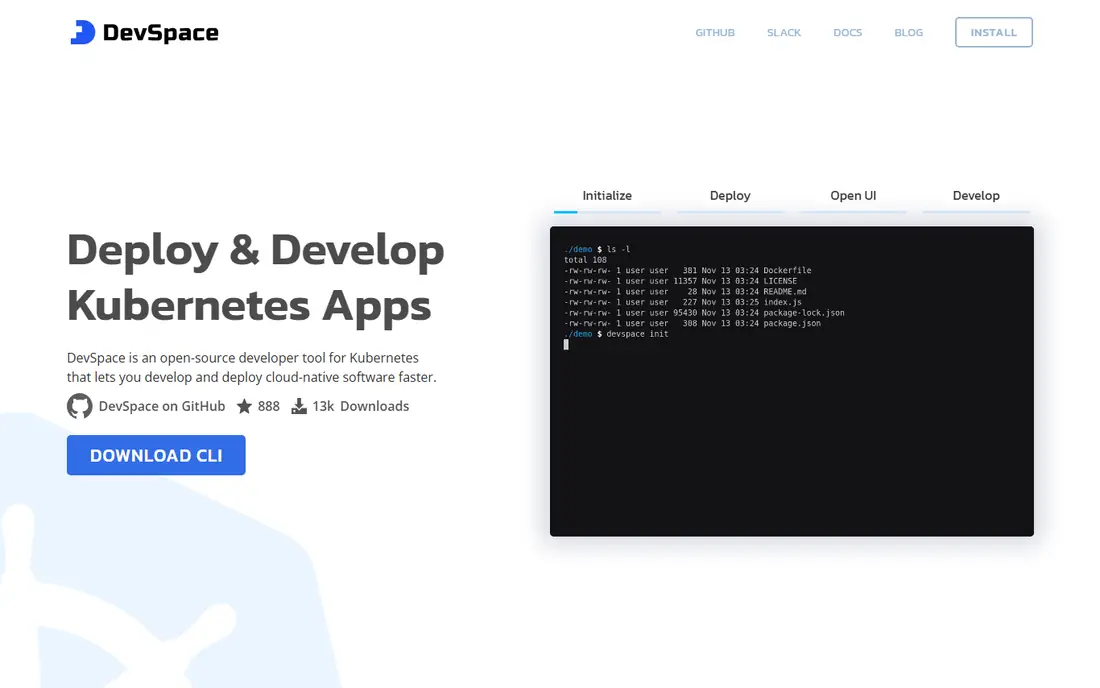
DevSpace, from Loft Labs, is the closest direct replacement for a Skaffold style loop with a light install. It builds and deploys to a cluster, syncs code changes, forwards ports and streams logs, so a developer can edit locally and see the change in the cluster quickly. Profiles let one configuration serve local development, staging and a demo deploy.
The tool is open source and free, which makes it easy to try on a small service first. The learning curve comes from its configuration file, which can grow as a project adds services and dependencies. Teams that keep the configuration small and shared will get the most value, while teams that want zero configuration may prefer a more managed option.
- Open source
- Hot reload and port forwarding
- Profiles for dev and deploy
- Configuration takes learning
- Best for teams comfortable with YAML
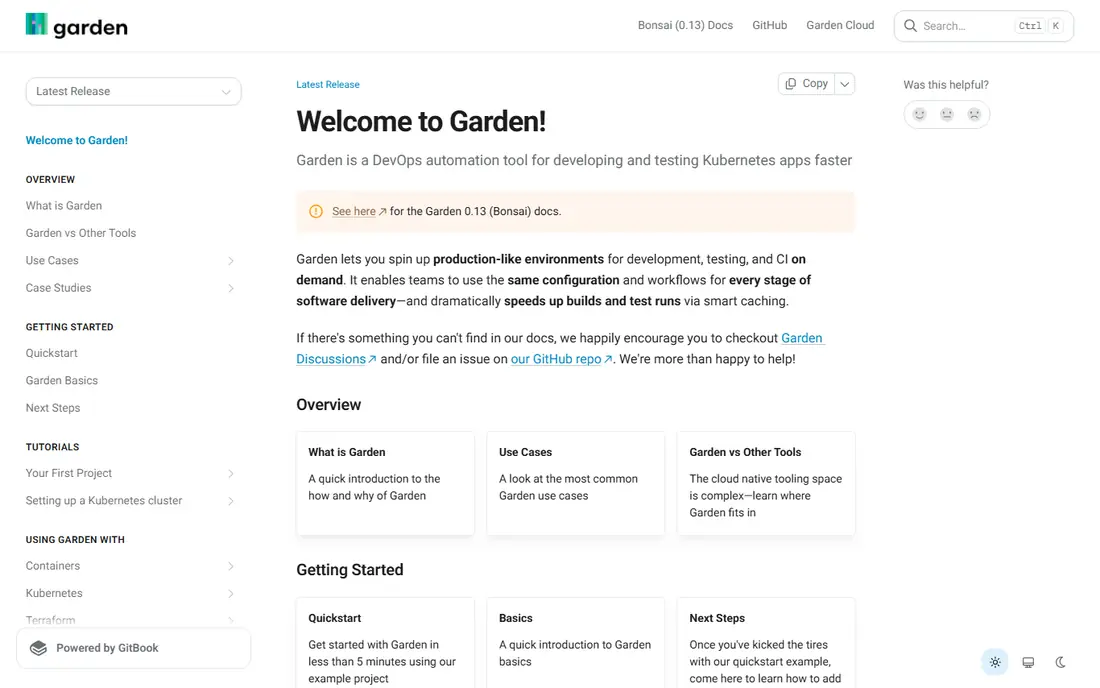
Garden describes a project as a graph of actions, such as builds, deploys, tests and runs, then executes only what changed. That model helps a team with several services, because Garden can start the dependencies a service needs and skip work that is already current. It supports local and remote Kubernetes clusters, which suits teams that share a staging cluster.
Garden has an open source core with commercial offerings, so pricing depends on the plan and support you need. The config model is powerful but takes a day or two to learn well. It is a good pick for a team that already thinks in terms of services and dependencies and wants that structure written down.
- One config for dev, test and deploy
- Dependency graph across services
- Remote clusters supported
- Pricing is not a simple open source list
- Config model takes time to learn
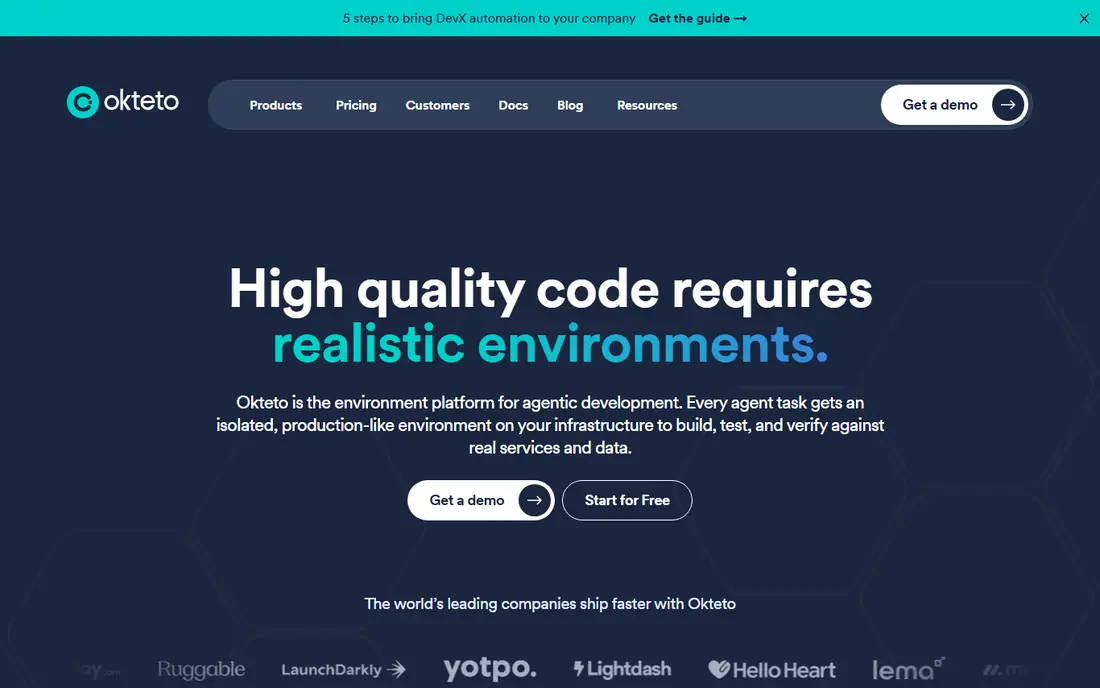
Okteto gives each developer an environment in Kubernetes that stays in sync with local code. Edit a file locally, and the change appears in the cluster without a full rebuild and redeploy cycle. It also supports preview environments for pull requests, which helps reviewers test a change without a local setup.
Okteto offers a free tier to start, with paid plans for teams that need more environments, support and controls. That managed route is lighter on the developer than running your own tooling, but heavier in vendor terms than a pure command line tool. Teams that want environments without maintaining tooling will find that trade worthwhile.
- Dev environments on demand
- Live code sync
- Preview environments for pull requests
- Managed plans are quote based for larger teams
- Deeper features need the cloud service
Telepresence connects a local machine to a remote Kubernetes cluster, so a developer can run one service locally while it talks to the other services in the cluster. With an intercept, traffic for that service routes to the local process, which means breakpoints, logs and local tools work as if the service were running in the cluster. The rest of the system keeps running untouched.
That focus is its strength. Telepresence does not try to be a full build and deploy loop, so it pairs well with a simple deploy tool or a CI pipeline. The catch is permissions and coordination on a shared cluster, because intercepts affect traffic for that service. Teams should agree on intercept rules before several developers share one cluster.
- Open source
- Intercept traffic to a local service
- Use local tools and debuggers
- Needs cluster permissions for intercepts
- Shared cluster use needs coordination
Mirrord takes a different route to the same problem as Telepresence. It runs your local process with the network, environment variables and file access of a pod in the cluster, without changing code or building a container for every edit. That makes it a good fit for debugging a service that depends on cluster internal addresses, secrets or config that are hard to copy locally.
Mirrord is open source and free, with a command line interface that is quick to try on one service. It is newer than Telepresence, so documentation and community examples are smaller, and it still needs an agent in the cluster. For a team that values a minimal setup and a local process, it is one of the lightest options in this list.
- Open source
- Runs a local process with cluster network and env
- No code changes needed
- Newer tool with a smaller ecosystem
- Needs cluster access and an agent pod
Draft, from Microsoft Azure, helps developers create the files a Kubernetes app needs, such as Dockerfiles, Helm charts and manifests, from a simple command. It lowers the first step for a team that is new to Kubernetes, because it generates a sensible starting point instead of asking a developer to write deployment files from a blank page.
Draft is not a full replacement for a live development loop. It does not, on its own, watch code and rebuild continuously in the way DevSpace or Garden do. Use it to start a project cleanly, then pair it with a sync or deploy tool for daily development. For scaffolding alone, its small footprint is hard to beat.
- Open source
- Scaffolds Dockerfiles and manifests
- Helps new Kubernetes projects start
- Narrow scope
- Not a full live reload loop on its own
DevPod, also from Loft Labs, creates reproducible developer environments from devcontainer definitions. A contributor can open a project and land in a configured environment, whether it runs on local Docker, a remote machine or a cloud VM. Projects already configured for other devcontainer tools often work with DevPod without major changes.
DevPod itself is free and open source, and you pay only for the compute underneath. That makes it light in licence terms, though it asks more of the team in setup than a managed service. It is a strong pick for platform teams that want portable environments without vendor lock-in, and for open source projects that want a consistent contributor setup.
- Open source
- Devcontainer compatible
- Runs on local Docker, remote machines or cloud VMs
- You manage the underlying compute
- Setup takes infrastructure knowledge
Ksync does one job: it keeps files in a local directory in sync with a container running in Kubernetes. That narrow scope is the point for a low footprint list. When a developer is iterating on code inside a container, Ksync removes the rebuild step for file changes and lets the app reload or restart quickly.
Ksync will not build images, manage dependencies or orchestrate a multi-service deploy, so it needs to sit alongside other tooling. Its project activity is also more limited than the larger tools here, so check the current repository state before adopting it for a critical workflow. For a simple sync need, its small size is a clear advantage.
- Open source
- Syncs local files into a running container
- Very small scope
- Sync only, no build or deploy orchestration
- Project activity is limited
How we picked these
We compared official project pages, documentation and public comparisons, and we kept only tools that exist and work in October 2026 and truly provide a Kubernetes development loop, debugging or sync function with a light install. We excluded Tilt and Skaffold themselves, as required for an alternatives list, and we excluded full platform products that need a large control plane. We did not claim hands-on testing, and where pricing was not published we wrote See website.
How to choose a low footprint loop
Start with the bottleneck in your current loop. If rebuilds are slow, a sync tool such as DevSpace or Ksync may fix the pain. If debugging against shared services is slow, Telepresence or Mirrord may help more than a new build tool. If environment setup is slow for new contributors, DevPod or Okteto may be the better investment.
Keep the loop local where possible
A tool that runs on the developer machine, with only a small agent in the cluster, is easier to debug and cheaper to run than a platform that needs its own services. Check what a tool installs into the cluster, what permissions it needs, and what happens if that component fails. A loop that still lets you deploy by hand when the tool is down is safer than one that becomes a single point of failure.
Test on one service first
Pick a single service with a clear build and a few dependencies, and run the new tool alongside your current workflow for a week. Measure time from code change to running change, and count the manual steps that remain. A tool that looks light in documentation but needs heavy configuration for your stack is not light in practice.
Watch shared cluster etiquette
Tools that intercept traffic or share a dev cluster can affect teammates. Agree on namespaces, intercept rules and environment lifetimes before a team adopts them widely. A small tool with clear rules will scale better than a powerful tool with no shared conventions.
Frequently asked questions
What is the best low footprint Tilt alternative?
DevSpace is the most direct low footprint pick for a build, sync and deploy loop, because it is open source and runs as a command line tool. Telepresence or Mirrord is better if your main pain is debugging one service against a shared cluster rather than rebuilding often.
What is the best low footprint Skaffold alternative?
Garden and DevSpace both cover the Skaffold style loop of build, deploy and watch, with different configuration models. Garden suits teams that want a dependency graph across services, while DevSpace suits teams that want profiles and a simpler command line flow.
Do these tools need a large Kubernetes platform to run?
No, that is the point of this list. Most run locally or with a small cluster agent, and several work with a local cluster such as a laptop cluster for early development. Managed options such as Okteto add a service layer, but they do not require you to run a second platform yourself.
Can I use Telepresence and DevSpace together?
Yes, many teams do. DevSpace can handle build and deploy, while Telepresence handles local debugging of one service against a shared cluster. Keep the responsibilities separate in your docs, so a new developer knows which tool owns which step.
Is DevPod a replacement for Tilt or Skaffold?
Not directly. DevPod provides a portable development environment, while Tilt and Skaffold provide a live build and deploy loop inside Kubernetes. The two can complement each other, with DevPod giving a consistent machine and a loop tool giving fast code changes.
How do I keep a dev loop low footprint over time?
Keep configuration in the repo, limit cluster components to what you actually use, and review permissions and installed agents each quarter. Remove preview environments and stale namespaces on a schedule, because forgotten environments are a common source of hidden cost and clutter.
Sources
See where you really rank - block by block
ProMapRanker scans Google Maps across a grid of your service area. Simple monthly plans from $19, white-label on every plan.
Start freeKeep reading
 best resource management software
Best Resource Management Software in 2026
We compared the best resource management software for scheduling, capacity and utilization, with current pricing and free trials, to help teams choose well.
Read → best reporting tools
Best Reporting Tools in 2026
Compare the best reporting tools for dashboards, scheduled reports, and business insights, from Power BI and Tableau to Looker Studio for every team size.
Read → best remote support software
Best Remote Support Software in 2026
Looking for the best remote support software? We compare 9 tools on price, security, session controls, and fit for helpdesks, MSPs, and small teams in 2026.
Read →