 ProMapRanker
SuiteDash Alternatives in 2026

Key takeaways
- Assembly suits firms that want a polished client portal first, while HoneyBook and Dubsado suit service businesses that need proposals, contracts, and workflows.
- ManyRequests and Zendo suit agencies selling productised services, where client requests and subscriptions drive the work.
- Bonsai and Plutio suit freelancers and small studios that want portal, contracts, and invoicing without enterprise complexity.
- Clinked suits teams with strict document control needs, but its price puts it in a different class from the budget options here.
- Pick by the client experience first, then check whether the internal project tools are strong enough for your team.
Quick comparison
| Pick | Great for | Pricing starts at | Free tier | |
|---|---|---|---|---|
 Assembly | Polished branded client portals | $20 per month | Free trial | Visit |
 HoneyBook | Booking based creative and service businesses | See website | Free trial | Visit |
 Dubsado | Workflow heavy solo operators | $20 per month | Free trial | Visit |
 Bonsai | Freelancers needing contracts and invoicing | See website | Free trial | Visit |
 ManyRequests | Productised agency services | $39 per month | Free trial | Visit |
 Zendo | Selling retainers through a portal | Free | Yes | Visit |
 Clinked | Secure white label document workspaces | $239 per month | Free trial | Visit |
 SuperOkay | Fast simple client portals | $9 per month | Free trial | Visit |
 Plutio | Freelancer project and client hub | See website | Free trial | Visit |
The best suitedash alternatives
We compared client portals, CRM features, invoicing, contracts, workflows, and pricing for tools that replace SuiteDash. SuiteDash itself is not listed here, since this article covers alternatives to it. Each pick covers a different balance of polish, depth, and price.
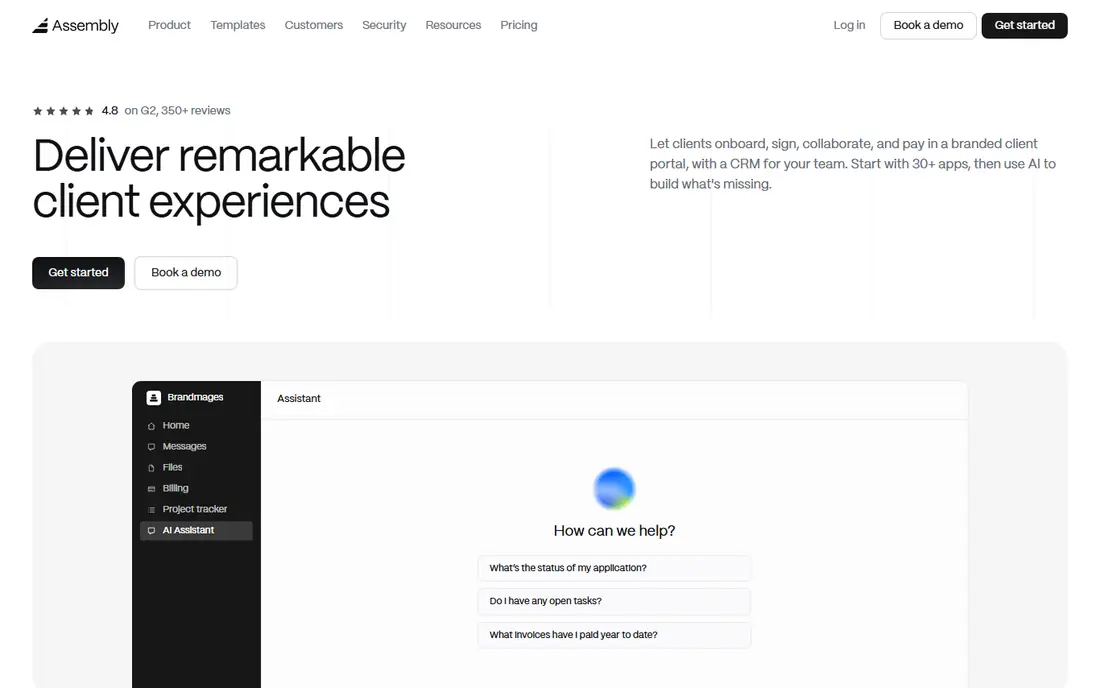
Assembly, formerly known as Copilot, is the portal first alternative. Clients log in with a magic link, see files, messages, invoices, contracts, and tasks in a clean branded space, and rarely need onboarding help. That low friction experience is why service firms with premium clients pick it.
The trade off is internal depth. Project management and dashboard customisation are lighter than SuiteDash, so teams that manage complex delivery inside the portal may need another tool alongside it. If client experience is the priority and internal work lives elsewhere, Assembly is a strong pick.
- Clean client experience
- Magic link logins
- CRM, messages, invoices, and files in one portal
- Project management is lighter than SuiteDash
- Custom domain needs a higher tier
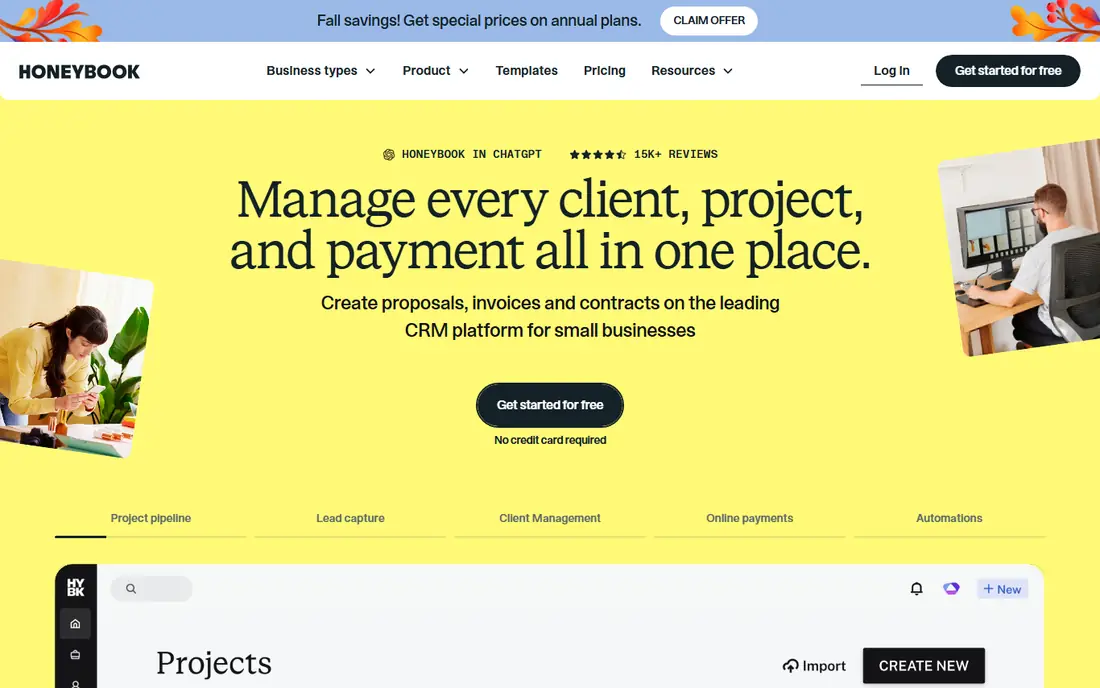
HoneyBook suits photographers, designers, coaches, and other service businesses that win work through inquiries and bookings. A client can move from inquiry to proposal, contract, invoice, and payment in one smooth flow, with scheduling built in. Templates keep that flow looking professional without design work.
Lower tiers limit active projects, so a busy firm should price the tier that covers its real project count. HoneyBook is also less of a general purpose portal for ongoing client collaboration than SuiteDash. For booking led businesses, that focused flow is the appeal.
- Proposals, contracts, and payments in one flow
- Scheduling tools
- Professional templates
- Active project limits on lower tiers
- Less of a general client portal than SuiteDash
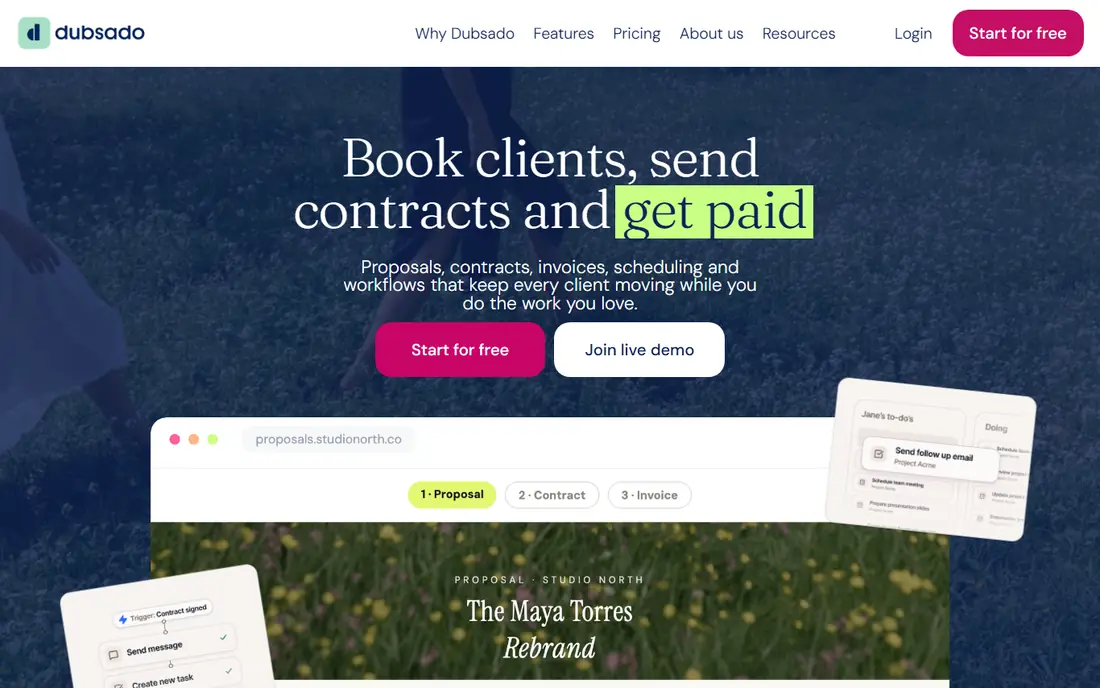
Dubsado is for operators who want to automate intake, onboarding, and delivery with templates and workflows. You can build forms, questionnaires, contracts, schedulers, and automated emails into a repeatable process, then reuse it for every client. That depth helps solo operators and small teams handle more clients without more admin time.
Setup is the cost. Building good workflows takes planning, and the interface is less polished than Assembly. Users who invest that setup time get a system tailored to their process. Users who want a portal running this week should pick a simpler option.
- Highly customisable workflows
- Forms, contracts, and scheduling
- Strong template system
- Setup takes time
- Interface feels dated in places
Bonsai bundles the business side of freelancing into one tool. Proposals, contracts, invoices, time tracking, and client portals sit together, with tax features aimed at US based freelancers. That breadth helps a freelancer replace several separate tools with one subscription.
The client portal itself is useful but less central than in a portal first tool such as Assembly. Teams with many clients and complex collaboration may want a dedicated portal instead. For a freelancer who mainly needs to win, contract, bill, and track work, Bonsai covers the bases well.
- Contracts, proposals, invoicing, and time tracking in one place
- Tax tools for US freelancers
- Portal is less central than in Assembly
- Some features need higher tiers
ManyRequests is built for agencies that sell services as packages or subscriptions. Clients submit requests through a portal, the agency works through a queue, and billing ties to the service catalogue. That model fits design, marketing, and development agencies that deliver repeatable work on retainer.
Custom, one off projects fit less neatly into a request queue, and teams should test the workflow with a real service before switching. For productised agencies, the clarity of a request based portal often beats a general project tool, because clients understand exactly what to ask for and what happens next.
- Request queue for retainer work
- Service catalogue
- Client portal with approvals
- Less suited to custom project work
- Pricing rises with seats and features
Zendo helps service businesses sell and deliver retainer and productised services through a simple portal. Clients can request work, approve quotes, and follow progress without email chains. A free tier for a small number of clients lets a new business start without a subscription.
Full white label branding and custom domains need higher tiers, so firms that need a fully branded portal should price that tier. Zendo is a practical pick for small agencies and freelancers who want a clean portal and request flow without SuiteDash level setup.
- Free tier for small client counts
- Request and quote approvals
- Simple portal setup
- White label features need higher tiers
- Smaller ecosystem than larger rivals
Clinked suits firms that need secure, white label workspaces for document collaboration, such as accountants, lawyers, and consultants handling sensitive files. Branded portals, granular access, tasks, chat, and audit trails give clients a professional and controlled place to share documents. That control is the main reason to pay its higher price.
For a solo freelancer or small studio, Clinked will feel expensive and heavy. It earns its place for compliance minded teams where document control and branding matter more than low cost. Smaller teams should compare SuperOkay or Zendo first.
- Branded workspaces
- File management, tasks, and chat
- Audit trail and access controls
- High entry price
- Overkill for small freelancers
SuperOkay is the fast, low cost portal option. You can set up a branded hub for reports, assets, links, and action items in a short time, and clients access it with a magic link. That simplicity suits creative agencies and consultants who mainly need to share work and gather feedback.
It does not replace a full CRM, invoicing, or workflow suite, so teams that need those tools should pair it with other software or pick a fuller alternative. For a team whose main problem is scattered client communication, SuperOkay solves it cheaply and quickly.
- Very low entry price
- Quick setup
- Magic link client access
- Fewer built in business tools
- White label needs higher tiers
Plutio gives freelancers and small studios a single hub for projects, tasks, time tracking, invoicing, proposals, and client portals. Clients can see progress, approve items, and pay invoices without juggling separate tools. White label options help small firms present a branded experience.
The interface packs many features into one place, which can feel busy until you learn where things live. Larger agencies may also want deeper workflow automation than Plutio offers. For a small team that wants one hub rather than several subscriptions, Plutio is a solid, affordable choice.
- Projects, tasks, invoicing, and client portal in one tool
- White label options
- Proposals included
- Interface can feel busy
- Some advanced features need higher tiers
How we picked these
We compared official pricing and feature pages, client portal quality, workflow depth, and public review themes about setup effort and support. We favoured tools that are live in October 2026, that offer a real client portal or client management suite, and that cover different needs from polished portals to productised services. We did not claim hands on testing, and we excluded tools that only offer file sharing without client management features.
How to choose without a painful migration
Start with the client journey. List what a client must do in the first month, such as sign a contract, pay an invoice, submit a request, or approve work, and test those exact steps in each shortlisted tool. A portal that looks good in a demo but confuses a real client will cost you time in support messages.
Next, check migration effort. Export clients, invoices, and open projects from SuiteDash, and confirm how each alternative imports them. Plan a pilot with two or three friendly clients before moving everyone, and keep SuiteDash running until the pilot clients complete a full cycle without help.
Price the tier you will actually use
Starter prices often limit projects, clients, or white label features. Price the tier that covers your real client count, project count, and branding needs, including any per seat costs. A tool that looks cheap at entry level can cost more than a fuller rival once those limits are factored in.
Frequently asked questions
What is SuiteDash?
SuiteDash is an all in one business platform that bundles client portals, CRM, invoicing, project management, forms, and automations for a flat monthly fee with unlimited users. Teams look for alternatives when they want a more polished portal, simpler setup, or a tool focused on their specific workflow, such as booking or productised services.
Which SuiteDash alternative is easiest to set up?
SuperOkay and Zendo are among the easiest, because they focus on a simple portal and request flow rather than a full suite. Assembly is also quick for a polished portal, though its project tools are lighter. SuiteDash itself rewards longer setup with broader features, so a simpler tool will usually launch faster.
Is Assembly better than SuiteDash?
Assembly is better for client experience, with cleaner portals and magic link logins that clients adopt easily. SuiteDash is better for all in one value and internal depth, with broader project, CRM, and automation features for a flat fee. Choose Assembly for polish, SuiteDash for breadth, or test both with real clients.
Can I replace SuiteDash with HoneyBook or Dubsado?
Yes, if your main work is booking based services or workflow driven client onboarding. HoneyBook suits inquiry to payment flows, while Dubsado suits templated workflows and forms. Neither matches SuiteDash as a general portal plus project suite, so check portal and collaboration needs before switching.
What is the cheapest SuiteDash alternative?
Zendo offers a free tier for a small number of clients, and SuperOkay starts at a low monthly price. Both cover basic portals well. For a fuller suite at low cost, Plutio and Dubsado are worth pricing at the tier that covers your client and project counts.
How do I move clients without confusion?
Tell clients what changes, when, and how they log in, and send the new portal link before the old one closes. Pilot with a few clients, answer their questions once, and turn those answers into a short help note for the rest. Keep the old portal read only for a short period so no file or invoice goes missing during the move.
Sources
See where you really rank - block by block
ProMapRanker scans Google Maps across a grid of your service area. Simple monthly plans from $19, white-label on every plan.
Start freeKeep reading
 wpforms alternatives
Best WPForms Alternatives in 2026
We compare 9 wpforms alternatives for WordPress forms, with free and paid options, current pricing notes, and honest limits for small business sites in 2026.
Read → windows task scheduler alternatives
Best Windows Task Scheduler Alternatives in 2026
Looking for Windows Task Scheduler alternatives? We compare 9 schedulers for Windows and cross-platform work, from free tools to enterprise automation.
Read → which ai video service is best
Which AI Video Service Is Best in 2026
which ai video service is best? We compare 10 legitimate AI video services on price, avatars, editing and output quality to help you pick the right tool.
Read →