 ProMapRanker
Square Alternatives in 2026

Key takeaways
- The cheapest alternative depends on your ticket size and volume, not just the monthly fee, because processing rates drive total cost.
- Shopify POS suits stores that already sell online, while Toast suits restaurants and Lightspeed suits inventory-heavy retail.
- Helcim suits higher-volume sellers who want interchange-plus pricing, while SumUp and PayPal Zettle suit mobile and market sellers.
- Clover hardware is strong, but pricing varies by seller, so get a written quote before you sign a contract.
- Avoid long contracts and hardware leases until you have tested the system on a real trading day.
Quick comparison
| Pick | Great for | Pricing starts at | Free tier | |
|---|---|---|---|---|
 Shopify POS | Online-first retail | $39 per month | No | Visit |
 Clover | Busy counters and hardware choice | See website | No | Visit |
 Toast | Restaurants | $69 per month | Free trial | Visit |
 Lightspeed Retail | Inventory-heavy retail | $89 per month | Free trial | Visit |
 Helcim | Interchange-plus pricing | Free | Yes | Visit |
 Stripe | Online and developer-led sales | Free | Yes | Visit |
 PayPal Zettle | Mobile and market sellers | Free | Yes | Visit |
 SumUp | Pop-ups and low-cost readers | Free | Yes | Visit |
The best square alternatives
We compared POS and payment tools that can replace Square for in-person sales, using official pricing pages and recent rate comparisons. We list alternatives only, not Square itself, and we focus on software cost, card rates, hardware, and contract terms.
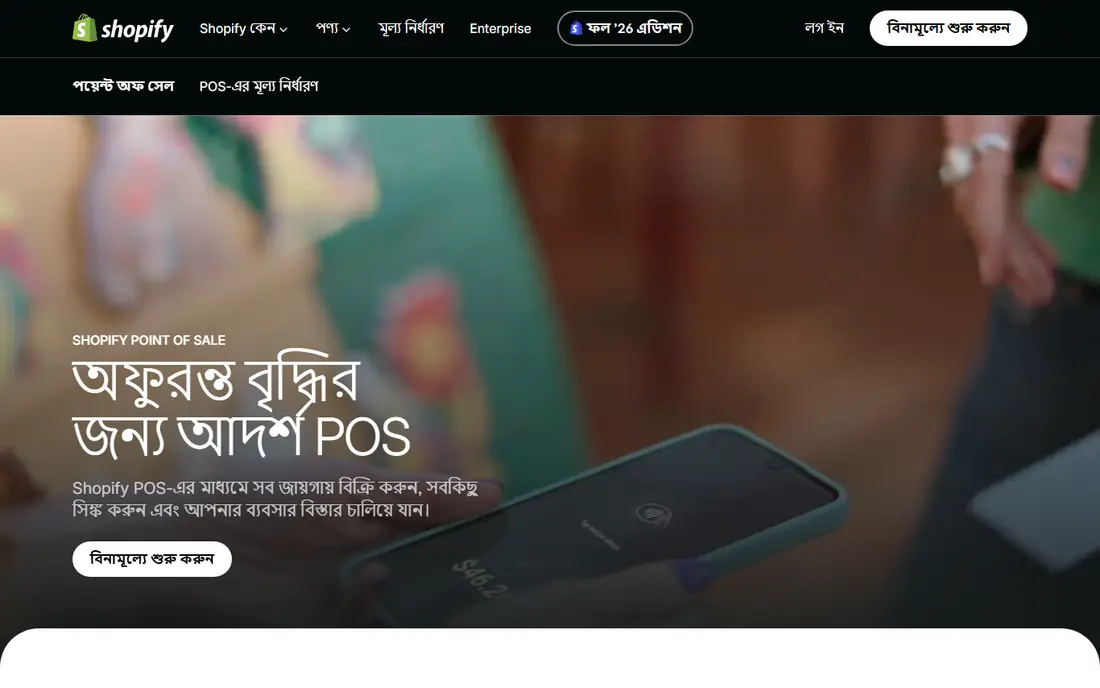
Shopify POS is the best Square alternative for a shop that already sells online on Shopify. Orders, inventory, and customer records stay in one system, so a sale in store updates the online stock at once, and an online order does not sell an item that left the shop an hour earlier. That sync is the main reason to choose Shopify POS over a standalone counter system.
The catch is stacked cost. Shopify POS starts with a Shopify plan, with Basic at $39 per month in recent listings, and POS Pro adds a further fee per location. In-person card rates through Shopify Payments are around 2.6% plus 10 cents on Basic in recent comparisons. For an online-first shop, that total is worth it. For a shop with no online store, a simpler POS may cost less.
- Online and in-person inventory stay in sync
- Strong online store tools
- Wide app and hardware range
- Needs a Shopify plan on top of POS fees
- POS Pro adds $89 per month per location in recent listings
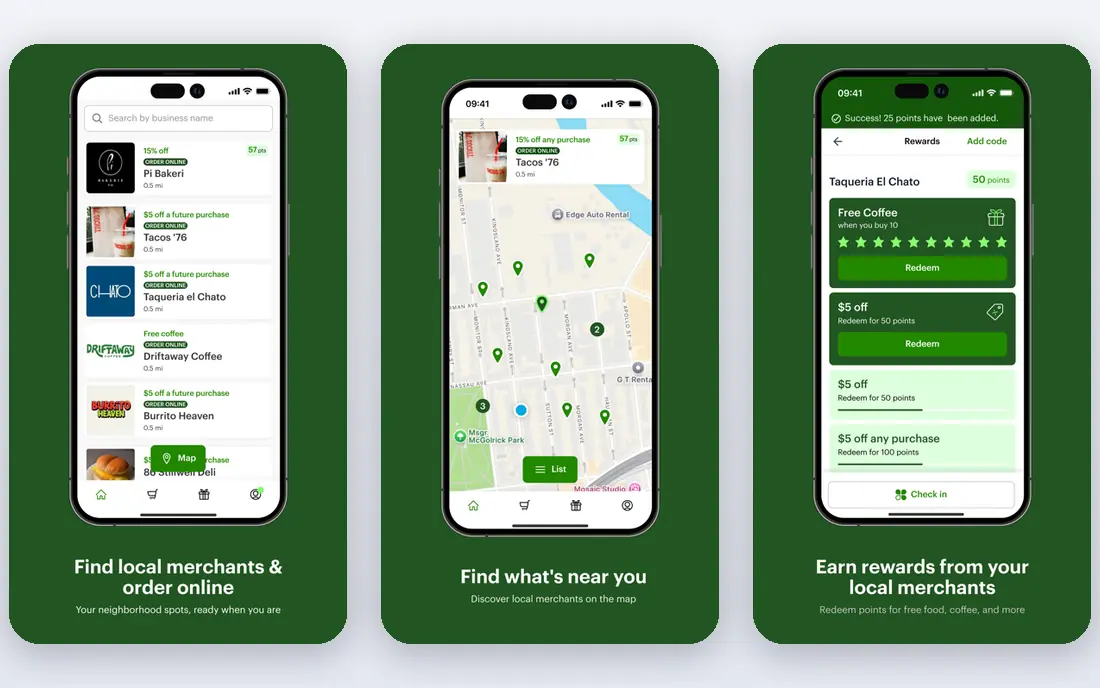
Clover, from Fiserv, is a hardware-forward POS system with devices for counters, tables, and mobile sales. Its app marketplace covers inventory, loyalty, online ordering, and staff tools, and its hardware feels built for a busy counter. Direct Clover listings in recent comparisons show in-person rates from 2.3% plus 10 cents for restaurants to 2.6% plus 10 cents for retail, with software from about $14.95 per month on some direct plans.
The main risk is reseller pricing. Clover is sold through many partners, and the same hardware can carry very different monthly fees, rates, and contract terms. Some resellers bundle hardware into a multi-year lease, which can cost far more than buying direct. Get a written quote from Clover direct and from any reseller, compare the full term cost, and do not sign a long contract on a first call.
- Wide hardware range from handheld to station
- Large app marketplace
- Direct rates as low as 2.3% plus 10 cents in recent listings
- Pricing varies by seller and contract
- Hardware can be costly
- Some plans carry long terms
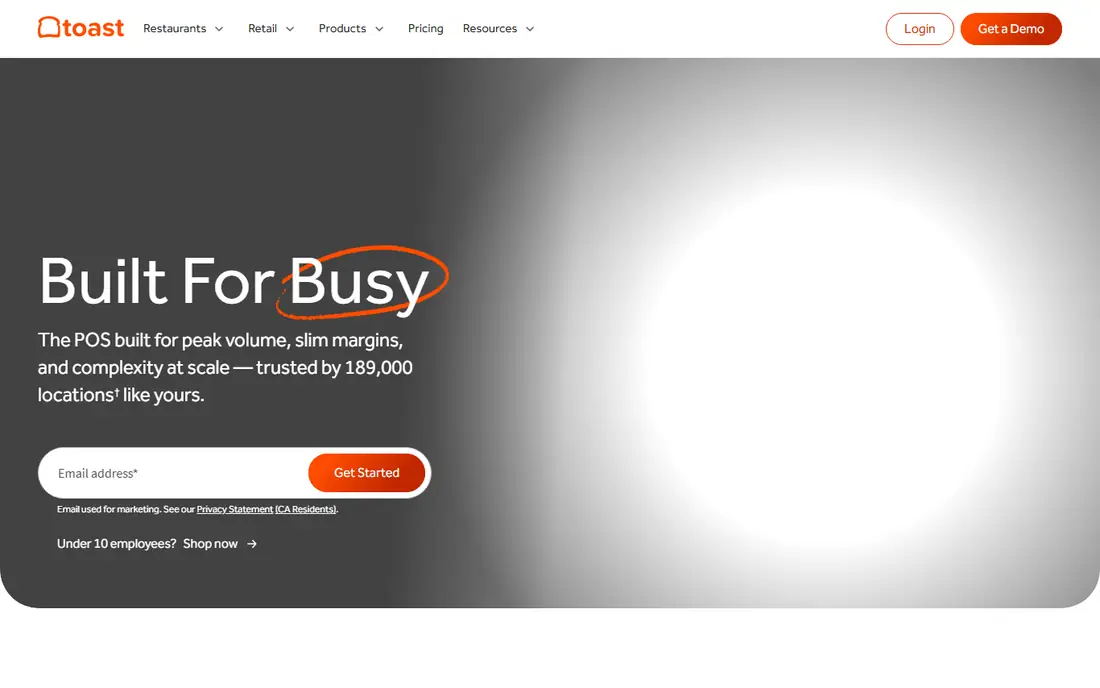
Toast is the best Square alternative for restaurants, because it is built around restaurant work: table maps, modifiers, split bills, kitchen display tickets, and handheld payment at the table. It also offers online ordering and guest tools that help a restaurant take orders beyond the dining room. For a full-service or quick-service restaurant, that depth beats a general retail POS.
The limit is scope and lock-in. Toast is less suited to a general retail shop, and its hardware only works with Toast, so switching later means replacing devices. Recent listings show POS plans from $69 per month, with in-person rates around 2.49% plus 15 cents on paid plans, though terms vary. Restaurants should test Toast on a busy service before committing, since speed at the pass matters more than any feature list.
- Deep restaurant tools including tables, modifiers, and kitchen tickets
- Handhelds for tableside payment
- Online ordering tools
- Restaurant focused, less suited to general retail
- Hardware is Toast only
- Contract terms vary
Lightspeed Retail suits shops with large catalogues, several locations, or complex stock needs, such as apparel, bike, pet, or specialty retail. It handles variants, purchase orders, suppliers, and multi-location stock in a way that simpler POS tools do not, and it includes e-commerce tools so online and in-store stock can stay aligned. Reporting also helps a buyer spot slow stock before it ties up cash.
The drawback is price. Lightspeed Retail starts at $89 per month billed annually in recent listings, and processing rates vary, with recent comparisons showing around 2.6% plus 10 cents through Lightspeed Payments. That cost is hard to justify for a single small shop with a short product list. For a shop where inventory is the main job, Lightspeed earns its fee.
- Deep inventory and multi-location tools
- Built-in e-commerce
- Strong reporting for large catalogues
- Higher monthly cost than entry POS tools
- Processing rates vary by plan and region
Helcim is the best Square alternative for sellers who want transparent, interchange-plus pricing. Instead of a flat rate on every card, Helcim passes through the card network cost and adds a margin, recently listed as 0.4% plus 8 cents in person. That model often wins for larger tickets and higher volumes, especially for debit cards and business cards where flat rates can be costly.
The catch is complexity. Interchange-plus statements show more detail than a flat-rate bill, so a seller needs to read them or trust the summary. Hardware is also separate, with readers listed around $199 in recent comparisons. For a low-volume seller, the saving may be small. For a growing business with steady card volume, Helcim is worth a quote alongside any flat-rate POS.
- Free POS software
- Interchange-plus pricing with a small margin
- No monthly fee in its stated model
- Hardware is separate
- Statements are more detailed than flat-rate bills
Stripe is best known for online payments, but it also offers Terminal for in-person card payments, which makes it a viable Square alternative for businesses that sell mainly online and take some payments in person. Its online rate is 2.9% plus 30 cents in recent listings, with Terminal in-person rates around 2.7% plus 5 cents. Subscriptions, invoicing, and developer tools are strong, which suits software, services, and subscription businesses.
The limit is POS depth. Stripe is not a full retail or restaurant POS out of the box, so a shop that needs inventory, table maps, or a counter register will need to pair Stripe with another POS or build a custom flow. For a business that already uses Stripe online and wants one payment provider for in-person sales, Stripe Terminal is a clean add-on.
- Strong online payments, subscriptions, and APIs
- Terminal for in-person payments
- No monthly fee for core payments
- Needs more setup than a ready-made POS
- In-person hardware and rates vary by product
PayPal Zettle, formerly iZettle, is a simple card reader and app system for mobile sellers, market stalls, cafes, and small shops. There is no monthly fee for the core service, and recent US listings show an in-person rate of 2.29% plus 9 cents, which is among the lowest flat rates in this list. The first reader is listed around $29 in some comparisons, which keeps startup costs low.
The trade-off is breadth. Zettle covers payments, simple inventory, and sales reports well, but it does not match Shopify for online stores, Toast for restaurants, or Lightspeed for large catalogues. It also links to PayPal, which helps for online checkout but adds a second fee structure to check. For a mobile seller who needs to take cards quickly, Zettle is an excellent low-cost pick.
- No monthly fee
- Low in-person rate in recent US listings
- Simple reader and app setup
- Online tools are thinner than Shopify or Stripe
- Reader costs extra
SumUp is a pay-as-you-go payment system with low-cost card readers, aimed at markets, pop-ups, cafes, and mobile sellers. There is no monthly fee on the basic plan, and recent US listings show an in-person rate of 2.6% plus 10 cents, with online payments at a higher rate. The reader range starts at a low price, which makes SumUp easy to try for a single event.
The limit is POS depth. SumUp handles payments and basic sales well, but a shop that needs deep inventory, restaurant tools, or multi-location stock will outgrow it quickly. It is also a payment-first tool, not a full business system. For a seller who needs a cheap reader for occasional sales, SumUp is a practical Square alternative.
- No monthly fee on pay-as-you-go plans
- Low-cost readers
- Simple setup for markets and pop-ups
- US in-person rate is 2.6% plus 10 cents in recent listings
- POS depth is limited
How we picked these
We compared official pricing pages and recent rate comparisons for POS and payment tools that serve small and mid-size US businesses in 2026. We kept tools that take in-person card payments as a core function, and we favored tools with published rates or a clear pricing model. Where Clover pricing varied by seller, we noted the range and advised a written quote, rather than presenting one reseller price as the only price.
How to choose a Square alternative
Start with your sales mix. If most sales happen online, choose Shopify POS or Stripe. If most sales happen at a restaurant table, choose Toast. If inventory is the main job, choose Lightspeed. If card volume is high and tickets are large, get a Helcim interchange-plus quote. If you sell at markets, choose Zettle or SumUp for low startup cost.
Then model total cost for one month of your real sales. Multiply your card volume by the in-person rate, add the monthly fee, and add hardware cost spread over its useful life. That total tells you more than any headline rate. Finally, check the contract: term length, early termination fees, hardware lease terms, and what happens to your data if you leave.
Frequently asked questions
What are alternatives to Square POS for small business?
Shopify POS, Clover, Lightspeed, Helcim, Stripe, PayPal Zettle, and SumUp are all viable Square POS alternatives, with different strengths. Shopify suits online-first shops, Clover suits busy counters, Lightspeed suits large catalogues, and Zettle and SumUp suit mobile sellers. Choose by sales mix and total monthly cost, not by monthly fee alone.
What are alternatives to Square payment processing?
Helcim, Stripe, PayPal Zettle, and SumUp all offer payment processing without Square, with different rate models. Helcim uses interchange-plus pricing, Stripe and Zettle use flat rates, and SumUp uses pay-as-you-go pricing. Compare your average ticket and monthly volume, since a lower percentage can still cost more on small tickets if the per-transaction fee is high.
Is Shopify POS cheaper than Square?
It depends on your plan and sales mix. Shopify POS needs a Shopify plan, so a shop with no online store may pay more than Square Free. A shop that already sells on Shopify may find the combined cost lower than running two separate systems, because inventory and orders stay in sync. Model your real monthly cost before you switch.
Which Square alternative is best for restaurants?
Toast is the strongest restaurant alternative, thanks to table maps, modifiers, kitchen tickets, and handheld payment. Clover also offers restaurant tools and hardware, while Square alternatives for general retail, such as Lightspeed, are less restaurant focused. Test any restaurant POS on a busy service, since speed and kitchen flow matter most.
Do Square alternatives require a contract?
Some do and some do not. Helcim, Stripe, Zettle, and SumUp generally offer no long-term contract on core plans, while Clover and Toast terms vary by seller and plan. Always read the contract for term length, early termination fees, and hardware lease terms before you sign, and prefer a month-to-month option for your first term if you can get it.
Sources
See where you really rank - block by block
ProMapRanker scans Google Maps across a grid of your service area. Simple monthly plans from $19, white-label on every plan.
Start freeKeep reading
 wayback machine alternatives
Wayback Machine Alternatives in 2026
We compared wayback machine alternatives for saving pages, citing sources, and researching old sites, from free snapshot tools to library archives and more.
Read → supabase alternatives
Supabase Alternatives in 2026
Compare the best Supabase alternatives for auth, databases, storage, and realtime, with pricing, hosting, and data models to help you choose well in 2026.
Read → best wealth management apps
Best Wealth Management Apps in 2026
Compare the best wealth management apps in 2026, platforms and services, with fees, minimums, advisor access and planning tools explained for US investors.
Read →